
Loading...

Every digital marketer has faced the challenge of matching their content to changing audience expectations across platforms. As research highlights, platform research evolves with country leadership and audience behaviors shaping trends in both e-commerce and education. Understanding these shifts is key for content creators aiming to produce truly engaging, high-performing digital experiences. This guide breaks down practical steps to help you connect with your audience, optimize for search, and make your AI-generated content feel unmistakably human.
| Key Insight | Explanation |
|---|---|
| 1. Research Audience Intent Thoroughly | Use tools like Google Trends and SEMrush to understand user behaviors and interests for tailored content creation. |
| 2. Draft with a Human-Centered Approach | Write in a natural, conversational tone to connect authentically with readers, making complex information accessible. |
| 3. Integrate Keywords Seamlessly for SEO | Utilize strategic keyword integration that enhances discoverability without sacrificing the authentic flow of your content. |
| 4. Humanize AI-Generated Text Effectively | Transform robotic AI text to relatable writing by incorporating personal anecdotes and emotional context to engage readers. |
| 5. Verify Content for Authenticity | Use multiple AI detection tools to ensure your writing maintains originality and meets SEO standards for better performance. |
Successfully crafting authentic digital content begins with a strategic understanding of audience intent and current platform dynamics. This research phase helps you align your writing precisely with what your readers seek and how they consume information.
To effectively research audience intent, start by leveraging advanced analytical tools and platforms that provide deep insights into user behaviors. Digital platform research trends reveal critical patterns in how audiences interact with online content across different sectors and demographics. Some key strategies include:
Platform trend research requires a multi-dimensional approach. With the rapid digital transformation happening globally, understanding how audiences adapt is crucial. For instance, recent studies show significant shifts in content consumption, particularly in educational and professional contexts. These changes are driven by technological advancements and changing user expectations.
Successful content creators don't just create content - they create experiences that resonate with their specific audience's evolving needs.
Utilize tools like Google Trends, SEMrush, and social listening platforms to track real-time audience interests. Look for emerging topics, frequently asked questions, and content gaps that represent opportunities for authentic, targeted writing.
Here's a summary of key tools and their benefits for digital content research:
| Tool | Primary Function | Key Benefit |
|---|---|---|
| Google Trends | Tracks keyword popularity | Identifies emerging topics fast |
| SEMrush | Comprehensive SEO analytics | Reveals keyword gaps and rivals |
| Social Listening Platforms | Monitors audience conversations | Uncovers real-time user interests |
| Demographic Analytics Tools | Analyzes user segments | Tailors content to audience types |
Pro tip: Create a dynamic audience persona document that you update quarterly to stay ahead of shifting digital consumption patterns.
Crafting authentic content requires more than just information - it demands a genuine human touch that resonates with readers. Your goal is to transform raw information into a conversational narrative that feels personal and engaging.
Humanizing AI-generated text involves strategic techniques that breathe life into your writing. This means moving beyond robotic language and creating content that sounds like a real person is speaking directly to the reader. Key strategies include:
Developing a natural tone requires understanding your audience's communication style. Think about how you would explain the concept to a friend over coffee - direct, warm, and without unnecessary complexity. Authentic writing means being clear without being sterile, informative without being dry.
Great writing feels like a conversation, not a lecture.
Pay attention to your word choice, using active voice and avoiding overly technical language. Introduce humor, personal observations, or relatable examples that make your content feel like a genuine human interaction.

Pro tip: Read your draft out loud to ensure it sounds conversational and natural, catching awkward phrasings that might slip past silent reading.
Successfully optimizing your content for search engines requires a nuanced approach to keyword integration that balances technical precision with natural readability. Your goal is to seamlessly weave strategic keywords into your writing without compromising the authentic flow of your content.
Title and keyword optimization plays a critical role in improving content discoverability across digital platforms. Effective keyword integration involves more than simply stuffing phrases into your text - it requires strategic placement and contextual relevance. Key techniques include:
Understand that modern search algorithms reward contextual relevance over mechanical keyword repetition. This means crafting content that genuinely addresses user questions while incorporating keywords in a way that feels organic and conversational. Think about how people actually search and speak about your topic.
Successful SEO integrates keywords so smoothly that readers never notice they're reading an optimized piece.
Consider using keyword research tools to identify semantic variations and related terms that can help you create more comprehensive, natural-sounding content. Remember that your primary audience is human readers, with search engines as a secondary consideration.
Pro tip: Read your keyword-integrated content out loud - if it sounds awkward or forced, you need to refine your approach.
Transforming AI-generated content into authentic, engaging writing requires more than simple editing - it demands a strategic approach that breathes genuine human personality into every paragraph. Your mission is to create content that sounds natural, relatable, and distinctly human.
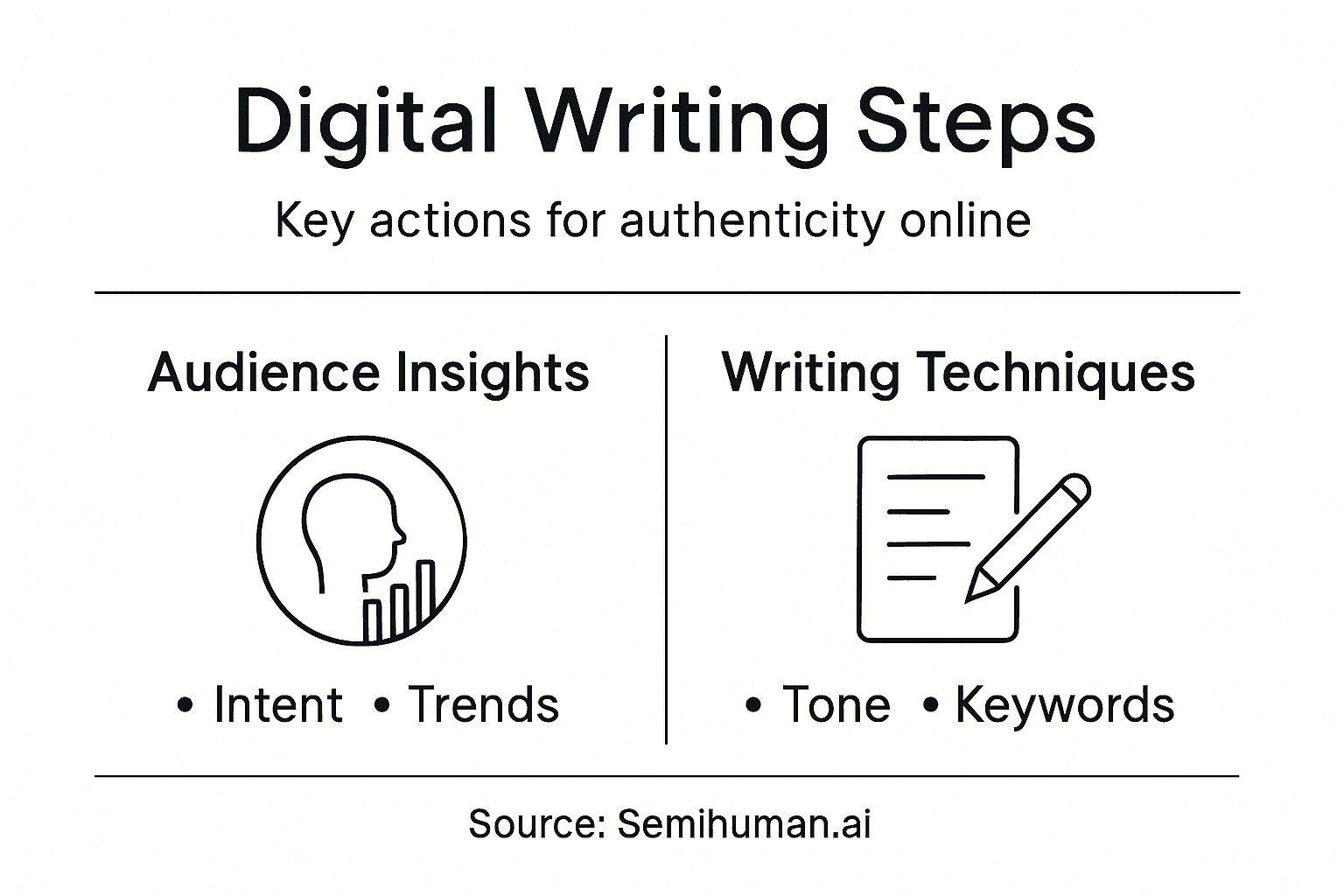
Humanizing machine-written text involves carefully dismantling robotic language patterns and rebuilding them with nuanced, conversational elements. Key strategies for infusing authenticity include:
Successful humanization goes beyond grammatical corrections. Authentic writing requires understanding the subtle psychological cues that make human communication feel genuine. This means moving beyond perfect syntax to create content that sounds like a real person is speaking directly to the reader.
Real communication isn't about perfection - it's about connection.
Pay special attention to sentence rhythm, emotional undertones, and natural language patterns. Think about how you would explain a concept to a friend over coffee - direct, warm, and without unnecessary complexity.
Pro tip: Always read your humanized content out loud and ask yourself: Would a real person actually say this?
This comparison highlights differences between humanized and AI-generated text:
| Aspect | Humanized Content | Pure AI-Generated Text |
|---|---|---|
| Tone | Conversational and warm | Formal and mechanical |
| Emotional Connection | Includes personal touches | Lacks genuine feeling |
| Readability | Flows naturally | May feel stiff or abrupt |
| Audience Engagement | Fosters connection | May fail to resonate |
Ensuring your content passes rigorous AI detection and maintains high-quality SEO standards requires strategic verification using advanced technological tools. Your goal is to confirm authenticity while optimizing search engine performance.
Advanced AI content detection offers precise mechanisms for evaluating digital content integrity across multiple platforms. When verifying your writing, consider implementing these comprehensive strategies:
The verification process involves more than simple scanning. Authentic content validation means understanding the nuanced markers that distinguish human-generated text from AI-produced material. This requires a multi-layered approach that goes beyond surface-level analysis.
Effective content verification is an art of balancing technological insight with human creativity.
Pay close attention to linguistic patterns, emotional context, and subtle variations that AI detection tools assess. Each platform offers unique insights, so cross-referencing results provides the most comprehensive evaluation of your content's authenticity and SEO potential.
Pro tip: Always run your content through at least two different AI detection tools to get a more comprehensive assessment of its human-like qualities.
Mastering digital content creation means tackling challenges like crafting genuinely human voices, integrating SEO keywords naturally, and beating AI detection tools. If you struggle to maintain authenticity while optimizing for search engines or want to enhance your content’s emotional connection, Semihuman.ai offers a powerful solution tailored for creators, marketers, and students alike. Our platform transforms AI-generated text into naturally flowing, authentic writing that resonates with your audience while improving SEO performance and passing advanced AI detection systems.
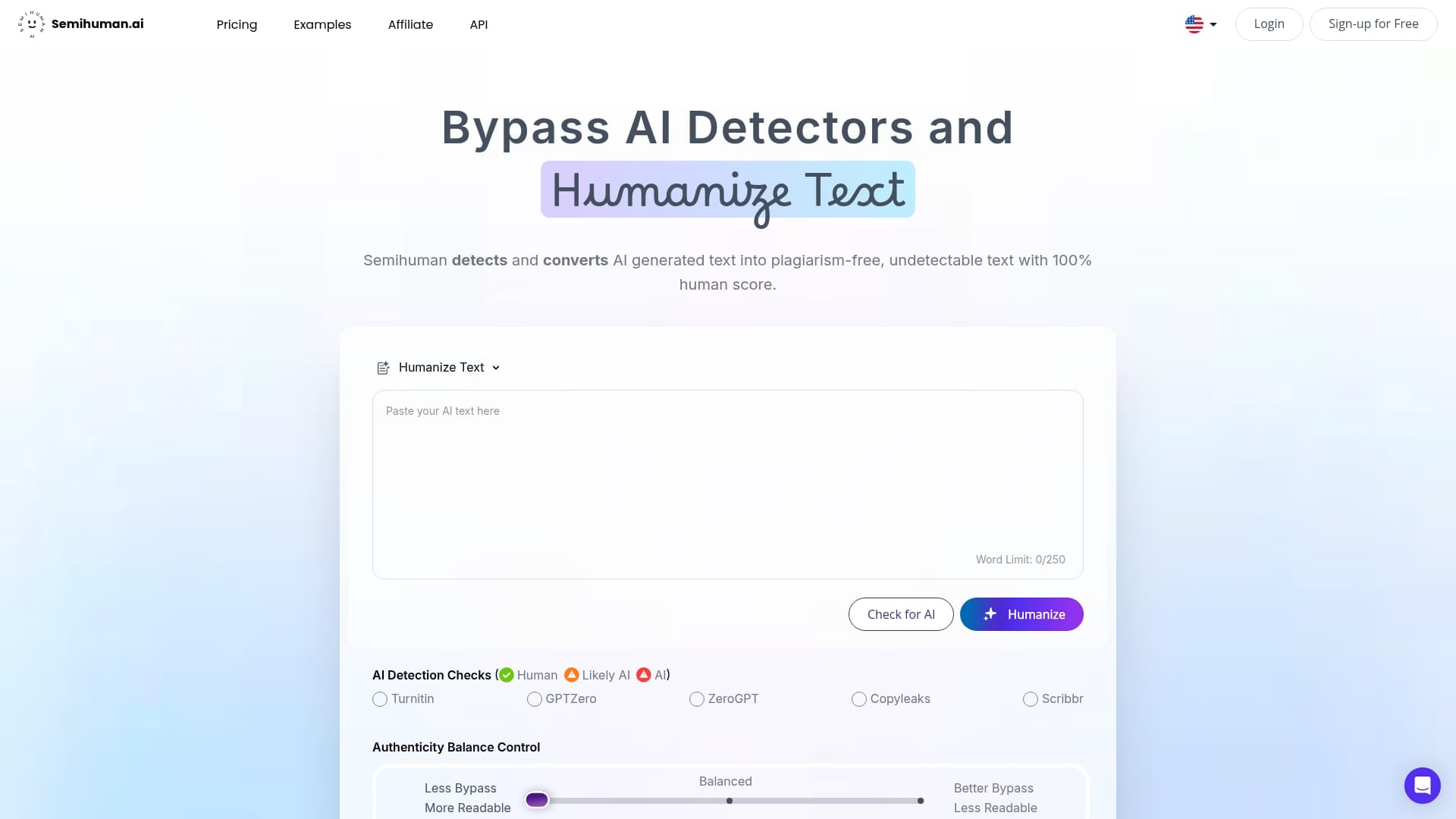
Take control of your content’s authenticity today. Use Semihuman.ai to humanize your AI-generated drafts, seamlessly integrate strategic keywords, and ensure your writing feels conversational and engaging. Don’t let robotic or mechanical text hold back your digital presence. Visit https://semihuman.ai and start creating content that truly connects now.
To research audience intent effectively, leverage analytical tools to analyze search engine keyword trends, social media engagement metrics, and demographic interaction patterns. Start by using tools like Google Trends and SEMrush to identify topics that resonate with your target audience.
To write authentic content, use conversational language and incorporate personal insights or anecdotes. Aim to write as if you're speaking to a friend, which will make your content feel warmer and more engaging.
To integrate keywords naturally, research long-tail and semantic keywords, then distribute them contextually throughout your content. Ensure keywords fit seamlessly into your sentences and avoid overstuffing, keeping the reader's experience in mind.
To humanize AI-generated content, introduce intentional imperfections and add personal anecdotes or humor. Read the content out loud to ensure it sounds natural and relatable, making adjustments for ease of understanding as needed.
To verify your content's authenticity and SEO effectiveness, use multiple detection tools to analyze its originality and readability. Check the integration of keywords, and aim for a balance between high quality and optimized performance across all your content.


Start
Humanizing
for Free!
Humanize