
Loading...

Over 80 percent of online readers say they trust content that feels authentic and conversational. In a world filled with automated messages and stiff corporate speak, reaching real people means writing in a tone that sounds truly human. This approach not only builds trust but also keeps readers engaged, helping your message stand out from robotic competitors.
| Point | Details |
|---|---|
| Importance of Human Tone | Human tone in digital content emphasizes authenticity, relatability, and conversational style, enhancing user engagement and trust. |
| Psychological Engagement | Content that is easy to process and resonates emotionally encourages deeper reader connections and positive interaction. |
| SEO Benefits | Incorporating humanized content can improve SEO through lower bounce rates, higher engagement, and better keyword integration. |
| Avoiding Common Pitfalls | Effective humanization requires careful attention to context and language to prevent forced sounds and maintain authenticity. |
Human tone represents the authentic, conversational essence that transforms digital communication from robotic text into engaging, relatable content. According to research from Newcastle University, tone of voice encompasses the attitude conveyed through communication, specifically focusing on word choice, sentence structure, and overall rhythm.
At its core, human tone is about creating a connection that feels natural and genuine. This means moving beyond rigid, academic language and embracing a style that sounds like a real person speaking. As the Newcastle University research highlights, using an active voice, approachable language, and maintaining simplicity are crucial elements in crafting a truly human communication style.
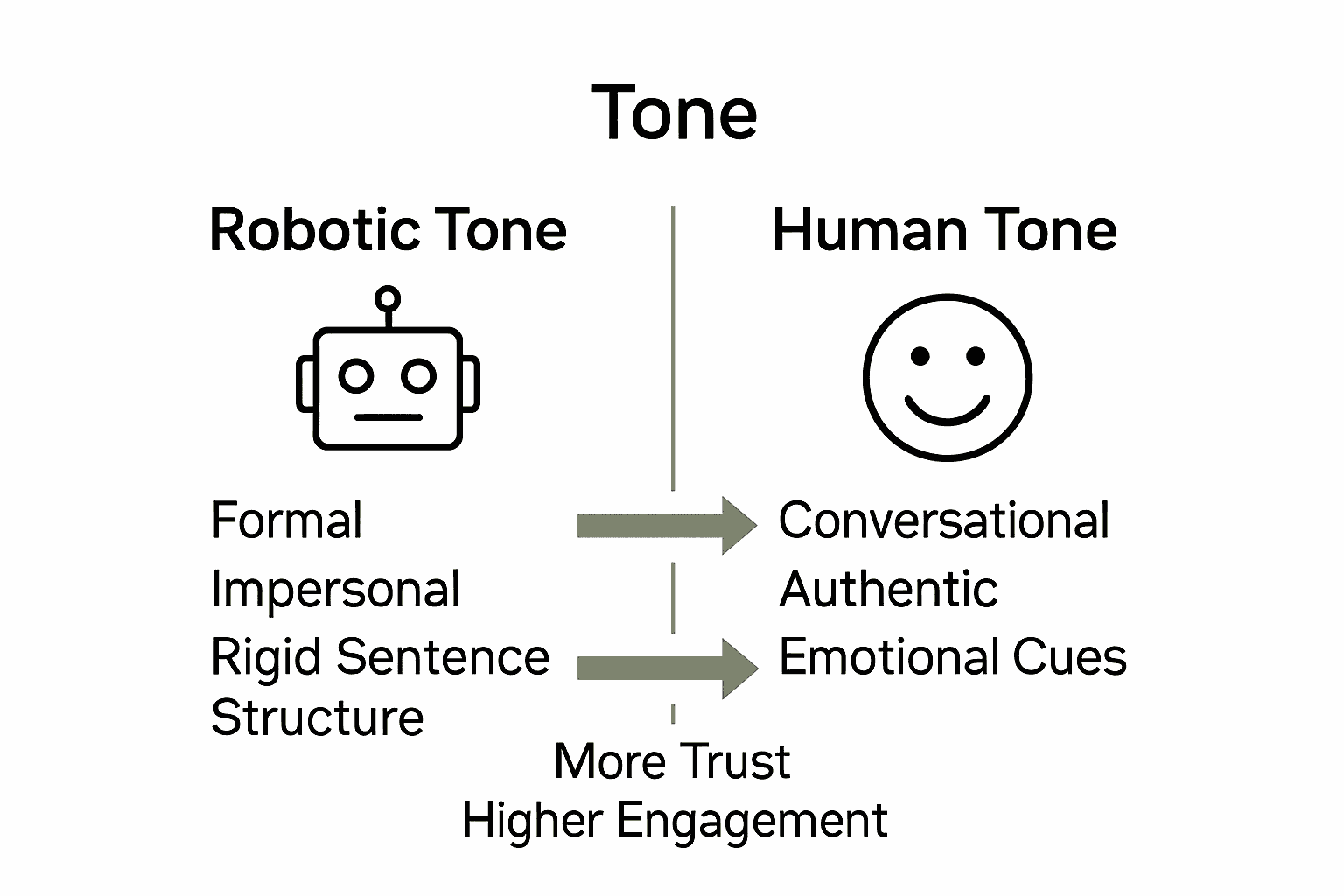
The nuances of human tone go far beyond mere word selection. Research from arXiv suggests that creating a human-like tone requires a delicate balance between authenticity and avoiding potential stereotyping. Key characteristics of a genuinely human tone include:

Interested in seeing real-world examples of how content creators achieve this? Check out our examples of humanized text for authentic content, which showcase practical techniques for developing a more human-like writing style.
Understanding why humans gravitate towards certain types of communication involves diving deep into complex psychological mechanisms. Processing Fluency Theory provides crucial insights into why people prefer content that feels intuitive and easy to comprehend. This theory suggests that our brains inherently favor information that can be processed with minimal cognitive effort.
The cognitive ease of understanding content directly impacts how we perceive and engage with it. When text feels natural and flows smoothly, readers experience less mental strain, which translates into a more positive emotional response. This psychological principle explains why human-like writing resonates more powerfully than rigid, mechanical communication. Readers unconsciously seek content that feels like a conversation rather than a technical manual.
Interestingly, research from arXiv exploring the "Physics of Preference" reveals that human preferences are remarkably complex and influenced by numerous subtle factors. Our decision-making processes aren't purely rational but involve intricate emotional and cognitive mechanisms. In the context of content consumption, this means readers are drawn to writing that:
These psychological drivers demonstrate why human tone isn't just a stylistic choice - it's a fundamental communication strategy that aligns with how our brains process and appreciate information.
Authenticity in digital communication is the cornerstone of building meaningful connections with readers. Newcastle University's research emphasizes that a consistent and genuine tone of voice is critical for establishing trust and familiarity among users. This means going beyond generic messaging and creating content that feels sincere, honest, and contextually appropriate.
The digital trust ecosystem is fragile and requires careful navigation. When content sounds mechanical or overly scripted, readers quickly disengage. According to research from arXiv, incorporating a persona that feels contextually natural can dramatically enhance user experience and perceived authenticity. This approach transforms digital interactions from transactional exchanges to genuine communication moments.
Key elements that contribute to authentic user experience include:
Want to dive deeper into creating authentic content that resonates? Check out our comprehensive guide to user experience in written content, which provides actionable strategies for building trust through meaningful communication.
Search engines are evolving to prioritize content that genuinely connects with readers, making humanized content a critical SEO strategy. Newcastle University's research suggests that building a strong brand identity through consistent, authentic communication can indirectly improve search rankings by enhancing user engagement and reducing bounce rates.
Modern SEO algorithms are sophisticated enough to distinguish between robotic, keyword-stuffed content and genuinely valuable writing. Research from arXiv highlights the importance of balancing human-like language with strategic optimization. This means creating content that sounds natural while strategically incorporating relevant keywords and maintaining readability.
Key SEO benefits of humanized content include:
Ready to transform your content strategy? Explore our comprehensive guide to SEO benefits of AI humanization to unlock the full potential of human-centric writing techniques that search engines love.
Navigating the complex landscape of AI content detection requires a nuanced approach that goes beyond simple avoidance tactics. Research from arXiv reveals that systematically controlling the human-like tone of generated content can significantly reduce the risk of being flagged by detection systems. The key is creating text that sounds authentically human, not just mechanically different.
The art of content humanization involves more than surface-level modifications. Another study from arXiv explores how incorporating contextually appropriate personas can enhance the authenticity of generated content. This means moving beyond basic synonym replacement and developing a genuine narrative voice that reflects natural human communication patterns.
Effective strategies for bypassing AI detection include:
Want to master the techniques of creating undetectable, authentic content? Check out our comprehensive guide on bypassing AI detection, which provides practical insights into creating truly human-like writing.
Humanizing AI text is a delicate art that requires more than simple word substitution. Research from arXiv warns that overzealous attempts to make AI content sound human can lead to significant risks, including potential overreliance and unintentional stereotyping. The goal is authentic communication, not mechanical mimicry.
Context is everything when transforming AI-generated content. Another study highlights the critical importance of contextually appropriate expression, revealing that poorly executed humanization can actually undermine user trust rather than enhance it. Without careful nuance, attempts to sound human can come across as artificial and forced.
Common pitfalls content creators must avoid include:
Want to master the subtle art of content humanization? Explore our comprehensive guide to humanizing machine-written text, which provides practical strategies for creating authentic, engaging content that resonates with readers.
The challenge of crafting content that feels authentic and engaging is clear from the article "Why Readers Prefer Human Tone: Complete Guide." Readers crave writing that flows naturally, triggers emotional connection, and reflects genuine human expression. If you want to overcome the pain points of rigid AI-generated text that often sounds mechanical or artificial, Semihuman.ai offers a powerful solution tailored just for that. By transforming your texts into more human-like, relatable content with ease, you can improve SEO performance, build trust with your audience, and confidently bypass AI detection tools.
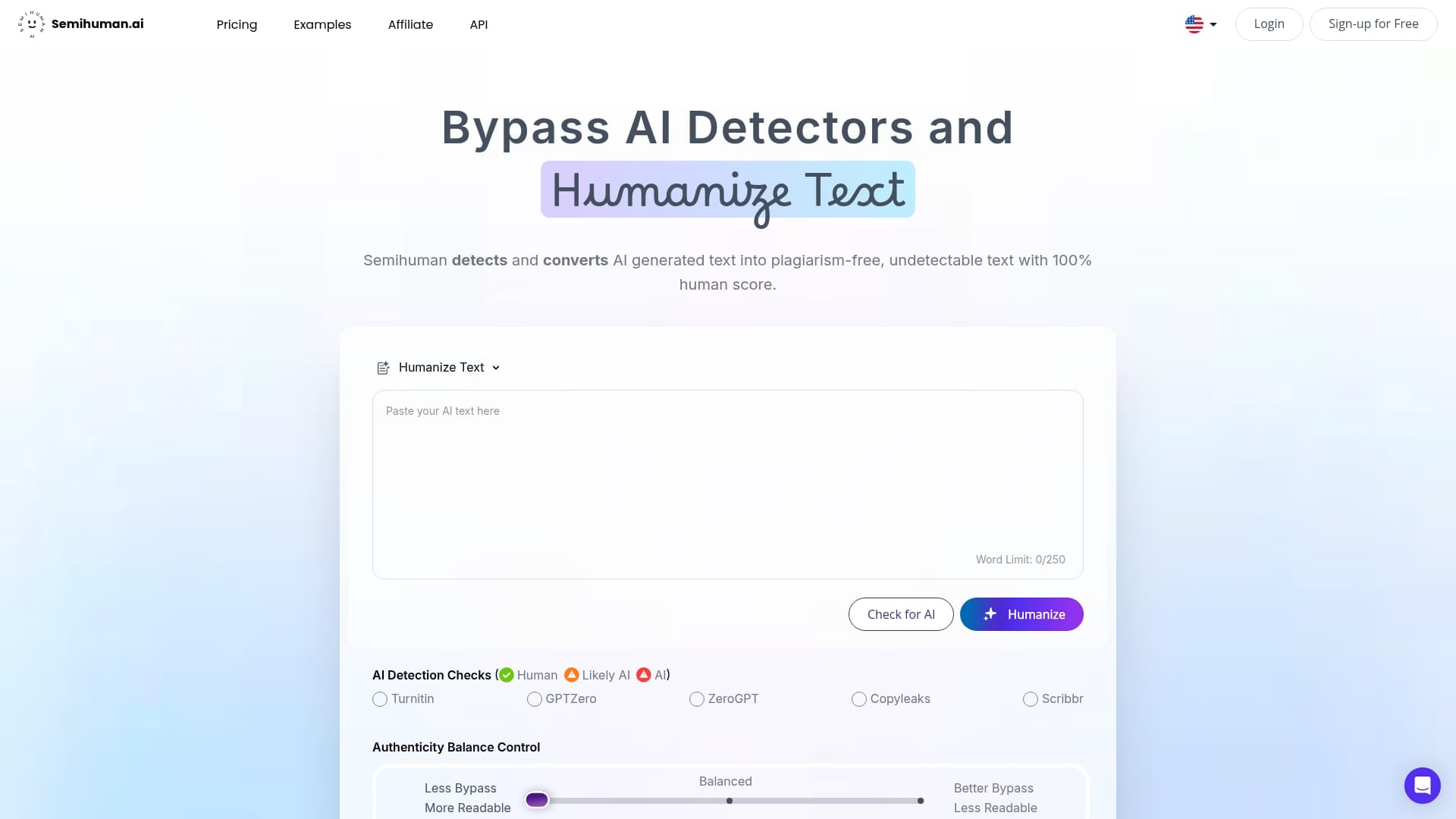
Discover how our platform reshapes AI content through features like text restructuring and natural keyword integration. Whether you are a content creator, marketer, or student, enabling your work to sound authentically human has never been simpler. Take the next step toward writing that resonates by visiting https://semihuman.ai. For deeper insights on enhancing user experience, explore our guide to user experience in written content or unlock the secrets of effective SEO benefits of AI humanization. Start creating content that readers truly prefer today.
Human tone refers to an authentic, conversational style that makes digital communication engaging and relatable. It moves away from robotic text, focusing on word choice, sentence structure, and overall rhythm to create a natural connection with readers.
Readers prefer content that feels intuitive and easy to understand, as it requires minimal cognitive effort. Human tone evokes emotional engagement, mirrors natural conversation, and enhances the overall reading experience, making it more enjoyable.
Authenticity is crucial for building trust and familiarity with readers. Content that feels sincere and contextually relevant fosters meaningful connections, transforming digital interactions from mere transactions into genuine conversations.
Effective strategies include using conversational language, varying sentence structure, incorporating personal anecdotes, and maintaining emotional tone. It's important to avoid corporate jargon and crafting text that sounds overly scripted or mechanical.


Start
Humanizing
for Free!
Humanize