
Loading...

Most advice about content detection misses a critical truth—over 35 percent of American writers have experienced false positives with popular AI detection tools. With reputations, academic standing, and even job prospects on the line, these systems spark concern across industries. Unpacking what content detection actually does, and debunking the most common myths around its accuracy, helps you separate fact from fiction in a world where machine and human voices often blur.
| Point | Details |
|---|---|
| Content Detection Limitations | AI detection tools struggle with high false positive rates and cultural biases, misclassifying genuine human-written content. |
| Ethical and Compliance Risks | Accurately identifying AI content is crucial, as undetected or flagged texts can undermine academic integrity and professional reputations. |
| Humanization Strategies | Enhancing AI-generated content requires incorporating personal narratives and unique stylistic elements to resonate with authentic human expression. |
| Adaptive Content Creation | Creators must stay informed about evolving technologies and regulatory challenges to ensure content authenticity and compliance in digital platforms. |
Content detection represents a technological frontier where artificial intelligence attempts to distinguish between machine and human-generated writing. At its core, these tools analyze linguistic patterns, semantic structures, and textual nuances to determine the probable origin of text. However, the reality is far more complex than a simple algorithmic determination.
Researchers have highlighted significant challenges in content detection accuracy. A comprehensive study examining AI detection tools in academic contexts reveals substantial limitations, particularly concerning false positive rates. These tools frequently misclassify authentic human-written content, creating potential ethical and professional complications for writers, students, and content creators.
Common myths about content detection persist, often misrepresenting the technology's capabilities. Many people incorrectly assume these tools provide definitive, binary classifications of content origin. In reality, most AI detection systems operate on probabilistic models with inherent uncertainties. Research evaluating detection effectiveness underscores critical concerns including:
The nuanced landscape of content detection demands a sophisticated approach. Writers and professionals must recognize these tools as imperfect screening mechanisms rather than absolute arbiters of content authenticity. Understanding their limitations helps develop more strategic approaches to creating genuine, high-quality content that resonates with human readers while navigating emerging technological challenges.
AI detection tools represent a technological response to the growing challenge of distinguishing between human and machine-generated content. These sophisticated systems employ complex algorithms and machine learning techniques to analyze textual characteristics, linguistic patterns, and semantic structures that might indicate artificial generation.
Investigative research on AI content detectors reveals significant challenges in accurately identifying machine-generated text, particularly when human editing is involved. The nuanced nature of these tools demonstrates that content detection is far from a straightforward process. Modern AI detection systems struggle with several key limitations:
Comprehensive evaluations of generative AI text detectors highlight the sophisticated methods AI-generated content can use to evade detection. When confronted with modified machine-generated text, these tools experience dramatic reductions in accuracy. This reality underscores a critical truth: AI detection is an ongoing technological arms race, with detection methods constantly being challenged and circumvented by increasingly advanced content generation techniques.

Content creators and professionals must approach AI detection tools with a nuanced perspective. These tools are not infallible arbiters of content origin, but rather imperfect screening mechanisms that provide probabilistic assessments. Understanding their limitations allows for more strategic approaches to content creation, ensuring authenticity while navigating the complex landscape of AI-generated and human-written text.
The landscape of content creation is fraught with potential risks when AI-generated text goes undetected or gets inappropriately flagged. Organizations, academic institutions, and content platforms face significant challenges in maintaining authenticity and integrity in an era of sophisticated AI writing tools.

Research exploring university assessments against AI-generated content reveals profound implications for academic integrity. Faculty members increasingly struggle to distinguish between human-written and machine-generated submissions, creating complex ethical and evaluative challenges. The risks extend beyond mere detection, potentially undermining fundamental principles of original scholarship and intellectual contribution.
The potential consequences of undetected or incorrectly flagged AI content are multifaceted:
Comprehensive evaluations of AI detection mechanisms demonstrate the inherent complexities in determining content authenticity. False positive rates remain alarmingly high, suggesting that automated detection systems are far from infallible. These challenges create a precarious environment where legitimate content might be wrongly categorized, and artificially generated text could potentially slip through undetected.
Content creators and organizations must adopt sophisticated, nuanced strategies to navigate these risks. This involves developing robust verification processes, investing in advanced detection technologies, and maintaining a proactive approach to content authenticity. Understanding the potential pitfalls is the first step in creating a more transparent and trustworthy digital content ecosystem.
The intersection of artificial intelligence and content creation has unleashed a complex web of legal, academic, and digital marketing challenges that demand unprecedented scrutiny and adaptive strategies. Content creators, researchers, and digital professionals now navigate an increasingly treacherous landscape where technological capabilities constantly outpace regulatory frameworks.

Emerging research on generative AI's impact on scientific publishing reveals alarming trends of academic misconduct and publication integrity concerns. Scientific journals have documented numerous instances of AI-generated content leading to retractions, undermining the fundamental principles of original research and scholarly contribution.
The compliance challenges manifest across multiple domains:
Technological innovations addressing content authentication demonstrate proactive approaches to mitigating these challenges. Watermarking technologies and advanced detection algorithms represent critical steps toward establishing more robust verification mechanisms, helping organizations distinguish between human-generated and AI-produced content.
Navigating these compliance challenges requires a multifaceted approach. Content creators must remain adaptable, continuously updating their understanding of emerging technologies, legal frameworks, and ethical guidelines. Success hinges on developing sophisticated strategies that balance technological innovation with fundamental principles of originality, transparency, and intellectual integrity.
Humanizing AI-generated content represents a sophisticated challenge that requires nuanced understanding and strategic intervention. Content creators must develop advanced techniques that transform algorithmic outputs into authentic, engaging narratives that resonate with human readers while maintaining the efficiency of artificial intelligence.
Theoretical frameworks addressing generative AI challenges reveal critical insights into distinguishing authentic human creativity from machine-generated text. These approaches emphasize the importance of introducing subtle variations, contextual adaptations, and personal narrative elements that transcend standard algorithmic generation patterns.
Effective humanization strategies include:
Research examining AI detection tool reliability underscores the critical need for sophisticated content transformation techniques. By understanding the algorithmic patterns that typically characterize machine-generated text, creators can strategically modify their content to appear more naturally human-like and authentic.
Successful content humanization is an art form that blends technological understanding with creative expression. It requires continuous learning, adaptability, and a deep appreciation for the nuanced ways humans communicate complex ideas. Creators must view AI as a collaborative tool rather than a replacement for human creativity, leveraging its capabilities while maintaining the irreplaceable qualities of genuine human communication.
The article "Why Content Detection Matters for Authenticity and SEO" highlights the critical challenge of maintaining genuine, human-like content while avoiding false positives from AI detection tools and safeguarding academic and professional integrity. If you are struggling with balancing AI-generated efficiency and the need for authentic, natural writing that resonates with readers and search engines, this is where targeted solutions become essential. Key pain points include avoiding detection errors, improving SEO rankings, and ensuring your content meets legal and ethical standards.
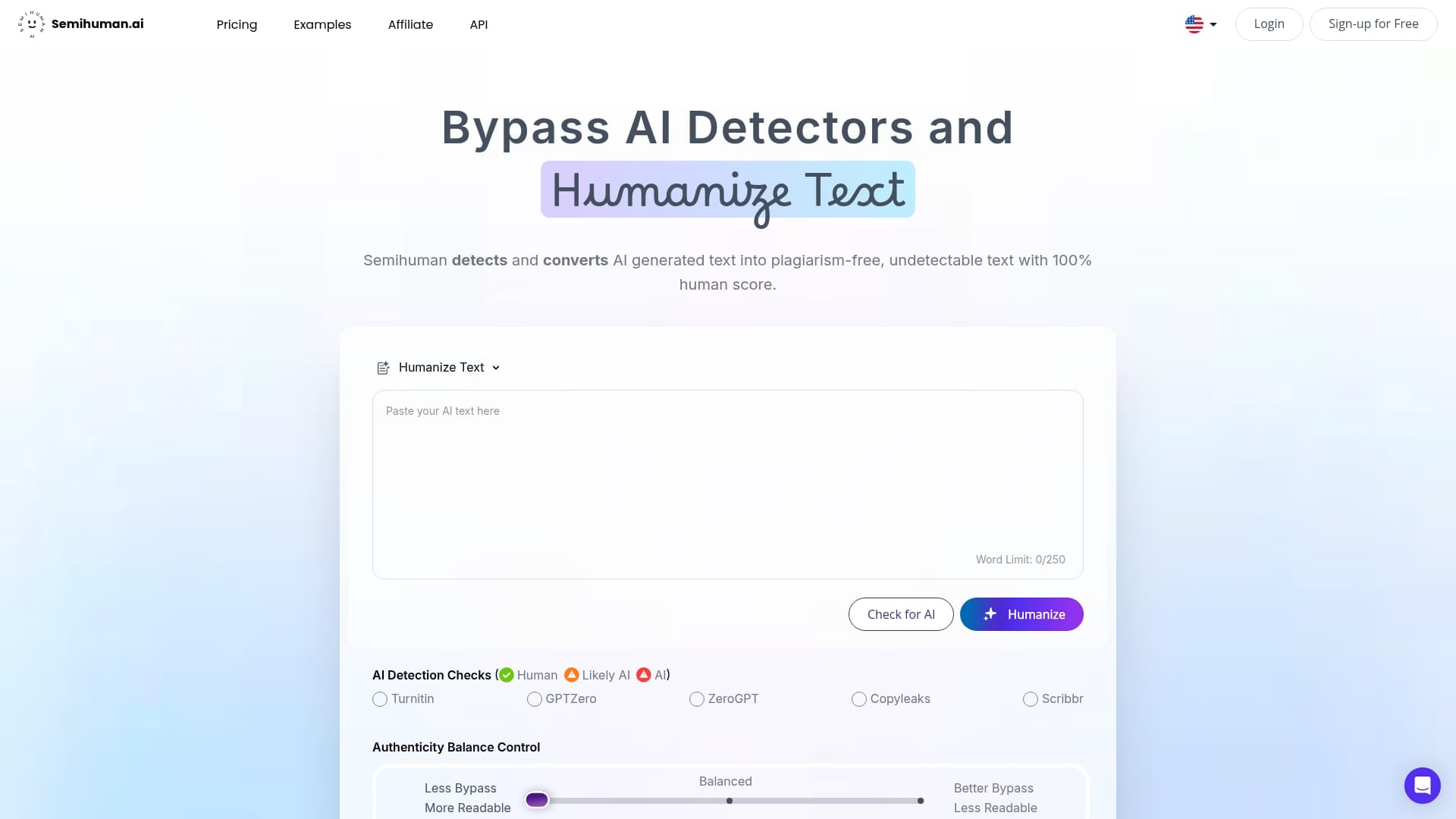
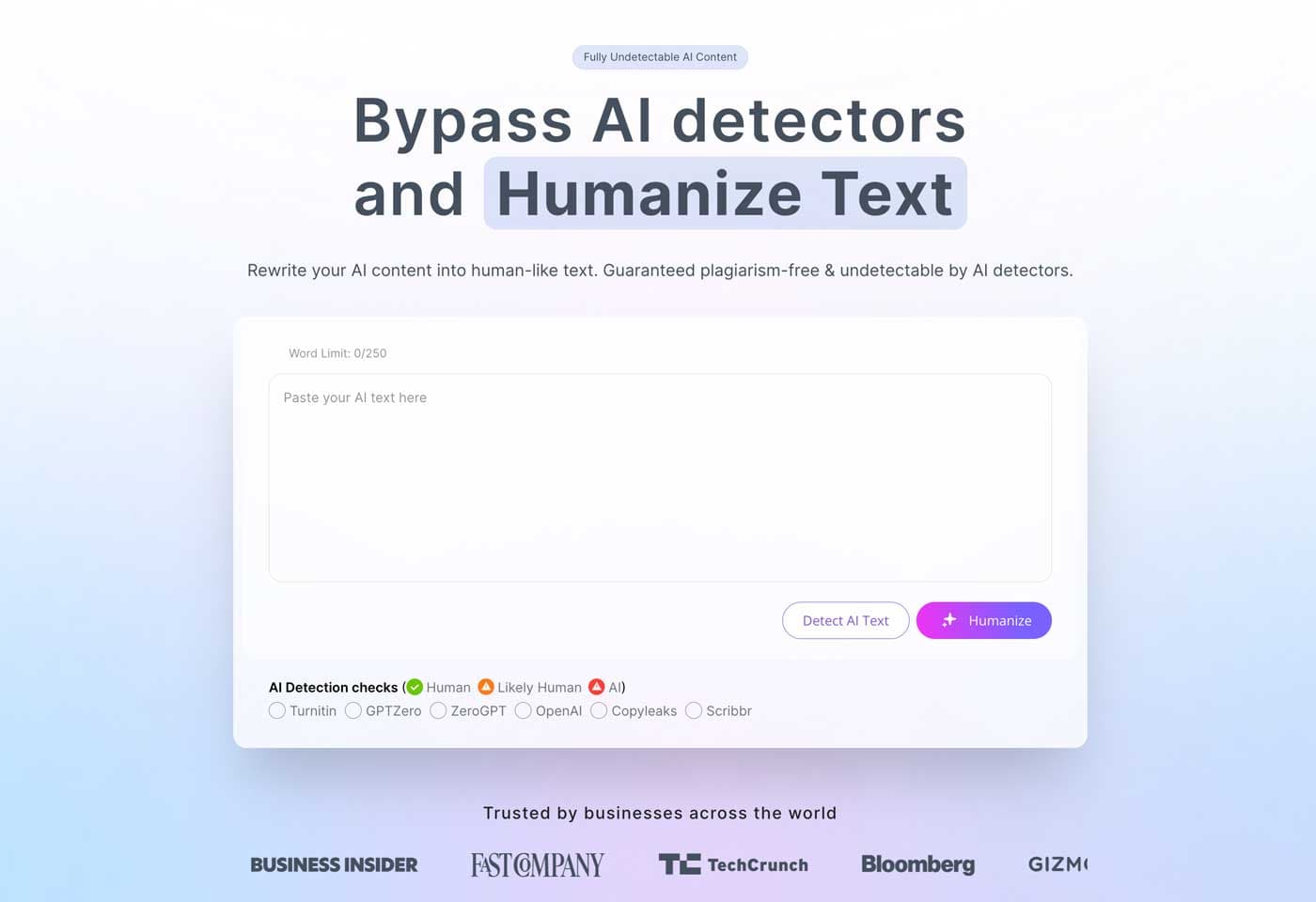
Take control of your content's future today with Semihuman.ai, a powerful platform designed to transform AI-generated text into authentically human writing. With advanced features like text restructuring, keyword integration, and detection evasion, Semihuman.ai helps you create content that not only passes tools like Turnitin and GPTZero but also appeals genuinely to your audience. Visit https://semihuman.ai now and experience how to humanize your writing effortlessly and boost your SEO impact with confidence.
Content detection is a technology that uses artificial intelligence to differentiate between machine-generated and human-written text. It is important for maintaining authenticity and credibility in various contexts, including academic settings and digital content creation.
Common myths include the belief that these tools provide definitive classifications of text origin. In reality, they often operate on probabilistic models with limitations, resulting in false positives and false negatives.
Risks include academic penalties, compromised professional reputation, reduced content credibility, potential legal violations, SEO ranking penalties, and loss of audience trust due to misclassification of content.
Content creators can humanize AI-generated text by incorporating personal anecdotes, adding intentional imperfections, developing a unique voice, and using emotional intelligence to engage readers on a more relatable level.


Start
Humanizing
for Free!
Humanize