
Loading...

More than 60 percent of American companies report concerns about the rise of AI-generated content and its impact on authenticity. As these advanced tools become harder to distinguish from human writing, questions of credibility, originality, and trust are growing. This guide explains how modern detection methods work, what signs set artificial content apart, and how professional writers can adapt to these new challenges.
| Point | Details |
|---|---|
| Understanding AI-Generated Content | AI-generated content is created through machine learning algorithms, producing outputs that closely mimic human writing styles, yet retain detectable linguistic fingerprints. |
| Detecting AI-Generated Materials | Advanced detection techniques utilize linguistic analysis and statistical modeling to differentiate between human and machine-generated texts. |
| Legal and Ethical Concerns | The rise of AI-generated content raises significant issues regarding intellectual property, academic integrity, and professional credibility that content creators must navigate. |
| Humanizing AI Text | To avoid detection, creators should focus on introducing natural variations and personal insights into AI-generated content to enhance its authenticity. |
Artificial Intelligence content represents text, images, or multimedia produced using machine learning algorithms instead of direct human authorship. These advanced systems analyze massive datasets and generate human-like outputs that can closely mimic natural writing styles. Advanced detection techniques now utilize multiple sophisticated approaches to distinguish AI-generated materials from human-created content.
The core characteristics of AI-generated content typically include patterns like unnaturally consistent language flow, generic phrasing, and statistically predictable sentence structures. While AI writing tools have become increasingly nuanced, they still leave behind subtle linguistic fingerprints that trained detection algorithms can identify. These markers often include:
Researchers have developed comprehensive multilayered detection strategies that leverage linguistic analysis, statistical modeling, and machine learning techniques. These methods examine text through multiple lenses - examining everything from semantic coherence to grammatical complexity - to determine whether content was machine or human generated. By understanding these detection mechanisms, content creators can better navigate the complex landscape of AI-assisted writing while maintaining authenticity and originality.

AI detection tools are becoming increasingly sophisticated in identifying machine-generated content through a series of nuanced linguistic markers. Distinctive writing patterns reveal subtle characteristics that differentiate AI-generated text from human writing, creating digital fingerprints that sophisticated algorithms can quickly recognize. These systems analyze multiple dimensions of language beyond simple grammatical structures.
Research highlights several key indicators that typically trigger AI detection algorithms, including:
Professional content creators must understand that AI detection goes beyond simple keyword matching. Modern algorithms employ advanced machine learning techniques to assess linguistic nuances, contextual appropriateness, and semantic coherence. By recognizing these potential red flags, writers can strategically refine their AI-assisted content to appear more authentically human-generated, maintaining both creativity and originality in their work.

The landscape of AI detection tools has rapidly evolved, with sophisticated technologies emerging to distinguish between human and machine-generated content. GPTZero stands out as a pioneering detection software that employs advanced linguistic analysis to identify artificial text generation, utilizing complex algorithms that examine nuanced writing characteristics.
Most prominent AI detection tools leverage multiple sophisticated techniques to assess content authenticity:
Modern AI detection technologies have become increasingly sophisticated, moving beyond simple keyword matching to develop intricate neural network models that can detect even highly refined AI-generated text. These tools continuously adapt and learn, creating a complex technological arms race between content generation and detection algorithms. Content creators must stay informed about these evolving technologies to maintain the authenticity and originality of their written materials.
Academic institutions and content creators face increasingly complex challenges with the proliferation of AI-generated text. The fundamental issue extends beyond mere technological detection, touching critical ethical and legal boundaries surrounding intellectual property and academic integrity. Emerging research demonstrates the profound implications of machine-generated content across professional and educational landscapes.
The primary legal and ethical concerns surrounding AI-generated content include:
University assessment strategies are evolving to address these challenges, with faculty developing sophisticated techniques to identify and mitigate AI-generated content risks. Content creators must proactively understand these emerging standards, recognizing that originality goes beyond simple detection avoidance. The goal is not just to circumvent AI identification systems, but to maintain genuine intellectual authenticity and ethical content creation practices that respect both technological innovations and established academic standards.
Undetectable AI technologies have emerged as sophisticated solutions for transforming machine-generated content into more human-like text. The core challenge lies in creating nuanced variations that preserve the original message while introducing subtle linguistic characteristics that bypass advanced detection algorithms.
Effective strategies for humanizing AI-generated text include:
Sophisticated text modification techniques go beyond simple word substitution. Content creators must develop a nuanced understanding of linguistic patterns, learning to introduce human-like complexity that makes AI-generated text indistinguishable from manually written content. The goal is not deception, but creating authentic, engaging text that resonates with readers while maintaining the efficiency and insights provided by AI writing tools.
Struggling with AI content getting flagged due to unnatural language flow or perfect grammar? You are not alone. The challenges of avoiding detection tools like GPTZero and Turnitin while maintaining originality and SEO relevance can be overwhelming. Key triggers such as overly consistent phrasing and generic vocabulary can raise red flags that endanger your credibility.
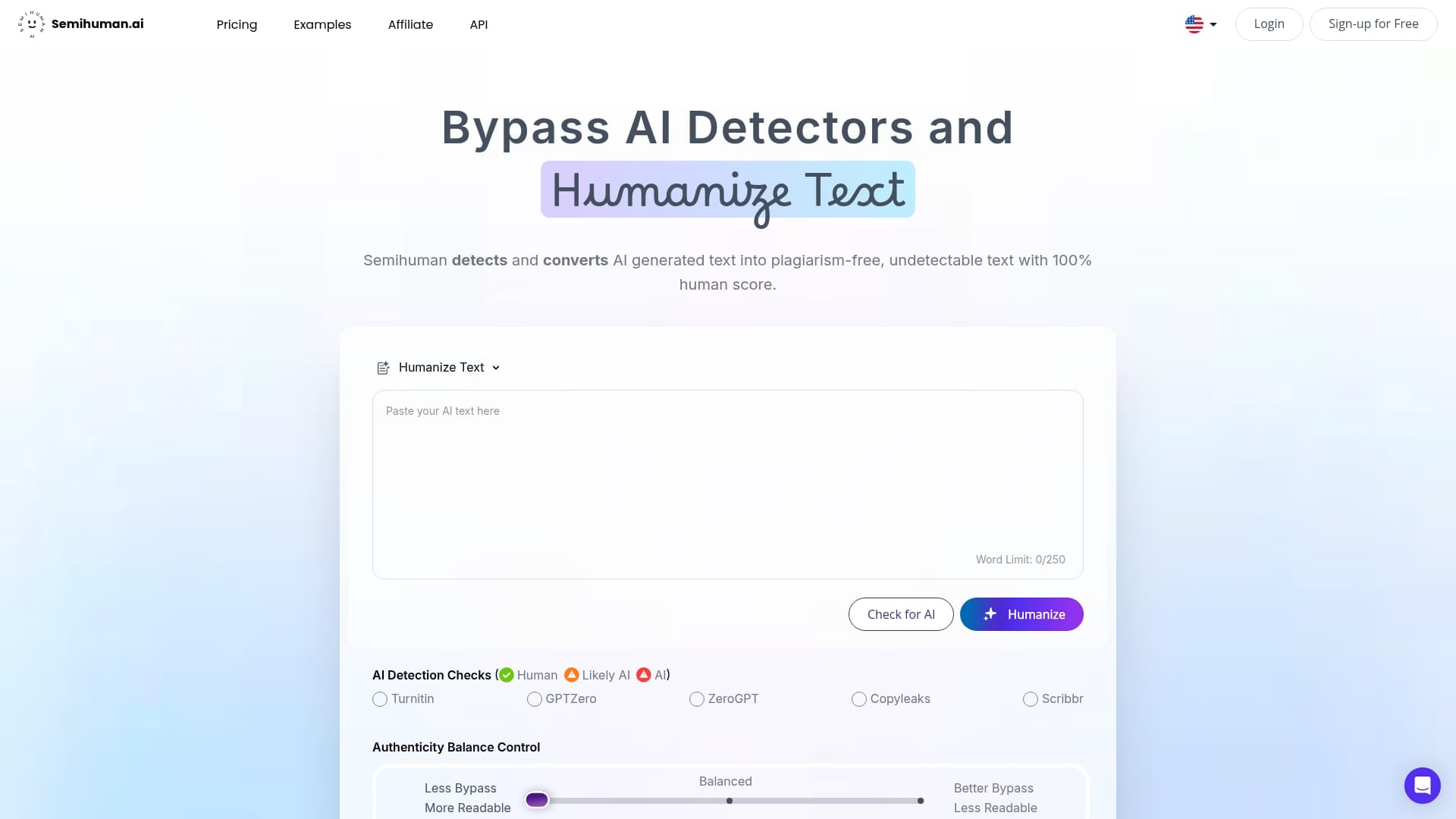
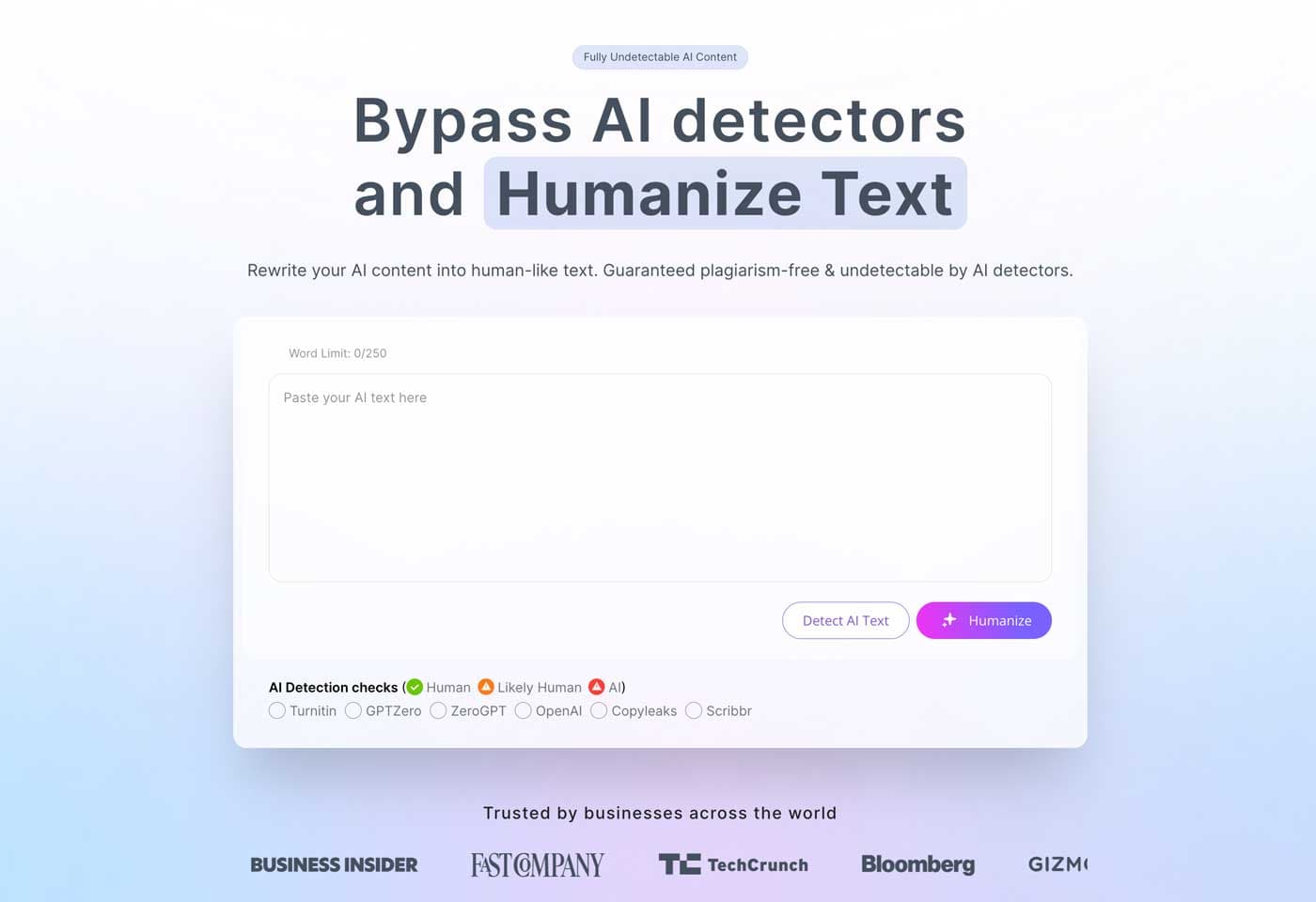
Harness the power of Semihuman.ai to overcome these hurdles. Our AI-powered platform specializes in detecting and humanizing machine-generated text by introducing natural linguistic variability and personalized style. Whether you are a marketer, student, or content creator aiming to bypass AI detection systems while preserving authenticity, Semihuman.ai equips you with advanced tools to restructure your content, improve keyword integration, and add crucial human touches. Act now and ensure your content stands out for its genuine voice and originality. Visit Semihuman.ai today and start crafting undetectable, credible, and engaging content.
AI-generated content often exhibits unnatural consistency in language, repetitive sentence structures, overly formal tone, generic phrasing, and a lack of personal anecdotes. These attributes can trigger AI detection tools.
To humanize AI-generated text, you can introduce variability in sentence structure, add personal insights or anecdotes, intentionally incorporate minor grammatical errors, mimic more conversational styles, and adapt the tone to fit specific contexts.
Key indicators include unnatural language consistency, overly sophisticated vocabulary choices, structural uniformity in writing, generic presentations of information, and overly perfect grammar, which can all lead to content being flagged as AI-generated.
AI detection tools utilize various methods such as perplexity analysis, burstiness evaluation, statistical language modeling, contextual coherence tracking, and machine learning classification to assess content authenticity and determine its origins.


Start
Humanizing
for Free!
Humanize