
Loading...

Writing content that feels genuinely human is a constant challenge, especially when you need to satisfy both readers and search engines. You want your articles to flow naturally and showcase your unique voice, but finding the right mix of structure, productivity, and authenticity can feel overwhelming.
The good news is that there are proven techniques to help you organize your thoughts, manage your writing sessions, and refine every draft for maximum impact. From outlining strategies that keep your ideas clear to using AI assistance without losing your personal style, these actionable steps will transform your workflow and results.
Get ready to discover practical methods you can use in your next project. Each strategy is designed to move you closer to writing content that not only performs well but also stands out as original and truly yours.
| Takeaway | Explanation |
|---|---|
| 1. Outline Your Writing First | Creating a structured outline helps organize thoughts and maintain logical flow, making the drafting process smoother and more efficient. |
| 2. Utilize Short Writing Sessions | Focused writing blocks with timers encourage productivity and prevent burnout, enhancing writing consistency and output quality. |
| 3. Rewrite AI Text for Authenticity | Transforming AI-generated content into your own voice adds personality, making it more relatable and engaging for readers. |
| 4. Integrate Keywords Naturally | Seamlessly incorporating keywords into your content boosts SEO without compromising readability or authenticity for your audience. |
| 5. Use Detection Tools for Quality Control | Running your content through AI detection tools helps identify areas needing refinement, ensuring it reads authentically before publishing. |
An outline is your writing roadmap. Before you draft a single sentence, spend time structuring your ideas on paper or digitally. This upfront investment saves you countless hours of revision and confusion later.
Why does outlining matter so much? Creating a well-structured outline ensures logical progression throughout your content, prevents scattered thoughts, and keeps your argument aligned with supporting evidence. Think of it as building the skeleton before adding flesh to your work.
When you outline first, several benefits emerge immediately:
For freelancers creating content for clients, an outline transforms your process entirely. You can share it with clients for approval before investing time in full writing. This prevents costly rewrites and ensures alignment with expectations from the start.
Your outline doesn't need to be fancy. Numbered points, bullet lists, or even simple hierarchical structures work perfectly. The goal is capturing the sequence of your ideas and the evidence supporting each point.
Consider the structure of your outline carefully. Group related concepts together. Arrange them in an order that builds naturally from introduction through conclusion. Ask yourself: Does each section support my main message? Will readers understand how one idea connects to the next?
A clear outline functions as the scaffold for your entire piece, ensuring your writing stays focused and your readers stay engaged.
Many writers skip this step because it feels like extra work. But authentic, well-organized content—the kind that performs well for SEO and reads naturally—almost always begins with solid planning. Your outline becomes invisible to readers, but they'll feel its presence in how smoothly your ideas flow.
Pro tip: Create your outline using the same structure your final piece will follow, then fill in supporting details and examples under each section—this transforms outlining into a mini-draft that accelerates your actual writing.
Marathon writing sessions drain your energy and produce mediocre work. Instead, embrace short, focused writing blocks that keep you energized and your mind sharp.
Your brain performs better in bursts. When you work in time-blocked sessions, you create urgency that eliminates distractions and builds momentum naturally. A consistent writing schedule tailored to when you have the most energy helps maintain a stronger voice and reduces procrastination.
Why does this approach work? Time pressure forces you to focus on what matters most. You stop overthinking and start producing. Without a timer, you drift, second-guess your work, and lose direction.
Consider how Pomodoro techniques and time management transform your productivity. These methods break work into manageable chunks rather than overwhelming sprints.
Here's what makes writing sessions effective:
Freelance writers and content creators especially benefit from this structure. When you work with clients, consistent output proves reliability. When you work for yourself, sessions prevent procrastination and keep momentum alive.
Start small. Try a single 30-minute writing session tomorrow. Notice how much you accomplish when distractions are blocked and time is limited. Then add another session the next day.
The key difference between writers who finish projects and those who don't often comes down to one thing: sustainable consistency. Short, predictable sessions produce more real progress than infrequent marathon days that leave you burned out.
Your writing routine becomes invisible to readers, but they'll definitely notice the difference in your output quality and speed.
Track your sessions too. After a week, you'll see patterns. Maybe you write better in the morning. Maybe you need more breaks. Use this data to personalize your approach.
Pro tip: Set your timer before opening any research materials or references—this forces you to write from memory first, which produces more authentic, naturally flowing prose that reads as genuinely human-written.
AI is a tool, not a replacement. The most effective writers use AI for scaffolding and support while maintaining complete control over their final work and unique perspective.
Think of AI as your research assistant or brainstorming partner, not your ghostwriter. You decide what to keep, what to discard, and what to reshape. This distinction is crucial for authenticity and originality.
Where AI shines in your workflow:
Here's what AI should not do. Don't let it generate finished paragraphs that you publish directly. Don't use it to replace your critical thinking or unique insights. The goal is speed and efficiency, not abdication of responsibility.
When you use AI responsibly, you maintain intellectual ownership of your work. This means verifying all AI-generated content, fact-checking claims, and ensuring the output aligns with your actual position and expertise. Your credibility depends on this.
Consider maintaining your authentic tone as you integrate AI assistance into your process. Your readers know your voice. They came for your perspective, not a generic AI summary.
The key balance looks like this: Use AI to handle busywork and generate raw material. Keep yourself in charge of analysis, argument development, and final execution. This blend produces both speed and authenticity.
Freelance writers who embrace this approach often report faster turnaround times without sacrificing quality. Content that feels genuinely human-written actually engages better with readers and performs better for SEO because it maintains personality and unique perspective.
AI assistance combined with your personal oversight creates content that reads naturally while arriving on deadline.
Transparency matters too. If you use AI during your process, own it internally. Don't pretend work is entirely human-generated when it involved AI assistance, especially in academic contexts. The ethical approach strengthens your credibility.
Start by using AI only for the tasks that genuinely waste your time. Leave the meaningful creative work to yourself. This creates natural boundaries that protect your voice while improving your productivity.
Pro tip: After AI generates initial content, rewrite it completely from memory rather than editing the AI version—this forces your voice to emerge naturally and creates text that readers perceive as authentically human.
AI-generated text often reads like AI-generated text. Readers sense the difference immediately, even if they can't name it. Your job is transforming that mechanical prose into something that sounds like an actual human wrote it.
The difference comes down to personality and specificity. AI defaults to generic phrasing, hedging language, and formal structures that feel stiff. Real writing has character, takes positions, and includes unexpected details.
When you rewrite AI output, you're not just editing. You're reconstructing the entire piece in your authentic voice. This means starting fresh rather than polishing the original.
Here's what makes rewriting effective:
Consider techniques for humanizing AI text to understand the mechanics of authentic rewriting. The goal is making readers forget an AI tool ever touched the content.
When you rewrite, ask yourself these questions: Does this sound like me? Would I actually say this to a friend? Is there personality here, or just information? If the answer is no, keep rewriting.
The most successful rewriters don't try to save AI-generated sentences. They use AI output as a research summary or brainstorm, then write completely new prose from that foundation. This approach produces the most authentic results.
For freelancers and content creators, this rewriting step is what clients actually pay for. Raw AI output is cheap and plentiful. Your value comes from making it human and making it better.
Rewriting AI text isn't editing. It's translation from machine language into the way real people actually communicate.
Start noticing which phrases make you sound like yourself. Is it humor? Bluntness? Questions posed to readers? Metaphors? Once you identify your voice markers, deliberately weave them into every rewrite.
Time this carefully too. Don't rush rewriting. Set it aside for a few hours, then come back fresh. You'll spot the AI-sounding parts immediately when you're not mentally tired.
Pro tip: Read your rewritten text aloud before publishing—your ear catches awkward phrasing and robotic rhythm that your eyes miss, ensuring it truly sounds human-written.
Keyword stuffing kills authenticity. Search engines punish it, and readers hate it. The modern approach involves weaving keywords naturally into your content so they disappear into the narrative.
Think of keywords as threads, not anchors. They should strengthen your fabric without showing. Your reader should never notice you're optimizing for search.
Why does seamless integration matter? Strategic keyword placement enhances both human readability and algorithmic understanding simultaneously. When keywords feel forced, your content sounds robotic and inauthentic. When they feel natural, search engines rank you higher while readers stay engaged.
Here's where keywords should live in your content:
The difference between keyword integration and keyword stuffing comes down to intentionality. Ask yourself: Would this phrase appear here if I wasn't thinking about SEO? If the answer is no, remove it.
When selecting keywords aligned with your core concepts, choose terms your target audience actually searches for and actually uses in conversation. Research shows that clear, specific keywords aligned with your topic enhance discoverability without sacrificing readability.
Freelance writers often struggle here because they feel caught between optimization and authenticity. The truth is they're not opposed. Authentic content about your topic naturally includes the words people search for.
Start by identifying your primary keyword and 3-5 related variations. Then weave them throughout your piece where they fit logically. If you're forcing insertions, your readers will sense it.
Keywords should strengthen your content, not strangle it. They disappear when integrated properly.
Consider context and relevance. A keyword in the wrong spot confuses both readers and search engines. Placement matters less than appropriateness. A keyword mentioning "content marketing strategies" belongs in a paragraph about strategy, not squeezed awkwardly into a sentence about unrelated topics.
Test your keyword integration by reading your content aloud. Do keywords feel welcome, or do they interrupt your flow? Your ear catches awkwardness your eyes miss.
Pro tip: Write your first draft ignoring keywords entirely, then strategically add them only where they fit naturally—this prevents keyword anxiety from poisoning your authentic voice while ensuring proper SEO coverage.
Detection tools are your quality control checkpoint. Before publishing, run your content through these systems to identify areas that read as machine-generated and need refinement.
Why does this matter? AI detection tools flag patterns that human readers might subconsciously notice without realizing why the content feels off. These tools help you catch what your own eyes miss after staring at your work for hours.
There are two types of detection to monitor. First, tools that check for AI-generated patterns like ChatGPT, Claude, or other large language models. Second, tools that evaluate overall authenticity and originality. Both provide different insights.
Here's how to use detection results effectively:
When understanding why content detection matters, you realize these tools aren't meant to scare you. They're meant to help you improve. High scores just mean your content reads authentically.
For freelancers and content creators, detection tools solve a critical problem. Clients increasingly use these tools to verify authenticity. Running your own checks beforehand means no surprises and stronger client relationships.
The key is treating detection as part of your editing workflow. If a tool flags 40% AI probability, that's actionable feedback. Spend 15 minutes rewriting those sections with more personality, then test again.
Different tools use different algorithms, so results vary slightly. If one tool flags your content and another doesn't, trust the higher score and adjust accordingly. Conservative revision prevents issues.
Detection tools aren't judges. They're mirrors showing you what readers might sense about your content.
Start with popular tools like Turnitin, GPTZero, or Copyleaks since many clients use these specifically. Familiarize yourself with how each one works and what triggers their alerts. Understanding their patterns helps you write around them naturally.
Make this a final step before submission. Your outline was solid, your timer sessions were productive, and your rewriting added personality. Now detection tools confirm everything worked.
Pro tip: Use detection tools not when you're finished, but when you're 80% done—this gives you time to revise and retest before your deadline, ensuring your final submission passes every check.
Templates eliminate decision fatigue. When you start with a proven structure, you skip the formatting battles and dive straight into creating authentic content. This saves time and maintains consistency across all your work.
Think of templates as structural scaffolding. They handle layout, spacing, and organizational logic so you focus entirely on what matters: your ideas and voice. You're not reinventing the wheel with every project.
Why templates work so well comes down to psychology and practicality. Professionally formatted templates ensure consistency in structure while reducing preparation time significantly. When writers start from scratch, they waste energy on formatting decisions that have nothing to do with content quality.
Here's what solid templates provide:
For freelancers managing multiple clients, templates become profit generators. You create the template once, then use it for dozens of similar projects. Each piece maintains consistency while you work faster.
Start by identifying your most common content types. Do you write blog posts, research papers, email sequences, or case studies regularly? Create one master template for each type. Using structured layout approaches ensures your templates support rather than constrain authentic writing.
Customize templates to your voice and workflow. Include sections that matter to you. Skip sections you never use. The best template is one that actually fits how you work, not a generic example you fight against.
Different writing contexts need different templates. Academic papers demand citations and formal structure. Blog posts need hooks, lists, and clear subheadings. Email sequences need progressive calls to action. Design templates that match these specific needs.
Templates are your writing insurance policy. They guarantee consistency and speed without sacrificing authenticity or quality.
When you use templates consistently, your writing improves because you can focus on craft rather than logistics. Your readers notice better organization and clearer structure. Search engines prefer well-organized content with consistent formatting.
Store templates in accessible places. Google Docs, Word, Notion, or whatever tool you use regularly. Make them easy to duplicate and modify. The easier templates are to access, the more likely you'll actually use them.
Pro tip: Create your template while writing your best recent piece, capturing the structure and flow that made it successful—this ensures your template reflects your actual strongest writing patterns rather than generic best practices.
Below is a table summarizing the key insights and strategies discussed in the article focusing on enhancing writing processes effectively.
| Strategy | Description | Key Benefits |
|---|---|---|
| Prioritize Clear Outlining | Establish a roadmap for structuring ideas before drafting content. | Ensures logical progression, facilitates revisions, and prevents scattered thoughts. |
| Set Achievable Writing Sessions | Implement focused, time-blocked writing periods to maximize productivity. | Reduces energy drain, enhances focus, and achieves sustainable progress. |
| Leverage AI Assistance | Use AI tools as aids for research and brainstorming, not as replacements for personal input. | Accelerates production while preserving authenticity and originality. |
| Rewrite AI-Generated Text | Transform generic AI-produced content into more natural and engaging prose. | Improves reader engagement and ensures the content aligns with human communication norms. |
| Seamlessly Integrate Keywords | Integrate targeted keywords into content naturally for search relevance and readability. | Enhances SEO performance without distorting content quality. |
| Use Detection Tools | Utilize AI detection software to refine machine-generated text and maintain authenticity. | Identifies improvements, boosts credibility, and ensures originality. |
| Create Writing Templates | Design structural templates for consistent and efficient content creation. | Saves time, ensures format uniformity, and enhances overall workflow productivity. |
The challenge of creating authentic content that seamlessly integrates AI assistance without losing your unique voice is real. As the article highlights, balancing AI-generated drafts with natural rewriting and strategic keyword placement is essential for maintaining authenticity and improving SEO. If you struggle with rewriting AI text to sound human, managing keyword integration, or passing AI detection tools like Turnitin or GPTZero, you are not alone.
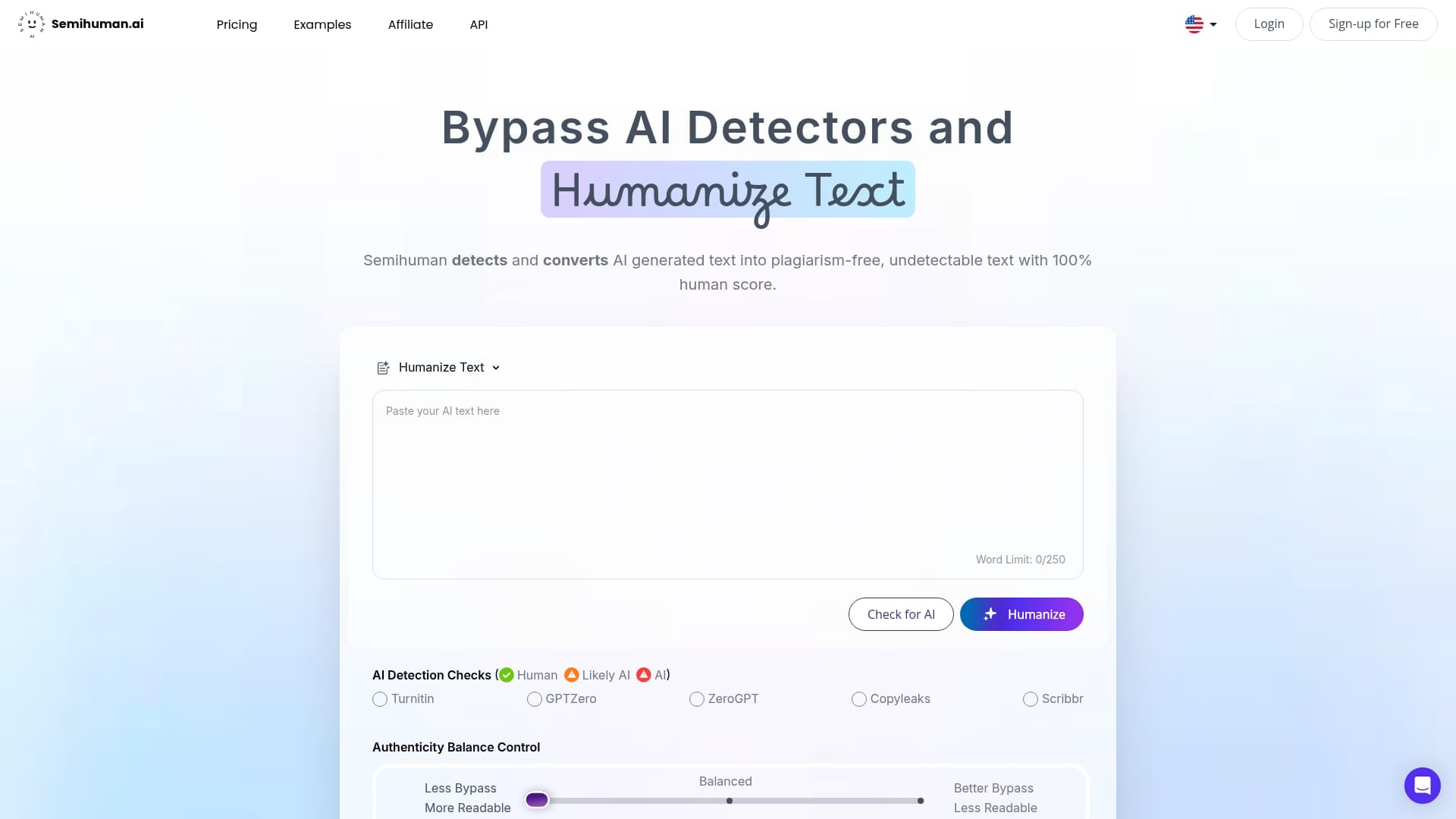
Semihuman.ai offers a specialized solution designed to transform your AI-generated drafts into genuine, human-like content that resonates with readers and ranks well. By leveraging features such as intelligent text restructuring, keyword integration, and advanced AI detection evasion, this platform empowers creators, marketers, and students to produce content that stays true to their voice while meeting today's demanding SEO and authenticity standards. Stop spending hours rewriting and start working smarter with Semihuman.ai. Explore how our AI-human content creation technology can elevate your writing workflow now at https://semihuman.ai.
Creating a clear outline before writing is essential for enhancing productivity. Spend time organizing your ideas, which will help streamline your writing process and reduce revision time by about 50%.
The Pomodoro technique involves writing in focused bursts of 25 to 50 minutes followed by short breaks. Implementing this method can increase your writing output significantly and enhance your focus during sessions.
Use AI tools for brainstorming, outlining, or drafting rough sections while maintaining control over the final piece. Ensure your personal style and insights shape the content by rewriting AI-generated text in your own voice.
Focus on weaving keywords naturally into your content to enhance readability and SEO. Aim to incorporate your primary keyword and a few variations in the title, first paragraph, and subheadings without sounding forced.
Detection tools help you identify areas of your content that may read as machine-generated. Run your draft through these tools to catch potential issues and improve the authenticity of your writing.
Templates provide a structured format for your writing, saving time and ensuring consistency across projects. Create templates for your most common content types to accelerate your writing process and enhance overall quality.




Start
Humanizing
for Free!
Humanize