
Loading...

Many marketers mistakenly believe visual storytelling is just about adding images to posts or following fleeting social media fads. In reality, it's a strategic communication framework that blends narrative, emotion, and visual elements to create memorable brand experiences. In 2026, visual storytelling has evolved beyond static graphics into a dynamic ecosystem where AI-powered tools, interactive formats, and authentic human connection converge. Understanding these emerging trends isn't optional for content creators and marketers who want to stand out in crowded digital spaces. This guide reveals the most impactful visual storytelling trends shaping 2026 and shows you how to apply them to enhance engagement, build trust, and create content that resonates deeply with your audience.
| Point | Details |
|---|---|
| AI enhances creativity | Artificial intelligence tools amplify visual storytelling potential while requiring careful ethical integration to preserve authenticity. |
| Multi-format drives engagement | Interactive visuals, short-form videos, and immersive experiences generate significantly higher audience interaction across platforms. |
| Authenticity builds trust | Personalized, human-centered narratives create stronger emotional connections and brand loyalty than generic content. |
| Strategic measurement matters | Tracking engagement rates, conversions, and sentiment helps refine visual storytelling tactics for continuous improvement. |
Visual storytelling represents far more than decorative images accompanying text. It's a strategic tool combining imagery and narrative to influence how audiences perceive, remember, and act on your message. This approach leverages human psychology: our brains process visuals 60,000 times faster than text, and we retain 80% of what we see compared to just 20% of what we read.
The evolution from static infographics to today's dynamic content landscape marks a fundamental shift. In 2026, visual storytelling encompasses short-form video, augmented reality overlays, AI-generated imagery, interactive data visualizations, and personalized visual narratives that adapt to individual viewer preferences. This transformation stems from technological advances, changing consumer expectations, and platform algorithm updates favoring rich media formats.
What makes 2026 distinctly different is the convergence of three forces: AI integration that democratizes sophisticated visual creation, audience demand for genuine authenticity over polished perfection, and multi-channel distribution requiring format flexibility. Brands can no longer rely on a single hero image or generic stock photo. Success demands strategic visual ecosystems that tell cohesive stories across touchpoints while maintaining human warmth.
Key components driving effective visual storytelling in 2026 include:
This foundation sets the stage for exploring specific trends that separate leading content creators from those struggling to capture attention in saturated digital environments.
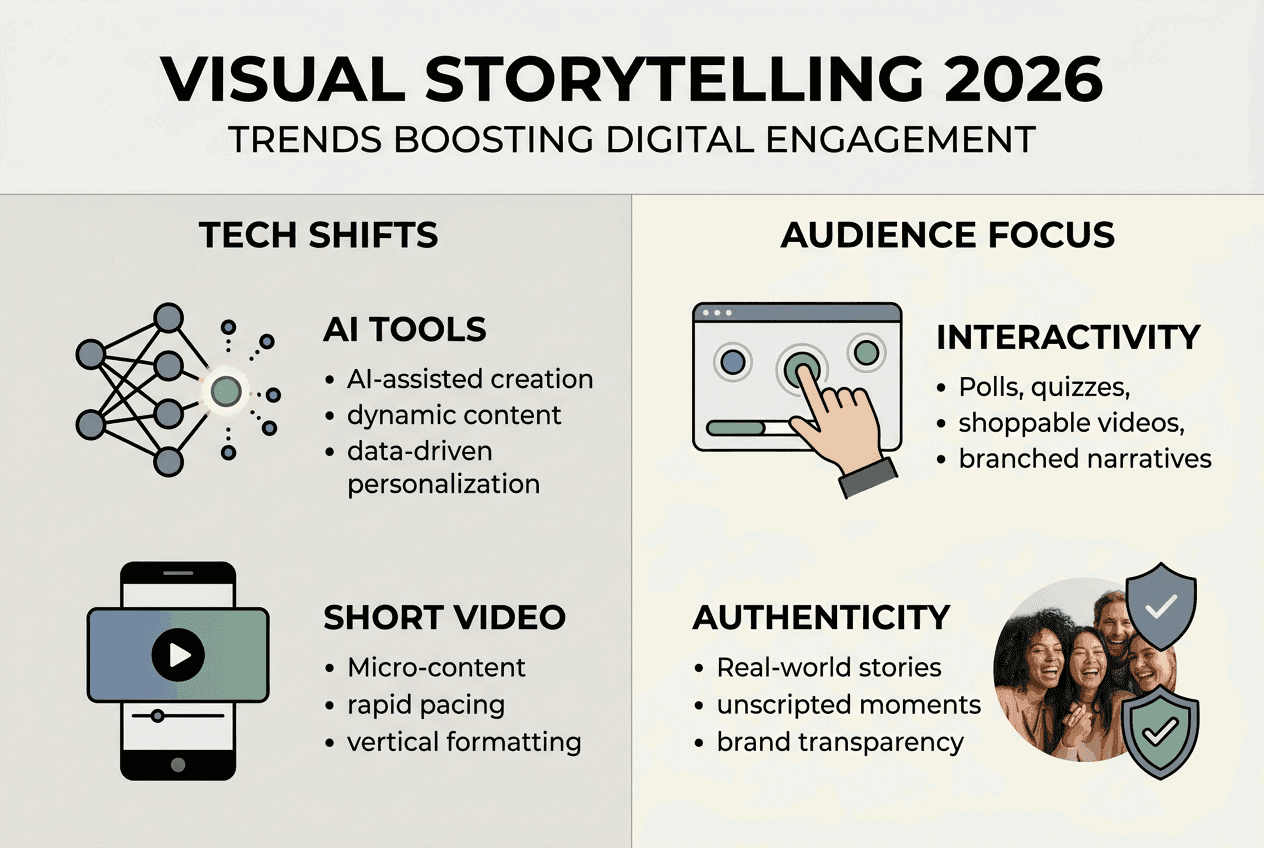
Five dominant trends define how successful marketers and creators approach visual storytelling in 2026. Each represents both opportunity and challenge, requiring thoughtful implementation rather than blind adoption.
The shift from traditional approaches to 2026 methodologies becomes clear when examining key differences:
| Aspect | Traditional Visuals | 2026 Trends | | --- | --- | | Creation process | Manual design by specialists | AI-assisted with human direction | | Audience interaction | Passive viewing | Active participation and choice | | Personalization | One-size-fits-all | Customized to viewer segments | | Format flexibility | Static images, long videos | Short clips, interactive elements | | Authenticity approach | Polished perfection | Genuine, relatable imperfection |
Pro Tip: When integrating AI tools into your visual storytelling workflow, establish clear brand guidelines that define your authentic voice and visual identity first. Use AI to amplify your unique perspective rather than letting algorithms homogenize your content into generic outputs that lack personality.
The challenge lies in balancing technology with authenticity to maintain trust. Audiences in 2026 possess sophisticated BS detectors, quickly identifying content that feels manufactured or manipulative. Research shows that authentic, humanized content generates 3.2 times higher engagement than overly polished corporate messaging.

Consider how AI enhances the creative process by handling repetitive tasks like background removal, color correction, or format resizing. This frees creators to focus energy on strategic decisions about narrative arc, emotional tone, and authentic connection points. The technology serves as creative assistant, not creative director.
Successful implementation requires understanding that these trends work synergistically rather than in isolation. A short-form video might incorporate AI-generated B-roll footage, interactive decision points, personalized opening frames based on viewer location, and AR elements viewers can activate. The magic happens when multiple trends combine to create experiences impossible just two years ago.
Knowing trends matters little without actionable implementation frameworks. These strategies translate awareness into results for content creators and marketers ready to elevate their visual storytelling.
Start with a structured approach to visual story development:
Short-form video deserves special attention given its algorithmic favoritism across platforms. Successful creators in 2026 master the hook-value-payoff structure within 60 seconds: grab attention in the first three seconds, deliver genuine value or entertainment in the middle, and end with a clear payoff that satisfies viewer investment. This compressed storytelling demands ruthless editing and crystal-clear messaging.
Interactive features transform viewers into participants. Simple tactics like Instagram Story polls asking audiences to choose between two visual directions, clickable product tags in lifestyle imagery, or quiz elements embedded in educational videos boost engagement metrics while providing valuable preference data. The interaction itself becomes part of the story, making audiences feel heard and valued.
Pro Tip: Reserve AI automation for technical tasks like resizing, captioning, or generating multiple format versions of core content. Keep strategic decisions about emotional tone, brand voice, and narrative arc firmly in human hands to maintain the authentic connection that builds lasting audience relationships.
Common pitfalls sabotage even well-intentioned visual storytelling efforts. Over-reliance on AI without human oversight produces technically competent but soulless content that fails to differentiate your brand. Ignoring platform-specific best practices wastes creative effort on formats audiences won't engage with on particular channels. Prioritizing aesthetic perfection over authentic connection alienates audiences craving genuine human moments.
Strategic visual use can increase marketing engagement by 94% and improve information retention by 65% compared to text-only approaches. The key lies in intentional application rather than random visual decoration.
Consider workflow integration as well. Successful teams in 2026 build visual storytelling into their content calendars from the start rather than treating it as an afterthought. They maintain swipe files of effective examples, test new formats quarterly, and allocate budget for both tools and training. Content marketing strategies that prioritize authentic storytelling consistently outperform generic promotional approaches.
Look to innovative video concepts for inspiration on breaking through creative plateaus. Sometimes the most effective visual stories come from unexpected angles or unconventional formats that competitors haven't explored.
Creating compelling visual stories means nothing without systems to measure impact and refine approaches based on evidence. Smart marketers in 2026 track specific indicators that reveal whether their visual storytelling actually moves business needles.
Essential KPIs for visual storytelling performance include:
Typical performance benchmarks versus 2026 targets illustrate the opportunity:
| Metric | Industry Average | 2026 Target | | --- | --- | | Video completion rate | 32% | 55%+ | | Social engagement rate | 1.8% | 4.2%+ | | Content share rate | 2.1% | 6.5%+ | | Click-through rate | 2.3% | 5.8%+ |
These targets reflect what top-performing visual storytellers achieve through strategic implementation of 2026 trends rather than settling for average results.
Continuous improvement requires systematic experimentation. A/B testing different visual approaches on the same narrative reveals what resonates with your specific audience. Test thumbnail images for videos, color palettes for graphics, video lengths, interactive element placement, and personalization variables. Let data guide creative evolution rather than relying solely on subjective preferences.
Audience feedback provides qualitative insights quantitative metrics miss. Direct questions in comments, survey responses, and focus group reactions reveal why certain visual stories connect while others fall flat. This human intelligence complements algorithmic data to paint a complete performance picture.
Platform analytics tools have become increasingly sophisticated, offering granular insights into viewer behavior. YouTube Analytics shows exact moments viewers drop off in videos. Instagram Insights reveals which story frames generate the most engagement. LinkedIn analytics indicates how visual posts perform compared to text-only updates. Master these native tools before investing in expensive third-party analytics platforms.
Data-driven content strategies that balance analytical rigor with creative intuition consistently outperform approaches relying on either extreme alone. The sweet spot combines measurable objectives with authentic human storytelling.
Staying current demands ongoing learning as platforms introduce new features, audience preferences shift, and competitive landscapes evolve. Allocate time monthly to explore emerging visual formats, test new tools, and analyze competitor innovations. The visual storytelling landscape of 2027 will differ from 2026 just as dramatically as 2026 differs from 2024.
Iterative refinement separates sustainable success from temporary wins. Use each campaign as a learning opportunity, documenting what worked and what flopped. Build institutional knowledge that compounds over time rather than starting from zero with each new project.
Implementing these visual storytelling trends requires tools that enhance your creative capabilities while maintaining the authentic human voice audiences crave. Semihuman AI offers solutions specifically designed for content creators and marketers navigating the balance between technological efficiency and genuine connection.
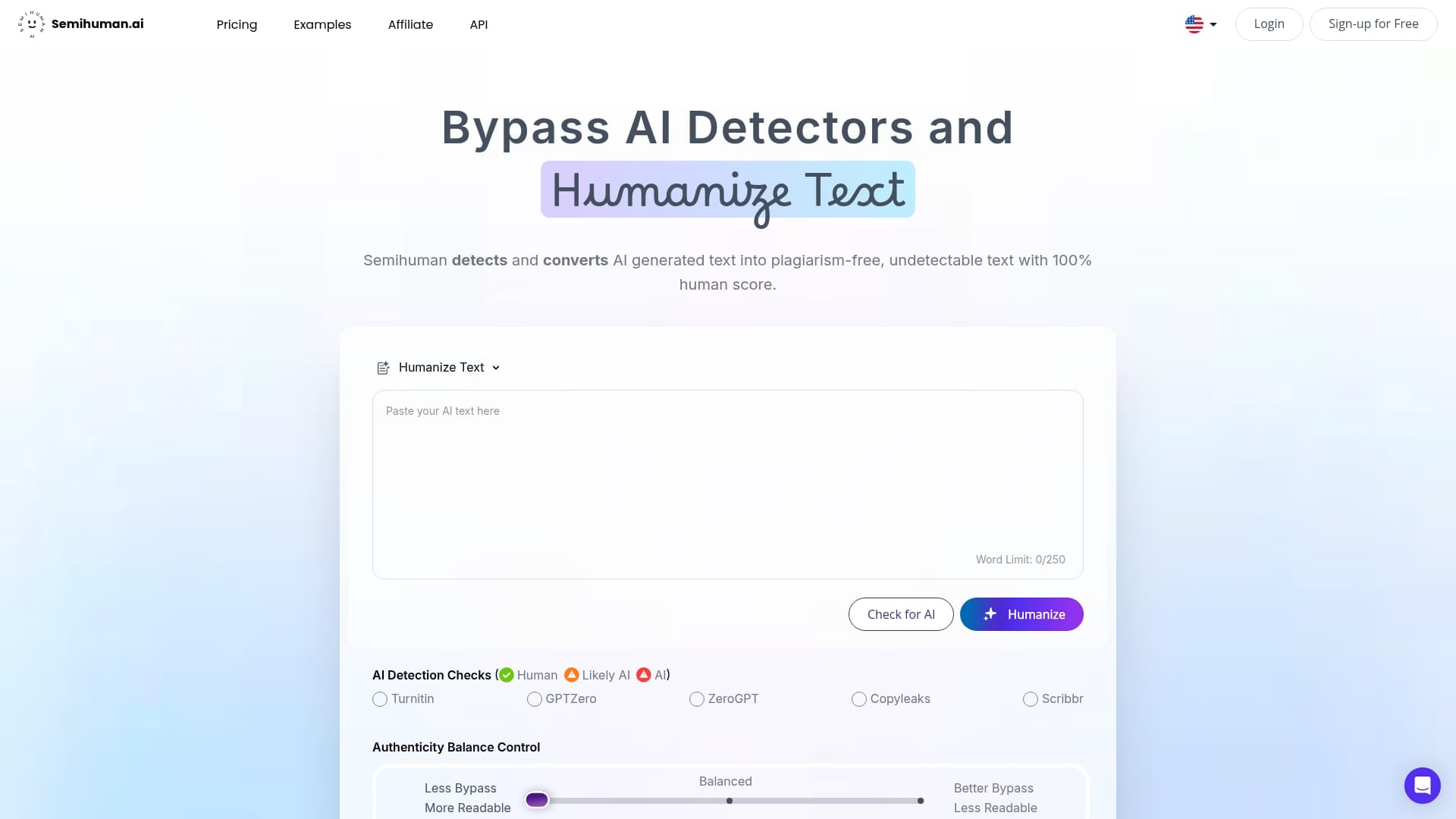
Our SEO text generator helps you craft optimized narratives that complement your visual content, ensuring search engines and humans both appreciate your stories. When AI assists with your written content, our tools to bypass AI detectors ensure the final output reads naturally and authentically, maintaining the human touch essential for building audience trust.
Explore how Semihuman AI supports your entire content workflow, from ideation through optimization, helping you implement 2026 visual storytelling trends without sacrificing the authenticity that makes your brand unique.
The five core trends reshaping visual storytelling include AI-powered creation tools, interactive content formats, short-form vertical video dominance, hyper-personalized narratives, and immersive AR/VR experiences. These trends work together to create more engaging, authentic connections between brands and audiences. Success comes from strategic integration rather than chasing every new feature.
Use AI for technical tasks like editing, resizing, and generating variations while keeping strategic decisions about tone, narrative, and emotional resonance in human hands. Establish clear brand guidelines before implementing AI tools to ensure outputs align with your authentic voice. The technology should amplify your unique perspective, not replace it. Balancing tech and authenticity requires intentional frameworks that preserve human judgment at critical decision points.
Focus on engagement rates, video completion percentages, conversion metrics, share rates, and brand sentiment analysis to measure visual storytelling impact. Platform-specific analytics reveal which visual elements drive results and which need refinement. Combine quantitative data with qualitative audience feedback for comprehensive performance understanding. Digital marketing strategies that prioritize measurable outcomes consistently outperform those relying on vanity metrics alone.
Prioritize platforms where your target audience actively engages rather than spreading resources across every channel. Instagram, TikTok, and YouTube remain dominant for visual content, but LinkedIn has emerged as surprisingly effective for B2B visual storytelling. Test platform performance with your specific audience before committing significant production resources. Platform algorithms change frequently, so maintain flexibility in your distribution strategy.
Review performance metrics monthly and conduct comprehensive strategy assessments quarterly to stay responsive to platform changes and audience preference shifts. Annual overhauls risk missing important mid-year trends, while constant pivoting prevents building momentum. The sweet spot balances consistency in core brand identity with tactical flexibility in format and distribution approaches.


Start
Humanizing
for Free!
Humanize