
Loading...

Most websites fail to satisfy over 60 percent of user searches because they overlook the real reason people visit in the first place. User intent shapes every click, scroll, and search, quietly steering which content wins attention and which gets ignored. By understanding the true motivation behind every digital action, marketers can build content that actually connects and converts, not just fills a page.
| Point | Details |
|---|---|
| Understanding User Intent | Grasp the underlying motivations of users when they engage with content to craft targeted experiences. |
| Types of User Intent | Recognize the three primary types of user intent: informational, navigational, and transactional, to tailor content strategies accordingly. |
| Impact on SEO | Prioritize user intent to enhance SEO performance, leading to improved search rankings and user engagement metrics. |
| Common Mistakes | Avoid pitfalls such as keyword stuffing and generic content, which can misalign with user intent and reduce effectiveness. |
User intent represents the underlying motivation driving a person's online search or content consumption. At its core, user intent is about understanding precisely why someone is seeking specific information, engaging with content, or taking a particular digital action. According to Wikipedia, intention mining involves determining a user's intention by analyzing their behavioral interactions within digital systems, a research area that has been evolving since 2002.
The concept of user intent goes beyond simple keyword matching or surface-level engagement. It delves into the psychological and practical needs that prompt users to seek out specific content. Uses and Gratifications Theory provides fascinating insights, suggesting that individuals select media and content to satisfy complex personal needs such as:
Effective content strategy requires moving past traditional metrics like page views or time on site. Instead, successful creators must decode the nuanced motivations behind user searches. This means understanding whether a user wants to learn, purchase, compare, or solve a specific problem. By mapping content directly to these underlying intentions, marketers and content creators can craft more resonant, targeted experiences that genuinely meet user expectations.
Practically speaking, identifying user intent involves analyzing search queries, understanding audience personas, and tracking user behavior across digital platforms. Advanced techniques like semantic analysis and machine learning algorithms can help uncover deeper patterns in user motivation, enabling more precise content alignment. The ultimate goal? Creating content that doesn't just attract clicks, but genuinely satisfies the user's core informational or emotional need.

User intent is a multifaceted concept with distinct categories that shape how individuals interact with digital content. Intention mining reveals three primary types of user intent: informational, navigational, and transactional, each representing unique user objectives within digital ecosystems.
Let's break down these critical user intent types:
Here's a summary comparing the three primary types of user intent:
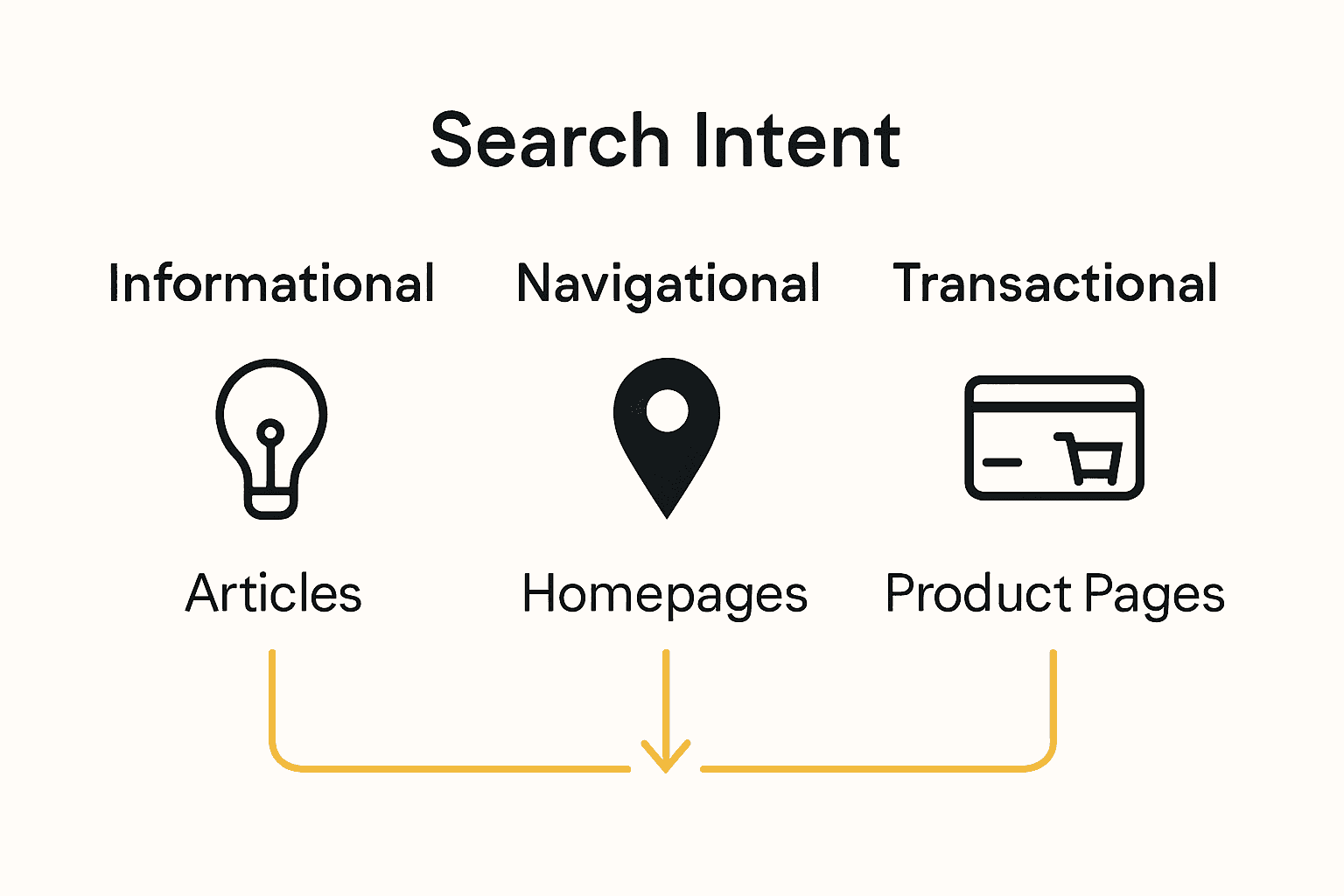
| User Intent Type | Main Objective | Typical User Actions |
|---|---|---|
| Informational | Seek knowledge or answers | Read articles Watch tutorials |
| Navigational | Locate a specific site/page | Enter brand names Click site links |
| Transactional | Complete a purchase or action | Add to cart Submit forms |
Beyond these technical classifications, Uses and Gratifications Theory provides deeper psychological insights into why users engage with content. This theory suggests that user motivations are complex, ranging from intellectual curiosity to emotional satisfaction. Some key psychological intent drivers include:
Understanding these nuanced intent types allows content creators to craft more targeted, resonant experiences. For instance, an informational article about digital marketing shouldn't read like a sales pitch, just as a transactional page should prioritize clear, action-oriented language. The most effective content strategists learn to recognize subtle shifts in user intent, adapting their approach to match precise user expectations.
Practical application requires sophisticated analysis. Modern content strategists use advanced techniques like behavioral tracking, semantic analysis, and machine learning algorithms to decode intricate user intent patterns. By mapping content precisely to these intent categories, creators can develop more meaningful, engaging digital experiences that genuinely fulfill user needs and expectations.
User intent analysis requires a sophisticated approach that transcends traditional content marketing strategies. Information behavior research reveals that understanding user intent is not about guessing, but systematically tracking how people search for, consume, and interact with content across diverse digital platforms.
Different content channels demand unique intent identification strategies:
Content strategy disciplines emphasize a holistic approach to intent identification. This means integrating insights from information architecture, digital marketing, and technical communication to create a comprehensive understanding of user motivations. The goal is not just to collect data, but to interpret it meaningfully, translating raw metrics into actionable content strategies.
Professional intent tracking goes beyond surface-level analytics. Advanced techniques like machine learning algorithms, semantic analysis, and predictive modeling help creators anticipate user needs before they're explicitly expressed. By developing a nuanced, multi-channel approach to intent identification, content creators can craft experiences that feel almost telepathic in their ability to deliver exactly what users seek.
Search engine optimization fundamentally transforms when content strategists prioritize genuine user intent. C&I Studios emphasizes that understanding user intent is crucial for delivering value and enhancing SEO performance, moving beyond traditional keyword optimization strategies.
The intricate relationship between user intent and engagement can be broken down into key components:
Research from the journal Sustainability highlights how content types emphasizing scarcity and interactivity significantly influence consumer engagement, particularly in digital commerce. This underscores the critical nature of crafting content that not only answers user queries but also creates an interactive, compelling experience.
Advanced SEO strategies now recognize that engagement metrics are direct indicators of content quality. Search algorithms increasingly prioritize content that demonstrates deep user satisfaction, measuring signals like click-through rates, time spent on page, and interaction depth. By developing content that authentically addresses user intent, creators can simultaneously improve search rankings and deliver genuine value. Learn more about the SEO benefits of authentic content in our comprehensive guide.
Content targeting is a delicate art that requires precision and understanding. The International Journal for Multidisciplinary Research highlights the critical importance of considering various search intents - informational, navigational, and transactional - to prevent content misalignment and improve overall effectiveness.
Common mistakes that derail user intent strategy include:
Research from the International Journal of Computer Science and Mathematical Theory emphasizes the need for thorough keyword research, high-quality content creation, and continuous monitoring to avoid targeting mistakes. The most successful content strategies recognize that user intent is dynamic and requires constant refinement.
Professional content creators must develop a nuanced approach that goes beyond surface-level metrics. This means diving deep into audience research, understanding psychological triggers, and creating content that genuinely serves user needs. Discover more about crafting authentic content in our comprehensive guide to SEO benefits that truly resonates with your target audience.
Understanding user intent is essential in creating content that truly connects and converts. This article highlights the challenges of aligning your messages with complex user motivations like informational, transactional, and navigational intents. The struggle to craft content that is both SEO-friendly and feels genuinely human can leave you frustrated. That is where Semihuman.ai can transform your strategy. Our AI-powered platform specializes in turning AI-generated text into natural, authentic content that resonates emotionally and outperforms in search rankings.
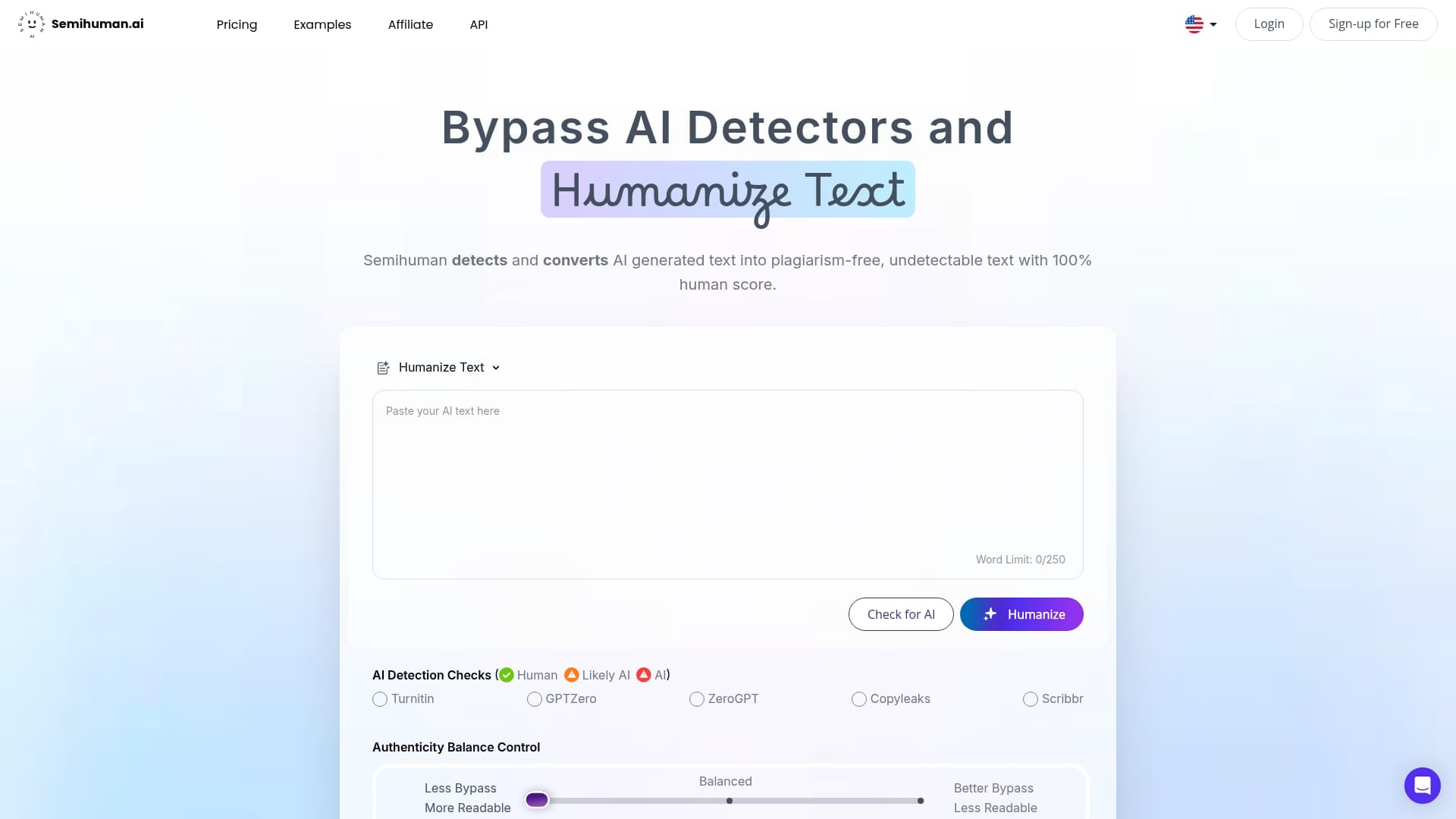
Take control of your content strategy now by using proven tools designed to enhance authenticity, integrate keywords naturally, and bypass AI detection systems. Whether you're writing for marketing, academic needs, or SEO optimization, discover how Semihuman.ai helps you meet user intent precisely and elevate engagement. Don't just write content. Create experiences your audience will trust and value today. Visit Semihuman.ai to get started immediately.
User intent in content strategy refers to the underlying motivation driving a user's online search or engagement with content. It aims to understand why a user seeks specific information or takes particular actions online.
The three primary types of user intent are informational (seeking knowledge or answers), navigational (locating a specific website or page), and transactional (completing a purchase or action).
To identify user intent, analyze engagement metrics on social media, evaluate keyword context in search engine results, and monitor user behavior through website analytics. Each platform may require tailored strategies for effective identification.
Understanding user intent is crucial for SEO because it aligns content with user expectations, improves search rankings, enhances user experience, and increases conversion potential by delivering content that meets users' actual needs.

Start
Humanizing
for Free!
Humanize