
Loading...

TL;DR:
- Modern search rankings depend on layered AI, behavioral signals, and semantic understanding rather than keyword repetition alone.
- Content passes through crawling, indexing, retrieval, and ranking stages, with technical performance issues often blocking effective ranking.
If you still think ranking on Google is mostly about repeating keywords enough times, you are working with a map that is several years out of date. Search algorithms today run on layered artificial intelligence, behavioral signals, and semantic understanding that would have seemed like science fiction a decade ago. The gap between marketers who understand how these systems actually function and those who guess their way through it is widening fast. This guide breaks down the real mechanics, identifies what separates high-ranking content from the rest, and gives you a practical workflow for optimizing content that satisfies both search engines and modern AI detection systems.
| Point | Details |
|---|---|
| Search is AI-driven | Modern search algorithms use advanced AI to evaluate content, context, and user intent far beyond keywords. |
| Quality and structure win | E-E-A-T, technical soundness, and user-centric content outperform keyword-heavy approaches. |
| Avoid common pitfalls | Technical mistakes and intent mismatches can suppress even excellent content from top rankings. |
| Optimize for both humans and algorithms | Write original, structured, and human-first content to satisfy both ranking systems and AI detectors. |
| Stay adaptable | Search ranking factors evolve constantly; audit and update your SEO strategy regularly for sustained results. |
With that common misunderstanding addressed, let's dive into the real mechanics behind search ranking.
Most people imagine search engines as a giant index you search through, like a library catalog. The truth is far more sophisticated. Search engines like Google and Bing operate through a multi-stage pipeline: crawling, indexing, retrieval, and multi-stage ranking, each powered by different technologies and each capable of disqualifying your content if you get it wrong.
Here is what each stage actually does:
| Stage | Key technology | What can go wrong |
|---|---|---|
| Crawling | Googlebot, Bingbot, sitemaps | Crawl budget waste, blocked resources |
| Indexing | Distributed databases, parsers | Canonicalization errors, thin content |
| Retrieval | BM25 + neural embeddings | Semantic mismatch, poor keyword coverage |
| Ranking | GBDT, transformers, whole-page | Low E-E-A-T, bad UX signals |
Understanding data-driven content optimization means knowing where in this pipeline your content is failing, not just adding more keywords and hoping for the best.
"Most SEO failures are not strategy failures. They are pipeline failures. Content that never gets crawled never gets ranked, no matter how good the writing is."
The stages build on each other sequentially. If the crawler misses your page, the indexer never sees it. If the indexer cannot parse your structured data, the ranker cannot use it. Mastering SEO optimization strategies starts with understanding this chain and making sure your content passes cleanly through every gate.
Now that the search pipeline is clear, what specific ingredients make a page climb the ranks?

Google's ranking systems evaluate hundreds of signals including relevance via BERT, MUM, and Gemini models, authority through PageRank-style link analysis, page experience through Core Web Vitals (LCP, INP, CLS), E-E-A-T (Experience, Expertise, Authoritativeness, Trustworthiness), content freshness, and user intent alignment. Importantly, the weights assigned to each signal shift depending on the query type and context.
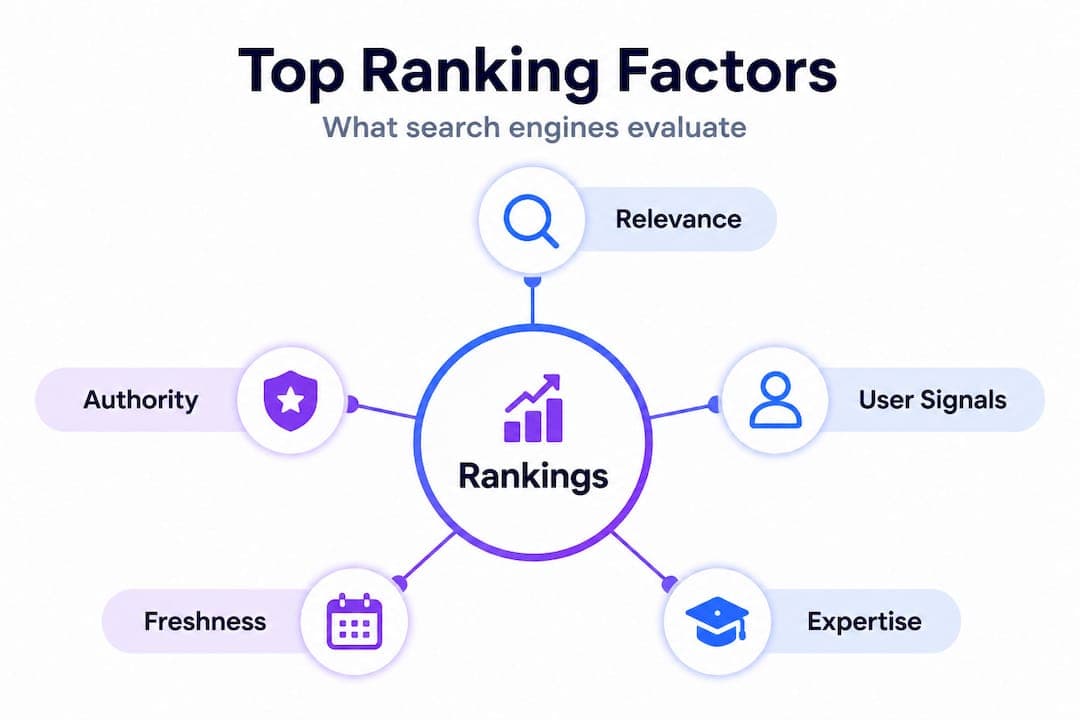
Traditional vs. modern ranking factors:
| Factor | Traditional SEO focus | Modern SEO focus |
|---|---|---|
| Keywords | Keyword density, exact match | Semantic relevance, entity coverage |
| Links | Raw link count | Authority, topical relevance, context |
| Content | Word count, frequency | E-E-A-T, originality, intent alignment |
| User signals | Not considered | Click-through rate, dwell time, bounce rate |
| Page experience | Load speed | Core Web Vitals, mobile usability, INP |
Here is how a typical query moves through ranking signals in practice:
Tracking content metrics for marketers is how you measure whether your page is serving each stage of this journey properly. Ignoring metrics like bounce rate or time on page means you are flying blind on how user signals affect your rankings.
Pro Tip: Before writing a single word, classify the intent of your target query. Is it informational, navigational, transactional, or commercial? Your entire content structure, from headline to call to action, should reflect that intent. Consult the SEO checklist for AI content to keep your content audit structured.
A crucial nuance for marketers: local content optimization follows the same multi-signal logic, but adds proximity, local authority, and location-specific entities to the mix. The framework is the same; the signals just have a geographic dimension layered on top.
Even with knowledge of ranking signals, it's easy to stumble. Here's what often goes wrong and why.
A lot of content that should rank well simply does not, and the reason is rarely the writing itself. Technical errors upstream in the pipeline quietly strangle performance before the ranking algorithms even get to evaluate quality.
Common edge cases that cause ranking drops include crawl budget waste from infinite faceted navigation and soft 404 errors, JavaScript-rendered content that bots cannot parse (the fix is server-side rendering), canonical tag inconsistencies, and intent mismatch between what a page covers and what a query actually needs.
Top 5 technical pitfalls to audit right now:
The impact of AI's impact on search ranking means that AI-driven ranking systems are increasingly good at detecting when content technically exists but does not genuinely answer a user's question. They reward intent alignment heavily and penalize patterns that look like SEO gaming.
Pro Tip: Run a content intent audit quarterly. Group your pages by the intent type they were written to serve, then check actual query data in Search Console to see if real users are coming with the same intent you assumed. Misalignment is often the silent killer of otherwise strong content.
Understanding effective SEO elements helps you prioritize fixes when you find issues. Not every technical problem has the same impact. Crawling and indexing blockers always come first because no ranking signal can help content that never enters the pipeline.
So, how do you create content that climbs the ranks and stands up to the latest AI detection models? Here's your playbook.
The challenge for content creators and marketers today is a double standard: your content has to look natural and authoritative to human readers, pass the scrutiny of AI detection systems, and simultaneously signal relevance and quality to algorithmic ranking layers. These goals are more compatible than they seem, but they require intentional structure.
Prioritize human-first E-E-A-T depth over keyword stuffing. Structure content for AI parsing using schema markup, FAQ and HowTo structured data, answer-first paragraph formats, and bullet points. Allow AI crawlers to access your content. For Bing specifically, exact keyword matches and social signals carry more weight than they do on Google.
Here is a step-by-step workflow for creating optimized, detection-resistant content:
"The best strategy for avoiding AI detection and ranking simultaneously is the same: write content so genuinely useful and specific that it could not have been produced by a generic model."
Writing for your audience is not a soft skill. It is a technical SEO advantage. Pages where users read deeply, engage with content, and return produce behavioral signals that reinforce rankings over time. Review humanized SEO content tips for practical ways to make your content pass both algorithmic and human review.
Comprehensive content optimization means combining all of this into a repeatable process rather than treating each piece as a one-off effort. Build the workflow into your content calendar, assign ownership for technical audits, and track performance changes after each update cycle.
Pro Tip: Regularly monitor your top pages for algorithm update impact. Google updates algorithms thousands of times per year, with major core updates several times annually. Pages that drop after a core update are almost always sending weak E-E-A-T or intent-mismatch signals. Fix those first.
Here is what is rarely acknowledged in the flood of SEO advice online.
Most SEO guides tell you to "follow the algorithm." Chase the update. Build more links. Add more schema. Update meta descriptions. The problem with that advice is not that it is wrong. The problem is that it optimizes for signals instead of substance, and modern AI-driven ranking systems are specifically designed to detect that difference.
The uncomfortable truth is that the authentic SEO tips that actually produce durable rankings are not algorithm-specific at all. They are about building content that contains real experience and original perspective, the kind that could only come from someone who has actually done the work being described.
"Chasing algorithm signals without genuine expertise is like studying the grading rubric without doing the reading. You might pass once. You will not pass consistently."
We have seen this pattern repeatedly: a content team produces technically perfect pages, with the right schema, the right keyword density, clean Core Web Vitals scores, and proper canonical structure. The pages plateau at positions 8 to 15 and never break through. The missing ingredient is always the same. The content does not say anything that the top-ranking results have not already said, often better.
What actually moves rankings over the long term is genuine insight. Original data. Specific, tested recommendations. Perspectives that users cannot find by reading five other articles on the same topic. These are the things that generate the shares, the backlinks, the returning visitors, and the behavioral signals that compound into ranking authority.
The practical audit question is not "does my content include all the ranking signals?" It is "does my content give users something they could not get anywhere else?" If the answer is no, no amount of technical optimization will close that gap permanently.
If you want to put these insights into practice even faster, here's how Semihuman AI can help you adapt and excel.
Understanding search algorithms is step one. Executing at scale without losing the human quality signals that algorithms reward is where most teams hit friction. Semihuman AI is built specifically for content creators and marketers who need to close that gap efficiently.
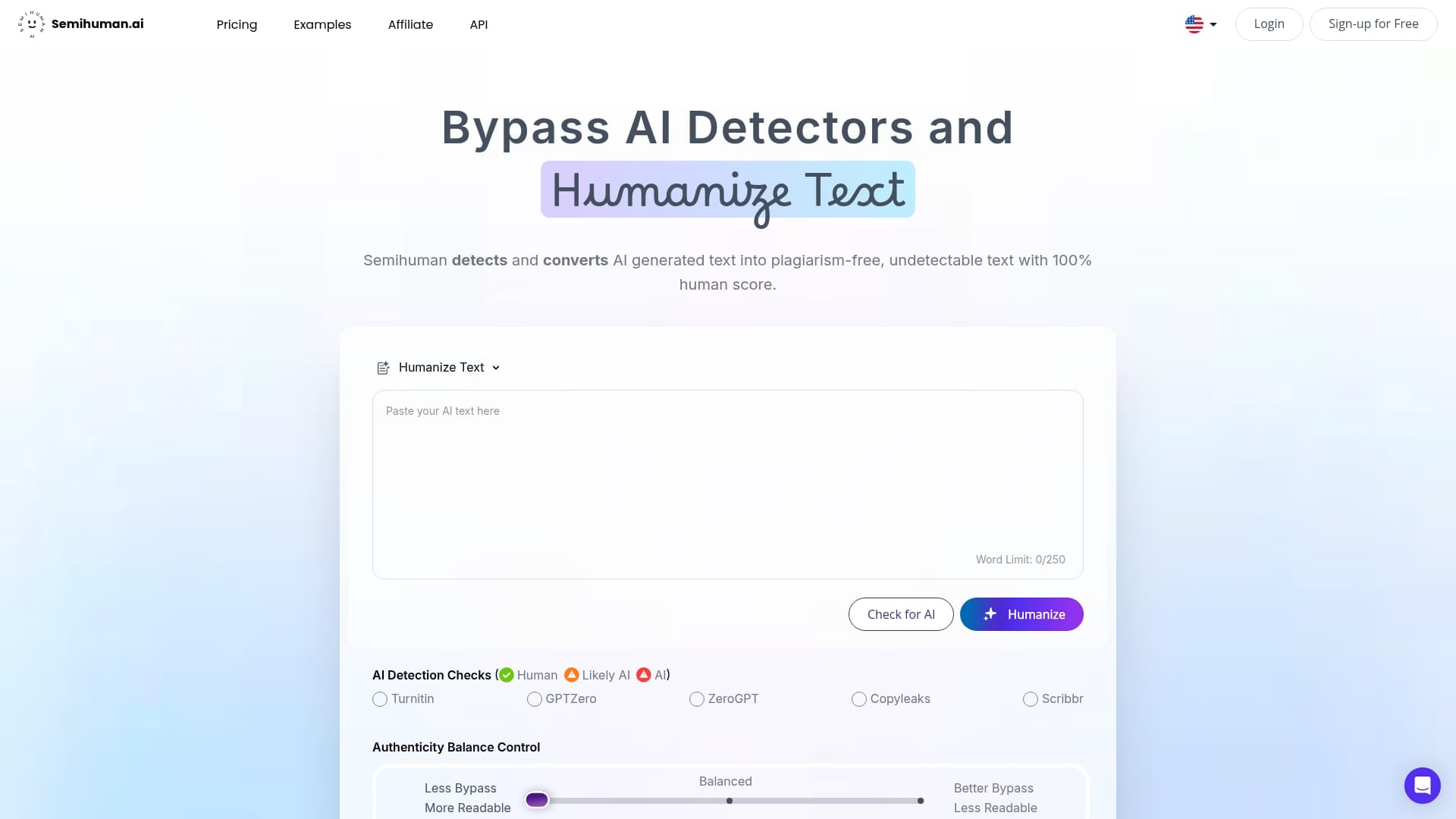
With Semihuman AI, you can transform AI-generated drafts into content that reads authentically human, passes major AI detection systems like GPTZero, Turnitin, and Copyleaks, and is structured to satisfy modern ranking signals. The SEO text generator lets you produce keyword-optimized, E-E-A-T-aligned content at scale without sacrificing the natural tone and specificity that both users and algorithms reward. From paraphrasing to full detection evasion, Semihuman AI gives your team the tools to compete in a landscape where AI content quality is the baseline expectation, not the differentiator.
Modern search now uses advanced AI and hundreds of nuanced signals, focusing less on simple keywords and more on context, user intent, and content quality than any previous iteration of search ranking systems.
Use Google Search Console and Bing Webmaster Tools to monitor crawling, indexing status, and spot technical issues like soft 404s, blocked resources, or canonical errors.
E-E-A-T stands for Experience, Expertise, Authoritativeness, and Trustworthiness, and it signals your content's credibility to Google's quality evaluators and automated ranking systems alike.
Prioritize original, human-first writing with specific examples, avoid scaled AI spam, use structured answers, and regularly revise for uniqueness rather than relying on generic templates.
Algorithms like Google's are updated thousands of times yearly, with several major core updates each year and continuous smaller tweaks to quality and spam signals running in the background at all times.


Start
Humanizing
for Free!
Humanize