
Loading...

Plagiarism remains a real threat to your content’s credibility, whether you’re publishing research, blog posts, or marketing material. Relying on a single tool or approach often leaves gaps that sophisticated forms of copied or paraphrased content can slip through. Even advanced software struggles with disguised plagiarism, complex paraphrasing, or manipulated AI-generated text.
You need practical methods that actually work for detecting both obvious and subtle cases of plagiarism. This guide reveals actionable techniques that combine human judgment with the latest AI-powered solutions, allowing you to catch stolen or reused content before it damages your reputation.
Get ready to discover how manual review, cutting-edge software, and smart cross-language solutions can keep your work original and trustworthy. These strategies will give you peace of mind—and the confidence to publish with authority.
| Takeaway | Explanation |
|---|---|
| 1. Combine Manual and Automated Reviews | Using both methods enhances plagiarism detection by covering gaps left by software alone. Human judgment interprets context, ensuring accurate assessments of intent. |
| 2. Utilize Text-Matching Tools Effectively | Employ multiple plagiarism detection tools to catch issues missed by a single platform. Each tool has unique databases, improving overall detection accuracy. |
| 3. Implement AI-Based Detection Methods | Advanced AI tools analyze context and intent, increasing accuracy in identifying sophisticated plagiarism, like paraphrasing and AI-generated content. |
| 4. Verify Citations and References | Use citation checking systems to ensure every source is valid and accurately represented, safeguarding your content's credibility against fake citations. |
| 5. Protect Against Cross-Language Plagiarism | Implement cross-language detection methods to catch translated plagiarism. This ensures your content is safeguarded globally, even when foreign competitors repurpose it. |
Manual review is where human expertise meets detection technology. While software flags similarities, trained reviewers interpret what those matches actually mean and catch plagiarism that algorithms miss entirely.
Automated tools are powerful but imperfect. They excel at finding exact matches and basic paraphrasing, yet they struggle with context, intent, and sophisticated content manipulation. Complex paraphrasing and intellectual property violations often slip past automated systems undetected.
Human reviewers bring something machines cannot: judgment. A skilled editor can evaluate whether borrowed content was properly attributed, whether citations are genuinely supporting ideas versus masking plagiarism, or whether figures and tables have been ethically sourced.
Here's what manual review catches that software typically misses:
The most effective approach combines both methods. Combining manual review with advanced machine learning techniques like BERT analysis creates a comprehensive detection system that catches direct copying, identifies paraphrased content, and requires human judgment to confirm plagiaristic intent.
Your team benefits from this hybrid approach. Software generates similarity reports, then reviewers examine the actual context. Did the writer intentionally conceal the source, or did they simply fail to cite properly? This distinction matters for content authenticity and SEO credibility.
Expert reviewers evaluate context and intent, ensuring integrity that goes beyond mere text matching.
Manual review works best when reviewers understand your industry and content goals. A marketing manager reviewing competitor research knows whether references are industry standard or plagiarized. An academic content specialist recognizes citation patterns that reveal intentional plagiarism versus genuine mistakes.
For content marketers using AI-generated or humanized content, manual review becomes critical. It confirms your material doesn't accidentally match published sources or violate intellectual property. This protects your SEO rankings and brand reputation simultaneously.
Pro tip: Assign manual review to team members who understand both your content purpose and your source material. They'll catch context-based plagiarism that generalist reviewers would miss.
Text-matching software is the backbone of modern plagiarism detection. These tools scan your content against billions of sources instantly, comparing every sentence and phrase to identify potential matches or suspicious similarities.
How they work is straightforward but powerful. You upload a document, and the software scans extensive databases including published articles, websites, academic papers, and previously submitted work. Within seconds, you get a detailed similarity report showing exactly where matches occur.
The best platforms offer color-coded similarity reports that make identification quick and visual. Green means original content, yellow flags potential issues, and red highlights definite matches. This color-coding lets you spot problems at a glance without reading through dense text.
Several top-tier options dominate the market for content creators and marketers:
These tools excel at catching direct copying and basic paraphrasing. They're particularly useful when you're working with multiple content creators or managing large content calendars. Running a quick scan takes minutes but saves hours of manual review.
For marketers, text-matching tools serve multiple purposes beyond plagiarism prevention. They verify that your content doesn't accidentally replicate competitor articles. They confirm your AI-humanized content maintains originality. They protect your SEO investment by ensuring Google recognizes your content as genuinely unique.
Expansive databases combined with AI-driven search techniques enable rapid comparison against billions of sources, facilitating quick identification of copied content.
The limitation worth knowing: these tools flag similarities but don't always distinguish between coincidental matches and actual plagiarism. Two articles about the same topic might share identical phrases without either being plagiarized. That's why combining software results with human review creates the strongest detection strategy.
Your workflow becomes efficient when you integrate text-matching tools into your content approval process. Run new content through detection before publishing, address flagged sections, then publish with confidence.
Pro tip: Run your content through multiple plagiarism detection platforms, not just one. Different tools use different databases and algorithms, so scanning with two or three tools catches issues that a single platform might miss.
AI-based detection represents the next evolution in plagiarism identification. Unlike traditional keyword matching, these systems use machine learning and natural language processing to understand meaning, context, and intent behind the words.
Think of it this way: older tools matched words. Modern AI systems match ideas. This distinction matters enormously when detecting sophisticated plagiarism like paraphrasing, translation manipulation, and AI-generated content disguised as human writing.
Here's how advanced AI detection works under the surface. The system analyzes semantic content, not just surface-level text matching. It evaluates contextual relationships between phrases, recognizes when ideas are repackaged with different vocabulary, and identifies patterns that signal AI generation or intentional obfuscation.
The accuracy improvements are significant. Advanced systems using machine learning and deep learning detect paraphrasing, translation-based plagiarism, and AI-generated content with substantially higher accuracy than traditional methods. Some cutting-edge approaches achieve up to 94% accuracy in distinguishing human versus AI-generated text.
What AI detection catches that other methods miss:
For content marketers, AI detection addresses your actual challenge. You're not worried about accidental word-for-word copying. Your concern is whether your AI-humanized content actually reads as original and authentic when Google crawls it.
Machine learning and natural language processing analyze semantic content and contextual similarities, enhancing detection accuracy and authenticity verification.
The technology adapts as language models evolve. New AI writing tools emerge constantly, and sophisticated detection systems adjust their algorithms accordingly. This adaptability ensures your detection strategy stays effective even as plagiarism tactics become more sophisticated.
You benefit from this approach because it goes beyond flagging matches. AI-based detection provides transparency into why content might be flagged, helping you understand whether an issue represents genuine plagiarism or false positive detection.
Combining AI detection with manual review creates your strongest defense. The system flags potential issues with high confidence, then human reviewers evaluate context and intent to confirm plagiarism or clear legitimate content.
Pro tip: When using AI detection tools, pay attention to confidence scores, not just match percentages. Content flagged with 95% confidence requires investigation; content flagged at 60% confidence might be a false positive worth dismissing.
Citation and reference checking systems are your quality control for academic credibility. These tools verify that every citation in your content actually exists, was authored by the claimed person, and matches the publication details you've cited.
Why does this matter? Fake citations destroy credibility instantly. A reader discovers a fabricated source, and suddenly your entire article loses trustworthiness. For marketers publishing research-backed content, citation accuracy directly impacts your brand authority.
These systems work by cross-referencing your citations against massive scholarly databases. They check author names, publication dates, journal titles, and DOIs simultaneously. Within seconds, you get a confidence score showing whether each citation is legitimate or potentially fabricated.
The problem they solve is real and growing. AI-generated content sometimes invents plausible-sounding citations that never existed. Writers occasionally misremember publication details. Reference lists get corrupted during document conversion. Citation checkers catch all these issues before your content goes live.
How these systems protect your credibility:
AI-powered algorithms automatically verify academic citations across millions of scholarly articles, journals, and books by cross-referencing key metadata and providing confidence scores. This automated verification ensures your citations maintain academic standards and research integrity.
Proper citation verification maintains academic credibility and protects your content from the reputation damage of fabricated sources.
For content marketers, citation checkers solve a specific problem. When your team uses research to support marketing claims, these tools confirm that your sources actually support what you're claiming. This is especially critical if you're publishing industry research or case studies that cite external findings.
The integration is seamless. Upload your document or paste citations, and the system provides results instantly. Many platforms support batch processing, so you can verify entire bibliographies at once rather than checking citations one by one.
Your workflow improves when citation checking becomes standard practice. Run content through before approval, address any flagged citations, then publish with genuine confidence that your sources are legitimate.
Pro tip: When a citation checker flags a source as potentially inaccurate, don't just remove it. Go back to the original source yourself to verify the correct details, then update your citation rather than losing the reference entirely.
Cross-language plagiarism detection identifies copied content that has been translated from one language to another. It's a sophisticated detection method because the plagiarized idea exists in a different language, making it invisible to standard English-only scanning tools.
This matters for global content teams. If your competitors operate internationally, they might translate your English content into Spanish, Russian, or Chinese to avoid detection. Without cross-language detection, you'd never know your work was stolen.
Here's the challenge these solutions overcome. A basic plagiarism checker scans for English text matches. It cannot detect when your article gets translated into another language and republished elsewhere. Translation-based plagiarism thrives precisely because it crosses language boundaries that most tools cannot.
Cross-lingual detection methods combine multiple approaches including semantic embedding, fingerprinting, and deep learning models to work across languages without requiring direct machine translation. These systems achieve high accuracy by understanding meaning across linguistic boundaries.
How cross-language detection works in practice:
For marketers publishing in multiple languages, this protection is critical. Your English blog post gets detected if someone translates and republishes it. Your marketing claims stay protected even when competitors translate them into other markets.
The technology doesn't require you to manually translate content back to English. The detection systems handle linguistic diversity automatically. This means you get protection across dozens of languages without additional effort or cost.
Semantic analysis across languages detects plagiarism that crosses linguistic boundaries, protecting your content in global markets.
The practical benefit is straightforward. When you publish content internationally, cross-language detection ensures your work remains protected. If international competitors or content mills steal your articles and translate them, these systems will catch it during your own detection sweeps.
Building this into your content workflow adds layers of protection. Run new content through cross-language detection alongside standard plagiarism checks. You'll catch both direct copies and translated theft attempts simultaneously.
Pro tip: If you publish content in multiple languages, scan each language version against all your other language versions. This catches internal duplication and prevents accidentally publishing the same idea twice in different languages without proper attribution.
Humanizing content transforms AI-generated text into writing that reads naturally and passes detection systems designed to flag machine-produced content. It's the counterpart to detection itself, showing you exactly how effectively AI content can be modified to appear authentically human-written.
Understanding this method matters for your detection strategy. When you know how content gets humanized, you recognize which detection approaches remain reliable and which ones become vulnerable. This knowledge strengthens your ability to identify authentic versus manipulated content.
The process works through strategic modifications rather than complete rewriting. Small perturbations introduced to machine-generated text can cause existing detectors to misclassify AI content as human-written. These subtle changes include vocabulary substitution, sentence restructuring, and stylistic variations that preserve meaning while altering detection signals.
Specific humanization techniques include:
For marketers, this reveals a critical reality. AI detection tools vary significantly in reliability, and humanization processes increasingly challenge the identification of AI-written content. Some detection systems remain robust, but others lose effectiveness against well-humanized content.
Humanization techniques reduce detection rates by altering the signals AI detectors rely on while preserving content authenticity and meaning.
This doesn't mean detection fails entirely. Rather, it shows why combining multiple detection methods matters. A single detector might fail against humanized content, but cross-referencing multiple tools catches manipulated text that individual systems miss.
Your team benefits from this knowledge when evaluating content authenticity. If you're publishing AI-assisted content, understand what humanization looks like so you can verify your final product actually reads as human-written, not just appears that way to a single detection tool.
The practical implication is straightforward. Content that passes one AI detector might fail another. Content that's been professionally humanized might pass all detectors. This is why combining automated detection with manual review remains your strongest approach.
Pro tip: Never rely on a single AI detection tool to verify authenticity. Run content through multiple detectors from different vendors, then have human reviewers evaluate flagged content contextually. This layered approach catches humanized content that individual tools might miss.
Below is a comprehensive table summarizing the key components and methods for detecting plagiarism as discussed within the article.
| Topic | Description | Key Notes |
|---|---|---|
| Manual Review | Employing human expertise to assess, interpret, and verify flagged similarities in content. | Detects context, intent, and subtle manipulation that software might miss. |
| Text-Matching Tools | Software for comparing content against extensive databases and identifying matches. | Provides visual similarity reports and flags potential issues but may require further human review. |
| AI-Based Detection | Advanced systems using machine learning to understand semantic meaning and detect sophisticated issues. | Effective for paraphrased and AI-generated content requiring contextual analysis. |
| Citation and Reference Checking | Tools confirming accuracy and authenticity of citations and references provided in a text. | Ensures academic credibility and protects content integrity. |
| Cross-Language Detection | Systems identifying content plagiarized through translation across different languages. | Protects against global misuse by analyzing semantic coherence in multiple languages. |
| Content Humanization Awareness | Understanding techniques used to modify AI-generated text to evade detection. | Highlights the necessity of diverse detection tools and manual evaluation for accurate verification. |
Plagiarism detection alone is not enough to protect your content's originality and credibility in today’s complex digital landscape. As detailed in "6 Types of Plagiarism Detection Every Marketer Should Know," mastering the challenges of AI-generated content, sophisticated paraphrasing, and cross-language plagiarism requires a powerful, adaptable solution. Key issues like humanizing AI text to bypass detection tools and verifying semantic authenticity demand tools that not only identify problems but also transform your content into genuinely human-like writing.
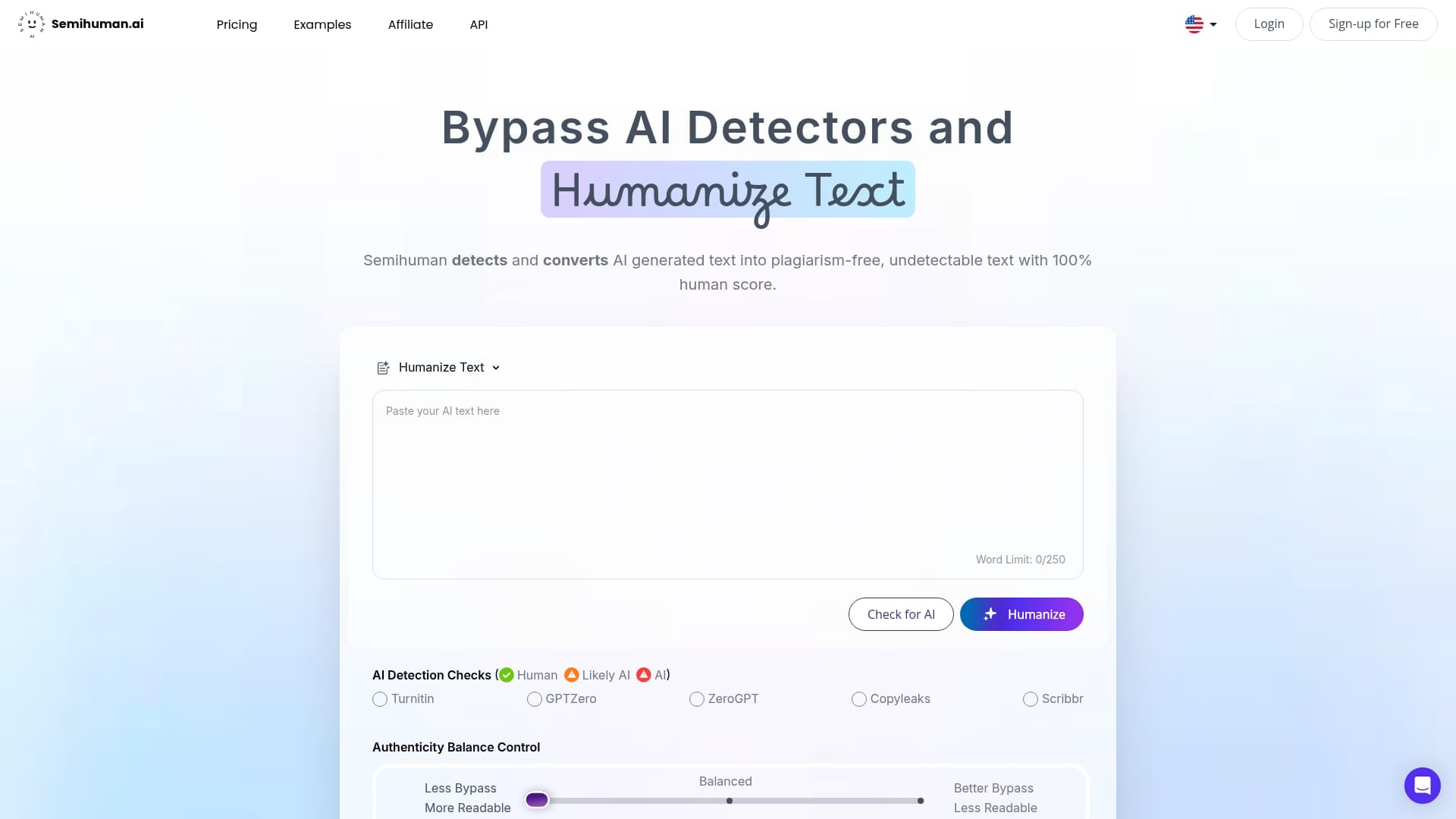
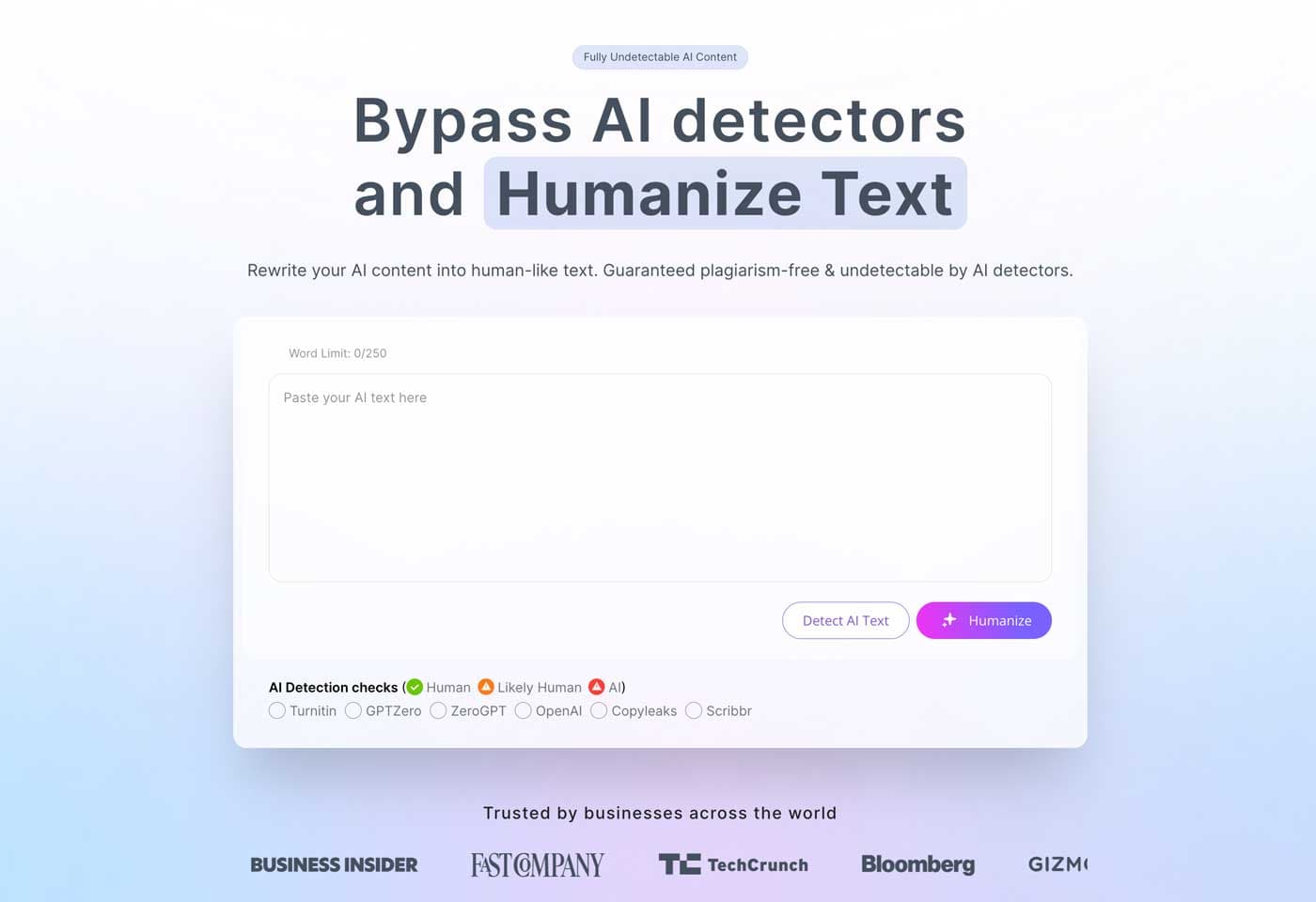
Take control of your content’s authenticity with Semihuman.ai, the AI-powered platform expertly designed to humanize machine-generated text. This powerful tool helps marketers like you overcome critical challenges by:
Don’t wait until your content is flagged or loses its competitive edge. Discover how manual review and AI detection complement the humanization process at Semihuman.ai. Visit now to start transforming your AI-generated text into authentic, high-impact content that stands out and ranks well.
Marketers should consider six essential types of plagiarism detection methods: manual review, text-matching tools, AI-based detection methods, citation and reference checking systems, cross-language plagiarism detection solutions, and humanizing content techniques. Use a combination of these methods to ensure comprehensive protection against plagiarism.
To effectively integrate plagiarism detection, run new content through both automated text-matching tools and manual reviews before publishing. This step ensures all potential issues are identified and addressed, maintaining content credibility and protecting your brand image.
When choosing a plagiarism detection tool, prioritize features such as extensive database coverage, the ability to detect paraphrasing, and user-friendly similarity reporting. Select tools that cover various sources, including academic papers and online articles, to ensure thorough analysis.
Educate your team by fostering awareness of the risks associated with plagiarism and the impact on brand reputation. Conduct training sessions that demonstrate how to use detection tools effectively, emphasizing real examples of potential plagiarism incidents that could harm the organization.
AI-generated content can be original but often requires a thorough review to ensure it doesn't inadvertently replicate existing works. Implement a process where AI-generated text undergoes humanization and plagiarism detection to verify its uniqueness and authenticity before publication.
Aim to run plagiarism checks on your content regularly, especially before major publication dates or when using AI-generated material. Conducting checks at least once per month helps maintain high standards of originality and protects your SEO rankings.


Start
Humanizing
for Free!
Humanize