
Loading...

Pressure is mounting for academic professionals and advanced students to adapt as digital transformation reshapes research and writing practices across fields. The need for authentic content that withstands artificial intelligence detection is growing, especially as artificial intelligence tools are now central to academic workflows. This article explores the shifting expectations in academic writing, highlighting strategies that not only keep pace with global trends but help scholars safeguard originality and maintain academic credibility.
| Point | Details |
|---|---|
| Integration of AI | Artificial intelligence is now integral to academic writing, enhancing drafting, research efficiency, and collaboration. |
| Ethical Considerations | Institutions are establishing ethical guidelines to ensure responsible AI use while maintaining academic integrity. |
| AI Detection Challenges | Traditional detection tools must evolve as AI-generated content becomes more sophisticated, necessitating holistic evaluation methods. |
| Common Writing Pitfalls | Clarity and structure are crucial; scholars should actively avoid informal language and overcomplicated writing to enhance their academic work. |
The landscape of academic writing is rapidly transforming, driven by technological advancements and evolving scholarly communication paradigms. Digital transformation trends are reshaping how researchers conceptualize, produce, and disseminate academic content, marking a significant shift from traditional writing approaches.
Key trends emerging in academic writing for 2025 include:
Technology is fundamentally redefining academic writing processes. Researchers now leverage advanced tools that support more dynamic, collaborative, and efficient writing strategies. Artificial intelligence is no longer just a supplementary tool but an integral component of academic research and writing workflows.
Here's a summary of how artificial intelligence is changing academic research and writing:
| Aspect of Writing | Traditional Approach | AI-Integrated Approach |
|---|---|---|
| Drafting Process | Manual composition, slower revisions | Automated drafting, rapid iterations |
| Research Efficiency | Time-intensive literature review | AI-assisted, streamlined data analysis |
| Collaboration | Email/document sharing | Real-time, AI-supported co-authoring |
| Error Detection | Manual proofreading | Automated grammar and logic checks |
The global academic community is witnessing a profound transformation, with publication trends showing significant growth in research output from diverse geographical regions. Countries like the United States, China, and the United Kingdom are leading this academic writing revolution, demonstrating increased publication activity and innovative research methodologies.
Pro tip: Embrace technological tools while maintaining your unique scholarly voice and commitment to academic integrity.
The academic landscape is experiencing a profound technological transformation, with AI reshaping scholarly communication across multiple dimensions. Artificial intelligence is no longer a peripheral technology but a core component of research, teaching, and learning ecosystems.
Primary types of AI integration in academic work include:
Generative AI tools like ChatGPT have dramatically altered academic writing processes. Researchers and students now leverage these technologies for drafting, summarizing, and refining academic content. Artificial intelligence enables more efficient research workflows, allowing scholars to focus on higher-order analytical tasks rather than routine documentation.

The integration of AI spans multiple academic domains, from personalized learning pathways to sophisticated research productivity enhancements. Institutions are developing comprehensive AI literacy programs to ensure responsible and ethical technological adoption, addressing potential challenges such as algorithmic bias and academic integrity concerns.
Pro tip: Develop critical AI literacy skills to effectively leverage technological tools while maintaining academic authenticity.
The academic technology landscape is experiencing a revolutionary shift in how artificial intelligence-generated text is identified and transformed. AI-generated text detection methods are becoming increasingly sophisticated, responding to the complex challenges of maintaining academic integrity in the digital age.
Key emerging strategies for AI detection and humanization include:
Humanization techniques have evolved beyond simple text modifications, now incorporating complex strategies that alter text rhythm, sentence structure, and semantic nuances. These approaches aim to create content that not only evades detection but maintains authentic academic voice and intellectual integrity.
Traditional detection tools like Turnitin and GPTZero are rapidly becoming obsolete as AI text generation becomes more advanced. Academic institutions are shifting toward more holistic assessment approaches that emphasize original thinking, creative expression, and transparent AI interaction tracking rather than relying solely on detection mechanisms.
Compare methods for identifying and addressing AI-generated content:
| Method | Detection Focus | Limitations |
|---|---|---|
| Pattern Recognition | Analyzes text structure and style | Can be bypassed by advanced AI |
| Semantic Analysis | Assesses meaning and context | May misinterpret nuanced writing |
| Holistic Evaluation | Reviews originality and critical thought | Requires expert human assessment |
Pro tip: Develop a nuanced understanding of AI writing tools that prioritizes academic creativity and ethical technological engagement.
The academic community is rapidly developing comprehensive frameworks to address the complex ethical challenges posed by artificial intelligence. Ethical guidelines for AI use are emerging as critical mechanisms to preserve academic integrity and ensure responsible technological engagement.
Key principles of ethical AI use in academic writing include:
Academic integrity remains the cornerstone of ethical AI implementation. Institutions are developing nuanced policies that recognize AI as a collaborative tool while emphasizing the irreplaceable role of human creativity and critical thinking. This approach requires scholars to view AI not as a replacement for original thought, but as a supportive mechanism for academic exploration.
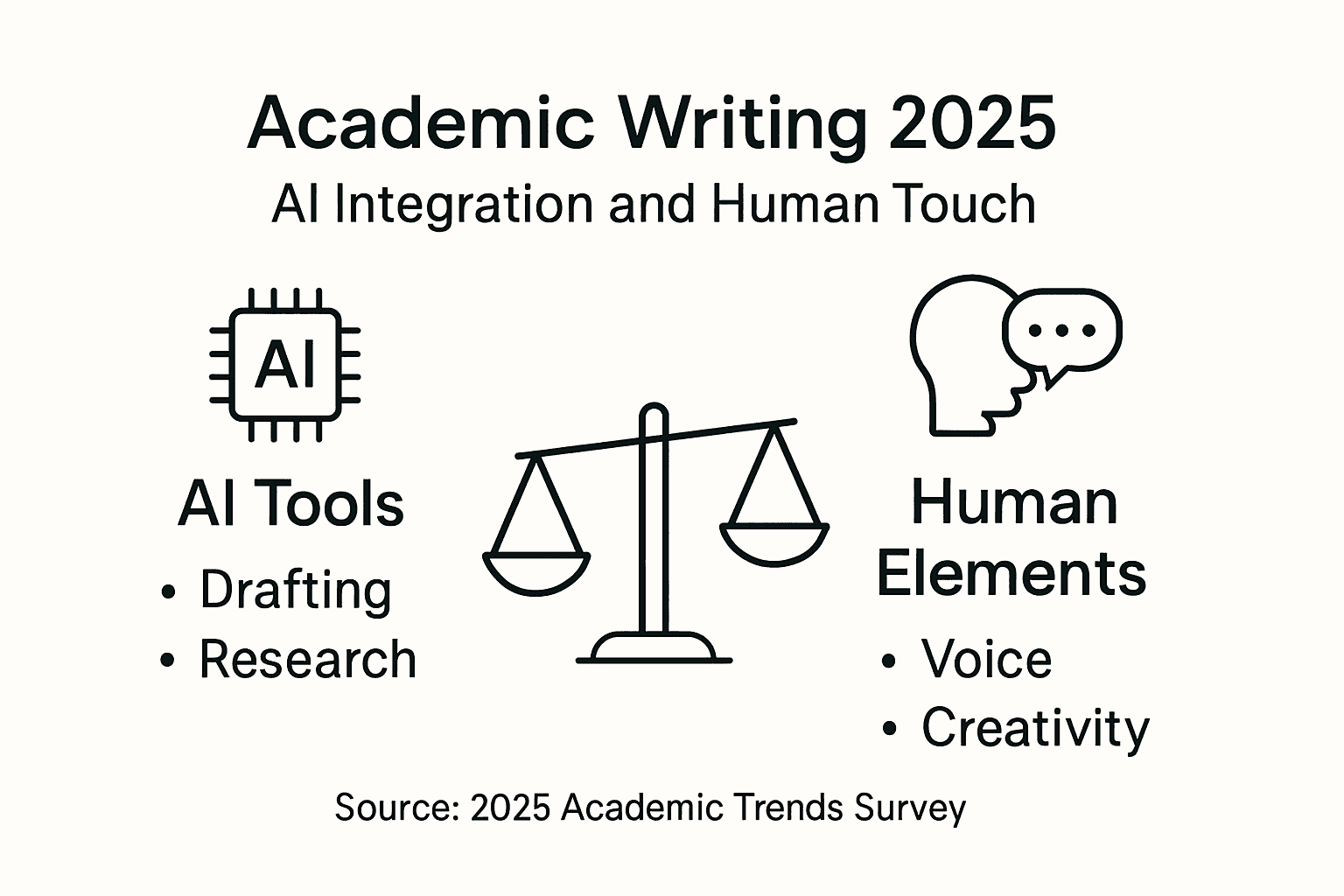
Leading universities are creating robust frameworks that balance technological innovation with scholarly traditions. These guidelines mandate clear acknowledgment of AI assistance, establish boundaries for acceptable AI use, and create mechanisms for evaluating the authenticity and originality of AI-supported research outputs.
Pro tip: Always document and disclose AI tools used in your research to maintain transparency and academic credibility.
Academic writing demands precision, clarity, and a sophisticated approach to communication. Common academic writing mistakes can significantly undermine the credibility and effectiveness of scholarly work, making awareness and strategic prevention critical.
Key pitfalls in academic writing include:
Academic writing excellence requires a methodical approach to avoiding these common traps. Scholars must develop a keen eye for identifying and eliminating linguistic and structural weaknesses that can diminish the impact of their research. This involves cultivating a writing process that prioritizes clarity, logical flow, and precise communication.
Navigating the complex terrain of scholarly communication demands continuous skill refinement. By understanding these potential pitfalls, researchers can develop strategies that transform their writing from merely acceptable to truly exceptional, ensuring their academic contributions are both intellectually rigorous and professionally presented.
Pro tip: Create a personal editing checklist that systematically addresses common writing weaknesses before submitting any academic document.
The article "Trends in Academic Writing 2025: Human Touch Matters" highlights the growing challenge of maintaining authentic scholarly voices amid rising AI-generated content and advanced detection methods. As AI tools reshape research workflows, preserving originality and academic integrity becomes crucial. Key pain points include avoiding detection pitfalls, ensuring clear humanization of AI-produced text, and meeting evolving ethical standards in academic writing.
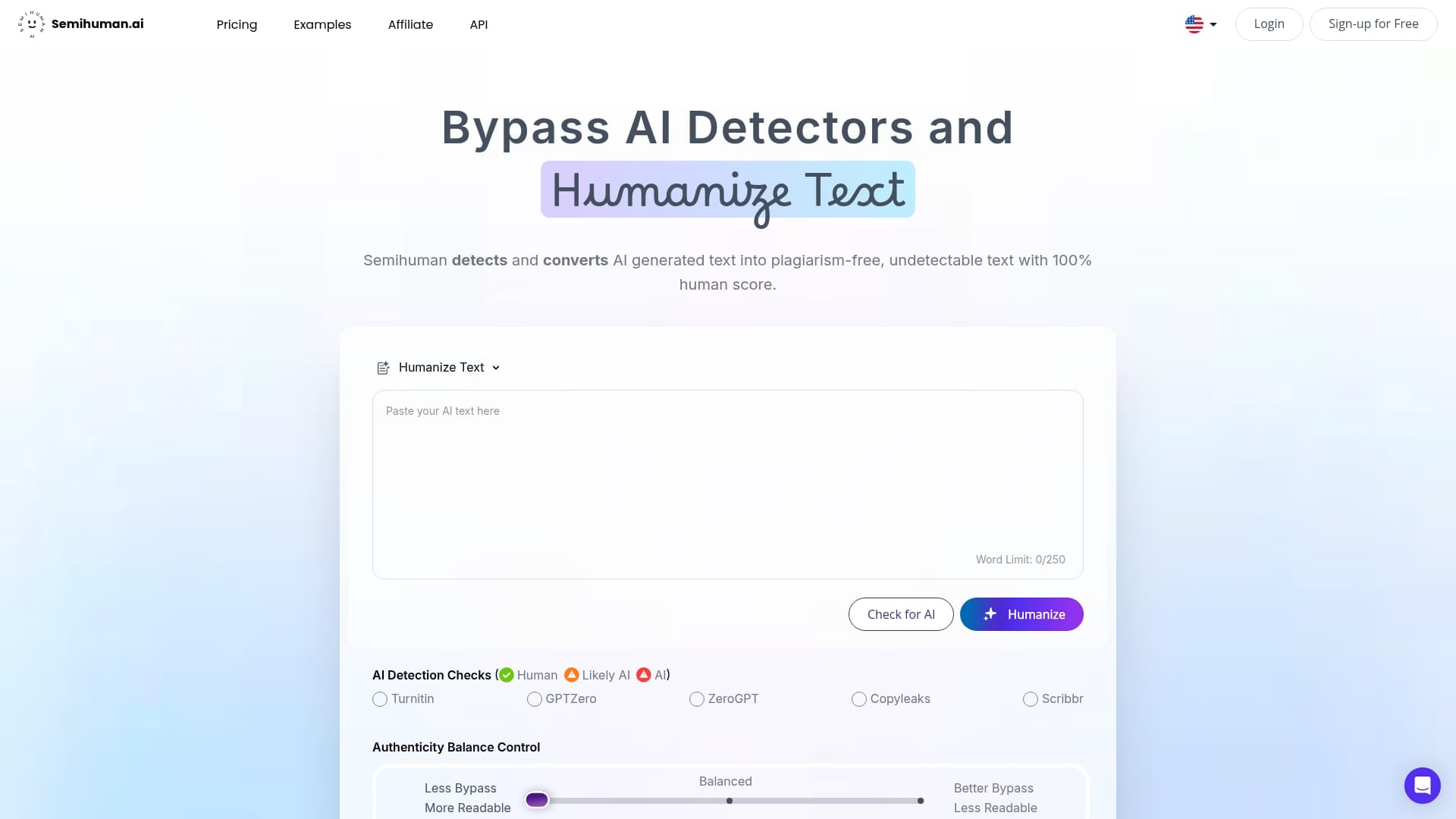
Semihuman.ai directly addresses these concerns by offering an AI-powered platform designed to transform AI-generated drafts into naturally human-like content that withstands sophisticated AI detection tools like Turnitin and GPTZero. Our technology helps you restructure text, integrate keywords smoothly, and maintain your unique academic voice without sacrificing authenticity or transparency.
Take control of your academic writing journey by visiting Semihuman.ai. Experience the future of ethical AI-assisted writing that supports your creativity and integrity.
Unlock seamless humanization and teach your content to stand out now.
Transform Your Academic Writing Today
Ready to preserve your academic integrity while adapting to modern writing trends Discover how Semihuman.ai empowers you to meet 2025’s evolving standards with confidence. Start humanizing your AI-generated content today to stay ahead in scholarly communication.
The key trends in academic writing for 2025 include increased integration of artificial intelligence tools, a growing emphasis on multilingual academic literacy, enhanced focus on research transparency and data sharing, expansion of interdisciplinary research methodologies, and stronger ethical considerations surrounding academic integrity.
Artificial intelligence is transforming academic writing by enabling automated drafting, streamlining literature reviews, facilitating real-time collaboration, and providing automated grammar and logic checks, allowing researchers to focus on higher-order analytical tasks.
Common pitfalls in academic writing include using informal language, overcomplicating sentence structures, lacking clear argumentative progression, creating vague thesis statements, excessive quotation usage, and insufficient proofreading and editing.
Researchers can maintain academic integrity by transparently disclosing AI assistance used, ensuring that human intellectual contributions remain central, preventing plagiarism, implementing content vetting processes, and preserving original scholarly thinking.

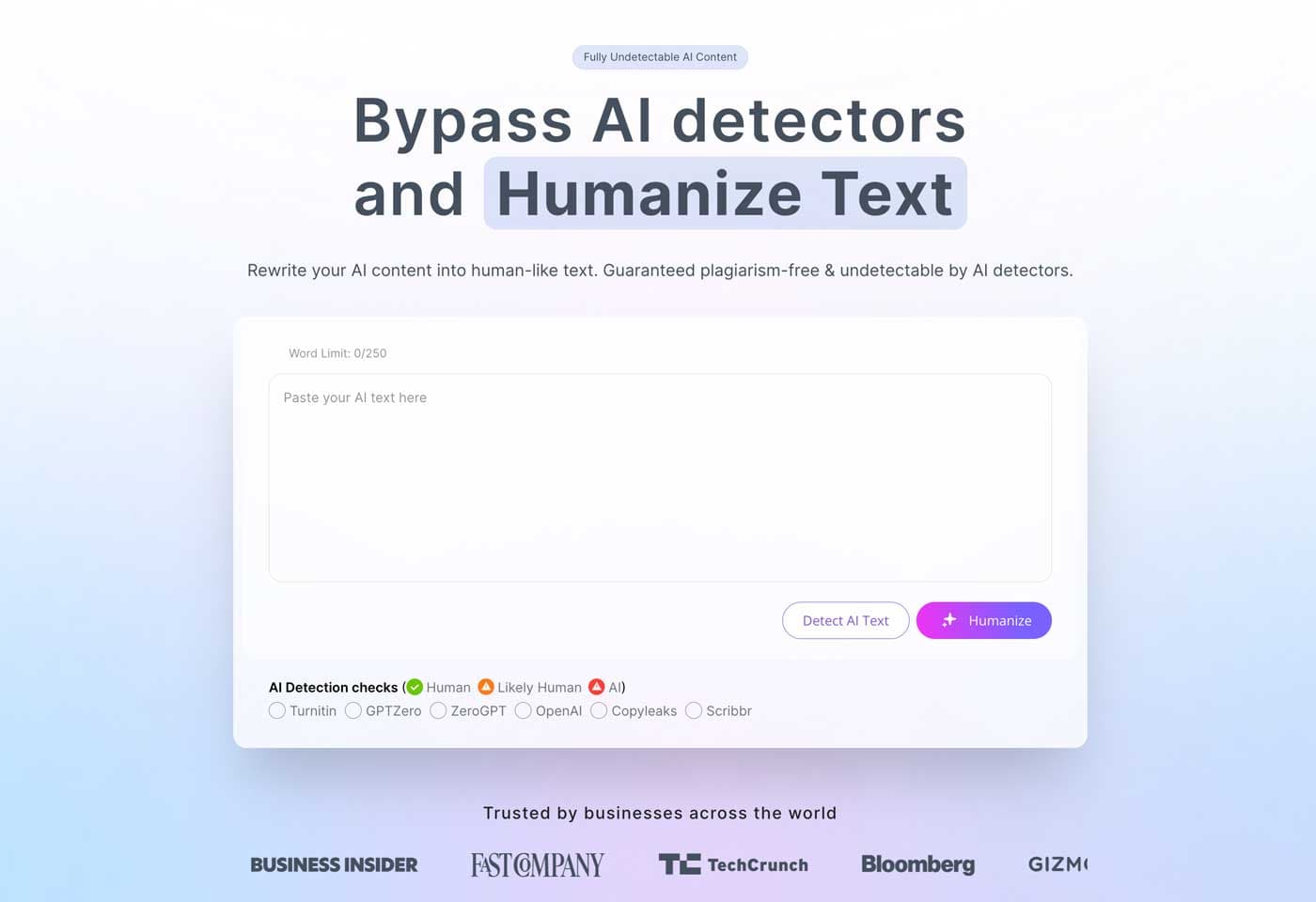
Start
Humanizing
for Free!
Humanize