
Loading...

TL;DR:
- Effective AI use in content marketing requires careful evaluation of quality, SEO impact, and authenticity.
- Combining AI automation with human editing ensures content remains engaging, trustworthy, and ranks well.
- Strategic AI application can significantly boost productivity, traffic, and revenue when aligned with clear goals.
Content marketers today face a paradox. AI tools promise to multiply your output, sharpen your SEO, and free up hours every week, yet the market is flooded with options that often produce flat, generic copy no reader wants to engage with. The pressure to publish more while sounding less robotic is real, and the wrong AI strategy can quietly tank your search rankings and audience trust. This article cuts through the noise by laying out clear evaluation criteria, the five highest-impact AI content applications, a side-by-side comparison of methods, and a practical decision framework so you can act with confidence, not guesswork.
| Point | Details |
|---|---|
| Maximize AI productivity | Strategic use of AI can save over 2 hours daily and significantly increase your content output. |
| Boost SEO and engagement | AI-powered content strategies have proven to raise traffic, organic reach, and revenue dramatically. |
| Prioritize authenticity | Pairing AI with human input ensures content stays unique, trustworthy, and favored by both people and search engines. |
| Align AI with goals | Select the right AI content approaches based on your audience needs, authenticity requirements, and SEO objectives. |
Before you commit to any AI content workflow, you need a filter. Not every AI application delivers equal value, and choosing based on hype alone will cost you time and credibility. The right evaluation framework helps you pick tools and strategies that actually move the needle on the metrics your team cares about.
Here are the core criteria every content marketer should apply:
These criteria matter because AI content marketing results vary wildly depending on how AI is implemented. Generic automation without editorial control rarely performs well long term.
The productivity data is compelling. Marketers save an average of 2.5 hours per day using AI, with productivity up 25.1% and 12.2% more tasks completed per person. But raw productivity gains mean little if the content fails to engage readers or rank.
Pro Tip: Never let AI publish without a human read. Even a 10-minute editorial pass catching tone inconsistencies and adding brand voice can be the difference between content that builds trust and content that readers bounce off instantly. Pair automation with oversight, especially for AI in blog content where voice consistency matters most.
When you apply AI for SEO best practices, the key is always intentionality. Tools are only as good as the strategy guiding them.
With your criteria in mind, let's break down exactly where AI delivers the biggest wins in content marketing. These aren't theoretical. They're the applications marketers are using right now to drive measurable results.
The adoption numbers back this up. Short articles (80%), content outlining (73%), video script writing and editing (71%), and SEO optimization (67%) are the top reported uses among content marketers globally.

The challenge across all five: AI output needs a human layer to feel real. Without it, you risk duplication, generic phrasing, and content that fails both readers and ranking algorithms. For guidance on keeping it genuine, explore authentic blog content tips.
Pro Tip: When humanizing AI drafts, don't just swap words. Add a specific example, a counterintuitive insight, or a brand anecdote. That's what separates forgettable content from content people share.
"AI works best as a capable first-draft engine. The marketers winning with it are the ones investing editorial energy where it counts: insight, originality, and reader trust." — Content strategy consensus, 2025
After exploring the high-impact uses, let's see how each method compares across critical outcomes.
| AI content method | Avg. productivity gain | SEO impact | Engagement lift | Best for |
|---|---|---|---|---|
| Short-form generation | High (saves 3 hrs/piece) | Moderate | Moderate | eCommerce, social |
| Content outlining | Medium | High | Low (indirect) | Blog, long-form |
| Script writing/editing | Medium | Low | High | Video, podcast |
| Personalization at scale | Medium | Moderate | Very high | Email, newsletters |
| SEO content optimization | High | Very high | High | Organic search, ranking |
The results in the real world are striking. Case studies show 2,300% traffic growth through AI SEO with E-E-A-T gaps filled by proprietary data, a wellness brand tripling blog output to 120 posts with a 34% organic traffic increase, and an eCommerce brand hitting $968K in revenue, a 91% jump, in just eight months through AI-optimized content.
Those numbers aren't flukes. They reflect a strategy where AI handles volume and structure while human expertise handles depth and differentiation. Tracking the right AI-driven SEO metrics is what helps you see which method is actually producing results for your specific goals.
SEO content optimization consistently produces the strongest compounding returns, especially when combined with humanization. The SEO benefits of AI humanization are measurable: better dwell time, lower bounce rates, and stronger topical authority signals all follow when AI-generated text is refined to read naturally.
For marketers choosing between methods, the table above should inform where you invest editorial effort, not just which AI tool you buy.
Now that you've seen comparisons, here's how to align AI strategies with your team's goals. Strategy fit depends on three things: what you're creating, who you're creating it for, and what result you need.
Use this checklist to match AI applications to your priorities:
| Content type | Strategy fit | Target audience | Expected result |
|---|---|---|---|
| Blog posts | Outlining plus human editing | Organic search readers | Traffic and authority |
| Product pages | Short-form AI with SEO layer | Buyers | Conversions |
| Email campaigns | Personalization AI | Segmented subscribers | Click-through rate |
| Video scripts | Script AI plus human polish | Viewers | Retention and shares |
| Pillar content | Full SEO optimization | Broad search intent | Compounding rankings |
One nuance most teams miss: you need to optimize for both traditional SEO and AI-powered search (also called Generative Engine Optimization or GEO). Pure AI output performs poorly in Google rankings but can earn strong citations in AI tools like ChatGPT and Perplexity if structured correctly with comprehensive entity coverage. This matters because AI search traffic is growing fast. Content that only chases one channel is leaving reach on the table.
The practical fix is content structured for extraction: clear headings, defined entities, and factual specificity. Those same elements also help you humanize content to rank better in traditional search, so the two goals reinforce each other.
Here's the uncomfortable reality most AI content guides skip: scaling output is the easy part. Earning trust at scale is where most content teams quietly fail.
The temptation is real. When AI can produce fifty blog posts a month, why invest heavily in any single one? The answer is that readers and algorithms are both getting better at detecting content that has nothing original to say. Google's helpful content signals, audience bounce rates, and social sharing patterns all punish generic at scale.
Our experience at Semihuman shows that the teams producing genuine, lasting impact with AI are not the ones publishing the most. They're the ones using AI to draft and structure, then investing editorial energy into nuance, real examples, and brand voice. That combination creates content worth reading, worth citing, and worth ranking.
The contrarian truth: less humanized AI content published at massive scale is actually a liability, not an asset. Creating authentic blog content naturally is the competitive edge most teams are underinvesting in right now. Quality always compounds. Generic content just accumulates.
Putting these strategies into practice is faster when you have the right tools behind you. Semihuman.ai is built specifically for content marketers who want both scale and authenticity, without choosing between them.
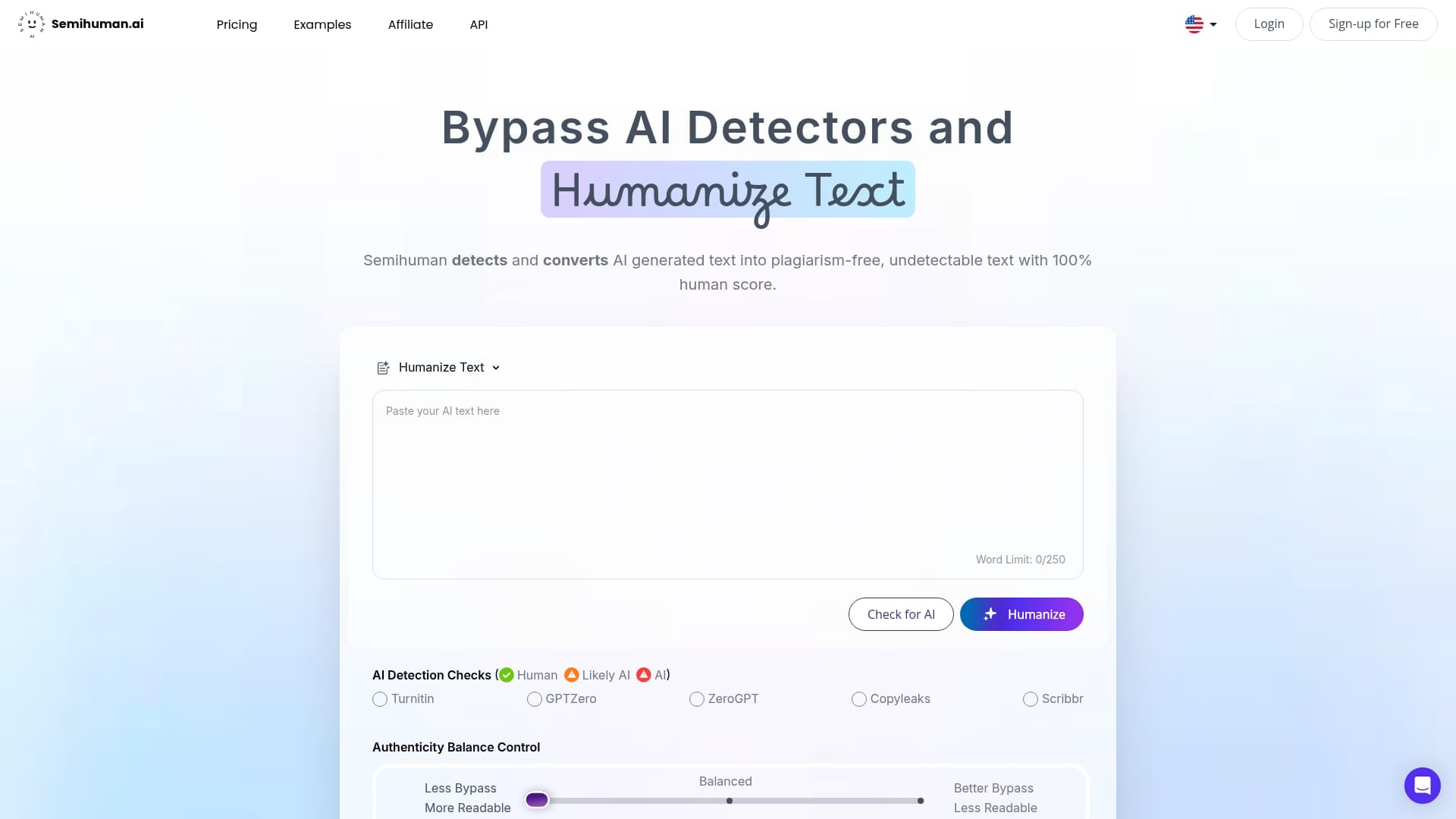
Whether you need to bypass AI detectors to ensure your content reads as genuinely human, generate optimized copy with the SEO text generator, or explore the full range of Semihuman AI solutions, you'll find tools that match the strategies covered in this article. The goal is the same: content that performs in search, resonates with readers, and builds the trust your brand depends on. Start today and see the difference authentic AI content makes.
The most common uses include generating short articles, outlining posts, editing video scripts, personalizing messages, and optimizing content for SEO. Short article generation leads adoption at 80%, followed by outlining at 73% and script writing at 71%.
On average, marketers save 2.5 hours daily and 3 hours per content piece with AI, alongside a 25.1% productivity boost and 12.2% more tasks completed per person.
Yes, when implemented strategically. AI-optimized content has driven up to 2,300% traffic growth, 34% more organic visits for a wellness brand, and a 91% revenue increase for an eCommerce site in under a year.
Combine AI drafts with human editing, inject original data or examples, and personalize for your specific audience. Content optimized for both traditional SEO and GEO with structured extraction and entity coverage performs best across channels.

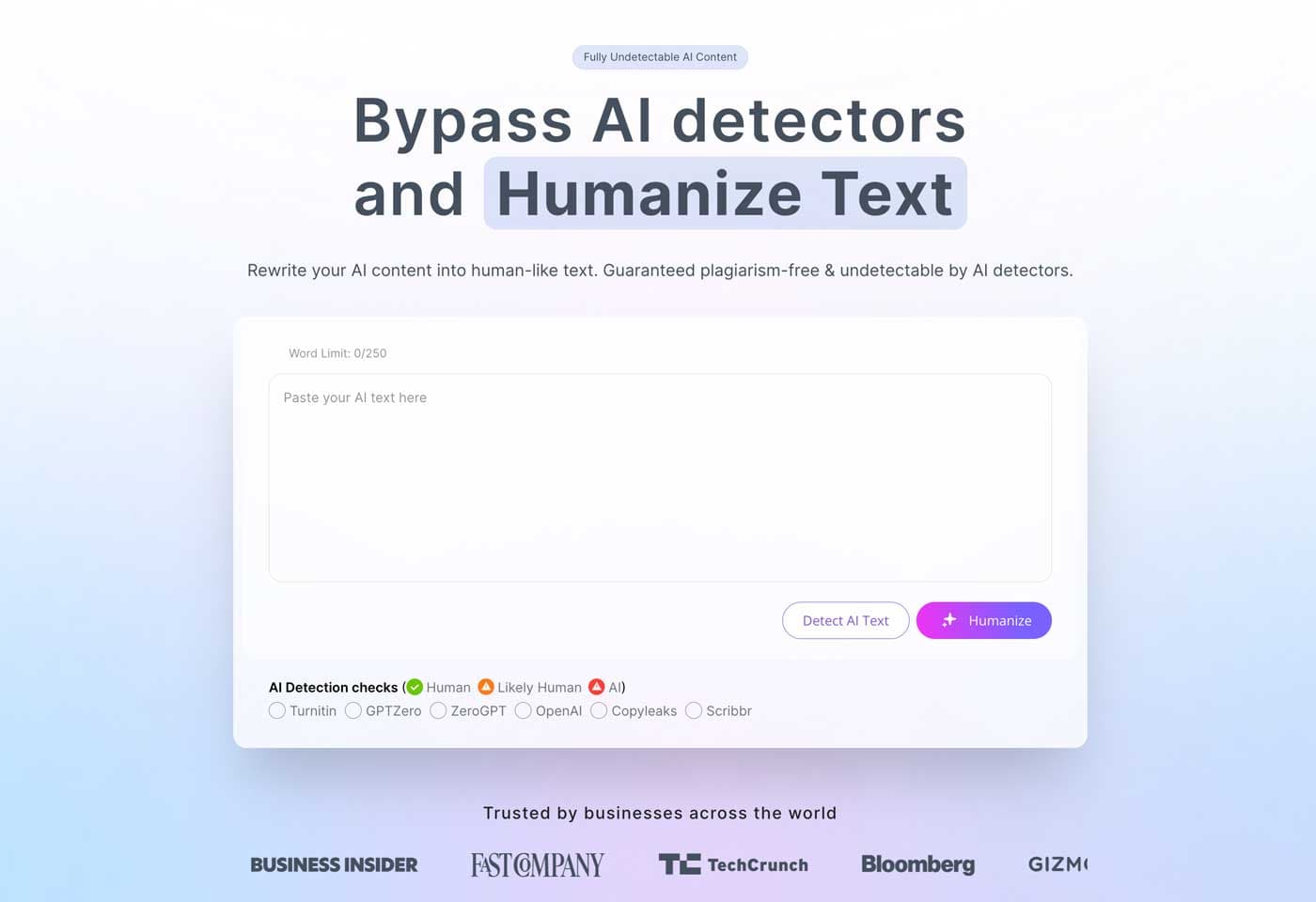

Start
Humanizing
for Free!
Humanize