
Loading...

Standing out in the crowded online space often comes down to expertise that feels genuine and fresh. For Content marketers and SEO specialists across North America, crafting thought leadership content is more than sharing ideas—it means offering principled guidance and insightful analysis that inspires trust. This article explores the building blocks of authentic thought leadership, showing how strategic content can establish your reputation and spark conversations that matter.
| Point | Details |
|---|---|
| Thought Leadership Definition | Thought leadership involves generating transformative ideas and guiding others in professional domains. It's about providing advanced insights rather than mere information reporting. |
| Key Characteristics | Exceptional thought leaders demonstrate deep understanding, unique perspectives, and engage audiences through compelling storytelling. |
| Effective Content Formats | Various content formats such as research reports, podcasts, and case studies help showcase expertise and engage professional audiences meaningfully. |
| Risks to Avoid | Thought leaders must be vigilant against ethical compromises and overconfidence, ensuring transparency and accountability in their communication. |
Thought leadership represents a powerful strategy for content creators seeking to establish credibility and influence within their professional domains. Authoritative insights into thought leadership reveal it as more than simple content creation - it's about generating transformative ideas that guide and inspire others.
At its core, thought leadership involves consistently delivering advanced analytical perspectives that challenge existing paradigms and provide principled guidance. A true thought leader doesn't merely report information; they synthesize complex concepts into actionable insights that help senior decision-makers navigate intricate professional landscapes. Recognized authorities in specific fields emerge by addressing both established and emerging questions through compelling, change-driving content.
Key characteristics of exceptional thought leadership include:
Successful thought leadership requires more than expertise - it demands a strategic approach to content creation that positions you as a trusted intellectual resource. Thought leaders build their reputation by systematically sharing profound insights that challenge existing thinking and provide clear, actionable frameworks for understanding complex challenges.
Thought leadership is not about being the loudest voice, but the most insightful one in the room.
Pro tip: Develop a consistent content strategy that showcases your unique analytical perspective and commitment to advancing knowledge in your professional domain.
Thought leadership manifests through diverse content formats, each strategically designed to engage and influence professional audiences. Comprehensive thought leadership content strategies encompass a wide range of mediums that transform complex insights into digestible, actionable intelligence.

The landscape of thought leadership content includes multiple dynamic formats, each serving unique strategic purposes. These formats enable professionals to showcase expertise, challenge existing paradigms, and provide nuanced perspectives on critical industry challenges. Leadership communication approaches vary widely, allowing thought leaders to adapt their communication style to specific audience needs and organizational contexts.
Key thought leadership content formats include:
Successful thought leadership requires selecting and executing content formats that maximize audience engagement and knowledge transfer. Each medium offers unique advantages in communicating sophisticated ideas, whether through visual storytelling, academic rigor, or conversational insights.
Here's a comparison of common thought leadership content formats and their strategic strengths:
| Format | Ideal Audience | Strategic Strength |
|---|---|---|
| Research Report | Senior executives | In-depth analysis |
| White Paper | Industry analysts | Innovative solutions |
| Case Study | Practitioners | Practical relevance |
| Webinar | Live participants | Real-time engagement |
| Podcast | Broad professionals | Accessible expertise |
| Symposium | Thought leaders | Collaborative discourse |
The most effective thought leadership transcends format, focusing on delivering genuine, transformative insights.
Pro tip: Experiment with multiple content formats to discover which best communicates your unique intellectual perspective and resonates with your target audience.
Authentic thought leadership goes beyond superficial expertise, requiring a deep commitment to genuine, principled communication. Authentic leadership principles demonstrate that true intellectual influence stems from integrity, transparency, and unwavering ethical standards.

Professional thought leaders distinguish themselves through a complex blend of personal attributes and strategic communication approaches. Navigating complex leadership contexts requires a nuanced balance between maintaining core values and adapting communication styles to diverse audiences while preserving intellectual honesty.
Key features of authentic thought leadership include:
Successful thought leaders recognize that authenticity is not a static state but a continuous process of personal and professional development. They cultivate trust by demonstrating consistent intellectual integrity, showing vulnerability, and prioritizing meaningful knowledge contribution over personal acclaim.
Authentic thought leadership transforms expertise into meaningful, transformative insights that inspire and challenge existing paradigms.
Pro tip: Develop a reflective practice that continuously examines your intellectual perspectives, ensuring your thought leadership remains genuine and evolving.
Leadership development frameworks reveal that effective thought leadership demands a sophisticated blend of strategic capabilities and personal attributes. Thought leaders must transcend traditional expertise, cultivating a holistic approach that combines intellectual depth with emotional intelligence and adaptive communication skills.
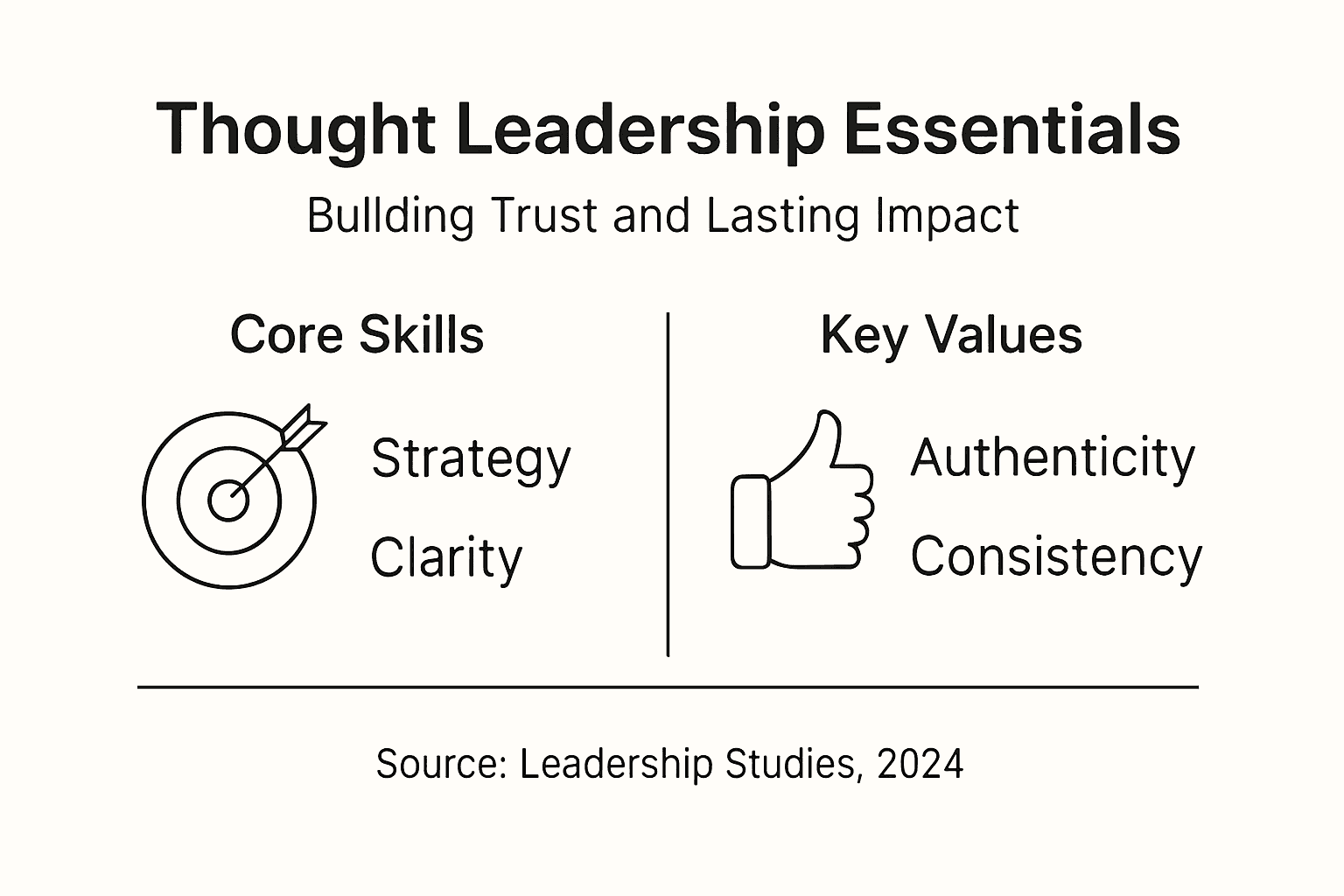
Professional thought leadership requires comprehensive competencies that extend far beyond technical knowledge. Developing leadership principles emphasize the critical importance of understanding complex stakeholder dynamics, personal motivational drivers, and the nuanced art of ethical decision-making in diverse organizational contexts.
Key requirements for effective thought leadership include:
Successful thought leaders recognize that leadership is a dynamic, ongoing process of personal and professional growth. They remain committed to self-reflection, seeking feedback, and maintaining a learning mindset that allows them to evolve continuously and remain relevant in rapidly changing professional landscapes.
Effective thought leadership is not about having all the answers, but about asking the right questions and inspiring meaningful dialogue.
Pro tip: Develop a structured self-assessment framework that regularly evaluates your leadership capabilities and identifies areas for targeted personal development.
Leadership ethical risks reveal critical challenges that can undermine thought leadership credibility and impact. Navigating these potential pitfalls requires a sophisticated understanding of complex organizational dynamics and a commitment to maintaining intellectual integrity and transparency.
Professional thought leaders must remain vigilant about potential vulnerabilities that could compromise their effectiveness and reputation. Common leadership development challenges highlight the importance of understanding and proactively addressing potential operational and interpersonal risks.
Key risks and pitfalls to avoid in thought leadership include:
Successful thought leaders recognize that maintaining credibility requires constant self-assessment, openness to feedback, and a commitment to intellectual honesty. They understand that vulnerability and transparency are strengths, not weaknesses, in building trust and maintaining professional reputation.
The table below summarizes risks that can undermine thought leadership and ways to address them:
| Risk | Potential Impact | Mitigation Approach |
|---|---|---|
| Ethical compromise | Lost trust, damage | Uphold transparency |
| Overconfidence | Limits growth | Foster intellectual humility |
| Trend chasing | Reduces credibility | Prioritize substance |
| Accountability gaps | Reputation erosion | Seek active feedback |
The greatest risk in thought leadership is not making mistakes, but refusing to acknowledge and learn from them.
Pro tip: Implement a rigorous peer review process and seek constructive criticism to identify potential blind spots in your thought leadership approach.
Building authentic and trustworthy thought leadership content demands more than just expertise. It requires delivering insights that resonate deeply and sound genuinely human. The challenge of maintaining intellectual integrity while communicating complex ideas can be daunting. You need to avoid risks like credibility erosion and ethical compromises, all while capturing your audience with compelling, nuanced narratives. That is where the power of Semihuman.ai can transform your approach.

Harness advanced AI tools designed specifically to humanize your AI-generated content so it reflects your unique voice and adheres to authentic thought leadership principles. By using Semihuman.ai, content creators, marketers, and professionals gain the ability to restructure writing, integrate keywords naturally, and bypass AI detection tools like Turnitin and GPTZero with ease. Start refining your strategic vision and communication mastery today by visiting Semihuman.ai and experience how technology empowers you to sustain trust, credibility, and lasting influence through your content.
Thought leadership in content refers to the creation and sharing of innovative ideas and insights that establish credibility and influence within a professional domain. It goes beyond traditional content creation by providing transformative perspectives that guide and inspire others.
Effective thought leadership is characterized by a deep understanding of complex topics, unique perspectives that challenge conventional wisdom, high-quality and research-backed content, compelling storytelling, and the ability to drive meaningful conversations in the industry.
Thought leadership can be expressed through various formats, including research reports, white papers, case studies, webinars, podcasts, and symposiums. Each format serves different strategic purposes and engages audiences in unique ways.
Common risks in thought leadership include ethical compromises, credibility erosion from unsupported claims, overconfidence in knowledge, communication failures, trend chasing, accountability gaps, and inflexibility. It's essential to maintain intellectual integrity and be open to feedback.



Start
Humanizing
for Free!
Humanize