
Loading...

Most American SEO specialists now face a major challenge as AI-generated text becomes harder to spot, yet studies show that over 60 percent can still identify telltale structural errors with the right process. For content marketers trying to deliver authentic digital campaigns, these subtle flaws threaten trust and search ranking alike. This guide walks through practical steps every American professional needs to transform machine writing into credible, human-sounding content.
| Key Point | Explanation |
|---|---|
| 1. Assess AI writing structure | Check for logical flow and coherence to identify AI-generated content. Look for repetitive phrases or lack of depth in arguments. |
| 2. Replace robotic language | Identify generic AI phrases and replace them with more natural, engaging language to enhance authenticity. |
| 3. Organize paragraphs effectively | Ensure each paragraph flows logically and supports your main argument, using transitions to maintain reader engagement. |
| 4. Integrate keywords naturally | Weave keywords into your content without forcing them, ensuring they enhance rather than disrupt readability. |
| 5. Review for human-like authenticity | Utilize a thorough review process that includes reading aloud and gathering feedback to ensure the content resonates with readers. |
Detecting structural inconsistencies in AI-generated text requires a systematic approach that goes beyond surface-level fluency. Understanding the nuanced challenges of artificial intelligence writing is crucial for maintaining authentic content standards. Structural coherence challenges reveal that while AI can produce organized essays, they often lack critical human engagement.
Careful assessment involves examining several key structural elements. Start by analyzing the text's logical progression and looking for patterns that suggest algorithmic generation. Watch for repetitive sentence structures, overly generic language, and arguments that lack genuine intellectual depth. Academic research indicates AI writing tends to demonstrate surface-level fluency without true critical thinking. Pay special attention to transitions between paragraphs, checking whether they feel natural or mechanically generated. Examine the overall argumentation for logical consistency and look for signs of generalized statements that might indicate template-based generation.
Thoroughly cross-reference claims with authoritative sources and verify factual accuracy. AI systems can confidently present incorrect information, so manual verification becomes essential. Scrutinize the text for nuanced critical analysis that demonstrates genuine understanding rather than algorithmic information recombination.
Pro tip: Create a simple checklist with specific structural markers to systematically evaluate AI-generated content and improve your detection accuracy.
Here's a summary of common structural markers for detecting AI-generated text:
| Structural Marker | Human Writing Example | AI-Generated Example | Why It Matters |
|---|---|---|---|
| Logical Progression | Builds ideas step by step | Jumps between unrelated points | Indicates genuine thought |
| Paragraph Transitions | Flows naturally | Feels mechanical | Reveals text cohesion |
| Sentence Variety | Mixed long/short sentences | Repetitive structure | Shows engagement |
| Factual Accuracy | References verified sources | Presents unsupported claims | Maintains credibility |
Transforming AI-generated text into authentic writing requires strategic identification and replacement of telltale machine language patterns. Typical AI writing patterns reveal predictable linguistic markers that signal computer-generated content, making it crucial to recognize and modify these robotic expressions.

Start by creating a watchlist of frequently used AI phrases that sound generic or overly formal. Common culprits include corporate jargon like 'leverage,' 'delve,' 'moreover,' and repetitive transitional words that lack natural conversational flow. Read the text critically, highlighting sentences that feel mechanical or sound like they were generated from a template. Pay attention to overused business terminology and abstract phrases that lack specific context or genuine personal insight. Replace these with more direct, conversational language that reflects genuine human communication. Focus on introducing nuanced vocabulary, varied sentence structures, and personal perspectives that demonstrate authentic thought processes.
Consider reading your text aloud as a diagnostic tool. If sentences sound stilted or unnatural when spoken, they likely need restructuring. Aim to inject personality, use active voice, and incorporate specific examples that showcase real understanding rather than algorithmic information recombination. Context and specificity are your greatest allies in distinguishing human from machine writing.
Pro tip: Develop a personal replacement dictionary of AI-like phrases, systematically swapping out robotic language with more engaging, natural alternatives.
Compare methods for transforming AI-patterned phrases:
| Method | Effectiveness | Best Use Case | Example Improvement |
|---|---|---|---|
| Phrase Watchlist | High | Initial AI detection | Identify 'leverage,' 'delve' |
| Contextual Rewriting | Moderate to High | Replacing jargon | Turn formal into casual |
| Read-Aloud Review | Moderate | Catching unnatural flow | Spot robotic transitions |
Restructuring paragraphs is an art that transforms mechanical text into a compelling narrative with seamless progression. Paragraph organization techniques focus on creating unity, coherence, and logical development of ideas that guide readers through your content effortlessly.
Begin by mapping out your core argument and identifying the primary message of each paragraph. Ensure each paragraph contains a clear topic sentence that anchors the subsequent supporting details. Pay close attention to the logical sequence of your ideas examine how one paragraph transitions to the next. Avoid abrupt shifts by using strategic transition words and maintaining a consistent thematic thread. Vary your sentence length to create rhythm some short sentences for emphasis, others longer for detailed explanation. Read your paragraphs aloud to test their natural flow track where you stumble or feel the progression becomes awkward. Those moments indicate where restructuring is needed.
Think of paragraph reorganization like conducting an orchestra. Each paragraph should play its part harmoniously, supporting the overall composition without overshadowing the main melody. Move supporting details around experiment with different arrangements until the text feels intuitive and engaging. Remove redundant information and ensure each paragraph builds upon the previous one, creating a smooth intellectual journey for your reader.
Pro tip: Create a physical or digital outline of your paragraphs using index cards or digital mapping tools to visualize and rearrange your content more effectively.
Keyword integration is a strategic art of blending crucial search terms into your content without disrupting its natural rhythm and readability. Keyword integration strategies emphasize precision and contextual relevance, ensuring your content remains authentic while improving discoverability.
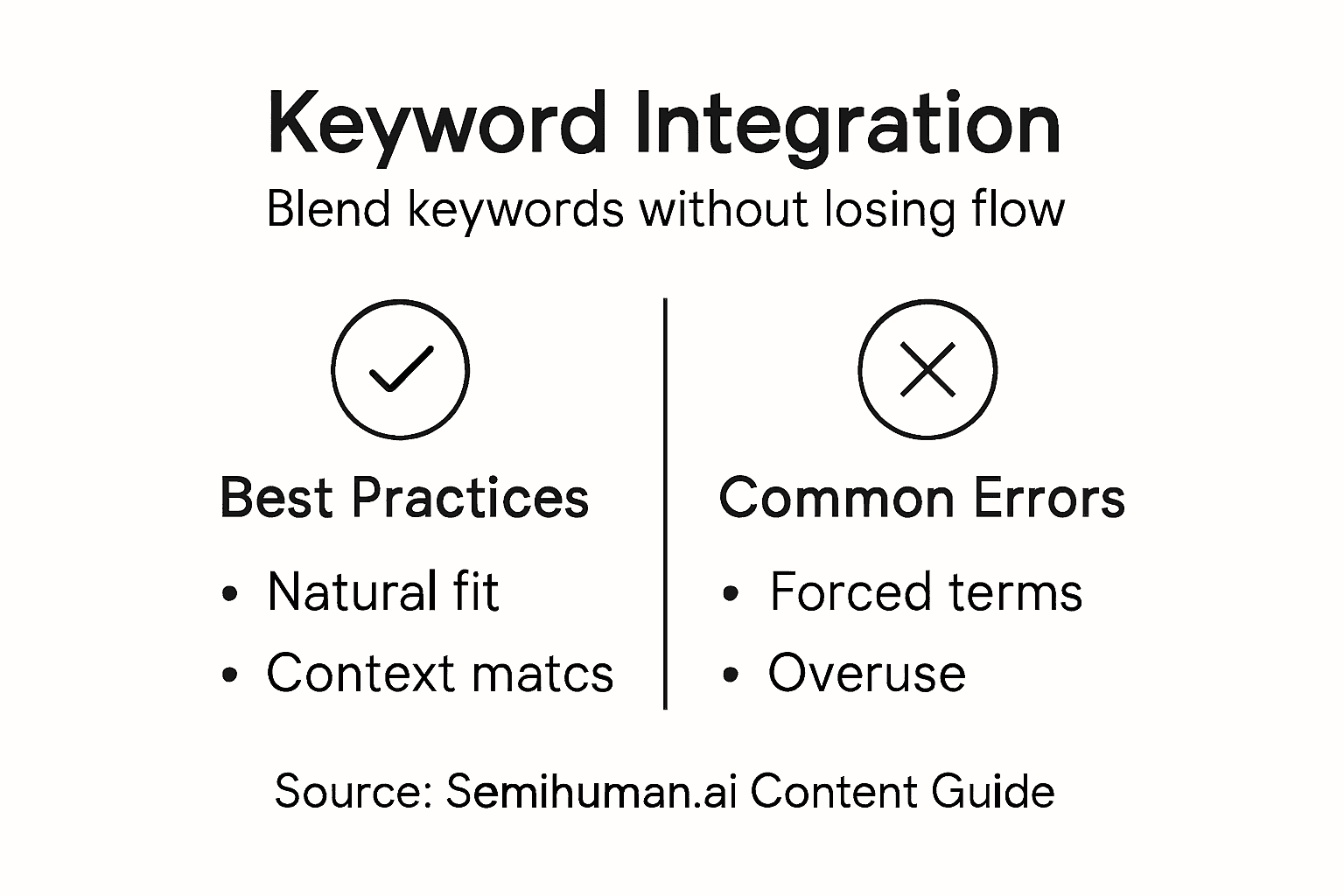
Start by selecting keywords that genuinely represent your content core. Avoid forcing these terms into your text mechanically. Instead, look for natural opportunities to incorporate them within sentences that flow organically. Think of keywords like seasoning not the main ingredient. They should enhance your writing without overwhelming the core message. Place keywords strategically in your opening paragraph, section headings, and throughout the body text where they make logical sense. Vary your keyword placement and use synonyms to prevent repetitive language. Read your text aloud to ensure the keywords sound conversational and smooth.
Remember that search algorithms have become increasingly sophisticated. They now prioritize contextual understanding over simple keyword density. This means your primary focus should be creating high quality, meaningful content that naturally includes relevant terms. Weave your keywords into substantive sentences that provide real value to your readers. Pay attention to semantic variations and related concepts that can help broaden your content reach without compromising its authentic voice.
Pro tip: Create a keyword mapping document that tracks your primary and secondary keywords, helping you visualize their strategic placement throughout your content.
Authenticity verification goes beyond surface-level language checks. Writer's behavioral analysis offers innovative approaches to distinguishing human generated content from AI-produced text by examining deeper writing characteristics.
Start by developing a comprehensive review process that evaluates multiple dimensions of your text. Read the content aloud and listen for unnatural rhythms or repetitive language patterns that might signal artificial generation. Pay attention to contextual nuance and emotional subtext. Authentic writing demonstrates subtle variations in sentence structure, includes personal insights, and reflects genuine thought processes. Compare your text against multiple AI detection tools but do not rely exclusively on their results. These tools have limitations and can produce inconsistent outcomes.
Consider incorporating human perspectives into your review. Ask colleagues or subject matter experts to read the text and provide feedback on its authenticity. Look for areas where the writing feels mechanical or lacks genuine intellectual engagement. Specific markers include overly formal language, generic statements without specific examples, and arguments that lack genuine critical thinking. The goal is not just to pass detection tools but to create content that genuinely resonates with human readers.
Pro tip: Create a personal authenticity checklist with specific human writing markers to systematically evaluate and improve your content before final submission.
The article "Text Restructuring Techniques for Authentic Content" highlights the challenge of turning AI-generated text into naturally flowing and genuinely human writing. Many creators struggle with detecting and replacing AI-patterned phrases, reorganizing paragraphs for smooth progression, and integrating keywords without losing authenticity. If you have ever felt frustrated by mechanical sentence structures or generic transitions that fail to engage readers, this problem hits close to home.
Semihuman.ai is designed precisely to solve these pain points. Our specialized AI-powered platform detects AI-generated language patterns and helps you restructure your text for enhanced coherence and readability. With advanced features for natural keyword integration and paragraph reorganization, our tool ensures your content shines with a truly human voice. This not only improves your SEO rankings but also helps your work confidently bypass AI detection tools like Turnitin and GPTZero.
Bring authenticity to your content creation now.
Start transforming your AI-generated drafts into seamless, reader-friendly writing with Semihuman.ai. Discover tools tailored for marketers, students, and content creators who value genuine connection in their words. Don’t wait to elevate your writing — experience the power of human-like content today at https://semihuman.ai.
Text restructuring techniques involve organizing and refining content to improve its clarity and flow. To implement these techniques, identify the key messages in your writing and reconfigure paragraphs and sentences to create a more natural progression.
To determine if your content sounds human-like, read it aloud and listen for unnatural rhythms or repetitive phrases. Focus on areas where the writing feels awkward, and revise those sections to enhance coherence and engagement.
When evaluating AI-generated text, check for logical progression, varied sentence structures, and natural transitions. Create a simple checklist that includes these markers to systematically identify areas that need improvement.
Integrate keywords by finding natural opportunities to include them in your sentences. Place keywords meaningfully within your writing, ensuring they enhance rather than interrupt the flow and make your content more discoverable.
Paragraph organization is crucial for maintaining a logical progression of ideas and guiding readers through your content. To improve organization, start by mapping out your core argument and ensure each paragraph supports that central theme with a clear topic sentence.
To ensure your content resonates with readers, include personal insights and authentic perspectives in your writing. Seek feedback from colleagues or peers to identify mechanical or generic phrases, refining those areas to better connect with your audience.



Start
Humanizing
for Free!
Humanize