
Loading...

Most American students now face classrooms where artificial intelligence shapes written assignments in ways never seen before. As AI-generated essays become common, the challenge shifts from simply producing content to accurately spotting work that is not authentically human. With over 60 percent of academic institutions testing AI detection tools, understanding how machine-produced writing differs from real expression is more important than ever for students, educators, and anyone committed to academic integrity.
| Point | Details |
|---|---|
| AI Essays Exhibit Unique Patterns | AI-generated essays often showcase intricate syntactic structures, unusual lexical diversity, and a consistently uniform writing tone that can be systematically identified. |
| Detection Tools Are Imperfect | Current AI text detection tools face limitations, including high false positive rates and challenges in accurately distinguishing between human and machine writing. |
| Risks of AI Content Reliance | Relying on AI-written content can lead to academic misconduct, credibility erosion, and potential factual inaccuracies, compromising intellectual integrity. |
| Strategies for Human-like Writing | Incorporating varied sentence structures, emotional subtext, and personal insights can help ensure writing reflects authentic human communication patterns. |
AI-generated essays have distinct linguistic characteristics that set them apart from human-written work. Advanced language models now produce essays with complex syntactic structures and unique writing patterns that can be systematically identified.
Research comparing human and AI-generated essays reveals several key telltale signs. According to recent studies, AI-generated essays often demonstrate:
The most significant linguistic indicator is the essay's syntactic complexity. Comparative research shows AI models like GPT tend to construct sentences with sophisticated grammatical arrangements that differ subtly from natural human writing. These essays frequently display perfect grammatical precision with less organic variation typical of human writers.
Detecting AI-generated content requires understanding these nuanced linguistic patterns. Experienced readers and advanced detection tools analyze multiple factors including sentence structure, vocabulary distribution, contextual coherence, and semantic consistency to distinguish between human and AI-generated text. While AI writing continues to improve, these fundamental differences provide critical markers for identification.
Linguistic analysis of AI-generated essays reveals intricate patterns that distinguish machine-written text from human composition. These computational texts demonstrate unique characteristics across multiple linguistic dimensions, making them increasingly identifiable through sophisticated detection techniques.
Research highlights several key linguistic indicators in AI-generated essays:
Advanced textual analysis indicates that AI essays frequently exhibit paradoxical linguistic traits. While demonstrating high novelty, these texts simultaneously show reduced vocabulary diversity and mechanically precise word count distributions. The algorithmic nature becomes evident through their structured yet slightly unnatural linguistic presentation.

Understanding these nuanced linguistic fingerprints requires careful examination of textual subtleties. Writers and academic professionals can develop keen insights by recognizing how machine-generated content differs from organic human writing through meticulous linguistic pattern recognition. Humanizing machine-written text becomes crucial in maintaining authentic academic communication.
The landscape of AI text detection has evolved rapidly, with tools like GPTZero emerging as critical technologies in identifying artificially generated content. These detection platforms aim to distinguish between human and machine-written text, but they face significant challenges in achieving consistent accuracy.
Key limitations of current AI detection tools include:
Undetectable AI technologies highlight the ongoing battle between text generation and detection systems. These tools demonstrate that current detection methods can be circumvented through advanced text modification techniques, creating a complex challenge for academic and professional verification processes.
Navigating the complex world of AI detection requires a sophisticated approach. Professionals must recognize that no single tool provides a definitive solution, and avoiding bland AI phrasing remains crucial in creating authentic, undetectable content. The most effective strategy involves combining multiple detection methods, understanding linguistic patterns, and maintaining critical analytical skills.
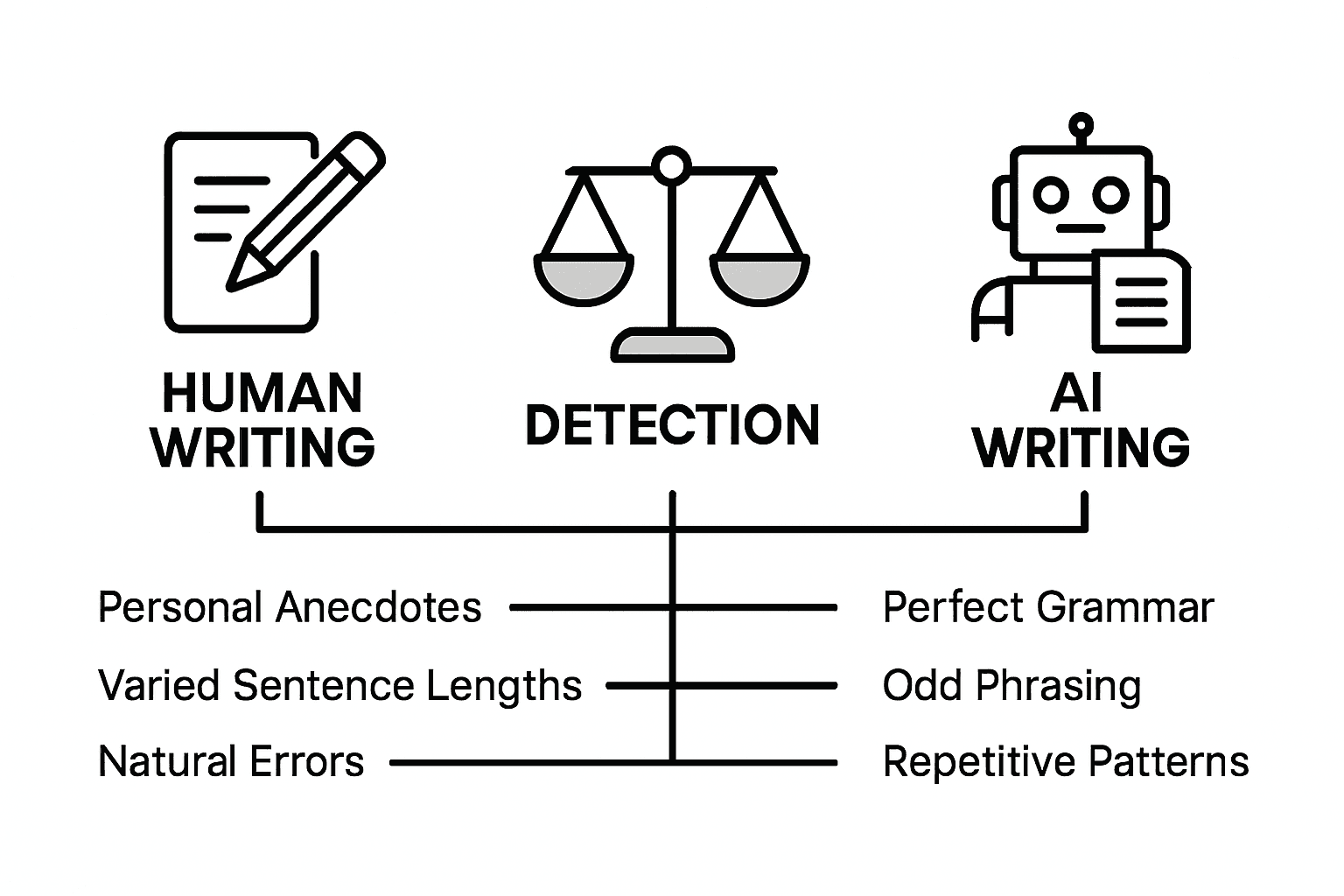
Generative artificial intelligence introduces significant challenges in academic and professional writing environments, creating complex risks that extend far beyond simple content generation. The uncritical adoption of AI-generated content can compromise intellectual integrity and undermine fundamental principles of original thinking.
Key risks of relying on AI-written content include:
Content challenges in digital platforms highlight the broader implications of AI-generated text. Online platforms have already experienced significant issues with artificially created content, including the creation of hoax articles and fabricated sources that can rapidly spread misinformation.
Effectively managing AI-generated content requires a nuanced approach. Content generation challenges demand critical evaluation, understanding that while AI can be a powerful tool, it cannot replace genuine human insight, creativity, and contextual understanding. Professionals must develop sophisticated strategies to leverage AI responsibly while maintaining the integrity of their intellectual work.
Linguistic research reveals critical strategies for creating writing that authentically reflects human communication patterns. Transforming AI-generated text requires a nuanced approach that goes beyond simple word replacement, focusing on the subtle linguistic characteristics that distinguish human expression.
Key strategies for ensuring naturally human writing include:
Incorporating personal experiences represents a powerful technique for enhancing writing authenticity. Human writing naturally includes subjective viewpoints, contextual nuances, and emotional undertones that AI-generated content typically struggles to replicate. Examples of humanized text demonstrate how strategic personal insights can transform mechanical prose into compelling, genuine communication.
The art of natural writing demands continuous refinement. Writers must develop a keen awareness of their unique voice, embracing imperfections and personal perspectives that make their work distinctly human. This approach transforms writing from a technical exercise into a genuine form of personal expression.
The article highlights the challenges of detecting AI-generated essays due to their intricate syntactic patterns and uniform tone. If you worry about AI detection tools flagging your work or if you want to maintain genuine academic integrity and unique voice, these concerns are key. Many writers face the dilemma of balancing AI assistance with the risk of bland, mechanical phrasing that lacks emotional depth and natural variation.
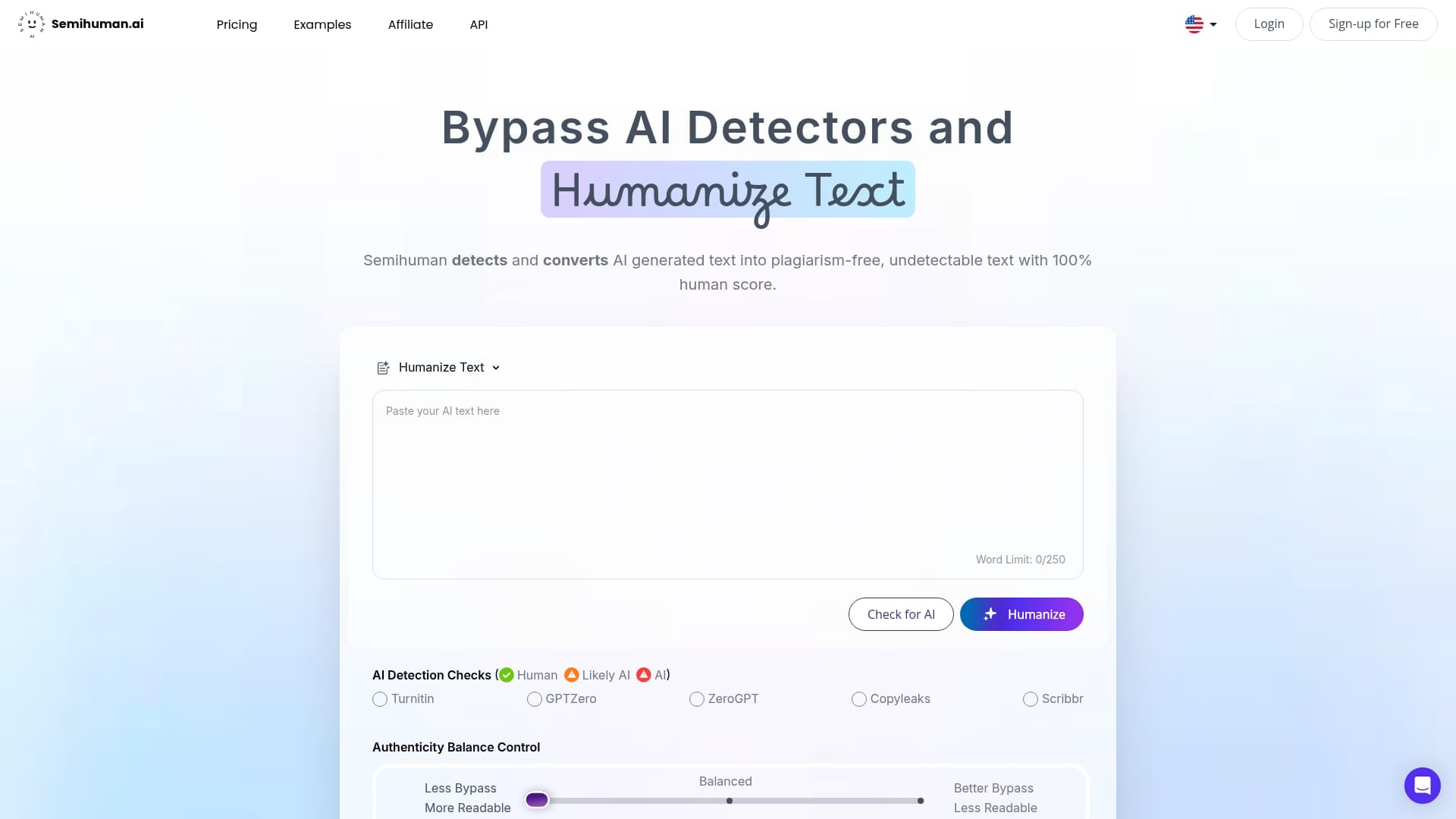
Discover how Semihuman.ai provides the perfect solution to these problems by transforming AI-produced text into naturally human-like content. With features tailored to restructure sentences, integrate keywords smoothly, and evade AI detection software like GPTZero and Turnitin, Semihuman.ai empowers creators, students, and marketers to produce authentic and credible writing. Don’t let AI-generated red flags compromise your work. Take control today for authentic, undetectable results by visiting Semihuman.ai and start humanizing your content with ease.
AI-generated essays often exhibit intricate syntactic structures, unusual lexical diversity, reduced use of contextual discourse markers, and a consistently uniform writing tone.
To detect AI-generated content, look for signs such as perfect grammatical precision, a lack of organic variation in writing style, structured sentence forms, and limited contextual understanding.
Relying on AI-written content poses risks such as academic misconduct, credibility erosion, potential factual inaccuracies, and intellectual property concerns.
To create naturally human writing, employ varied sentence structures, use contextually appropriate function words, integrate emotional subtext, and allow for occasional grammatical imperfections.



Start
Humanizing
for Free!
Humanize