
Loading...

More than 60 percent of American businesses now rely on AI tools to produce digital content, but standing out in competitive global industries demands more than simple automation. For digital marketers and content strategists, ensuring that repurposed material feels genuinely human while still ranking high on search engines is a challenge that influences success. This guide delivers proven tactics for transforming AI-generated articles into authentic assets that avoid detection and boost visibility.
| Important Insight | Explanation |
|---|---|
| 1. Assess Your Content Thoroughly | Conduct a comprehensive review to identify sections with strong potential for repurposing across different formats and audiences. |
| 2. Identify Suitable Formats and Platforms | Match your content to the right platforms, ensuring that each format resonates with its intended audience for maximum engagement. |
| 3. Cultivate a Human Voice | Transform mechanical language into authentic, conversational writing, incorporating personal insights and narrative elements for better connection. |
| 4. Integrate Keywords Strategically | Naturally embed relevant keywords to enhance search visibility while ensuring the content remains readable and engaging for human audiences. |
| 5. Verify Content Authenticity | Use AI detection tools to assess and refine your content, focusing on making it feel distinctly human and less formulaic. |
Successfully repurposing content begins with a strategic evaluation of your existing materials. This step involves carefully analyzing your original work to identify hidden opportunities for transformation and reuse.
Starting the assessment requires a comprehensive review of your current content through multiple lenses. Computational integration methods demonstrate how examining existing material can uncover new potential applications. Scan your content for key elements that might translate across different formats or audiences. Look for rich sections with evergreen insights that could be expanded or reimagined.
Focus on identifying content segments with strong foundational information that can be restructured or reinterpreted. Academic papers, research reports, and detailed blog posts often contain multiple nuggets of valuable information waiting to be repurposed. Pay special attention to sections with unique research, compelling statistics, or innovative perspectives that could stand alone as separate pieces.
Pro tip: Create a content inventory spreadsheet tracking each piece's core topics, unique insights, and potential repurposing angles to streamline your assessment process.
Successfully expanding your content's reach requires strategic planning across multiple distribution channels. This step focuses on identifying the most effective formats and platforms that will maximize your content's visibility and engagement.

Content distribution strategies involve transforming your original material into formats that resonate with different audience segments. Begin by mapping your core content to potential platforms LinkedIn might work best for long-form professional articles, while Instagram could showcase infographic snippets. Consider converting written content into engaging video scripts for YouTube, creating podcast episodes from research-heavy pieces, or developing short social media posts that highlight key insights.
Understand each platform's unique characteristics and audience expectations. Short video clips might perform exceptionally well on TikTok, while detailed analysis works better on professional networks. Evaluate your target audience's preferences by analyzing platform demographics, engagement metrics, and content consumption patterns. Some formats like webinars, slide decks, or interactive guides can breathe new life into existing material while attracting different audience segments.
Pro tip: Create a content matrix documenting each piece's potential formats, ideal platforms, and expected engagement to streamline your distribution strategy.
Here's a quick comparison of popular content formats and the platforms where they perform best:
| Content Format | Ideal Platform | Typical Audience | Engagement Strength |
|---|---|---|---|
| Long-form articles | LinkedIn, Medium | Professionals | High |
| Infographics | Instagram, Pinterest | Visual learners | Moderate to High |
| Short videos | TikTok, Instagram | Younger demographics | Very High |
| Podcasts | Spotify, Apple | On-the-go listeners | Moderate |
| Slide decks | SlideShare, LinkedIn | Business audiences | Niche, targetted |
Transforming content requires strategic modifications that breathe genuine human personality into your writing. This step focuses on reimagining your existing material to sound authentically human while maintaining core informational value.
Writer's Integrity frameworks demonstrate the critical importance of preserving unique authorial voice during content repurposing. Start by reviewing your original text and identifying areas where language feels mechanical or overly systematic. Inject personal insights, use conversational phrasing, and incorporate subtle narrative elements that reflect human experience. This might mean adding contextual anecdotes, using varied sentence structures, or introducing reflective commentary that AI typically cannot replicate.

Pay close attention to emotional nuance and subjective perspectives. Academic or technical content often sounds sterile when directly transferred between formats. Break up dense paragraphs, introduce rhetorical questions, and use first-person references that create a sense of genuine human interaction. Your goal is to transform structured information into a dynamic narrative that feels like a conversation with a knowledgeable colleague rather than a computer-generated report.
Pro tip: Read your transformed content aloud and edit any sections that sound robotic or lack natural conversational rhythm.
Keyword integration is an essential skill for transforming repurposed content into search engine friendly material while maintaining authentic readability. This step focuses on strategically embedding keywords that enhance your content's visibility without compromising its natural flow.
Content optimization strategies reveal the nuanced art of keyword placement and density. Begin by conducting thorough keyword research to identify terms that align with your original content's core themes. Aim to incorporate primary and secondary keywords naturally within your text thinking beyond simple insertion. This means weaving keywords into headers, introductory paragraphs, and throughout your content in ways that feel conversational and organic. Consider using variations and semantic alternatives to prevent keyword stuffing while maintaining semantic relevance.
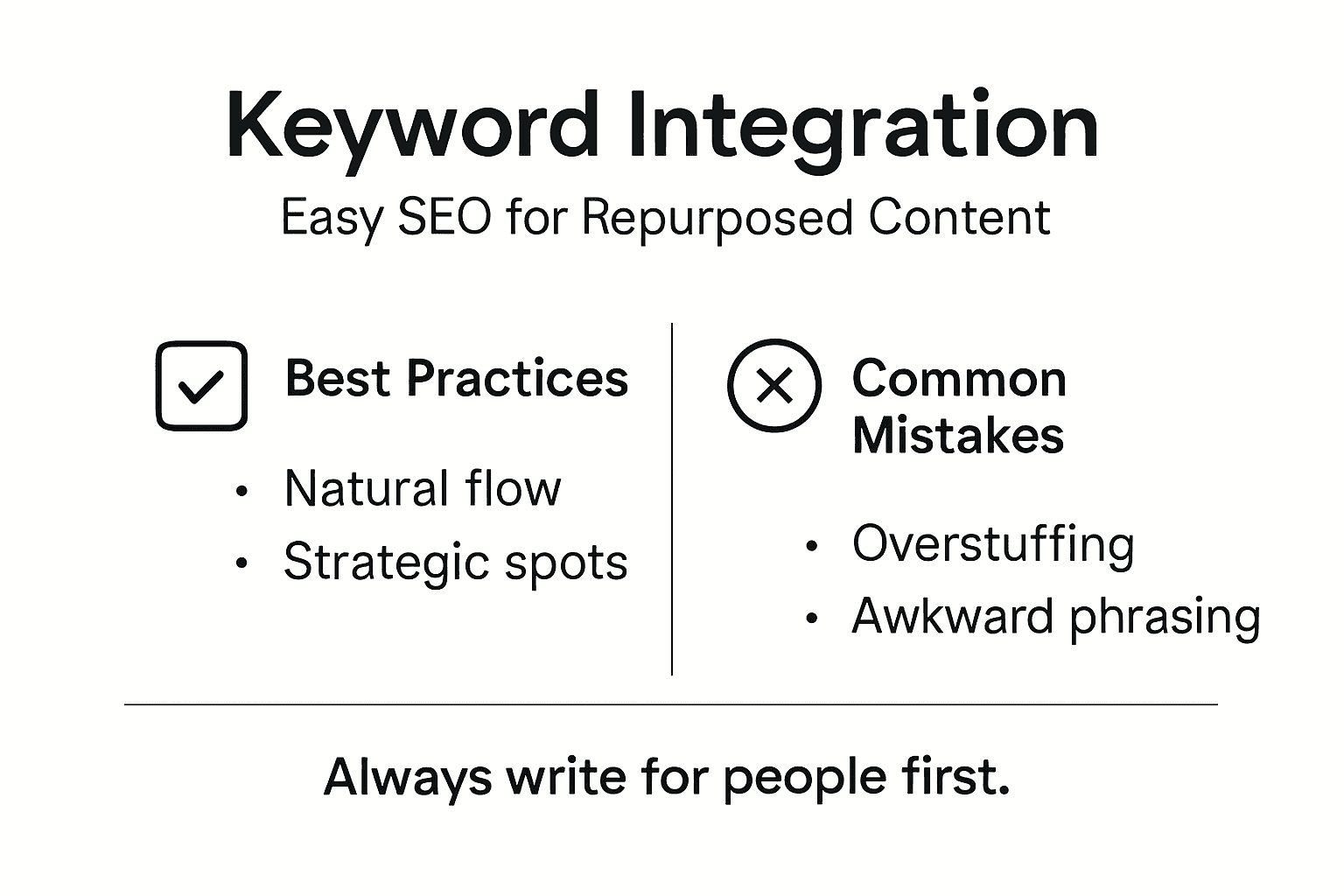
Think strategically about keyword placement and context. Your goal is creating content that reads smoothly for human audiences while signaling topical expertise to search engines. Place primary keywords in critical locations such as the title, first paragraph, and section headers. Use secondary keywords throughout the body to provide context and depth. Remember that modern search algorithms prioritize contextual understanding over mechanical keyword density. Pay attention to user intent and ensure your keywords support the overall narrative and value of your repurposed content.
Pro tip: Use online keyword density tools sparingly and always prioritize natural language flow over strict percentage targets.
Use this overview to guide keyword integration for repurposed content:
| Keyword Type | Placement Location | Example Use Case |
|---|---|---|
| Primary Keyword | Title, intro, headings | Topic-defining articles |
| Secondary Keyword | Throughout body text | Supporting subtopics |
| Semantic Variant | Synonyms in all sections | Improving topic breadth |
| Long-tail Keyword | Section conclusions, FAQs | Targeting niche searches |
Verifying content authenticity requires strategic testing to ensure your repurposed material successfully bypasses AI detection systems. This critical step helps maintain the integrity of your content while avoiding potential flagging by automated detection tools.
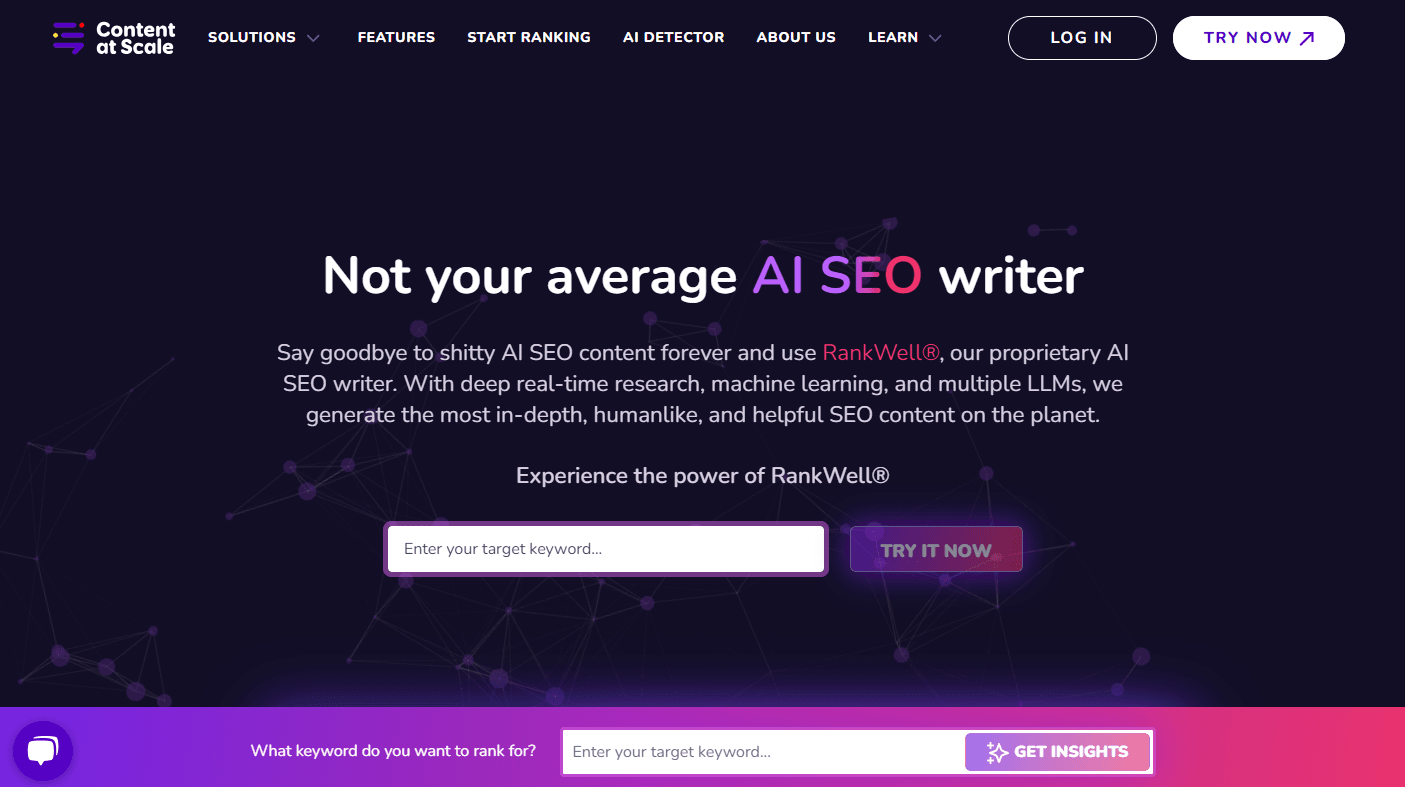
AI text detection challenges reveal the complex landscape of content verification. Begin by running your transformed content through multiple AI detection platforms to assess its human authenticity score. Use a diverse range of tools including GPTZero, Originality.ai, and Content at Scale to get comprehensive results. Pay attention to specific markers that might trigger AI detection such as repetitive phrasing, overly systematic sentence structures, or lack of contextual nuance. Look for subtle variations in your text that can improve its human like qualities such as incorporating personal anecdotes, using varied sentence lengths, and introducing slight imperfections that AI typically avoids.
Develop a systematic approach to testing and refinement. After initial detection tests, carefully analyze the feedback and incrementally adjust your content. Focus on areas that might appear mechanical or too polished. Introduce natural language variations like occasional colloquialisms, strategic grammatical imperfections, and context specific references that demonstrate genuine human insight. Remember that AI detection is an evolving technology so continuous adaptation is key to maintaining your content authenticity.
Pro tip: Create a personal editing checklist that includes specific human touch elements to naturally bypass AI detection algorithms.
The article reveals the challenge content creators face when transforming AI-generated or original content into authentic, SEO-friendly pieces that sound genuinely human. Key issues include avoiding robotic phrasing, integrating keywords naturally, and passing AI detection tests while preserving human authenticity. If you struggle with maintaining a natural voice and ensuring your repurposed content achieves SEO success without risking flagging by tools like GPTZero or Turnitin, this is where the real challenge lies.
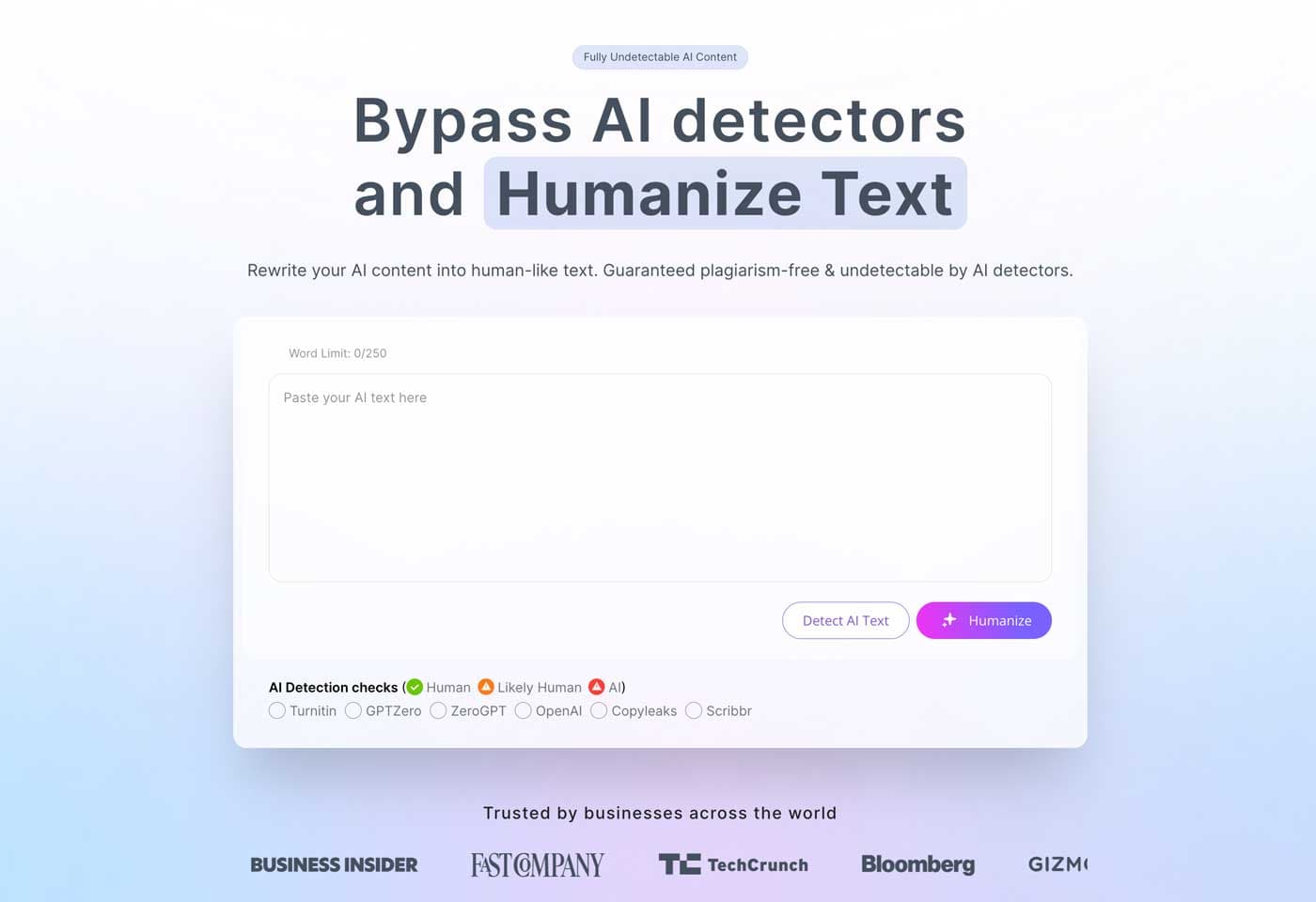
Semihuman.ai offers a powerful solution tailored for these exact needs. Our AI-powered platform specializes in humanizing AI-produced text by restructuring language, enhancing keyword integration, and optimizing your content to evade AI detection systems. Whether you are creating blog articles, marketing emails, or academic papers, Semihuman.ai helps unlock the full potential of your repurposed work by infusing it with genuine human nuance and style.
Discover how easy it is to transform your content by visiting Semihuman.ai and explore how our features align perfectly with strategies discussed in the article such as keyword placement, authentic narrative flow, and AI detection evasion. Also, check out our main landing page to get started with tools designed for creators, marketers, and students aiming for authentic SEO success.
Ready to turn your AI text into compelling, human-like writing that ranks well and passes detection tests?
Improve your content’s authenticity and SEO impact today.
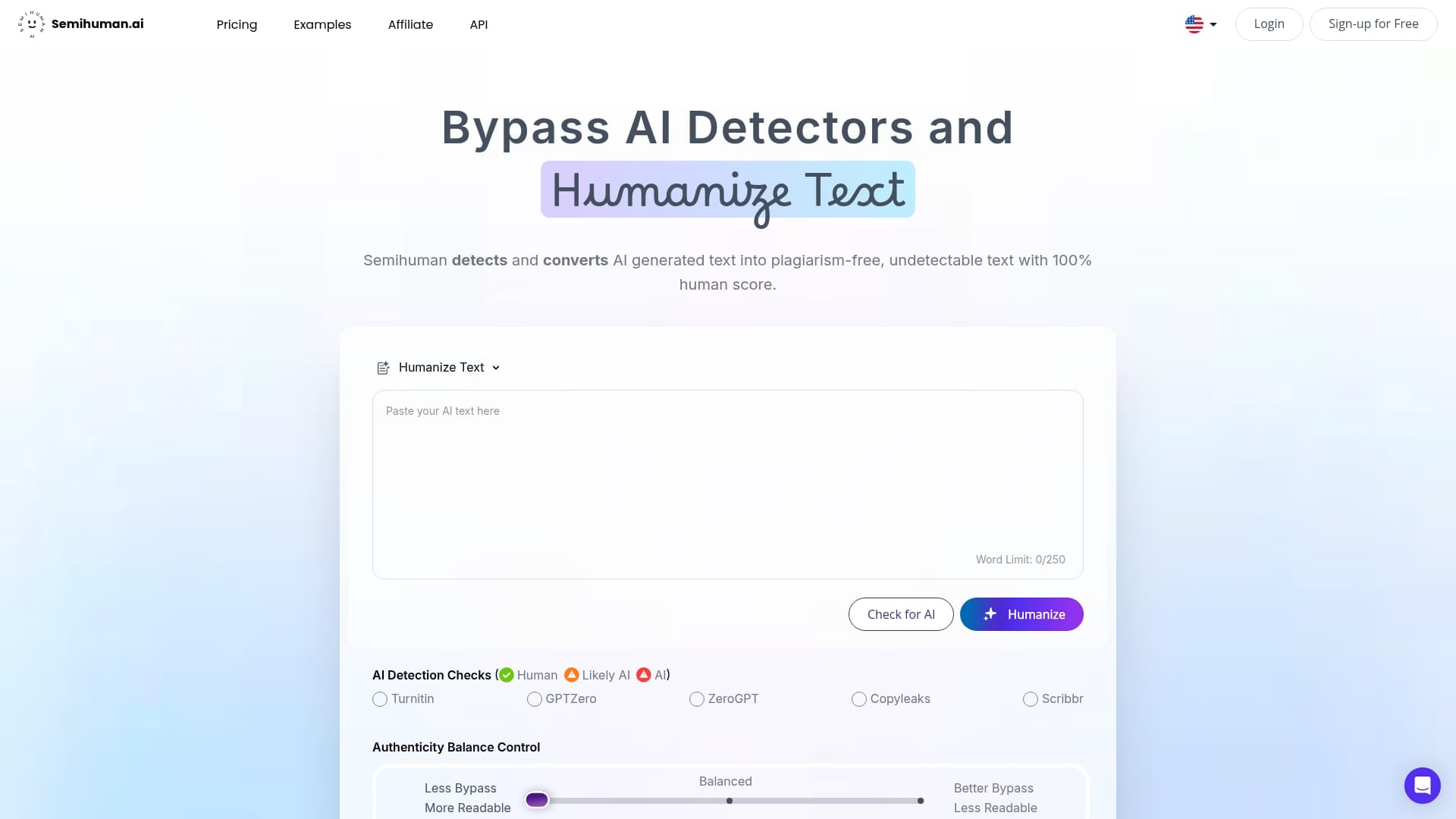
Experience the transformation yourself—visit Semihuman.ai now and take the first step toward content that truly connects with your audience.
Start by conducting a comprehensive review of your existing materials to identify valuable segments. Create a content inventory spreadsheet to track core topics and unique insights, which will help streamline your assessment process.
Evaluate which content formats best suit each distribution platform. For example, consider turning long-form articles into short videos for social media or podcasts to reach different audience segments effectively.
To make your content feel more human, incorporate personal insights and conversational phrasing. Aim to break up dense paragraphs and add anecdotes to create a genuine narrative that engages readers.
Focus on seamlessly embedding primary and secondary keywords throughout your text while ensuring it reads naturally. Place primary keywords in key locations such as the title and headings, and use variations of keywords to enhance semantic relevance.
Run your content through multiple AI detection platforms to gauge its human authenticity score. Make incremental adjustments based on feedback, introducing natural language variations and slight imperfections to improve its human-like qualities.
Develop a personal editing checklist that includes elements like personal anecdotes, varied sentence structures, and slight grammatical imperfections. This will help you create content that feels more genuine and reduces the likelihood of being flagged by AI detection systems.


Start
Humanizing
for Free!
Humanize