
Loading...

Every Content Marketer faces the challenge of distinguishing authentic voice from formulaic text in the rapidly shifting AI content scene. The depth of genuine human expression often determines whether content for an American audience feels relatable or gets dismissed as artificial. Authentic writing moves beyond technical perfection, delving into the emotional and psychological dimensions that foster real reader connections. This article unveils strategies and misconceptions, helping Content Marketers and SEO Specialists create meaningful digital narratives that resonate and withstand detection scrutiny.
| Point | Details |
|---|---|
| Authentic Writing | True authenticity involves genuine human expression and emotional connections, not just technical accuracy. |
| Navigating AI and Authenticity | Content creators must balance technological efficiency with personal insights to maintain a genuine voice. |
| Psychological Drivers | Key factors like self-esteem, autonomy, and emotional alignment are crucial for producing authentic content. |
| Importance in Marketing | Authentic communication enhances consumer trust, making it essential in digital marketing and SEO strategies. |
Authentic writing represents more than just crafting technically accurate text - it encompasses capturing genuine human expression and creating meaningful connections with readers. The concept goes far beyond surface-level mechanics, diving deep into the psychological and emotional dimensions of communication. Writer's Integrity framework challenges traditional assumptions by emphasizing that authenticity emerges from the unique human writing process, not merely the final textual output.
Misconceptions about authentic writing often stem from oversimplified perspectives that reduce communication to mechanical task completion. Many incorrectly assume that authentic writing can be achieved through formulaic approaches or by simply mimicking real-world writing styles. However, true authenticity requires a nuanced understanding that writing is fundamentally about connecting human experiences. Authentic writing assignments demonstrate this by aligning academic tasks with meaningful real-world purposes and students' lived experiences, moving beyond rote academic exercises.
In the AI-driven content landscape, authenticity has become increasingly complex. Content creators must now navigate the delicate balance between technological efficiency and maintaining genuine human voice. This means going beyond AI-generated text to infuse writing with personal insights, emotional depth, and contextual understanding that algorithms cannot replicate. Authentic writing demands vulnerability, personal perspective, and a willingness to move beyond standardized communication patterns.
Pro tip: Develop a personal writing ritual that helps you tap into your unique voice and perspective, creating a consistent method for generating authentic content.
Here's a summary of the key misconceptions and realities of authentic writing:
| Common Misconception | Reality of Authentic Writing |
|---|---|
| Imitating style equals authenticity | True authenticity reflects personal experience |
| Formulaic approaches guarantee genuine work | Authenticity needs emotional depth and context |
| Technical accuracy ensures authentic voice | Human insight and vulnerability are essential |
| AI tools alone can create real connection | Personal narrative drives reader engagement |
Psychological authenticity emerges from complex internal mechanisms that drive human expression and self-perception. Psychological need satisfaction plays a critical role in understanding how individuals develop and maintain an authentic sense of self. At its core, authenticity is rooted in three fundamental psychological drivers: self-esteem, autonomy, and emotional alignment with one's true identity.

The primary psychological mechanisms underlying authenticity include self-accuracy, self-consistency, and self-ownership. Individuals experience authenticity when their external behaviors consistently reflect their internal values, beliefs, and emotional landscapes. Authenticity conceptualizations reveal that true self-representation requires a delicate balance between personal integrity and adaptive social interaction. This means creating a genuine narrative that honors individual experiences while remaining flexible enough to grow and evolve.
Content creators and marketers must recognize that authenticity is not a static destination but a dynamic psychological journey. It involves continuous self-reflection, vulnerability, and the willingness to challenge internal narratives that might limit genuine expression. The psychological research suggests that individuals who prioritize autonomy and maintain strong connections between their inner experiences and external representations are more likely to produce truly authentic content that resonates with audiences.
Pro tip: Practice daily mindfulness techniques that help you align your internal emotional landscape with your external communication, creating a more authentic and consistent personal narrative.
To better understand what drives authentic writing, compare these primary psychological factors:
| Psychological Driver | Definition | Impact on Authentic Writing |
|---|---|---|
| Self-Esteem | Confidence in one’s worth | Encourages honest self-expression |
| Autonomy | Freedom to act independently | Supports unique voice development |
| Emotional Alignment | Matching feelings and actions | Makes content resonate with readers |
The intersection of artificial intelligence and human perception reveals complex dynamics in how we interpret authenticity. Human perception of authorship fundamentally shifts when individuals become aware that content is AI-generated, dramatically impacting credibility and emotional engagement. This awareness triggers an immediate psychological filter that evaluates the text's perceived genuineness, challenging the notion that technological sophistication alone can replicate human expression.
Authentic voice transcends mere technical accuracy and demands a nuanced understanding of emotional intelligence and contextual subtlety. Creative text authenticity research demonstrates that AI consistently struggles to capture the iterative, idiosyncratic processes that define human writing. These unique characteristics include subtle emotional undertones, personal experiences, and spontaneous thought connections that cannot be algorithmically predicted or replicated.
Content creators must recognize that authentic voice is not about perfection but about vulnerability, personal perspective, and the inherent imperfections that make human communication compelling. While AI can generate grammatically flawless text, it cannot inherently understand the emotional landscapes that give writing its true power. The challenge lies in creating content that maintains technological efficiency while preserving the raw, unpredictable essence of human expression.
Pro tip: Integrate personal anecdotes and unique perspectives into your writing to create an unmistakable human signature that AI cannot easily replicate.
Authenticity has become a critical differentiator in digital marketing, transforming how brands connect with audiences. Authenticity management strategies are fundamental in creating meaningful digital engagement, directly influencing consumer trust and content credibility. Marketers now recognize that genuine, transparent communication drives deeper connections beyond traditional algorithmic optimization techniques.
In the evolving landscape of search engine optimization, authenticity serves as a powerful ranking signal. Search algorithms increasingly prioritize content that demonstrates real human insight, emotional intelligence, and contextual understanding. Digital identity construction through authentic content helps brands establish virtual communities, strengthen consumer relationships, and create meaningful interactions that transcend traditional transactional marketing approaches.
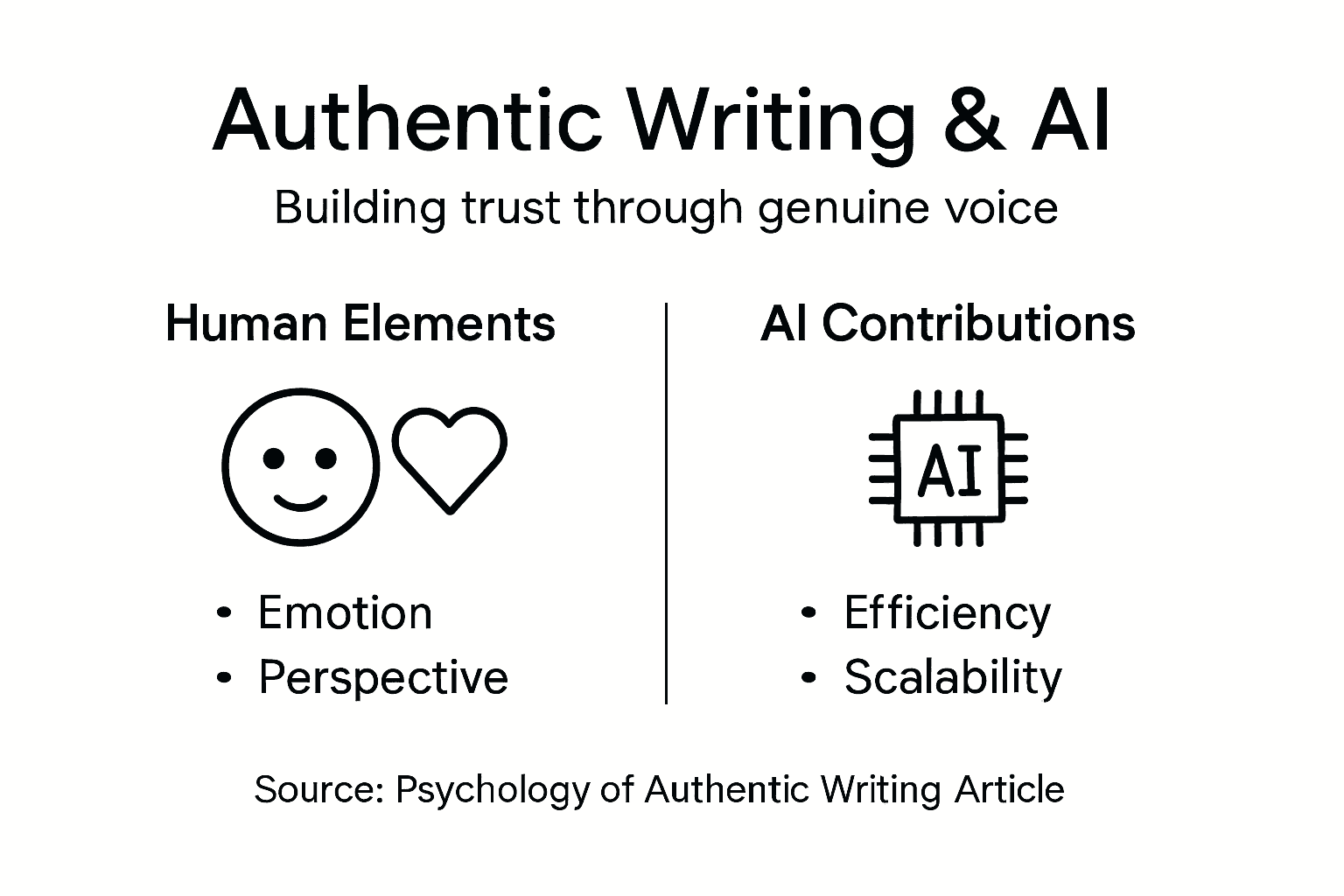
Content marketing success now hinges on the ability to blend technological efficiency with genuine human storytelling. This requires a strategic approach that goes beyond keyword stuffing or mechanical content generation. Authentic content involves revealing brand personality, sharing real experiences, and creating narratives that resonate with audience emotions and lived experiences. Marketers must focus on developing content that feels personal, vulnerable, and uniquely human, effectively cutting through the noise of AI-generated materials.
Pro tip: Develop a consistent brand voice that reflects genuine human experiences and integrate personal storytelling elements to create more engaging and authentic content.
Navigating the complex landscape of AI content detection requires a nuanced understanding of emerging technological challenges. AI detection tools vary dramatically in their effectiveness, creating a sophisticated game of technological cat and mouse between content creators and detection systems. The most common pitfalls emerge from simplistic approaches that rely on predictable patterns of AI-generated text, which can be systematically identified and modified.
Advanced evasion strategies focus on introducing human-like variability and contextual complexity into generated content. This involves sophisticated techniques like strategic prompt engineering, intentional stylistic modifications, and carefully crafted textual nuances that disrupt machine learning detection algorithms. The goal is not just to avoid detection, but to create content that genuinely reflects human cognitive diversity and contextual understanding.
Process-based authenticity assessments represent the next frontier in addressing AI writing detection challenges. These approaches move beyond surface-level text analysis, examining the entire writing process including interaction tracking, reflection iterations, and revision patterns. By focusing on the holistic writing experience rather than just the final text, these methods provide a more sophisticated mechanism for understanding authentic content generation.
Pro tip: Develop a multi-layered writing approach that incorporates spontaneous revisions, personal anecdotes, and contextual variations to create more naturally complex content.
The article on the psychology of authentic writing highlights the critical challenge creators face today: blending AI efficiency with genuine human voice that builds trust and connection. Readers seeking to overcome pitfalls like emotional disconnect and AI detection need powerful tools that align with psychological drivers such as autonomy and emotional alignment.
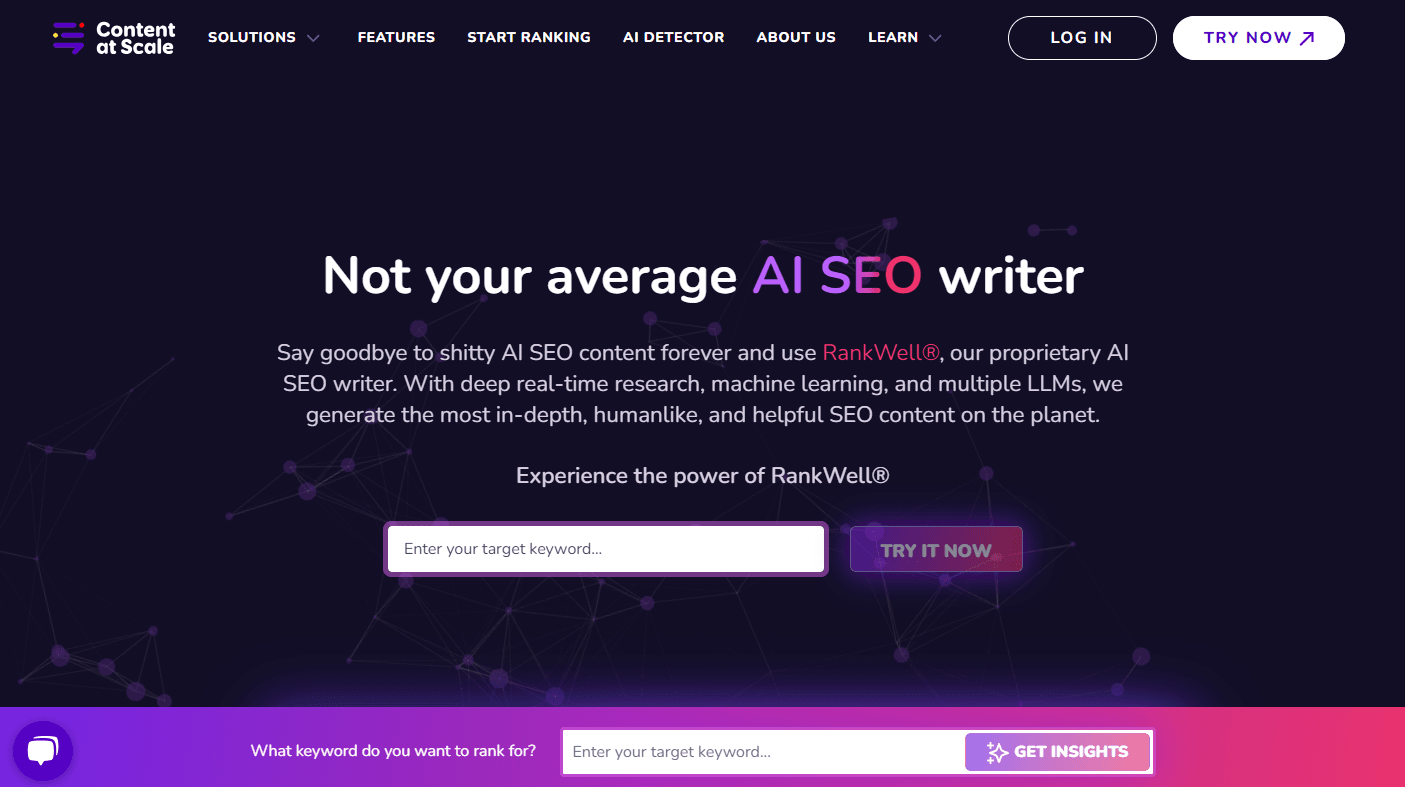
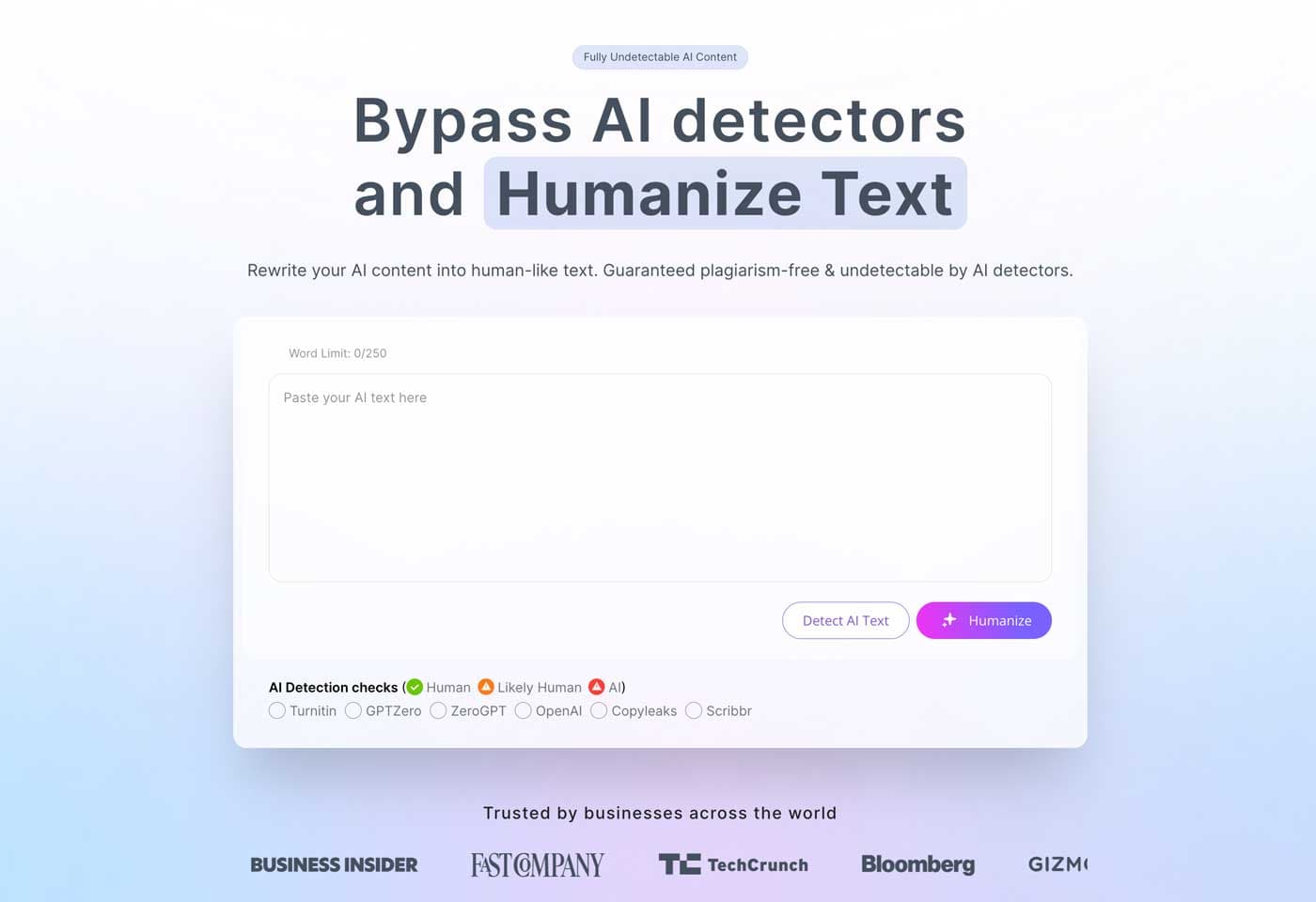
Semihuman.ai offers a unique solution designed to transform AI-generated text into content that feels naturally human and resonates deeply with audiences. By integrating features like text restructuring and detection evasion, it supports creators, marketers, and students in maintaining authenticity while boosting SEO performance. Discover how technology can empower your writing process without sacrificing your personal touch.
Take control of your content's authenticity now with Semihuman.ai.
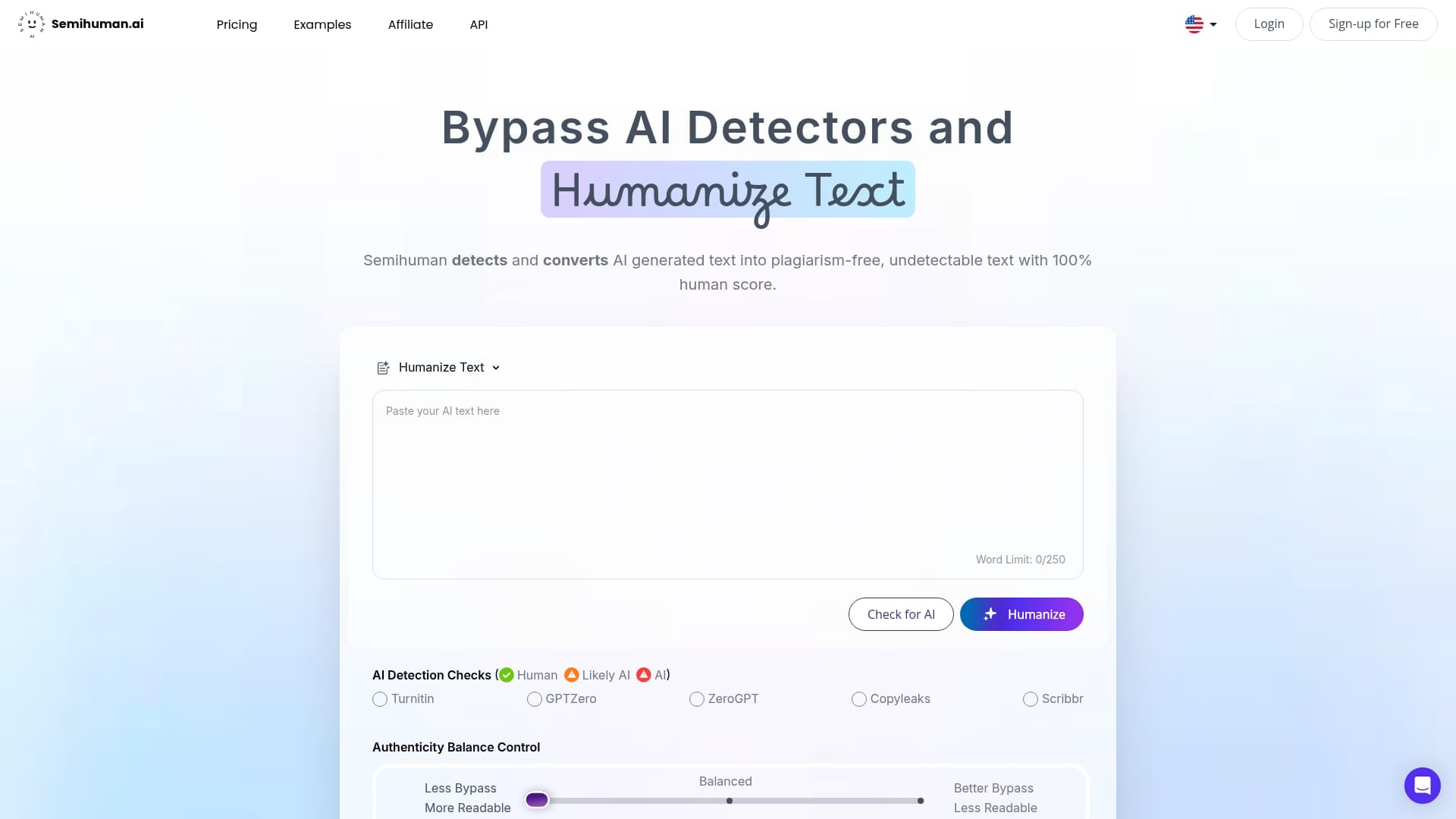
Start humanizing your AI-assisted writing today and see how your words gain the emotional depth and credibility that readers crave. Visit Semihuman.ai to transform your content into authentic, engaging narratives that stand out in the digital landscape.
Authentic writing captures genuine human expression and aims to create meaningful connections with readers, emphasizing personal experiences over mere technical accuracy.
To develop your authentic writing voice, practice daily mindfulness techniques and establish a personal writing ritual that helps you tap into your unique perspective and emotions.
AI can enhance the efficiency of content creation, but it often struggles to capture the emotional depth and personal insights that define authentic writing, making human input essential.
Authenticity helps brands build trust and deeper connections with audiences by prioritizing genuine communication, thereby positively impacting consumer trust and overall content credibility.


Start
Humanizing
for Free!
Humanize