
Loading...

Over half of American educators now face the challenge of detecting plagiarism in AI-generated writing. As artificial intelligence tools create content that closely mimics human language, questions of originality and ethical responsibility take center stage. Understanding how AI alters the boundaries of authorship is essential for anyone navigating academic, professional, or creative fields, as this guide unpacks the hidden risks and key safeguards for genuine and transparent work.
| Point | Details |
|---|---|
| AI Necessitates New Definitions of Plagiarism | Traditional views of plagiarism are challenged by AI, making it essential for institutions to adapt their frameworks to include AI-generated content. |
| Transparency is Crucial | Users must disclose AI tool usage and properly document contributions to uphold ethical standards in academic and professional settings. |
| Multiple Detection Methods Are Necessary | Reliance on a single detection tool is insufficient; a combination of human review and diverse detection technologies should be employed for effectiveness. |
| Proactive Content Modification | To minimize plagiarism risks, significant transformation of AI-generated text is essential, ensuring originality through extensive edits and personal insights. |
Plagiarism in AI-generated content represents a complex and evolving challenge across academic, professional, and creative domains. Traditionally, plagiarism meant directly copying someone else's work without attribution. However, with AI technologies, the definition has become significantly more nuanced. Advanced language models can generate text that appears original but potentially incorporates unacknowledged sources, creating ethical and intellectual property complexities.
The core issue emerges from AI's ability to synthesize information from multiple sources without explicit citation mechanisms. Unlike human writers who consciously choose and credit sources, AI systems aggregate and reconstruct knowledge in ways that blur traditional plagiarism boundaries. Academic institutions are now grappling with how to evaluate AI-generated content, recognizing that these technologies fundamentally challenge existing plagiarism detection frameworks.
Most educational and professional environments now consider AI-generated text as potentially problematic when submitted without transparency. Key considerations include whether the content is presented as original work, whether appropriate citations are provided for source materials, and whether the AI-generated text substantially reproduces existing copyrighted content. Emerging academic policies suggest that proper acknowledgment of AI tool usage and clear indication of content generation methods are becoming critical ethical requirements.
Pro Writer's Insight: Always disclose AI tool usage and maintain rigorous citation practices to preserve academic and professional integrity.
Quick Tip: When using AI-generated content, review and modify at least 30% of the text to ensure genuine originality and reduce potential plagiarism risks.
AI-generated writing introduces complex variations of plagiarism that extend far beyond traditional academic misconduct. Detailed plagiarism classifications reveal multiple nuanced forms that content creators must understand to maintain ethical standards. These types range from verbatim reproduction to more subtle forms of intellectual appropriation that can occur through sophisticated language models.
The primary categories of AI writing plagiarism include direct plagiarism, where AI tools generate text that closely mirrors existing sources without attribution, and mosaic plagiarism, which involves subtly repurposing content by changing word arrangements while preserving original semantic structures. Self-plagiarism emerges as another significant concern, particularly when AI regenerates previously created content across different platforms or documents without proper acknowledgment.
Accidental plagiarism represents a particularly challenging type of content reproduction in AI writing. This occurs when language models inadvertently generate text that closely resembles source materials without intentional copying. Such instances highlight the complexity of AI-generated content, where sophisticated algorithms can reproduce concepts and phrasing that seem original but may actually be derivative of existing intellectual property. Sophisticated detection tools are increasingly necessary to identify these nuanced forms of potential plagiaristic content.

Here's a concise comparison of the main types of plagiarism found in AI-generated writing:
| Plagiarism Type | How It Occurs with AI | Detection Challenge |
|---|---|---|
| Direct Plagiarism | AI outputs nearly identical wording as sources | Easily flagged but may miss paraphrasing |
| Mosaic Plagiarism | AI rephrases but retains original structure | Difficult due to subtle changes |
| Self-Plagiarism | AI reuses prior user's content in new outputs | Hard to identify across platforms |
| Accidental Plagiarism | AI unintentionally mimics source content | Common, especially with popular topics |
Pro Writer's Insight: Always run comprehensive originality checks using multiple detection platforms to ensure your AI-generated content remains truly unique.
Quick Tip: Cross-reference AI-generated text against multiple sources and modify at least 40% of the content to guarantee genuine originality and minimize plagiarism risks.
AI detection tools represent a sophisticated technological response to the growing challenge of identifying artificially generated content. Advanced machine learning algorithms have emerged as powerful mechanisms for distinguishing between human-written and AI-generated text, utilizing complex pattern recognition techniques that analyze linguistic nuances, semantic structures, and statistical anomalies inherent in machine-produced writing.
The core methodology of these detection tools involves multiple analytical approaches. Some leverage probabilistic models like XGBoost and Random Forest, which examine text characteristics such as word predictability, sentence complexity, and contextual coherence. Others employ deep learning neural networks that can identify subtle linguistic patterns typically associated with AI-generated content. These tools analyze factors like repetitive phrasing, unnaturally perfect grammatical structures, and statistically improbable word combinations that signal machine-generated text.
University-level detection strategies reveal the ongoing challenge of creating foolproof AI content identification systems. Academic institutions are increasingly developing sophisticated detection protocols that combine automated tools with human expert review. These approaches recognize that no single detection method is entirely reliable, requiring a multilayered approach that integrates technological analysis with human critical thinking and contextual understanding.
Pro Writer's Insight: Diversify your detection strategy by using multiple AI detection tools to increase accuracy and reliability.
Quick Tip: Run AI-generated content through at least three different detection platforms and manually review any flagged sections to ensure complete originality.
Artificial intelligence has introduced unprecedented legal and ethical challenges that blur traditional boundaries of intellectual property and academic integrity. Emerging research on AI-assisted writing reveals complex scenarios where distinguishing between human and machine contributions becomes increasingly difficult, raising profound questions about authorship, originality, and ethical standards.
The legal landscape surrounding AI-generated content remains fundamentally uncertain. Educational institutions and professional organizations are struggling to establish clear guidelines for acceptable AI usage. Potential legal risks include accusations of plagiarism, copyright infringement, and academic misconduct. Software plagiarism detection methodologies are rapidly evolving to address these challenges, attempting to create nuanced frameworks that can differentiate between legitimate AI assistance and outright intellectual theft.
Most institutional policies now require explicit disclosure of AI tool usage, treating undeclared AI-generated content as a serious ethical violation. This approach recognizes the transformative potential of AI writing technologies while maintaining critical standards of transparency and academic honesty. Users must navigate a complex landscape where technological capabilities continuously challenge existing legal and ethical frameworks, demanding constant adaptation and critical reflection on the boundaries of acceptable AI assistance.
Pro Writer's Insight: Always maintain complete transparency about AI tool usage and document your specific contributions when using AI-generated content.
Quick Tip: Develop a personal protocol for documenting and attributing AI assistance in your writing to protect yourself from potential ethical or legal complications.
Minimizing plagiarism risks in AI-generated content requires a multifaceted approach that combines technological awareness, ethical practices, and proactive content management. Responsible generative AI usage demands a comprehensive strategy that goes beyond simple detection and prevention techniques, focusing on creating genuinely original and ethically sound content.
Key strategies include thorough content transformation, which involves significantly modifying AI-generated text to ensure originality. This process requires more than surface-level edits. Repurposing existing content effectively means rewriting at least 40-60% of the original text, restructuring sentences, introducing personal insights, and ensuring the final output reflects a unique perspective. Users should critically analyze AI-generated content, identifying and eliminating repetitive patterns, standardized phrasings, and potentially derivative language structures that might signal machine-generated text.
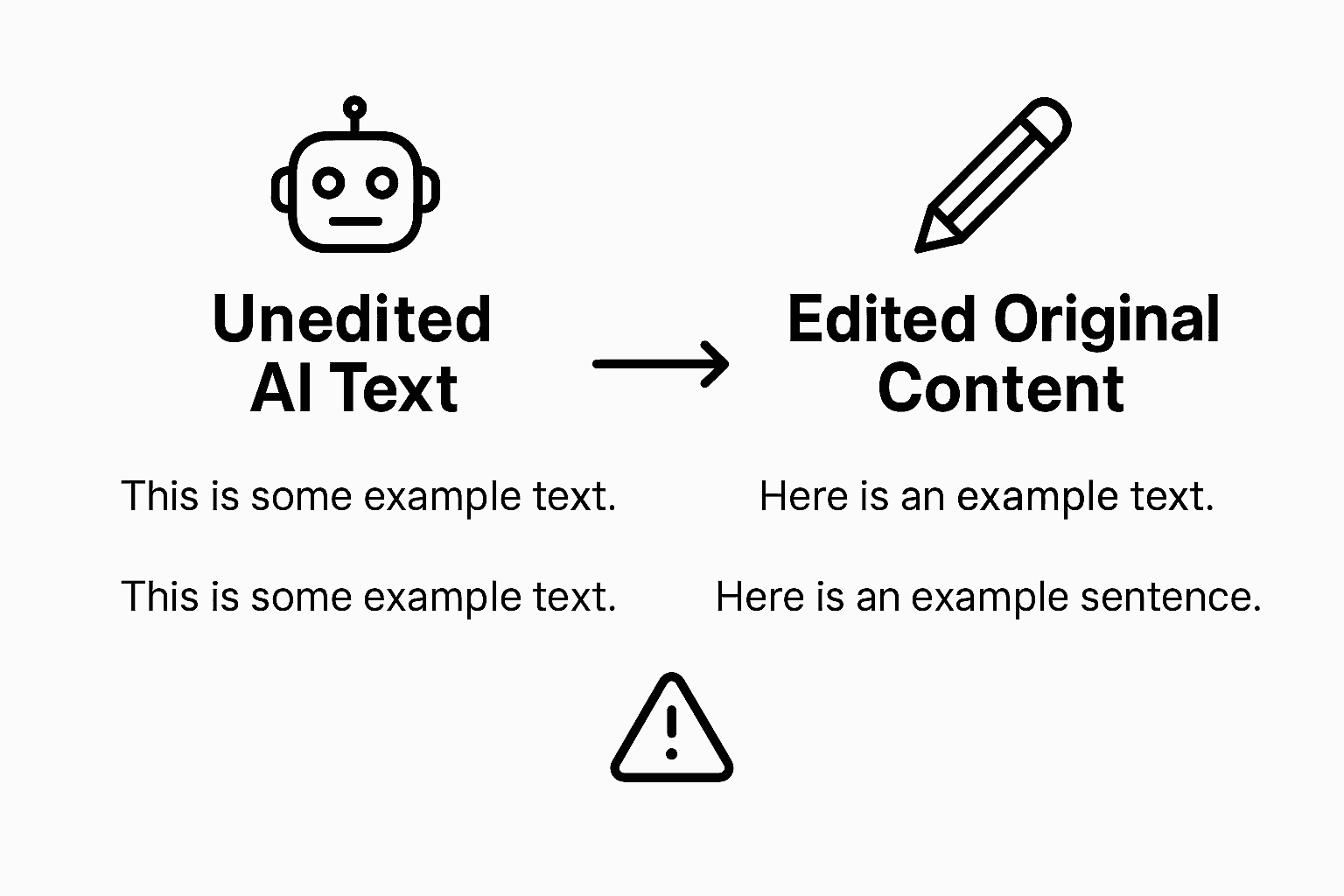
Documentation and transparency represent another critical strategy for mitigating plagiarism risks. Academic and professional environments increasingly require explicit disclosure of AI tool usage, making it essential to maintain clear records of AI assistance. This approach involves tracking the specific AI tools used, documenting the extent of AI contribution, and demonstrating how human expertise has shaped the final content. By establishing a transparent workflow, creators can protect themselves from potential academic or professional repercussions while maintaining intellectual integrity.
Pro Writer's Insight: Develop a systematic approach to AI content modification that prioritizes originality and personal insight.
Quick Tip: Create a personal checklist for AI-generated content review that includes mandatory steps like restructuring, adding unique perspectives, and citing AI tool usage.
Below is a summary of practical strategies to minimize AI plagiarism risks:
| Strategy | Purpose | Key Action |
|---|---|---|
| Content Transformation | Ensure originality | Rewrite and restructure text |
| Documentation & Transparency | Maintain ethical standards | Disclose AI tool and contribution |
| Multi-Level Detection | Increase reliability | Use several detection tools |
| Add Personal Insight | Differentiate your content | Integrate unique perspectives |
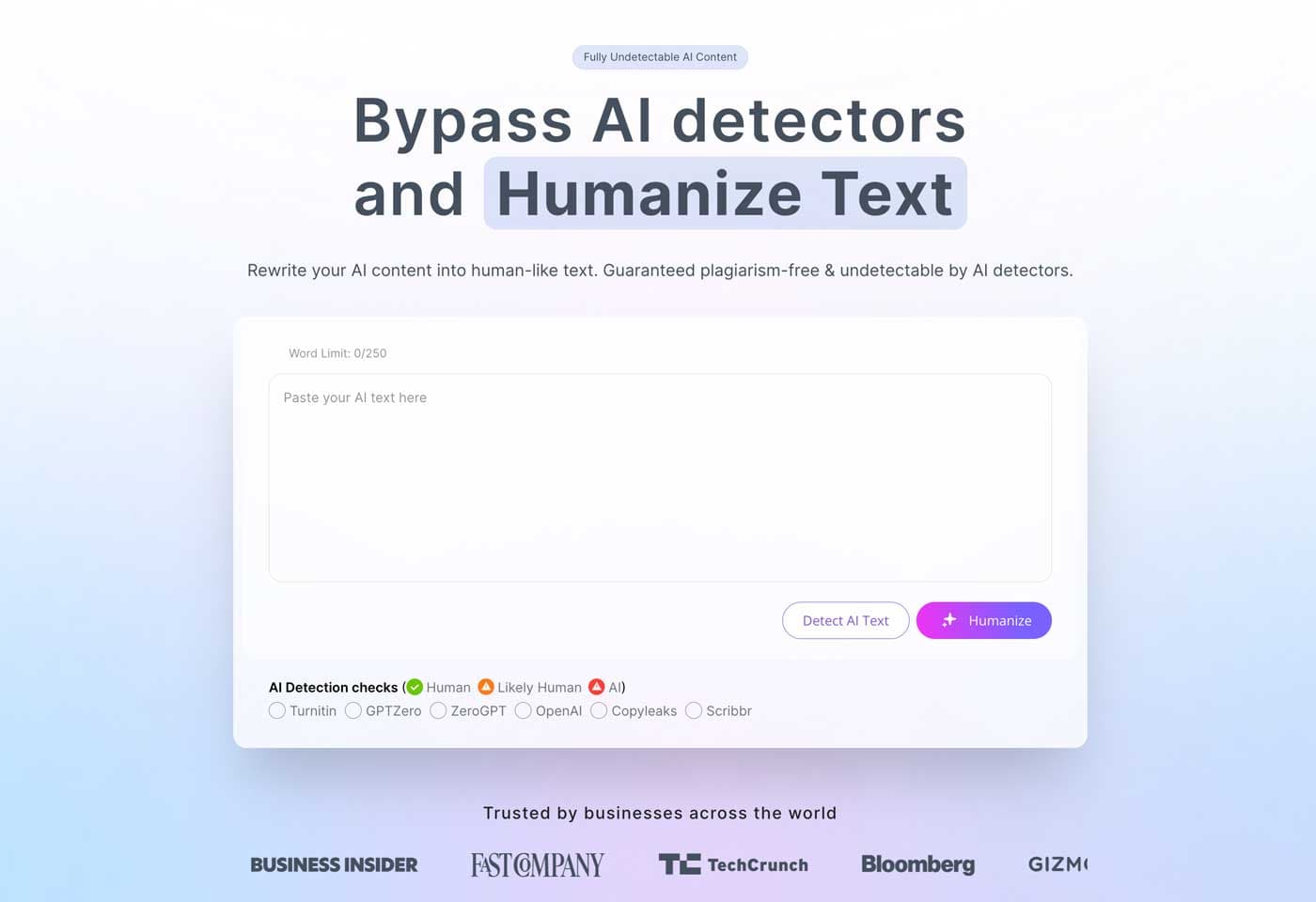
Plagiarism risks with AI-generated text create a complicated challenge for students, marketers, and professionals aiming to maintain originality and ethical standards. With issues like direct, mosaic, and accidental plagiarism becoming harder to detect, the need for reliable AI content transformation is crucial. Semihuman.ai offers a powerful solution that addresses these concerns by detecting AI-generated patterns and transforming your text into authentic, human-like content. It helps you restructure words, integrate keywords naturally, and bypass strict AI detection tools such as Turnitin and GPTZero without compromising content integrity.
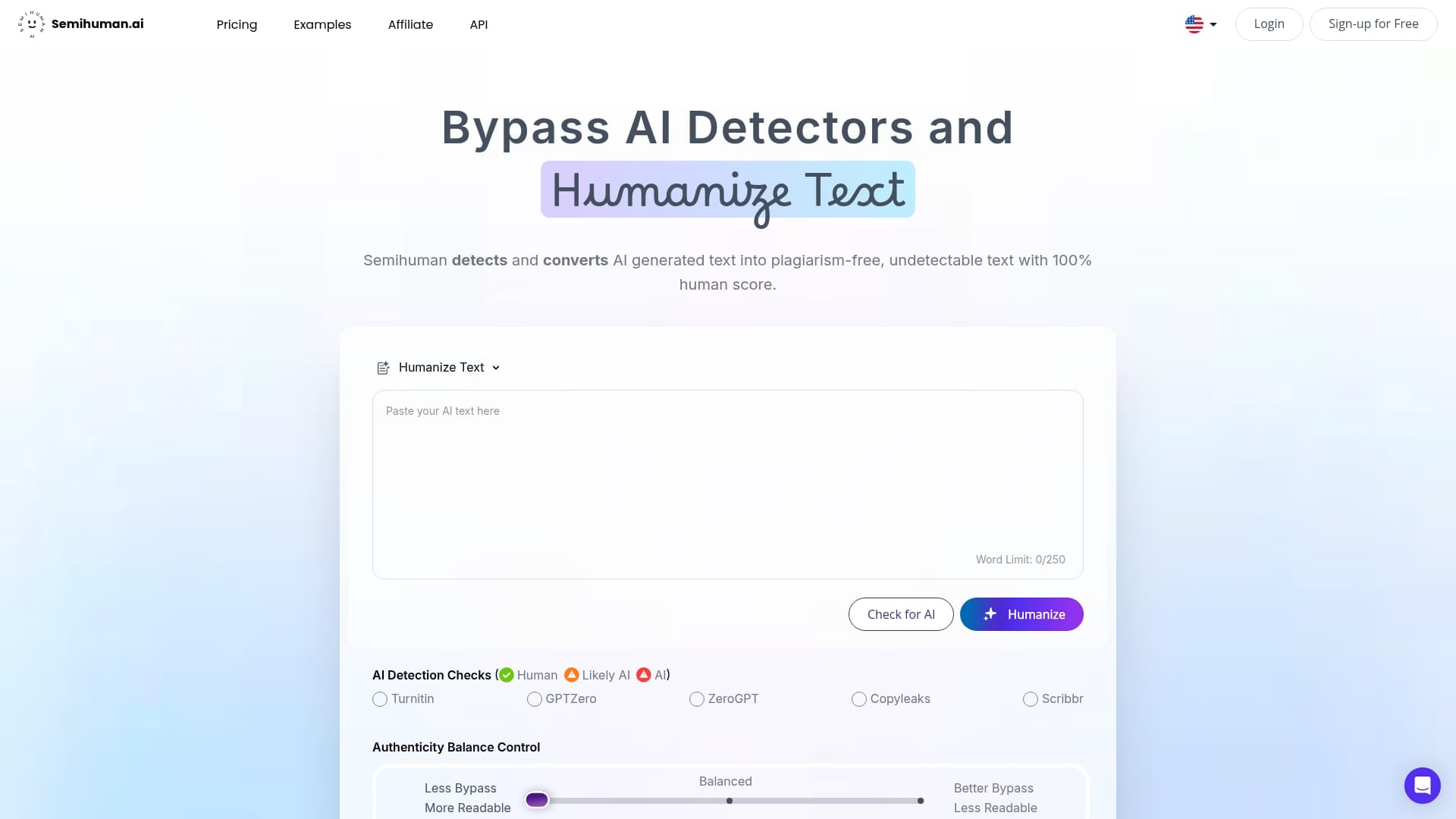
Take control over your AI-assisted writing with Semihuman.ai, the specialized platform dedicated to reducing plagiarism risks and enhancing content authenticity. Discover how to effortlessly humanize your AI-generated text by visiting our landing page and explore features designed for academic writing, SEO, and content creation. Don’t let plagiarism concerns hold you back. Start transforming your content now and maintain confidence in your originality.
Plagiarism in AI-generated content refers to the act of using text produced by AI systems without proper attribution, leading to ethical and legal concerns about originality and intellectual property.
To avoid plagiarism, ensure you modify at least 30-40% of the AI-generated content, add personal insights, and document AI tool usage transparently. This helps maintain originality and academic integrity.
Common types of plagiarism in AI writing include direct plagiarism, mosaic plagiarism, self-plagiarism, and accidental plagiarism, each presenting unique challenges in maintaining originality.
Best practices for disclosing AI tool usage involve maintaining clear records of the AI tools employed, documenting their contributions, and indicating how human input shaped the final content, thus ensuring transparency and ethical compliance.

Start
Humanizing
for Free!
Humanize