
Loading...

Academic dishonesty affects more than 60% of university students, revealing plagiarism as a widespread challenge in higher education. Whether intentional or accidental, plagiarism undermines the foundation of scholarly work and can derail academic careers. This guide explains what constitutes plagiarism in academic writing, explores common causes including AI-related risks, examines detection methods and their limitations, and provides actionable strategies to help you maintain integrity in your work throughout 2026 and beyond.
| Point | Details |
|---|---|
| Plagiarism definition | Using others' work without proper attribution, including direct copying, paraphrasing without credit, and accidental omissions |
| Common causes | Intentional cheating, knowledge gaps, editing errors, and AI tool misuse all contribute to plagiarism risks |
| Detection challenges | AI detectors face accuracy issues with short texts and paraphrased content, requiring human review |
| Prevention strategies | Proper citation practices, careful source tracking, and ethical AI use protect academic integrity |
| Intent vs. outcome | Universities evaluate final submitted text regardless of whether plagiarism was intentional or accidental |
Plagiarism represents the use of someone else's words, ideas, or creative work without proper acknowledgment. In academic contexts, this violation extends beyond simple copying to include inadequately paraphrased material, missing citations, and improperly quoted passages. Academic integrity, the ethical framework governing scholarly work, demands that students and researchers give credit where credit is due and produce original contributions to knowledge.
The distinction between intentional and accidental plagiarism matters for understanding how it occurs, but universities evaluate submitted work based on final text, not author intent. A forgotten citation carries the same consequences as deliberate copying because the end result damages the scholarly record equally. This principle underscores why developing strong citation habits and understanding ethical academic content creation practices proves essential for every student.
Plagiarism manifests in several distinct forms across academic writing:
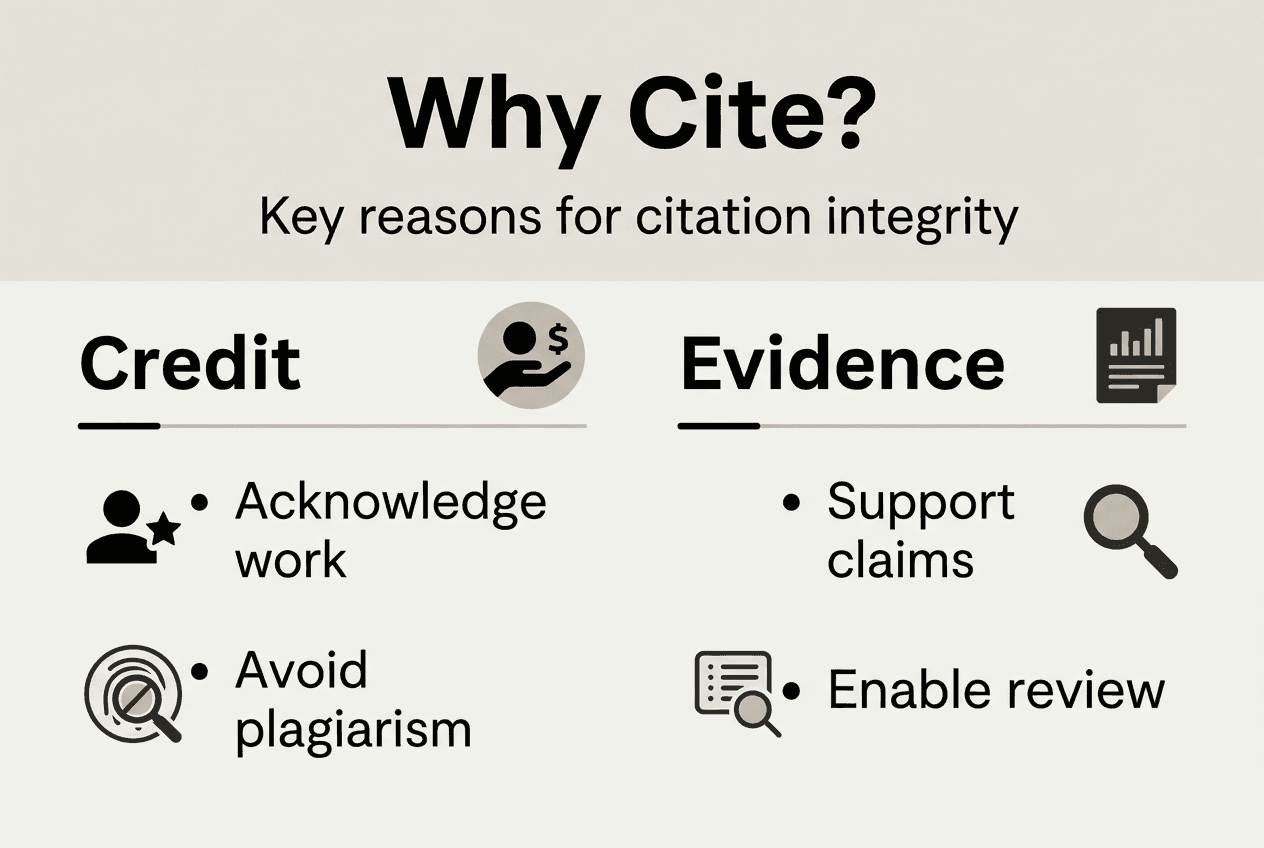
Proper citation serves two critical functions in scholarly work. First, it acknowledges intellectual debt to previous researchers and writers whose ideas inform your arguments. Second, it allows readers to verify claims and explore topics further by consulting your sources directly. Effective paraphrasing requires more than swapping synonyms; you must genuinely process the original idea, express it in your own sentence structure and vocabulary, and still provide a citation to the source.
The rise of digital writing tools and AI assistance has complicated traditional plagiarism boundaries. Students now navigate questions about how much AI support crosses ethical lines and when paraphrasing tools produce text too similar to sources. Understanding these foundational concepts prepares you to recognize plagiarism risks in evolving academic environments.
Plagiarism stems from multiple motivations and circumstances, ranging from deliberate academic dishonesty to innocent mistakes amplified by modern writing workflows. Intentional plagiarism occurs when students knowingly submit others' work as their own, often driven by time pressure, performance anxiety, or misplaced priorities. However, a significant portion of plagiarism cases arise without malicious intent.
Knowledge gaps about citation conventions contribute substantially to accidental violations. Many students arrive at university without comprehensive training in academic referencing systems or clear understanding of when citations are required. The assumption that common knowledge needs no citation, confusion about paraphrasing standards, and uncertainty about citing indirect sources all create vulnerability to unintentional plagiarism.
Accidental plagiarism arises from omissions like missed citations or forgotten quotation marks during the revision process. Modern writing workflows exacerbate this risk. Students frequently draft, edit, and reorganize content across multiple sessions and devices. During these revisions, properly cited material can become separated from its attribution. A paragraph copied for reference might lose its quotation marks. A citation placeholder might never get completed.

AI writing tools introduce new plagiarism risks with AI-generated text that students must navigate carefully. When AI systems paraphrase source material or generate content based on training data, the output may closely resemble existing published work without clear attribution. Students who incorporate AI-generated text without thorough review and proper citation face plagiarism allegations even if they believed the content was original.
The consequences of plagiarism, whether intentional or accidental, carry serious weight:
Pro Tip: Maintain detailed version control when drafting academic work. Save separate files for each major revision, preserve original sources with their citations in a reference document, and review every paragraph for proper attribution before submission. When using AI assistance for brainstorming or drafting, treat all generated content as requiring verification and citation just like any other source material.
Academic institutions employ sophisticated plagiarism detection systems that compare submitted work against vast databases of published materials, student papers, and web content. Traditional detection methods identify text similarity by matching sequences of words and phrases, flagging passages that closely resemble existing sources. Modern systems have evolved to incorporate AI detection capabilities that analyze writing patterns, vocabulary distribution, and stylistic consistency to identify potentially machine-generated content.
Turnitin, the dominant platform in academic plagiarism detection, has deployed multilayer AI detection models that evolved through several iterations up to 2025, specifically designed to handle AI paraphrasing attempts and bypass tools. These systems analyze linguistic patterns beyond simple word matching, examining sentence structure variation, contextual coherence, and statistical anomalies that suggest machine generation. The scale of deployment is substantial, with millions of student submissions processed through these detection layers each academic term.
Despite technological advances, AI detection faces significant accuracy challenges. No AI detector is infallible, and false positives disproportionately impact vulnerable students, including non-native English speakers whose writing patterns may trigger algorithmic flags. Short text samples provide insufficient data for reliable detection, leading to inconsistent results. Low AI content scores in the ambiguous range create interpretation challenges for instructors trying to make fair judgments.
A critical limitation emerges with conceptual plagiarism. Automated plagiarism detectors struggle to catch plagiarized ideas in LLM-generated documents because AI systems generate novel phrasings of existing concepts without direct text copying. When students use AI to paraphrase source material extensively, detection tools may miss the underlying intellectual borrowing even though proper attribution remains absent.
Understanding these detection approaches helps you assess tools critically:
| Detection Method | Strengths | Limitations |
|---|---|---|
| Text similarity matching | Identifies direct copying and close paraphrasing effectively | Misses original phrasing of borrowed ideas |
| AI pattern analysis | Detects statistical anomalies in machine-generated text | Produces false positives, struggles with short samples |
| Citation verification | Confirms sources exist and are properly formatted | Cannot verify if cited sources actually support claims |
| Writing style comparison | Identifies inconsistencies suggesting multiple authors | Penalizes students whose skills improve or who seek legitimate help |
Familiarizing yourself with AI detection tools for content creators and recognizing signs of AI generated essays equips you to evaluate your own work before submission. However, detection tools serve best as diagnostic aids rather than definitive judgments.
Pro Tip: Run your drafts through plagiarism checkers and AI detectors before final submission, but treat flagged passages as prompts for careful human review rather than automatic verdicts. If a detector highlights a section, examine whether you've properly cited sources, expressed ideas in genuinely original language, and maintained consistent voice throughout your paper. When in doubt, add citations and seek feedback from instructors or writing center staff.
Maintaining academic integrity in an era of powerful AI writing tools requires deliberate practice and systematic approaches to research, writing, and citation. These actionable steps provide a framework for producing ethical scholarly work:
Proper citation requires understanding what needs attribution and what constitutes common knowledge. Cite specific facts, statistics, expert opinions, unique ideas, and any information not widely known in your field. Common knowledge varies by discipline; what requires citation in an introductory course may not need it in advanced seminars where certain facts are assumed knowledge.
When using AI writing tools ethically, treat them as brainstorming partners rather than ghost writers. AI can help generate topic ideas, suggest organizational structures, or provide feedback on clarity. However, expert recommendations emphasize careful assessment of LLM-generated work and ethical academic content practices. Never submit AI-generated text as your own original work without substantial revision, verification of factual accuracy, and proper disclosure according to your instructor's requirements.
Best practices for reviewing your work include:
Staying current with institutional policies matters increasingly as universities develop new guidelines for AI tool use. What was acceptable last year may violate updated policies in 2026. Regular consultation with instructors, librarians, and writing center staff helps you navigate gray areas and make informed decisions about your writing process.
Exploring resources on AI for scholarly communication and ethical academic content creation provides additional perspective on maintaining integrity while leveraging modern tools appropriately.
Pro Tip: Create a pre-submission checklist that includes citation verification, plagiarism detection scanning, AI content review, and policy compliance confirmation. Save all research notes, drafts, and source materials for at least one year after course completion. This documentation protects you if questions arise about your work's originality and demonstrates your commitment to ethical scholarship.
Navigating the complex intersection of AI assistance and academic integrity requires sophisticated tools that help you understand how your writing appears to detection systems. Semihuman AI offers specialized resources designed to support ethical academic work while helping you refine content that may inadvertently trigger false positives.
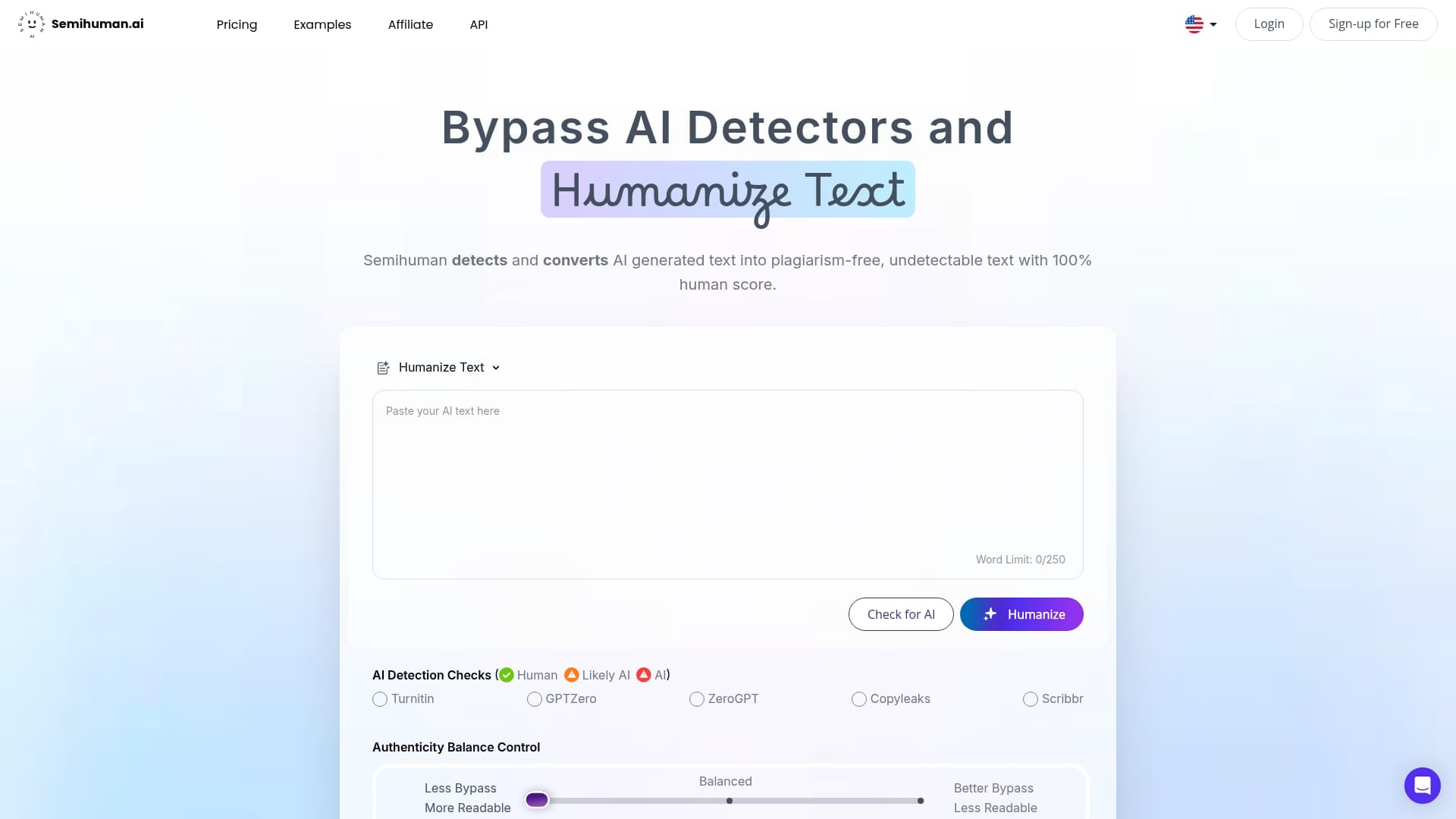
The platform's ability to bypass AI detectors helps you understand detection mechanisms and refine legitimately authored work that algorithms incorrectly flag. The AI text paraphraser assists in developing genuinely original phrasings when you struggle to express complex ideas in your own words. For students concerned about maintaining authentic voice while using AI assistance, AI proof writing tools provide insights into creating content that reflects genuine human authorship. These resources complement rather than replace your commitment to ethical scholarship and proper citation practices.
Yes, universities treat unintentional plagiarism as academic misconduct because the final submitted work contains improperly attributed material regardless of the author's intent. Academic integrity policies focus on the text itself rather than the circumstances of its creation. However, many institutions distinguish between deliberate cheating and honest mistakes when determining consequences.
Students who can demonstrate good faith efforts to cite properly, such as showing draft notes with citation attempts or seeking help from writing centers, may receive educational interventions rather than severe penalties for first offenses. The key to addressing accidental plagiarism lies in immediate disclosure when you discover the error and willingness to learn proper citation practices. Taking responsibility and implementing better systems prevents future violations and demonstrates your commitment to academic integrity.
AI plagiarism detectors in 2026 have improved significantly but remain imperfect tools that require human judgment for fair application. Detection accuracy varies substantially with short texts and low AI content scores, producing ambiguous results that could reflect either human authorship or sophisticated AI generation. False positives continue to affect non-native English speakers and students with developing writing skills whose patterns may resemble machine output.
The most reliable approach combines automated detection with instructor review of flagged content. Educators should examine suspicious passages in context, consider the student's previous work, and discuss concerns directly rather than relying solely on algorithmic scores. Students benefit from understanding these tools' limitations and using them proactively to identify potential issues before submission.
AI-generated content raises complex plagiarism questions because LLM-generated documents often lack source acknowledgment and may contain plagiarized material from training data. When you submit AI-generated text as your own work without disclosure, you misrepresent authorship even if the specific words don't match existing sources. Many institutions now classify undisclosed AI use as a form of academic dishonesty distinct from traditional plagiarism.
The ethical approach requires transparency about AI assistance and critical evaluation of all generated content. Verify factual claims, check for potential plagiarism in AI output, add proper citations for any ideas drawn from sources, and ensure the final work reflects your own understanding and analysis. Never assume AI-generated text is original or accurate without thorough review.
Best practices for citing AI assistance depend on your institution's specific policies, which vary considerably in 2026. Some universities require explicit acknowledgment of any AI tool use in a methods section or footnote, while others permit AI assistance for certain tasks without disclosure. Start by consulting your course syllabus and instructor for clear guidance on acceptable AI use and required attribution.
When disclosure is required, specify which AI tools you used, for what purposes, and to what extent. For example, you might note that you used ChatGPT to brainstorm topic ideas but wrote all final text yourself, or that you employed Grammarly for grammar checking. Keep records of your AI interactions and original drafts to demonstrate the evolution of your work from AI assistance to final submission. Transparency protects you from accusations of misconduct and demonstrates your commitment to ethical scholarship.

Start
Humanizing
for Free!
Humanize