
Loading...

TL;DR:
- AI speeds content creation but often requires more review time, reducing overall productivity.
- Authentic, emotionally resonant, and trustworthy content still relies heavily on human insight and creativity.
- Effective AI strategies combine automation with human oversight, original research, and transparent disclosure.
Most marketers expect AI to make content better and faster at the same time. What they don't expect is that AI-assisted content on social media can actually increase engagement while simultaneously decreasing perceived quality, authenticity, and informativeness. That contradiction sits at the heart of the AI automation challenge. This article breaks down why it happens, what it means for your brand's reputation and search visibility, and what practical steps you can take to get the speed benefits of AI without sacrificing the trust that keeps audiences coming back.
| Point | Details |
|---|---|
| Speed vs quality tradeoff | AI automation increases content speed but often leads to lower quality and longer review cycles. |
| Authenticity impacts trust | Content created by AI is seen as less trustworthy, which can harm brand reputation and consumer loyalty. |
| SEO requires human touch | AI-generated content loses search ranking without signals of expertise, experience, authority, and trustworthiness. |
| Practical humanization steps | Using human editors and creative input helps overcome AI challenges in authenticity and SEO. |
| Tools for better outcomes | Specialized AI tools can support content creators in making automation beneficial while safeguarding originality and ranking. |
Building on the introduction's insight about engagement, let's explore why faster doesn't always mean better in practice.
The promise is simple: use AI to produce more content in less time, then redirect that saved time toward strategy and creativity. In reality, the workflow rarely goes that smoothly. When you automate content production, you introduce a new set of tasks, reviewing outputs for factual errors, adjusting tone, fixing repetitive phrasing, and restructuring arguments that don't quite land. Each of those tasks takes real time and real expertise.
Here's where it gets counterintuitive. AI transformation research shows experienced developers using AI tools actually take 19% longer on real-world tasks because of the overhead involved in prompting, reviewing, and correcting outputs. Even more striking, 80% of firms report zero measurable productivity impact from AI adoption. The efficiency gain that was supposed to justify the investment simply evaporates in the review cycle.
This is what we call the efficiency trap. You automate the writing, but the human review, fact-checking, and quality control that follow are not automated at all. In many cases, reviewing AI output requires more cognitive effort than writing from scratch, because you need to evaluate a finished-looking piece rather than building ideas from a blank page.
| Task | AI-assisted workflow | Human-only workflow |
|---|---|---|
| Initial draft creation | 5 minutes | 45 minutes |
| Fact-checking and verification | 25 minutes | 10 minutes |
| Tone and style corrections | 20 minutes | 5 minutes |
| Restructuring for coherence | 15 minutes | 5 minutes |
| Total average time | 65 minutes | 65 minutes |
The table above reflects a pattern we see repeatedly. The draft comes fast, but the post-draft work stretches the timeline back out. Understanding AI writing risks before you commit to a production workflow can save you from discovering this the hard way at scale.
Pro Tip: Identify the three to four steps in your content workflow where errors are most costly, such as brand claim accuracy, legal compliance, or sourcing, and apply dedicated human oversight only there. Let AI handle low-stakes tasks like formatting, headline variants, and first-draft outlines, where review time is shorter and errors are cheaper to fix.
The AI trap is not an argument against using AI. It is an argument for realistic expectations. Speed gains are real, but they cluster in specific parts of the workflow. Knowing where they appear and where they don't is the difference between a smart automation strategy and a frustrating one that consumes your team's energy without meaningful payoff. Tracking content metrics and SEO outcomes before and after AI adoption is the clearest way to see whether your workflow is actually improving.
Understanding the efficiency tradeoff, we now turn to how AI automation impacts the heart of content: authenticity and trust.
Speed issues are frustrating, but they are fixable. The authenticity problem runs deeper. When audiences sense that content was generated by a machine, something shifts in how they receive the message. The information might be accurate. The structure might be clean. But the emotional connection, the sense that a real person thought carefully about this topic for this specific audience, is missing.
"AI-generated content risks reputational damage, lacks emotional resonance, and leads to model collapse or regression to the mean." A regression to the mean means your content starts sounding like everyone else's content, which is exactly the opposite of what brand differentiation requires.
Consumer perceptions of AI content are genuinely split. On one side, AI enables personalization at scale, which audiences appreciate. On the other, it erodes trust when audiences can't tell whether a human was involved, and it strips away the human insight that differentiates strong brands from generic content producers.

| Dimension | AI-generated content | Human-authored content |
|---|---|---|
| Emotional resonance | Low | High |
| Perceived authenticity | Mixed to low | High |
| Brand voice consistency | Inconsistent | Consistent with oversight |
| Audience trust | Variable | Stronger baseline |
| Personalization at scale | High | Limited without tools |
| Differentiation potential | Low (regression to mean) | High |
The comparison above tells a clear story. AI wins on scale and personalization capacity. Human content wins on every dimension that builds long-term audience relationships. The practical goal is not to choose one over the other but to understand where each falls short so you can compensate.
Key authenticity pitfalls in AI-generated content include:
Balancing authenticity in AI workflows is not about limiting AI use. It is about understanding what human input adds that cannot be replicated at scale. A brand that figures this out gains a genuine competitive edge. You can explore the relationship between SEO and trustworthiness to see how these factors interact in search as well. For a deeper strategic view, the guide on authenticity for marketers walks through how to position this within a broader content strategy.
Once authenticity is scrutinized, let's see why even high-volume AI content may struggle to gain lasting visibility online.
Volume alone does not equal visibility. This is the lesson content teams learn after running AI-powered publishing campaigns at scale. You can produce 50 articles in the time it used to take to write 10, but if those 50 articles don't rank, you've invested significant effort for limited return.
The data is specific and revealing. Pure AI content gets indexed quickly, with 71% of AI-generated pieces indexed within 36 days. That sounds promising. But rankings collapse without E-E-A-T signals, and human-authored content is 8 times more likely to hold a position 1 ranking. Getting indexed is not the same as ranking. The gap between those two outcomes is where most AI content strategies lose momentum.
E-E-A-T stands for Experience, Expertise, Authoritativeness, and Trustworthiness. These are the signals Google's quality evaluators look for when assessing whether a piece of content deserves a prominent position. AI content, by its nature, struggles to demonstrate genuine experience or true expertise because it is synthesizing existing data rather than reporting original insight or first-hand knowledge.
The key factors that determine whether AI content holds its search position:
Humanizing content for search means adding the signals AI alone cannot produce. This is not about fooling search engines. It is about meeting the standard they were designed to enforce: content that genuinely serves readers. The SEO benefits of humanization are measurable and well-documented, including in research showing that personalization boosts SEO by a significant margin when done correctly.
If your current AI content isn't gaining traction in search, you're not alone. The guide on fixing AI content ranking addresses the specific structural reasons most AI pieces stall and how to reverse that pattern.
With risks and challenges defined, let's move to solutions, real steps you can take to turn AI automation into an advantage.
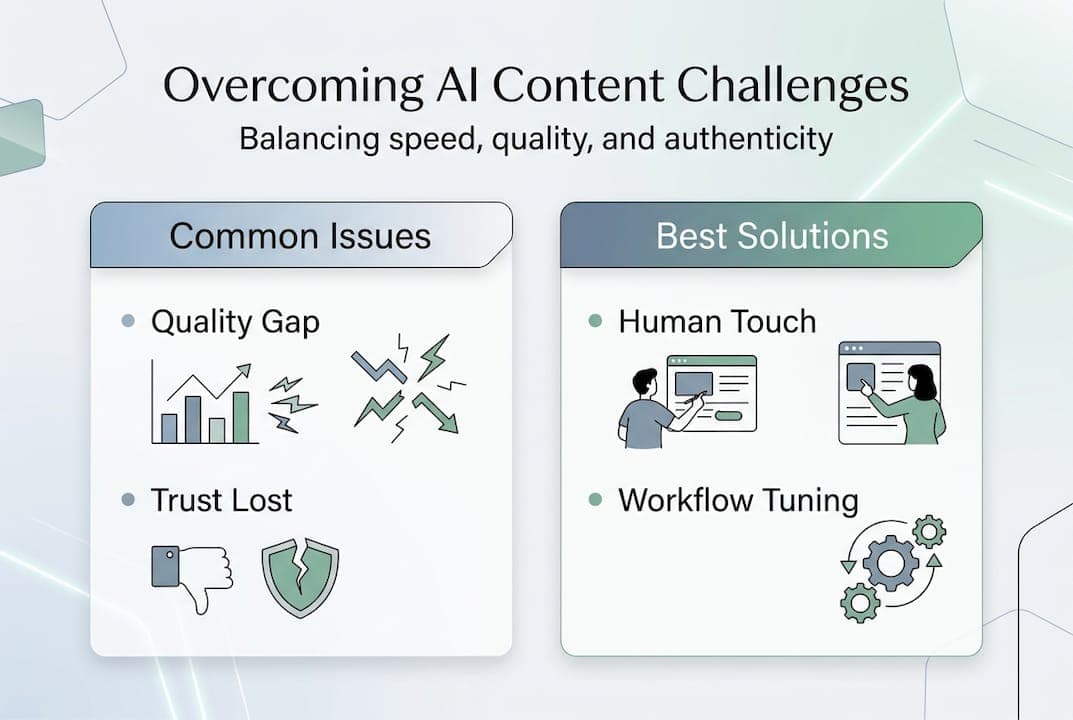
Knowing the problems is only useful if you act on that knowledge. AI excels in speed and volume but genuinely fails in authenticity, emotional connection, and handling edge cases that require nuanced judgment. This is not a criticism of AI tools. It is a description of where human oversight adds irreplaceable value.
Here are the steps content teams are using right now to get real results from their AI workflows:
Audit your current AI content against E-E-A-T criteria. Go through your 10 most recent AI-assisted pieces and ask whether each one demonstrates genuine experience, named expertise, and verifiable claims. This audit reveals your biggest vulnerabilities quickly.
Assign a human editor as the final voice for every piece. Not a proofreader. An editor who can add a specific anecdote, sharpen the argument, or insert an original data point that makes the content genuinely different from what's already ranking.
Build a brand voice guide that AI must follow. Document your brand's tone, preferred vocabulary, sentence length preferences, and off-limits phrases. Feed this into every prompt. It dramatically reduces post-draft correction time and keeps content consistent across pieces.
Add original research or expert quotes to every major piece. Even a single original survey question run to your email list can generate data no other piece has. This kind of specificity is almost impossible to replicate at scale and signals genuine expertise to both readers and search engines.
Use humanization tools as part of your editing workflow. Platforms designed to restructure AI text, integrate keywords naturally, and reduce detectable AI patterns help close the gap between AI speed and human authenticity. Exploring top uses for authenticity gives a practical breakdown of where these tools add the most value.
Disclose AI involvement transparently where appropriate. Audiences are becoming more sophisticated. Transparent disclosure, combined with visible human curation, actually builds trust rather than undermining it.
Measure content performance by audience behavior, not just traffic. Time on page, social shares, return visits, and comment quality tell you more about authenticity than raw pageview numbers do.
Pro Tip: Don't treat humanization as an afterthought. The best workflow runs AI for first draft speed, then routes every piece through a dedicated humanization step before publishing. This step, whether handled by a human editor or a specialized tool, is where the differentiation happens. It is not optional if you want lasting search visibility and genuine audience trust.
The practical solutions above are effective. But here's a perspective that most AI content conversations miss entirely.
The real risk of AI automation is not that it produces bad content. It is that it produces average content very efficiently. That might sound fine until you realize that "average" is exactly where content goes to be ignored. When every brand in your category uses the same AI tools with similar prompts, the outputs converge. Everyone's content starts to sound the same, cover the same angles, and reach the same conclusions.
This is the doom loop. And the only exit is deliberate, opinionated human creativity. Not human proofreading of AI output. Actual human perspective, original thinking, and creative risk-taking that AI cannot replicate because it has no genuine point of view.
We've seen this play out in real content programs. The teams that treat AI as a creative partner rather than a content factory are the ones building audiences. They use AI for research synthesis, outline drafts, and initial structures, then a skilled human writer tears the draft apart and rebuilds it with something the AI couldn't know: a specific client story, a contrarian argument, a detail that surprises even experienced readers.
Balancing tech and creativity is the actual skill set that will separate strong content programs from average ones in 2026. The tools don't define the outcome. The human judgment about how to use them does.
The strategies in this article require the right infrastructure to scale. Semihuman.ai gives content creators and marketers the tools to humanize AI output efficiently, without sacrificing the speed that makes AI valuable in the first place.
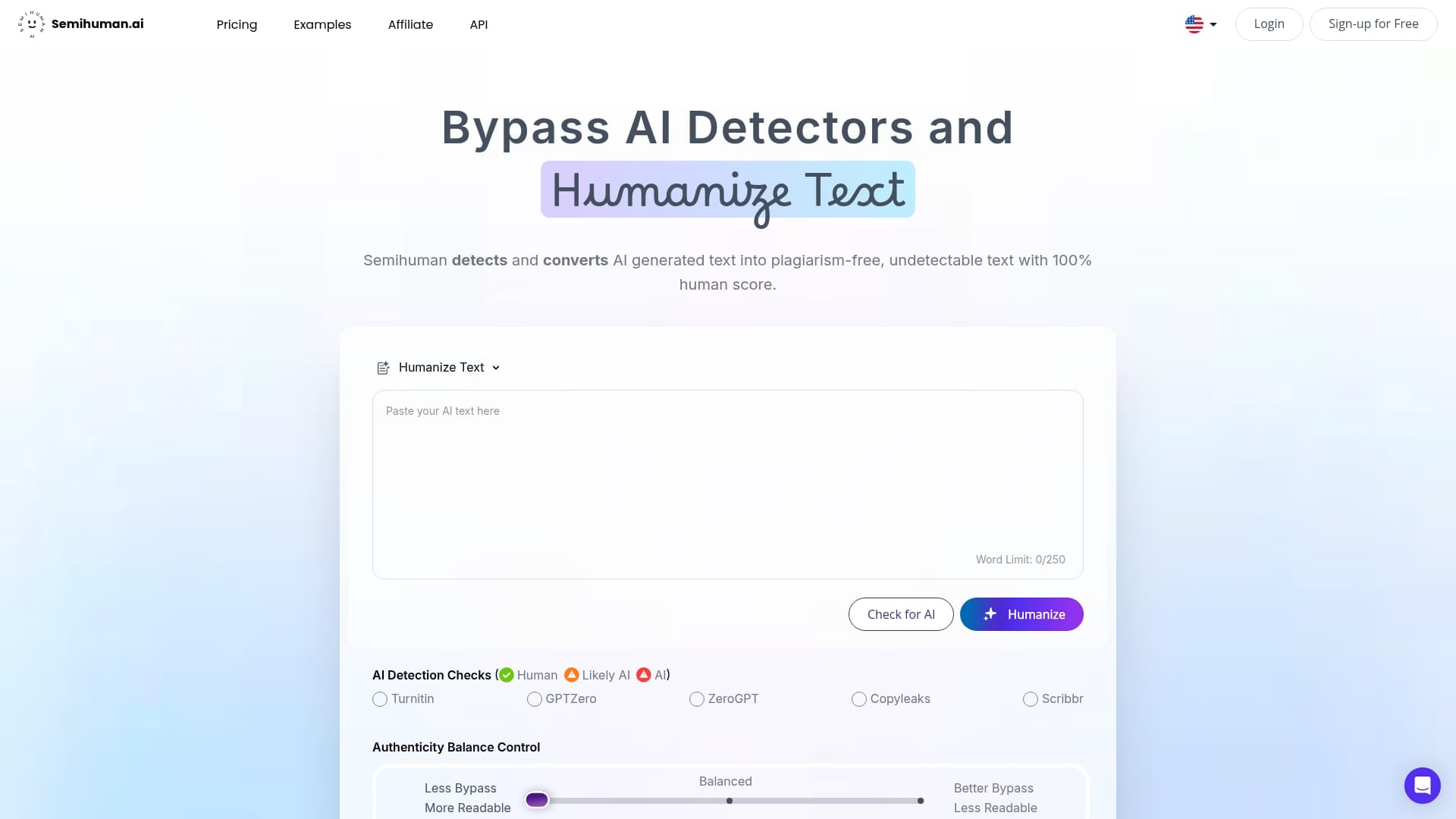
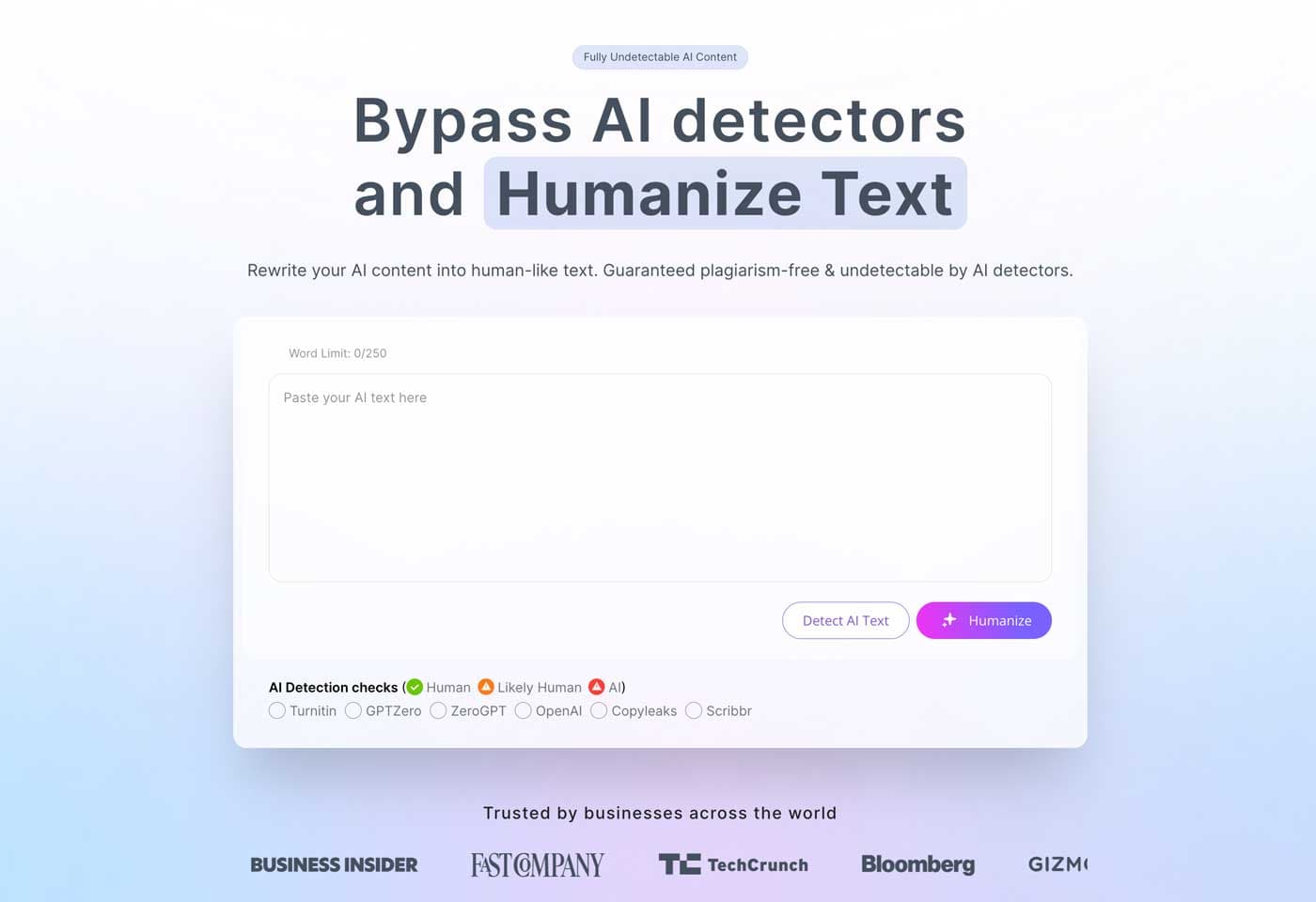
Semihuman.ai's platform restructures AI-generated text, integrates keywords naturally, and reduces detectable AI patterns so your content meets both audience expectations and search engine standards. Whether you need to bypass AI detectors for content compliance, improve rankings with the SEO text generator, or refresh existing drafts using the AI text paraphraser, Semihuman.ai fits into your existing workflow without adding complexity. The result is content that moves fast, sounds human, and performs.
AI-assisted content increases engagement metrics but is consistently rated lower in quality and informativeness because audiences notice the absence of depth, specificity, and genuine human perspective.
Yes. Reputational risks include lack of emotional resonance, model collapse, and audience distrust when content feels purely automated rather than thoughtfully created by someone who genuinely cares about the topic.
AI content indexes quickly but loses ground because it lacks the E-E-A-T signals that sustain rankings; human-authored content is 8 times more likely to hold the top position in competitive searches.
Adding human editorial input, original data, named expertise, and using humanization tools as part of the workflow addresses the core gaps that AI automation creates around authenticity and emotional connection.


Start
Humanizing
for Free!
Humanize