
Loading...

Content marketers often find themselves caught between search algorithms and the quest for genuine engagement. As NLP continues to shape everything from search engines to plagiarism detection, understanding its foundation becomes a strategic advantage. This article spotlights core NLP techniques that help bridge the gap between machine interpretation and authentic human communication, empowering you to create content that resonates while adapting to ever-evolving detection challenges.
| Point | Details |
|---|---|
| Understanding NLP's Core Techniques | Familiarize yourself with techniques like tokenization, sentiment analysis, and named entity recognition to effectively leverage NLP capabilities. |
| Combining Approaches for Better Results | Utilize a mix of rule-based and machine learning techniques to enhance language processing efficiency and accuracy. |
| Staying Informed on Risks and Limitations | Regularly audit NLP models for biases and vulnerabilities to ensure responsible deployment and improve reliability. |
| Utilizing Content Authenticity Tools | Implement diverse detection strategies to verify content authenticity and protect against evasion tactics. |
Natural Language Processing (NLP) represents a sophisticated intersection of computer science, computational linguistics, and artificial intelligence focused on transforming human language into structured, machine-readable data. By bridging the communication gap between humans and computers, NLP enables sophisticated language understanding and generation capabilities.
At its core, NLP combines multiple disciplines to decode the complex nuances of human communication. Computational linguistics methods help computers interpret linguistic structures, statistical techniques analyze language patterns, and machine learning algorithms continuously improve language comprehension.
The fundamental components of NLP include several key techniques:
These techniques power numerous applications across industries, from digital assistants and search engines to healthcare informatics and content generation. NLP technologies automate complex language tasks by processing and generating human-like text with remarkable accuracy.
Pro tip: Focus on understanding NLP's core techniques to leverage its potential in content creation and communication strategies.
Natural Language Processing employs diverse techniques that transform how machines understand and generate human language. Traditional and modern NLP approaches work together to create sophisticated language processing systems that can handle increasingly complex communication tasks.
The primary categories of NLP techniques include several fundamental methodologies:
Classical machine learning techniques remain crucial in NLP development. Key techniques like sentiment analysis and named entity recognition enable computers to extract meaningful insights from unstructured text data.

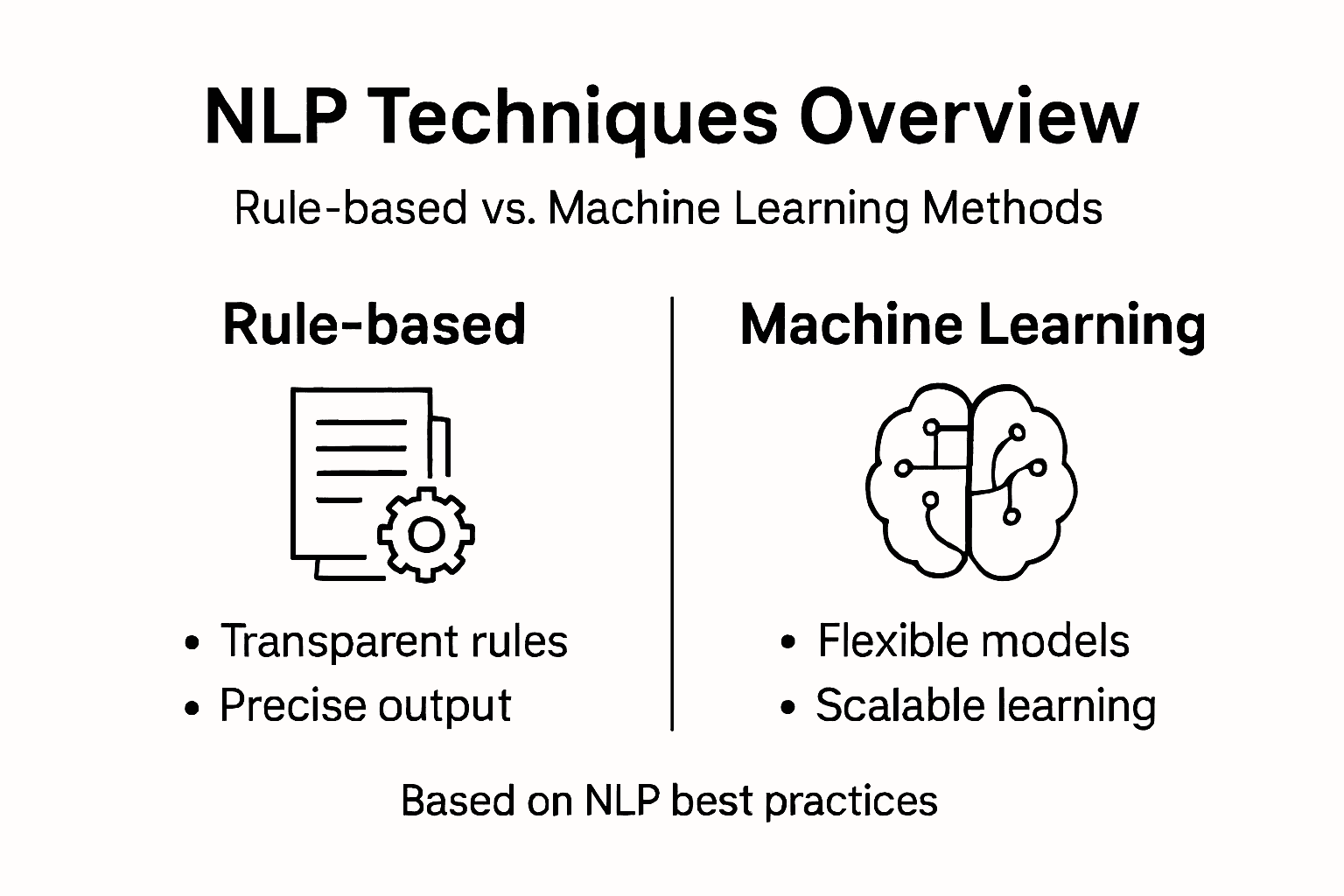
Each NLP approach offers unique strengths. Rule-based systems provide precise, transparent processing, while machine learning models excel at handling complex, nuanced language patterns. Modern NLP increasingly combines these techniques, creating hybrid systems that leverage the best of traditional and advanced computational linguistics.
Here's a comparison of major NLP approaches and their practical advantages:
| Approach Type | Core Principle | Best For | Typical Limitation |
|---|---|---|---|
| Rule-based | Predefined linguistic rules | Enforcing clear language structure | Difficult to scale |
| Statistical | Probability-based models | Finding common patterns in large datasets | Requires large labeled data |
| Machine Learning | Learning from examples | Adapting to new language patterns | Needs extensive training |
| Deep Learning | Neural network processing | Handling complex, nuanced text | High computational resources |
Pro tip: Experiment with multiple NLP techniques to find the most effective approach for your specific language processing challenge.
Natural Language Processing has revolutionized both content creation and detection, bridging the gap between machine-generated and human-authored text. Large language models transform content generation by enabling sophisticated text production across multiple domains, from marketing communications to academic writing.
The core capabilities of NLP in content creation include several key functionalities:
Plagiarism and AI detection represent another critical domain where NLP demonstrates remarkable power. Advanced paraphrasing detection techniques can now identify AI-generated content with up to 94% accuracy, providing unprecedented transparency in content authenticity.
By combining machine learning algorithms with sophisticated linguistic analysis, NLP technologies continue to push the boundaries of how machines understand, generate, and validate human language. These innovations create powerful tools for content creators, marketers, and researchers seeking to maintain high standards of originality and communication effectiveness.
Pro tip: Regularly update your NLP models to stay ahead of evolving content generation and detection technologies.
Natural Language Processing continues to evolve, but significant challenges persist in its implementation and effectiveness. Technological advances introduce complex risks that demand careful consideration, including potential biases, ethical concerns, and reliability limitations.
The primary risks and limitations of NLP technologies include:
Misconceptions about NLP frequently emerge from unrealistic expectations. Major challenges in language processing stem from the inherent complexity of human communication, which machines struggle to fully comprehend. Sarcasm, contextual subtleties, and cultural nuances remain particularly difficult for NLP systems to accurately interpret.
Despite technological progress, NLP is not a perfect solution but a continuously improving tool. Researchers and developers must remain vigilant about potential shortcomings, actively working to mitigate biases and improve system reliability. Understanding these limitations is crucial for responsible and effective implementation of NLP technologies.
Below is a summary of risks and proper practices for responsible NLP deployment:
| Risk/Challenge | Example Scenario | Recommended Mitigation |
|---|---|---|
| Algorithmic bias | Gender bias in resume screening | Diverse, audited training data |
| Privacy vulnerability | Sensitive info leaks in chatbots | Data anonymization, encryption |
| High computational cost | Running large language models | Optimize infrastructure, cloud |
| Misinterpretation | Failing to detect sarcasm | Combined approaches, retraining |
Pro tip: Regularly audit your NLP models for potential biases and accuracy limitations to ensure responsible AI deployment.
Natural Language Processing technologies are developing increasingly sophisticated tools to address the growing challenge of content authenticity and detection evasion. AI-generated text detection tools face significant accuracy challenges, revealing complex limitations in current technological approaches.
The primary categories of NLP authenticity tools include:
Content obfuscation methods continue to challenge existing detection systems. Advanced language models consistently outpace detection technologies, creating an ongoing technological arms race between content generation and verification systems. This dynamic environment requires continuous innovation and adaptive detection strategies.
Successful content authenticity tools must balance technical sophistication with practical usability, providing creators with reliable methods to verify and protect their intellectual work. The goal remains creating transparent, trustworthy content verification systems that respect both technological innovation and human creativity.
Pro tip: Implement multiple detection strategies to create a robust content verification approach.
The article highlights key challenges in NLP such as AI-generated content detection, content authenticity, and overcoming algorithmic biases. If you are striving to create truly human-like text that passes AI detection tests and enhances SEO performance, Semihuman.ai offers the perfect solution. Our platform specializes in transforming AI-produced text into natural, undetectable human writing with tools like text restructuring and keyword integration.
Experience the future of content creation today
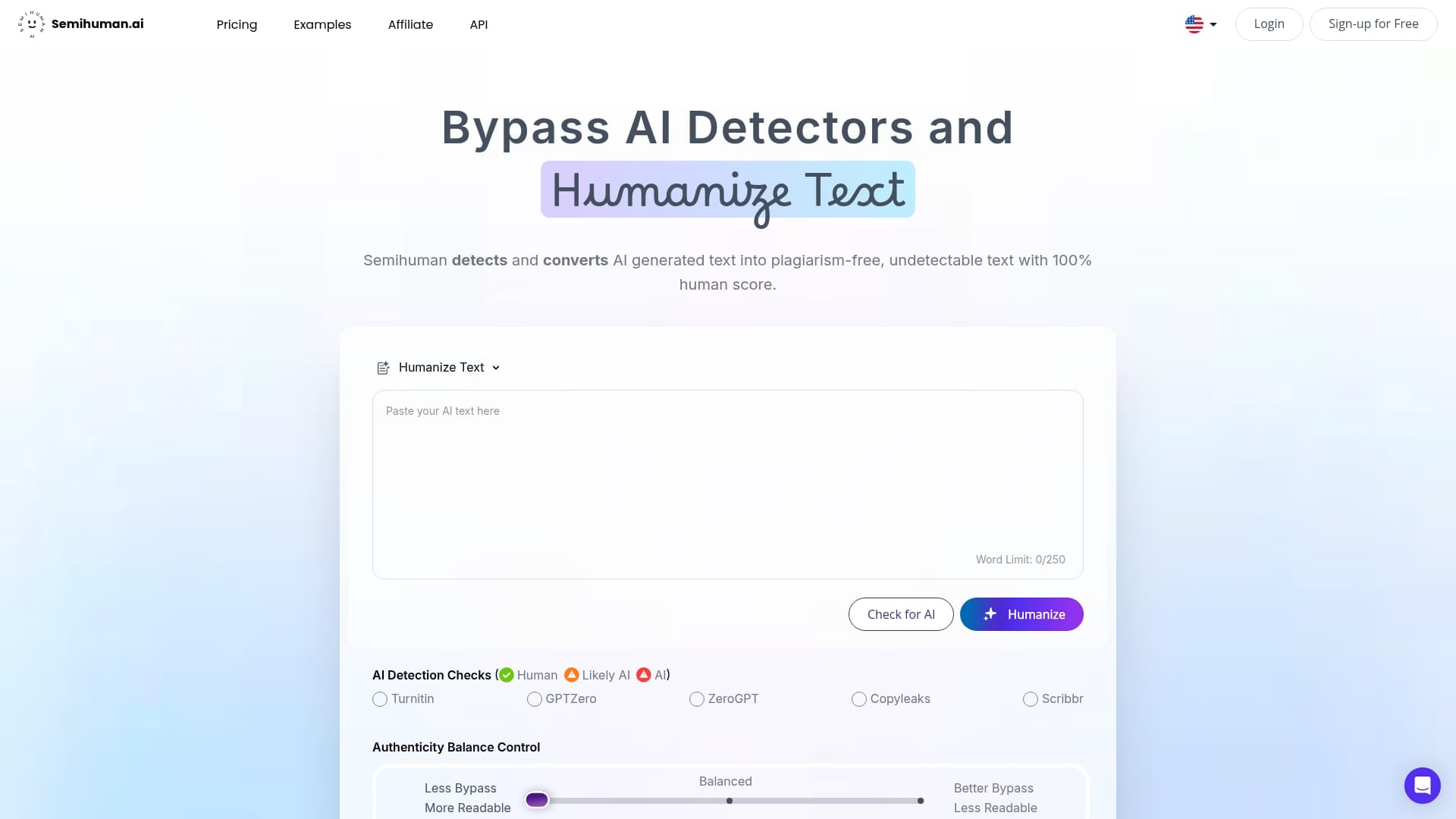
Don't let AI detectors limit your creative potential. Empower your content with AI-powered text humanization built for marketers, content creators, and students. Visit Semihuman.ai now and start generating authentic, engaging, and detection-proof content that resonates with your audience and stands out in a competitive digital world.
Natural Language Processing (NLP) is a field at the intersection of computer science, linguistics, and artificial intelligence that focuses on enabling computers to understand and generate human language.
The core techniques in NLP include tokenization, syntactic parsing, named entity recognition, sentiment analysis, and machine translation, which help computers process and understand human language.
NLP contributes to content creation by automating text generation, personalizing content, mimicking human writing styles, and enhancing contextual understanding, making it easier for marketers and writers to produce relevant material.
NLP technologies face risks such as algorithmic bias, privacy vulnerabilities, challenges with understanding complex language, and high computational costs, highlighting the need for responsible implementation.



Start
Humanizing
for Free!
Humanize