
Loading...

TL;DR:
- Streaming now accounts for nearly half of all TV viewing, surpassing traditional broadcast.
- Ad-supported streaming is dominant, with audiences watching more ads in targeted, engaging environments.
- Authentic, human-centric content remains essential as AI and technology evolve, emphasizing genuine connection.
Traditional TV's reign as the undisputed king of viewer attention is officially over. If your content strategy still assumes primetime TV is where audiences gather, you're working from a map that no longer matches the territory. Streaming has surpassed broadcast, ad-supported viewing has become the norm rather than the exception, and AI is quietly rewriting the rules of content discovery. For content creators and digital marketers, understanding exactly where viewers are spending their time and why is no longer optional. It's the foundation of every campaign that actually converts.
| Point | Details |
|---|---|
| Streaming’s dominance | Streaming now drives the majority of viewer behavior and is the new default for most audiences. |
| Ad-supported models win | The fastest growing segment is ad-supported content, reshaping monetization for creators and marketers. |
| Engaged fans matter most | Focusing on superfans and engaged communities boosts retention and revenue. |
| AI disruption is real | AI is changing how content is discovered, consumed, and turned into business opportunity. |
| Be human to succeed | Humanized, authentic content outperforms automation and is the true key to lasting engagement. |
The data is striking. Streaming now accounts for 47.5% of all TV viewing time as of December 2025, and among the coveted 18 to 49 age group, streaming captures 66.7% of ad-supported TV time. That's not a trend on the horizon. That's the new baseline.
"The majority of viewing time has decisively moved to streaming, and marketers who ignore this shift risk speaking to rooms that are increasingly empty." — Nielsen, 2026 Upfront Planning Series
What's powering this shift? A few forces are working together. First, streaming services have aggressively expanded their ad-supported tiers to attract cost-conscious viewers who want content without a premium price tag. Second, connected TVs have made it easier than ever to access streaming apps from the living room. Third, younger audiences grew up without traditional TV habits and see streaming as the default, not the alternative.
The numbers on ad-supported models are just as telling. Ad-supported viewing represents 74% of total TV time, two-thirds of streaming subscribers now pay for ad-supported tiers, and that figure is up 20 percentage points since 2024. Global entertainment and media ad revenue is projected to grow at a 6.1% compound annual growth rate, which is the fastest category across all media sectors. For marketers, this creates a real opening: audiences aren't avoiding ads, they're watching more of them in streaming environments where targeting is sharper and measurement is better.
Here's what this means practically for content creators and marketers:
Pro Tip: If you're producing authentic AI content for campaigns that run across streaming environments, make sure your scripts and copy match the conversational tone of the platform. Streaming viewers expect a different register than broadcast TV audiences.
The shift to streaming also changes how you structure your content calendar. Broadcast TV ran on a fall-to-spring season model. Streaming is year-round, with content drops happening every week. That means your audience engagement strategy needs to match: consistent publishing, regular touchpoints, and creative that stays fresh beyond a single campaign window.
While overall viewing habits are changing, the role of fans and active communities is shaping a new kind of media value chain. Not all viewers are equal, and the data proves it.
Superfans drive 27% higher streaming spend compared to casual viewers, according to Deloitte's research on subscriber behavior. They engage through social media (50%) and podcasts (36%) to maintain their connection to content year-round, not just when a new season drops. For media companies and marketers, superfans aren't just loyal customers. They're multipliers who recruit new audiences, generate organic content, and defend brand reputation online.
| Engagement channel | % of superfans using it | Key benefit for marketers |
|---|---|---|
| Social media | 50% | Organic amplification and word-of-mouth reach |
| Podcasts | 36% | Deep-dive engagement and topic authority |
| Live events | Growing | Premium monetization and community building |
| Community forums | Significant | Retention, feedback loops, and loyalty signals |
How do you actually cultivate a superfan base rather than a passive audience? Here's a practical sequence:
Pro Tip: The way you write and produce community-facing content matters just as much as strategy. Check out AI for authenticity to understand how tone, style, and genuine voice keep superfans engaged rather than skeptical.
The podcast ecosystem deserves special mention here. Podcasts aren't ambient background noise for superfans. They're a serious engagement channel where hosts build parasocial relationships that rival TV personalities. If your brand or content isn't showing up in the podcast space, you're missing one of the most intimate touchpoints available. A well-placed sponsorship or a branded podcast can convert casual listeners into devoted community members faster than almost any other format. The implications for content marketing with AI are significant: personalization, tone matching, and relevance are the difference between content that superfans share and content they scroll past.

Active fans shape digital media, but some media moments still belong to traditional TV, especially live sports. Here's why that matters for your strategy.
Linear TV may have lost the overall viewing war to streaming, but it's defending its territory fiercely in one critical area: live events. Sports represent the clearest case. Sports anchor ad-supported viewing for the 25 to 54 demographic, with 30% of that group primarily watching sports through ad-supported formats. Super Bowls, playoffs, the Olympics, and major league games still pull audiences that no streaming drama can match for simultaneous, communal viewing.
| Format | Streaming advantage | Linear TV advantage |
|---|---|---|
| On-demand content | High; watch anytime, any device | Low; scheduled broadcast |
| Targeting precision | Strong; data-driven ad delivery | Moderate; broad demographic targeting |
| Live sports | Growing but fragmented | Still dominant for major events |
| Community viewing experience | Limited | Strong for high-profile events |
| Cost for marketers | Rising but flexible | Premium but mass reach |
What does this mean for your media mix? It means you can't entirely abandon linear TV if your audience overlaps with sports fans. The live viewing experience creates something that on-demand content rarely achieves: genuine cultural moments that audiences discuss in real time on social platforms. Those second-screen conversations are marketing gold.
Here's how smart marketers are blending live and digital strategies right now:
Pro Tip: For content personalization for live events, create variations of your messaging in advance. A fan watching their team win needs different copy than one watching a loss. Dynamic creative optimization lets you match the moment.
The sports media landscape is also evolving fast. Streaming platforms are spending billions on sports rights precisely because they understand what linear TV's audience data has shown for decades: sports viewers are loyal, engaged, and valuable to advertisers. The lines between linear and streaming will continue to blur, but the underlying principle remains constant. Live, unscripted moments with emotional stakes are where the most valuable audience attention lives.
With the pillars of streaming, fan engagement, and live events set, the next wave is powered by AI. What's happening now will reshape how audiences find content and how creators distribute it.
Forrester's analyst predictions for 2026 outline several developments that every digital marketer should understand. Agentic AI (autonomous AI systems that take actions on behalf of users) is beginning to change how consumers search and shop online, which is expected to reduce reliance on retail media by as much as 20%. Creator affiliate budgets are projected to double as brands shift investment toward creator-led commerce. And offline experiences are seeing a genuine rebound, partly as a reaction to digital fatigue.
"GenAI's current limitations in generating nuanced, long-form video content mean that human creativity and authentic storytelling remain irreplaceable advantages for creators." — Forrester, Digital Content Predictions 2026
Let's break down what each of these shifts means for content creators and marketers:
The implications for content authenticity are direct. When agentic AI is filtering content on behalf of users, generic and obviously AI-generated material gets deprioritized. Content that signals real expertise, original perspective, and human nuance performs better in AI-curated environments. Following trustworthy AI strategies isn't just good ethics, it's good SEO and good business in a world where AI agents are making discovery decisions.
The creator economy is also being restructured by these forces. As affiliate budgets double and agentic AI shifts how purchases happen, the creators who build genuine authority in specific niches will have more leverage than ever. Broad, generic content will struggle. Deep, specific, human-centered content will thrive.
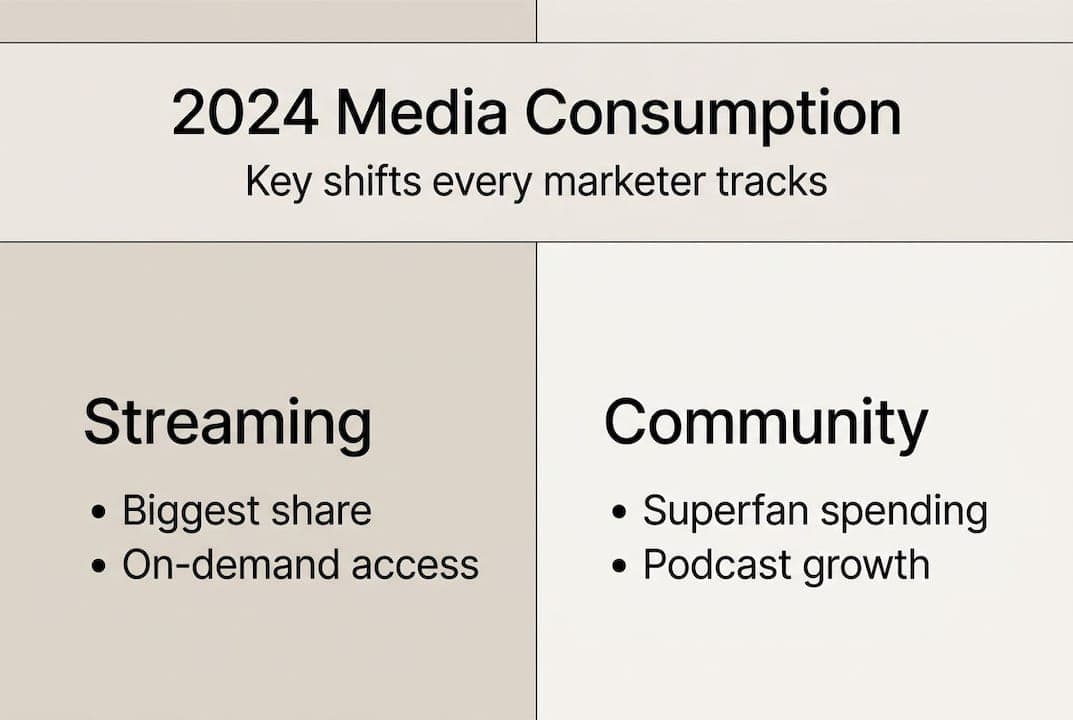
Here's a perspective built on watching these trends across dozens of content strategies: technology will keep evolving faster than any single platform prediction can capture. What doesn't change is the human need for genuine connection and trustworthy information.
Every trend covered in this article, from streaming's rise to superfan economics to AI-driven discovery, points to the same underlying conclusion. Audiences are getting better at filtering out content that feels manufactured. Streaming algorithms now optimize for watch time and completion rates, which means content that doesn't hold attention gets buried quickly. Superfans, by definition, are intensely sensitive to whether a creator is authentic or performing authenticity. And agentic AI systems are trained to surface credible, high-quality content, which means low-effort output loses before it even reaches a human reader.
The humanizing digital impact of combining technology with genuine creative investment is real and measurable. Brands that lean into authentic storytelling, nuanced perspectives, and real context consistently outperform those chasing algorithmic shortcuts. This doesn't mean you can't use AI tools in your workflow. It means the output has to feel human, read naturally, and carry genuine insight.
The practical takeaway: build authenticity into the production process, not just the messaging strategy. That means reviewing AI-generated drafts for voice, adding real examples from your experience, and never publishing content that you wouldn't comfortably put your name on.
The trends are clear: audiences want content that feels real, platforms reward authentic engagement, and AI-generated material that reads like a machine wrote it gets filtered out faster every year.
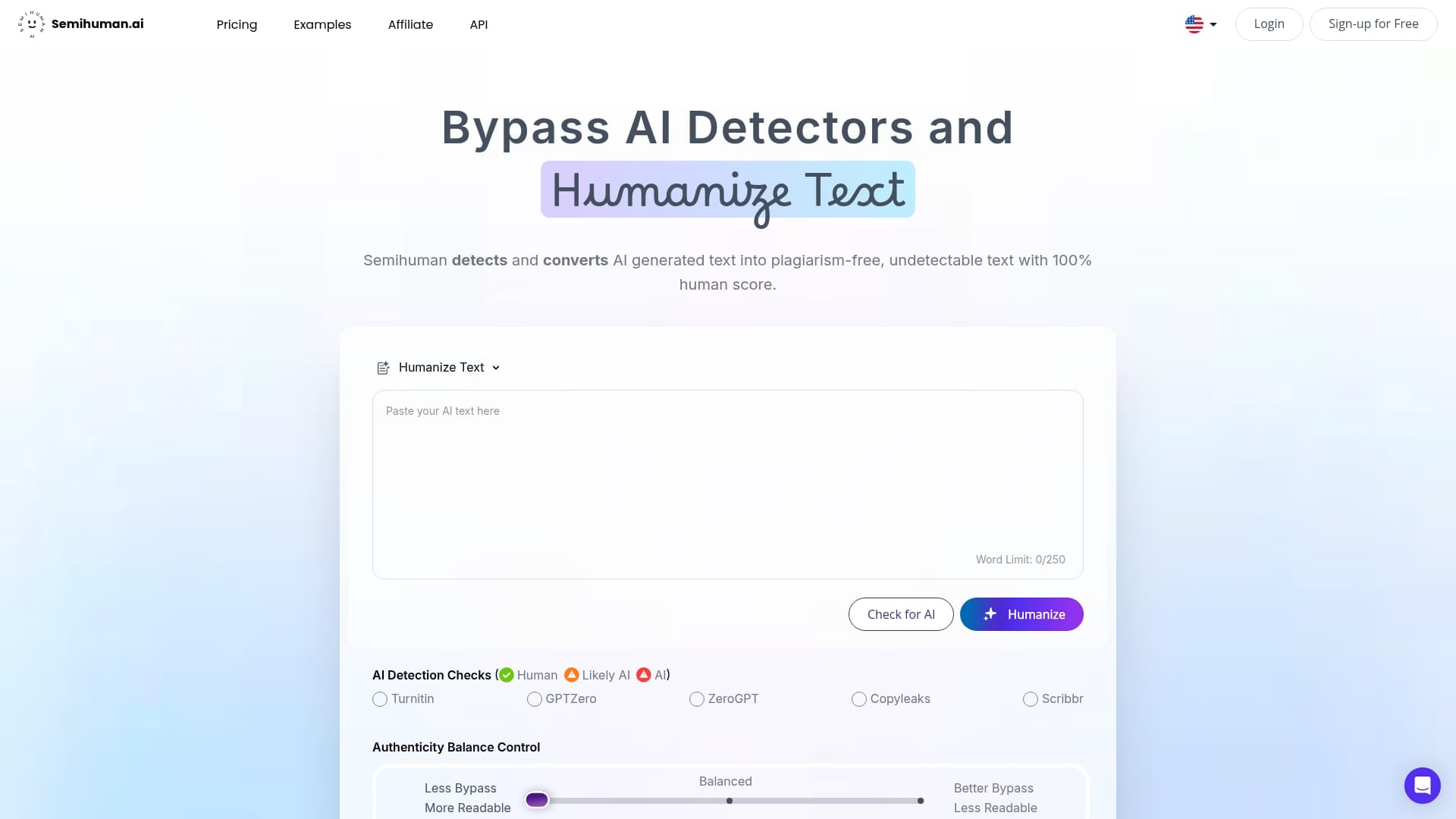
Semihuman AI gives content creators and marketers the tools to close that gap. Whether you need to bypass AI detectors to ensure your content passes platform and editorial review, or you want to produce high-ranking copy with the SEO text generator, Semihuman AI is built to help you create content that connects. The platform restructures AI-generated text so it reads naturally, integrates keywords without sounding forced, and gives your work the human voice that today's algorithms and audiences both favor. It's not about faking authenticity. It's about delivering it consistently at scale.
Yes, streaming accounts for 47.5% of all TV viewing time as of December 2025, making it the dominant format, especially among viewers aged 18 to 49.
Very important: 74% of total TV time is now ad-supported, and two-thirds of streaming subscribers are opting for ad-tier plans, a figure that jumped 20 percentage points in a single year.
Superfans spend 27% more on streaming than casual viewers and sustain engagement between releases through social and podcast communities, making them the highest-value segment for retention and growth.
Agentic AI is reducing retail media reliance by up to 20% while doubling creator affiliate budgets, shifting how audiences find and purchase content-adjacent products across digital platforms.

Start
Humanizing
for Free!
Humanize