
Loading...

Most American content marketers now rely on AI to scale their writing, yet nearly 60 percent find challenges in making this content sound genuinely human. Authenticity matters because machine-written text often triggers detection by plagiarism tools or leaves readers disengaged. This guide offers practical techniques that help you shape tone, integrate keywords, and refine AI drafts so your content stands out as original and trustworthy in any digital market.
| Key Point | Explanation |
|---|---|
| 1. Understand Your Audience | Develop a detailed audience persona to guide tone and content effectively. |
| 2. Create Initial AI Draft | Use established tone parameters to generate baseline content with AI tools. |
| 3. Utilize Humanization Tools | Apply strategies to adjust language for a more authentic, natural feel. |
| 4. Incorporate Keywords Strategically | Seamlessly integrate relevant keywords to enhance content without disrupting flow. |
| 5. Ensure Tone Consistency | Employ detection tools to identify and correct tone variations throughout the text. |
Creating authentic AI content begins with understanding your specific audience and precisely defining their tone expectations. Your goal is to craft language that resonates naturally with readers while maintaining a consistent communication style.
Start by developing a comprehensive audience persona that goes beyond basic demographics. Analyze academic writing expectations to understand nuanced communication preferences. This means mapping out key characteristics like professional background, education level, industry terminology comfort, and communication formality standards. Consider questions such as: Are they technical professionals seeking precise language? Academic researchers requiring scholarly tone? Marketing executives wanting dynamic engagement?
Next, map your tone parameters systematically. Break down specific dimensions like sentence complexity, vocabulary level, emotional resonance, and technical depth. For academic or professional audiences, prioritize clarity and precision. For creative sectors, emphasize conversational flow and storytelling elements. Create a detailed style guide documenting these parameters so your AI writing consistently matches target audience expectations.
Pro Tip: Conduct periodic audience surveys or review communication feedback to continuously refine your tone parameters and maintain relevance.
Your next critical task is transforming your audience tone parameters into a workable initial AI draft. This step bridges strategic planning with practical content generation, creating a foundational framework for authentic writing.
Structured AI drafting tools can help you quickly produce baseline content that aligns with your predetermined tone specifications. Begin by inputting your carefully defined audience persona and communication guidelines directly into your AI writing platform. Focus on providing clear, specific prompts that outline expected sentence structure, vocabulary complexity, and emotional tone. For academic or professional contexts, emphasize precision and formal language conventions. For more creative domains, allow for more conversational and engaging narrative styles.
Remember that the initial draft is just a starting point. Academic writing research highlights the importance of human oversight in refining AI generated content. Review the draft critically, checking for authentic voice, logical flow, and alignment with your original tone parameters. Make strategic edits that preserve the AI's structural strengths while injecting nuanced human understanding and intellectual depth.
Pro Tip: Always save multiple draft versions to track your refinement process and identify which prompting strategies produce the most authentic results.
Transforming AI-generated content into authentic writing requires strategic use of specialized humanization tools. Your goal is to eliminate robotic language patterns and inject natural human complexity into the text.
Start by running your initial draft through a comprehensive humanization guide that analyzes linguistic nuances. These tools examine sentence structure, word choice, and emotional resonance to identify mechanical writing patterns. Look for telltale signs of AI generation such as repetitive phrasing, overly formal language, or lack of contextual variation. Focus on modifications that introduce subtle imperfections and conversational elements typical of human writing personal insights or slight narrative deviations that make the text feel more organic.

Carefully review each suggested change, understanding that humanization is an art of subtle refinement. Some tools offer granular adjustments like modifying sentence complexity, introducing colloquial expressions, or adjusting emotional tone. Experiment with different settings to find the right balance between maintaining your original message and creating a natural reading experience. Pay special attention to transitions, introductory phrases, and concluding statements where human writing tends to show the most personality.
Pro Tip: Always save your original draft and work on a copy to track how each humanization adjustment impacts the overall tone and readability.
Here's a side-by-side summary of humanization and tone verification tools:
| Tool Type | Primary Purpose | Example Adjustments | Best Used For |
|---|---|---|---|
| Humanization Tools | Make AI text sound natural | Add idioms, vary sentence length | Improving authenticity |
| Tone Verification Tools | Ensure consistent style | Highlight tone shifts, measure emotional resonance | Maintaining uniform voice |
| AI Drafting Tools | Rapid initial content | Generate baseline structure | Quick first draft creation |
Keyword integration is a nuanced art that transforms technical content into contextually rich writing. Your mission is to weave keywords seamlessly into your text without disrupting the natural flow of language.
Academic writing research demonstrates that effective keyword placement requires strategic thinking beyond simple repetition. Start by identifying primary and secondary keywords that authentically represent your content's core concepts. Examine how these terms naturally appear in scholarly or professional discourse within your specific field. The goal is not mechanical insertion but organic integration that enhances comprehension and maintains readability. Consider how experts in your domain actually discuss these concepts conversationally and model your language after those authentic communication patterns.
Consider each keyword as a precise instrument of communication rather than a checkbox to be filled. Strategically distribute them across your document ensuring they emerge contextually. Place keywords in introductory statements, supporting arguments, and concluding remarks. Pay attention to semantic variations and related terminology that can provide linguistic diversity while maintaining topical consistency. Look for opportunities to introduce keywords through explanatory phrases, comparative statements, or illustrative examples that naturally invite their usage.
Pro Tip: Read your draft aloud to ensure keywords flow naturally and do not disrupt the conversational rhythm of your writing.
This table consolidates techniques for authentic keyword integration:
| Technique | Description | Value Added |
|---|---|---|
| Contextual Placement | Embed keywords in explanations and examples | Enhances readability |
| Semantic Variation | Use synonyms and related terms | Ensures linguistic diversity |
| Conversational Modeling | Mimic how experts use keywords in speech | Improves natural flow |
| Strategic Distribution | Space keywords evenly across document | Prevents forced repetition |
Ensuring consistent tone throughout your document requires strategic analysis and targeted refinement. Your objective is to identify and eliminate subtle linguistic variations that could compromise the authenticity of your writing.

Utilize comprehensive tone verification tools that analyze linguistic patterns across your entire document. These sophisticated systems examine multiple dimensions of your text including sentence structure, emotional resonance, vocabulary complexity, and contextual consistency. Pay close attention to areas where AI-generated language might slip through unnoticed such as technical descriptions, transitional phrases, or complex explanatory sections. Run multiple scans that compare different sections to ensure your writing maintains a uniform voice and communication style.
Approach tone detection as a granular process of linguistic fine tuning. Look beyond surface level metrics to understand the deeper contextual nuances that define authentic writing. Create a baseline profile of your desired tone characteristics and systematically compare your draft against these parameters. Some detection tools offer visual representations of linguistic variations allowing you to pinpoint exact locations where tone might deviate. Focus on maintaining natural language flow while eliminating robotic or overly systematic communication patterns.
Pro Tip: Create a reference document with your ideal tone profile to use as a consistent benchmark during multiple verification passes.
Authenticity is more than avoiding detection it is about creating content that genuinely reflects human intellectual effort. Your mission is to transform AI-generated text into a piece that sounds uniquely personal and contextually nuanced.
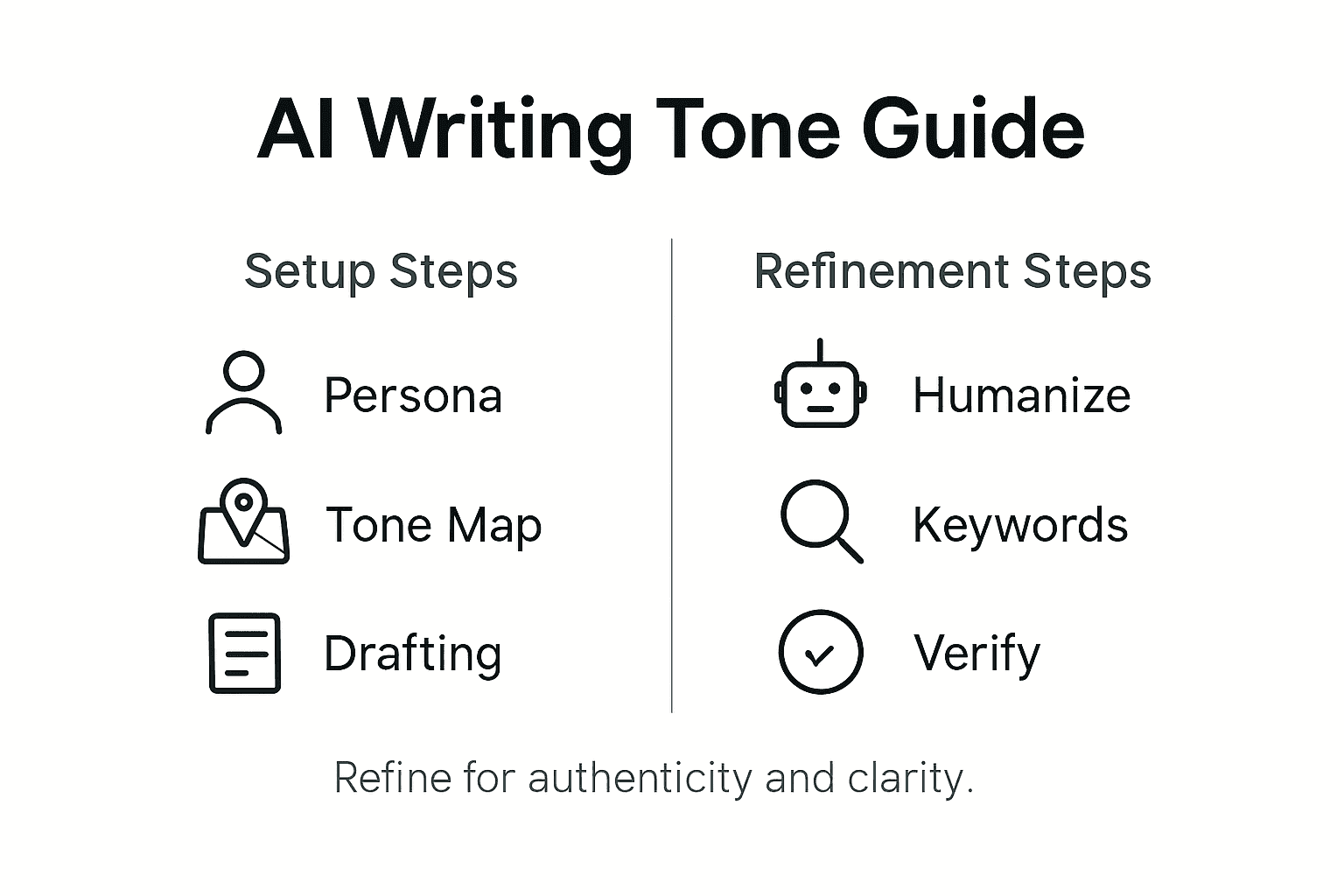
Writer's integrity frameworks emphasize the importance of introducing subtle personal variations that make your writing feel genuinely human. Start by injecting personal perspectives subtle anecdotal references or contextual insights that AI typically struggles to generate. Think about how you would naturally explain a concept to a colleague or friend. Add unexpected metaphors quirky transitions or conversational asides that break predictable language patterns. Consider introducing intentional imperfections like occasional conversational fillers or slight semantic meandering that mirror authentic human communication.
Implement a multilayered refinement approach that goes beyond surface level edits. Examine your text for systematic language patterns and deliberately interrupt them. Vary your sentence structures introducing both complex and simple sentences. Incorporate domain specific vernacular that demonstrates genuine expertise while maintaining an approachable tone. Pay attention to emotional undercurrents and ensure your writing reflects genuine human curiosity engagement and intellectual exploration.
Pro Tip: Record yourself explaining the core concepts of your writing and use those natural speech patterns as a refinement guide.
Maintaining consistent tone in AI writing is a challenge many creators face when striving for authentic content that truly connects. If you struggle with robotic phrasing, forced keyword placement, or feel your text lacks the natural flow of a human writer this article shows why refining tone is essential for authenticity and engagement. Concepts like humanization tools and tone verification are vital to bridge the gap between AI draft and genuinely relatable writing.
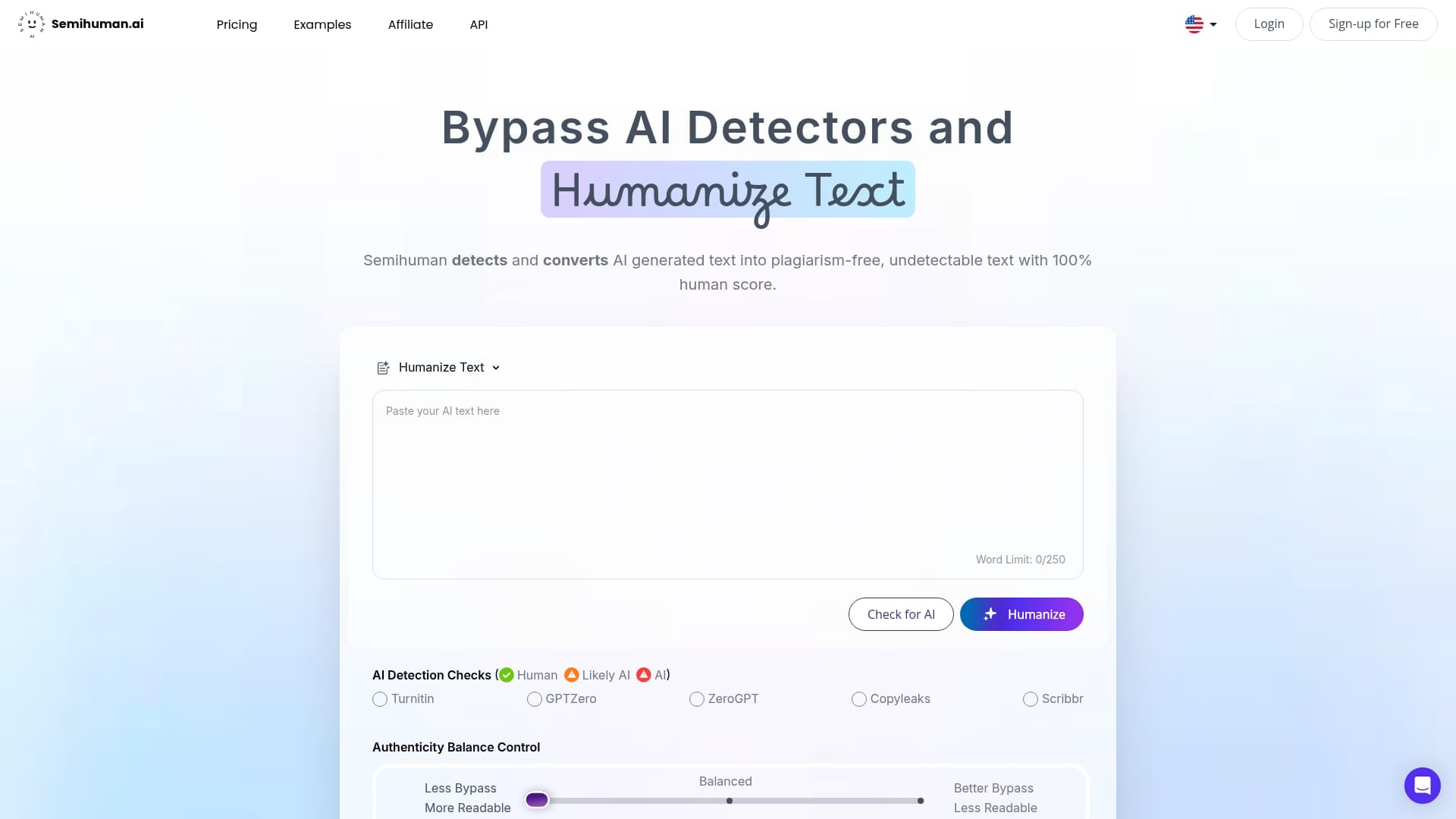
Unlock the power to transform your AI-generated drafts into naturally human-like content with Semihuman.ai. Our platform specializes in detecting mechanical language patterns and restructuring your writing so it resonates with real readers while improving SEO performance and bypassing AI detection systems. Whether you create academic papers, marketing emails, or website content discover how to seamlessly integrate keywords and maintain tone consistency using advanced humanization features featured in this detailed humanization guide. Act now to ensure your work stands out with authentic voice and credibility by visiting Semihuman.ai and experience the future of AI content refinement.
To determine the best tone, create a detailed audience persona that includes professional background, education level, and communication preferences. Focus on these characteristics to guide your tone parameters for authentic AI content.
Start by inputting your defined audience persona and tone guidelines into your AI writing platform. Be specific about sentence structure, vocabulary complexity, and emotional tone to create a strong baseline draft.
Run your initial AI draft through humanization tools that identify mechanical writing patterns and suggest natural language modifications. Modify repetitive phrasing and overly formal language to achieve a more conversational tone.
Embed keywords strategically within explanations and examples instead of repetitive insertion. Ensure that keywords flow logically with the content, enhancing comprehension while maintaining readability.
Use tone verification tools to analyze linguistic patterns in your draft for variations in sentence structure and emotional resonance. Conduct multiple scans to ensure your writing maintains a uniform voice and communication style.
Introduce personal perspectives and unique insights that AI might miss, such as anecdotes or metaphors. Use a mix of sentence structures and domain-specific terminology to enhance authenticity and engage readers more effectively.



Start
Humanizing
for Free!
Humanize