
Loading...

Every content marketer knows the debate around long-form articles can stir up strong opinions. For those focused on earning higher rankings and genuine reader engagement, understanding what makes long-form content effective is essential. By exploring why comprehensive, in-depth writing leads to deeper connections and improved SEO, this guide helps you overcome old myths and harness the real advantages of longer digital content.
| Point | Details |
|---|---|
| Long-Form Content Benefits | Long-form content enhances SEO performance and user engagement by delivering comprehensive information and insights. |
| Debunking Common Myths | Myths that longer content is boring or less effective are disproven by research showing deeper content ranks higher and attracts more backlinks. |
| Diverse Content Formats | Various types of long-form content, such as whitepapers and case studies, cater to different audience needs and stages in the marketing funnel. |
| Authenticity and Trust | Building reader trust through authentic, well-researched content is crucial for lasting engagement and credibility. |
Long-form content represents a comprehensive approach to digital writing that goes far beyond simple word count. At its core, long-form content is an in-depth exploration of a topic, typically ranging from 1,000 to 7,500 words, which provides extensive analysis, research, and valuable insights for readers.
Traditionally, content creators have encountered several persistent myths about long-form writing that often discourage its development. These misconceptions can prevent marketers and writers from leveraging the powerful content writing strategies that drive meaningful engagement.
Key myths surrounding long-form content include:
Contrary to these beliefs, research demonstrates that comprehensive content actually provides significant advantages. Detailed articles tend to rank higher in search results, generate more backlinks, and establish stronger topical authority. Digital content strategies reveal that in-depth pieces foster deeper user engagement and provide more substantial value.
The modern digital landscape rewards content that thoroughly addresses user questions and provides actionable, nuanced insights. Successful long-form content isn't about padding word count, but delivering genuine depth and expertise.
Pro tip: Focus on creating value-driven content that comprehensively answers user questions, rather than arbitrarily extending word count.
Long-form content represents a diverse ecosystem of digital marketing materials designed to provide comprehensive, in-depth information across multiple formats. Digital content strategies reveal that these formats extend far beyond traditional blog posts, encompassing a rich landscape of engaging media types.
Key types of long-form content include:
Modern digital marketing requires strategic multimedia content approaches that transcend traditional text-based formats. Successful long-form content now incorporates multiple media types, enhancing user engagement and accessibility while delivering substantive information.
Each content type serves a unique purpose in the marketing funnel, targeting different audience segments and stages of the customer journey. Whitepapers might appeal to decision-makers, while case studies could resonate with prospects seeking proof of concept. The key is selecting the right format that aligns with your specific communication objectives and audience preferences.
Here's how different long-form content formats cater to the marketing funnel:
| Content Format | Marketing Funnel Stage | Typical Audience | Impact |
|---|---|---|---|
| Whitepaper | Awareness/Education | Decision-makers | Builds authority, educates |
| Case Study | Consideration/Decision | Prospects, clients | Demonstrates proven solutions |
| Ebook | Lead Generation | Broad, engaged readers | Captures leads, nurtures |
| Multimedia Guide | Engagement/Conversion | Mixed demographics | Boosts engagement, accessibility |
| Blog Guide | Awareness/Interest | Search-driven audiences | Improves visibility, answers questions |
Pro tip: Match your long-form content type precisely to your target audience's information needs and consumption preferences.
Search engines have evolved to prioritize comprehensive, value-driven content that thoroughly addresses user queries. Digital content strategies reveal that long-form content has become a powerful mechanism for improving search engine rankings by providing deep, authoritative insights across multiple dimensions.
Key SEO performance drivers of long-form content include:
Modern search algorithms increasingly reward content that demonstrates comprehensive user intent by analyzing multiple engagement metrics. Longer content allows for more nuanced exploration of topics, incorporating related keywords, expert insights, and multimedia elements that signal credibility to search algorithms.
Successful long-form SEO requires strategic approach. Content must balance depth with readability, using clear structures like headers, bullet points, and visual breaks to maintain reader engagement while providing comprehensive information. The goal is not simply length, but delivering genuine value that comprehensively addresses user questions.

Pro tip: Structure your long-form content with clear headings, actionable insights, and multimedia elements to maximize both reader engagement and search engine optimization.
Building genuine reader trust demands more than surface-level content. Authentic writing strategies require a deliberate approach that goes beyond mere information delivery, focusing on transparency, credibility, and meaningful connection with the audience.
Key elements of building authentic content include:
The psychology of trust hinges on content that resonates authentically with readers' core needs and expectations. Readers can quickly detect manufactured or superficial content, making genuine, depth-driven writing crucial for maintaining engagement and credibility.
Authentic long-form content transcends traditional marketing approaches by prioritizing reader value over promotional messaging. This means creating content that genuinely educates, addresses pain points, and provides actionable insights without manipulative tactics. The goal is to establish a connection that feels human, direct, and trustworthy.
Pro tip: Integrate personal insights, real-world examples, and transparent research to create content that feels genuinely human and builds lasting reader trust.
The digital content landscape has become increasingly complex, with artificial intelligence presenting both opportunities and significant challenges for content creators. Technical approaches to content authentication have emerged as critical strategies for maintaining integrity and avoiding detection risks.
Common AI-generated content pitfalls include:
Content creators must develop sophisticated strategies to mitigate risks associated with AI writing tools. This involves understanding detection mechanisms, implementing human editing processes, and maintaining a genuine, original writing approach that transcends algorithmic generation.
Successful content strategy requires a balanced approach that leverages AI's capabilities while preserving human creativity and authenticity. This means using AI as a collaborative tool rather than a replacement for genuine human insight, carefully editing and personalizing generated content to ensure it passes sophisticated detection protocols.
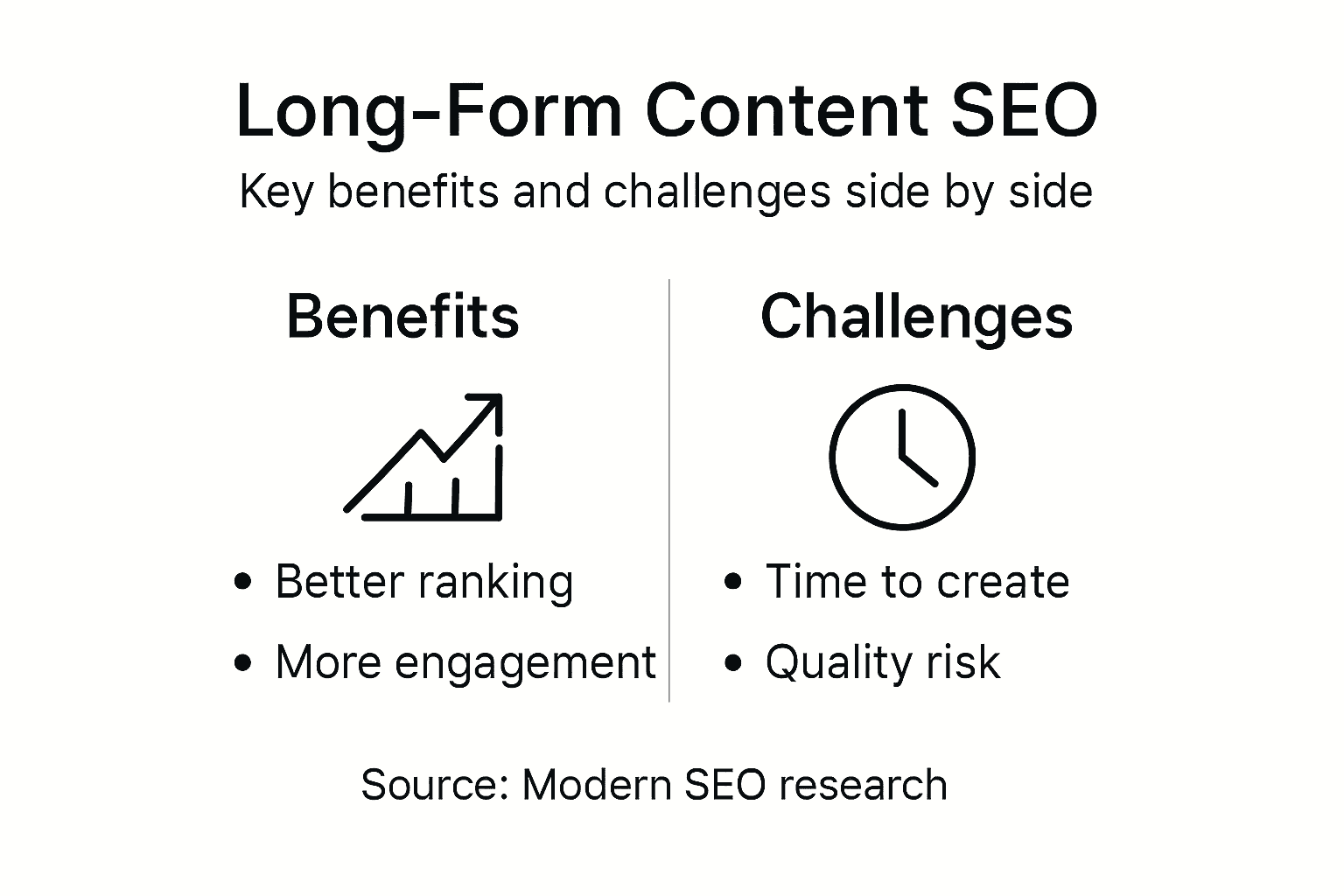
Below is a comparison of human-edited versus AI-generated content characteristics:
| Attribute | Human-Edited Content | AI-Generated Content |
|---|---|---|
| Tone Consistency | Natural, steady voice | Can be inconsistent |
| Contextual Depth | Nuanced, tailored | May lack nuance |
| Fact Accuracy | Thoroughly researched | Sometimes unreliable |
| Trust Signals | Relatable, transparent | May appear artificial |
Pro tip: Always introduce personal experiences, unique perspectives, and specific examples that AI cannot easily replicate to enhance content authenticity.
Creating comprehensive long-form content is crucial for SEO success but maintaining authenticity and avoiding AI detection pitfalls can be daunting. The article highlights challenges like preserving genuine tone, enhancing reader trust, and crafting nuanced, value-driven writing that stands out in search rankings. These pain points can hinder your ability to leverage the full potential of in-depth content for driving engagement and authority.
Semihuman.ai offers an innovative solution designed specifically to transform AI-generated drafts into naturally human-like content that aligns with your SEO goals. By focusing on text restructuring, keyword integration, and detection evasion, our platform helps you overcome common issues such as predictable language patterns and artificial tone. This ensures your long-form content not only ranks higher but also resonates authentically with your audience. Harness the power of long-form content advantages while maintaining credibility and trust.
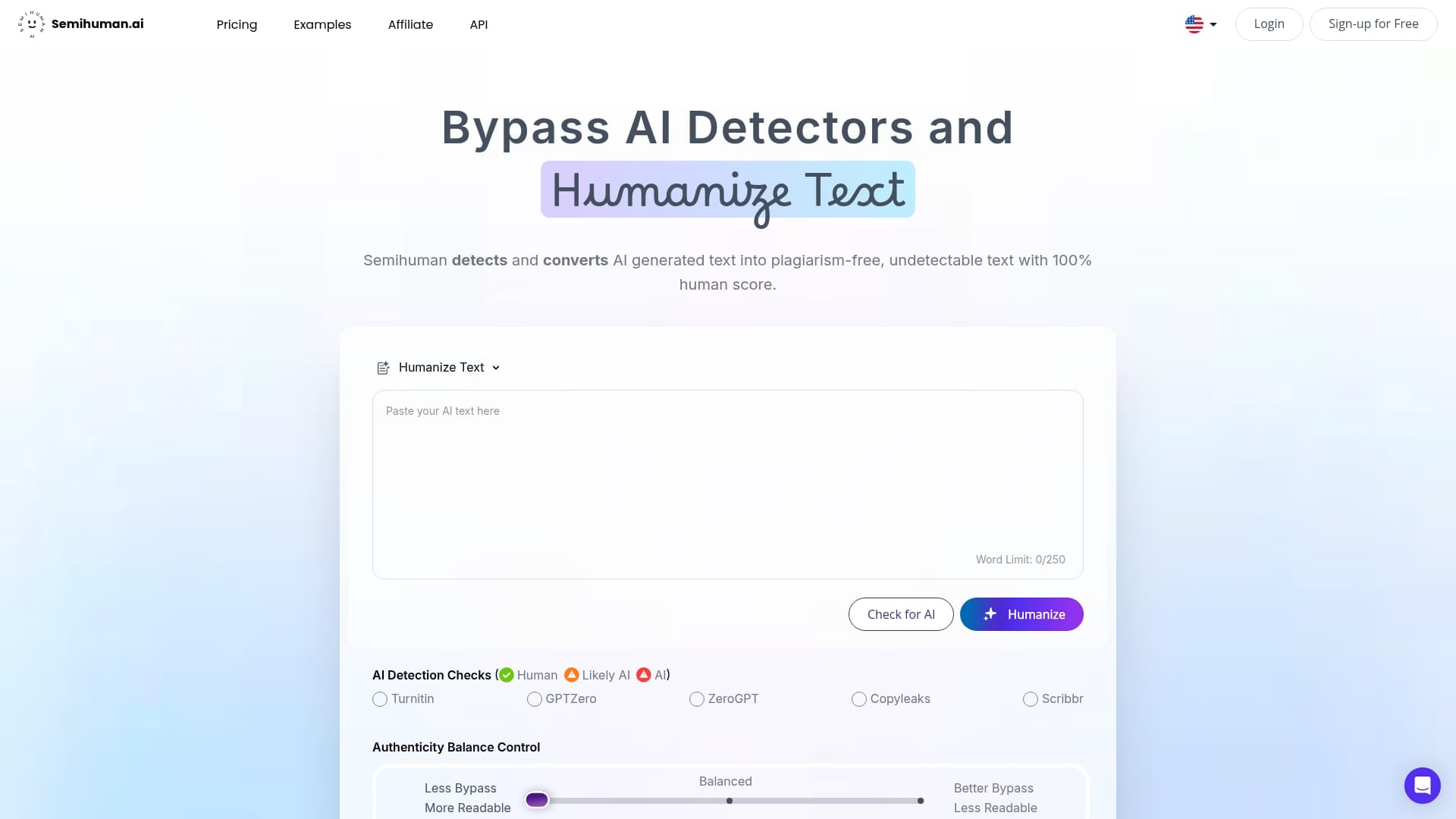
Unlock your content's true potential now with Semihuman.ai to enhance authenticity, improve SEO performance, and bypass AI detection tools like Turnitin and GPTZero. Start creating compelling humanized content that drives measurable results and connects deeply with readers today.
Long-form content is an in-depth exploration of a topic, typically ranging from 1,000 to 7,500 words, providing extensive analysis and valuable insights for readers.
Long-form content drives SEO performance by enhancing keyword comprehensiveness, improving user engagement, attracting backlinks, demonstrating topical authority, and providing opportunities for rich snippets in search results.
Types of long-form content include whitepapers, ebooks, case studies, comprehensive blog guides, research reports, and multimedia guides, each serving different purposes in the marketing funnel.
To create authentic content, focus on transparent sourcing, incorporate personal narratives, acknowledge limitations, present comprehensive research, and include insights from industry experts.

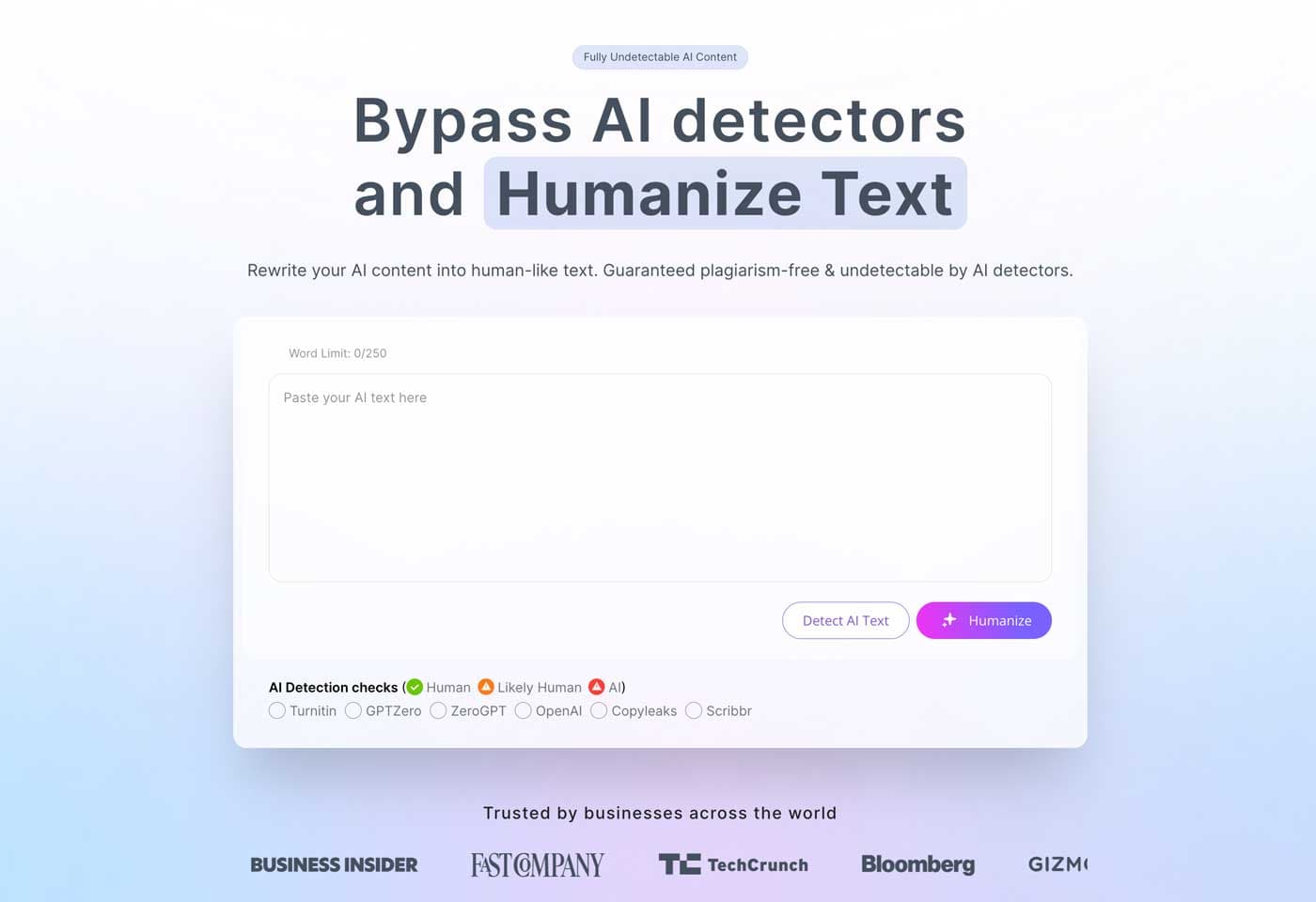
Start
Humanizing
for Free!
Humanize