
Loading...

TL;DR:
- Pair human editing with AI to create engaging, accurate, and personalized content.
- Use specificity, real data, and authentic voice to improve ranking and trust.
- Implement structured SEO techniques like schema markup and question-based headings for AI citation.
You've run the AI tool, gotten a polished-looking draft, and hit publish. Then the silence hits: low clicks, poor time-on-page, and maybe a dreaded flag from an AI detection system. This is the daily friction for content teams in 2026. AI writing tools are fast and scalable, but raw AI output consistently misses the nuance, specificity, and warmth that real readers respond to. The good news is that fixing this isn't about scrapping AI entirely. It's about building a smarter process around it. This guide gives you concrete, evidence-backed strategies to improve quality, boost SEO performance, and create content that genuinely connects.
| Point | Details |
|---|---|
| Manual review matters | Human editing and experience-based insights are essential for authentic, high-ranking AI content. |
| Specificity beats vagueness | Concrete data, mini-case studies, and unique opinions outperform generic AI text every time. |
| Structure drives visibility | Advanced formatting, schema markup, and clear answers improve both SEO and AI engine results. |
| Add your unique voice | Content grounded in personal experience and expert opinion consistently ranks higher in search. |
Before you start editing or restructuring anything, you need a clear definition of what "good" actually looks like. Without criteria, every revision becomes guesswork. Think of this as building your content scorecard: a short checklist that every piece of AI content must pass before it goes anywhere near your audience.
Here's what that scorecard should measure:
Here's a finding that should get your attention: content with personal experience ranks nearly 5 positions higher in Google search results. That's not a small SEO bump. That's the difference between page one and page two.

The temptation is to rely entirely on automation to check these boxes. But no tool can verify whether your content truly reflects real experience or whether the tone genuinely matches your audience's expectations. AI content humanization requires genuine quality for humans and E-E-A-T signals, not just passing a detector. Manual review is non-negotiable. The good news is that when you pair a clear scorecard with a structured review process, the editing gets faster and more consistent. Your team stops arguing about what "good" means and starts spending that energy actually improving the content. Understanding SEO authenticity in 2026 is also essential context for setting the right benchmarks from the start.
With criteria in place, let's explore how real teams pair human expertise with AI power. The biggest mistake content teams make is treating AI output as a finished product. It isn't. Think of it as a very fast first draft from a writer who knows a lot of facts but has never actually lived through any of them.
Here's a workflow that consistently produces better results:
Pro Tip: Build a dedicated "humanization pass" into your standard editorial workflow. It doesn't need to take long. Even 20 minutes of focused editing on the intro, conclusion, and one middle section can dramatically shift how the content feels to a real reader.
This human-AI workflow approach, where AI handles drafts and research and humans handle editing and expertise, consistently outperforms pure AI output in engagement and trust metrics. Teams that integrate human editing in marketing workflows report stronger audience retention and better conversion rates. And for deeper guidance on getting this balance right, exploring balancing authenticity in AI content gives you a practical framework to apply across content types.
Pairing humans and AI improves quality, but you still need specific editing techniques to humanize at scale. Generic content isn't just boring. It's algorithmically penalized and immediately recognizable as AI-generated. The fix is specificity, and it's more achievable than most content teams realize.
Here's how to build specificity into every piece:
Pro Tip: Add a mini-story or a genuine "we tried this and here's what happened" moment to at least one section per article. It doesn't need to be long. Two or three sentences is enough to shift the tone from generic AI to credible human author.
Sentence rhythm matters just as much as content. AI tools tend to produce uniform sentence lengths, which reads as robotic even when the words are technically correct. Break that pattern deliberately. Short sentences hit hard. Longer sentences that build on each other and layer in context give readers a sense of depth and authority that keeps them reading.
"Well-edited, experience-rich content consistently outranks generic AI text, because readers and algorithms both recognize the difference between information and genuine insight."
Adding specificity by replacing vague claims with concrete data and named sources is one of the highest-leverage edits you can make. Equally important, grounding content in real experience from projects, clients, or testing directly strengthens your E-E-A-T signals. For practical guidance, check out these content authenticity tips and consider how generative engine optimization changes how you approach specificity for AI answer engines.
After personalizing your content, it's time to give it an SEO and AI-readability upgrade. In 2026, content doesn't just need to rank in Google. It needs to be cited by AI answer engines like ChatGPT, Perplexity, and Google's AI Overviews. That requires a different kind of structural thinking.
Here's how old-style SEO compares to modern GEO and AEO techniques:
| Approach | Old-style SEO | GEO/AEO (2026) |
|---|---|---|
| Answer placement | Buried in body paragraphs | Front-loaded in first 75-150 words of each section |
| Structure | Keyword density focus | Semantic HTML, schema markup |
| Headings | Keyword-stuffed H2s | Question-based, self-contained H2s and H3s |
| Citations | Backlinks only | Data sources, expert quotes, original research |
| Snippet optimization | Meta description | Direct, self-contained answers under headings |
Here's a practical process for applying these techniques:
Explore data-driven optimization to understand how to apply these structural improvements systematically. And dynamic creative approaches offer useful context for thinking about content variation and format testing.
Even the best-structured content can be improved by adding exclusive data or hands-on insights. This is where you create a real competitive advantage. AI tools pull from the same training data. Your original research and tested opinions are things no AI can replicate.
Here are practical ways to generate original data without a research budget:
Here's a sample of how original data can shift content performance:
| Content type | Avg. time on page | Organic CTR | Backlinks earned |
|---|---|---|---|
| Pure AI output | 1:12 | 2.1% | 0.4 per piece |
| AI + human editing | 2:34 | 3.8% | 1.2 per piece |
| AI + original data + expert voice | 4:07 | 5.9% | 3.1 per piece |
Original research and surveys provide unique insights that AI tools simply cannot replicate. And injecting personal point of view, opinions, and honest caveats makes content feel opinionated and authentic in a way that generic AI content never achieves. Review the latest content trends for authenticity to see how the best content teams are applying these approaches right now.
Here's an uncomfortable truth the content industry doesn't say loudly enough: obsessing over detection evasion is a short game. Algorithms update. Detectors improve. What worked six months ago may already be flagged today. The teams that consistently win aren't the ones who found the cleverest workaround. They're the ones who invested in building genuine authority through real stories, tested opinions, and field-earned expertise.
We've spent considerable time working with content operations across industries, and the pattern is clear. The articles that continue to drive traffic, earn links, and generate trust six months after publication are always the ones where a real person added something irreplaceable: a specific test result, an honest disagreement with the conventional advice, or a story from an actual project.
AI tools are genuinely useful. They compress the time it takes to produce a competent first draft. But they cannot manufacture credibility. Human experience and opinions differentiate content in the AI era, and pure AI content is increasingly being demoted while edited content outperforms across ranking signals.
"Experience is the new authority. Edit AI content as if your personal reputation depends on it."
Content marketers need to shift their mental model. Stop asking "will this pass the detector?" and start asking "would I be proud to put my name on this?" That question will serve you far better over time. For broader context on where this is all heading, explore how AI in content marketing is reshaping the competitive landscape.
If you're ready to put these tactics to work at scale, Semihuman offers purpose-built solutions designed for exactly this challenge.
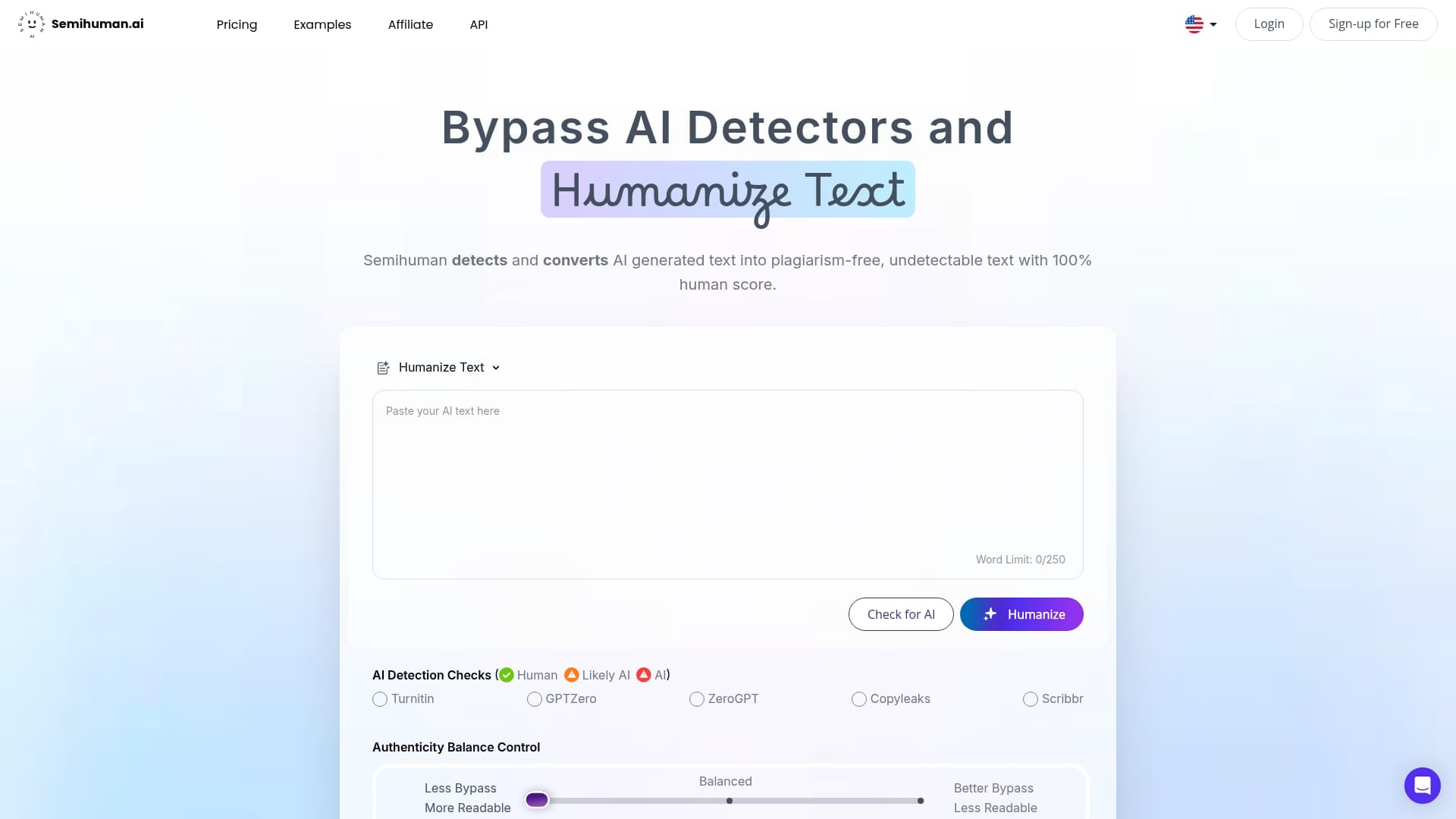
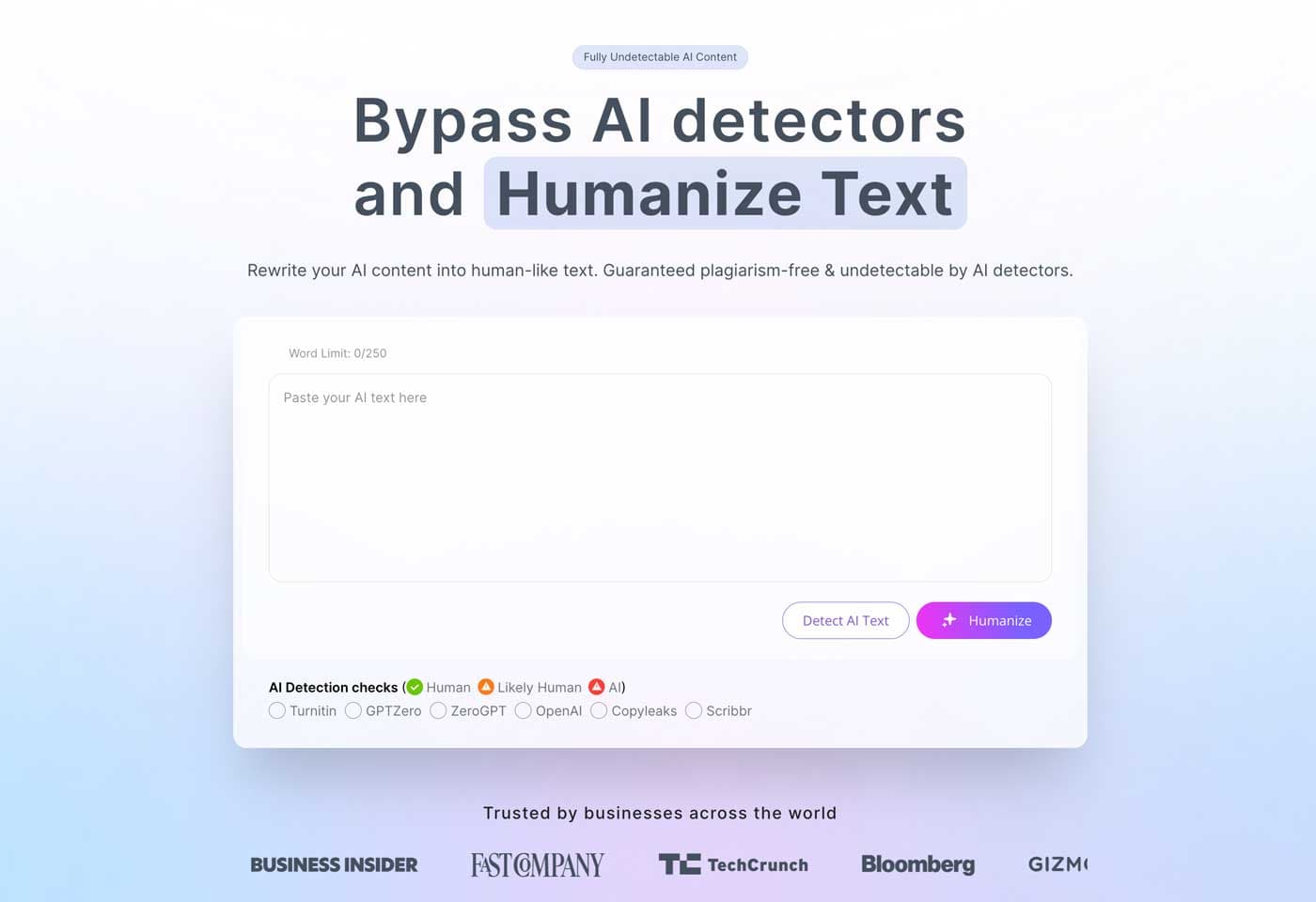
Semihuman's platform lets you bypass AI detectors while systematically improving content quality through text restructuring, keyword integration, and humanization workflows. Whether you're running a high-volume content operation or refining a single high-stakes piece, the platform adapts to your process. The SEO text generator helps you produce content that's structured for both traditional search and AI answer engines from the start, saving editing time downstream. Think of Semihuman as the infrastructure layer that makes the strategies in this article repeatable and scalable, without sacrificing the authenticity that your audience and Google both demand.
Edit for varied sentence lengths and rhythms, inject real experiences or specific examples, and strip out filler phrases that AI tools repeat habitually. Even brief manual rewrites of intros and conclusions create a noticeably stronger impression.
Yes. Writing intros and conclusions manually from scratch dramatically improves both bypass rates and reader engagement because those sections set the tone and carry the most distinctive human signals that detectors look for.
Content with personal experience ranks 4.7 positions higher per a 2026 Authority Hacker study, so grounding AI drafts in real data, expert quotes, and firsthand insights is the most reliable path to stronger organic rankings.
Yes. Schema markup implementation using FAQ, HowTo, and Article formats helps both search engines and AI answer engines parse your content structure, making it significantly more likely to be cited in featured snippets and AI-generated responses.


Start
Humanizing
for Free!
Humanize