
Loading...

Most American website owners do not realize that over 25 percent of all online content is considered duplicate by search engines. This surprising fact highlights just how easy it is to fall for common myths about uniqueness. Understanding what truly makes content original is critical for anyone hoping to stand out and improve visibility. This guide sheds light on the real definition of unique content, clears up widespread misconceptions, and explains why originality is more important than ever.
| Point | Details |
|---|---|
| Importance of Unique Content | Unique content is essential for improving SEO performance and engaging audiences effectively. Substantial intellectual contribution enhances originality beyond mere rewording. |
| Influence on Search Rankings | Quality and originality of content significantly affect search engine rankings, with sophisticated algorithms rewarding genuinely valuable materials. |
| Distinguishing Human vs. AI Content | Recognizing the differences between human-generated and AI-generated text is crucial; human writing often includes emotional depth and personal insights that AI typically lacks. |
| Risks of Duplicate Content | Duplicate content can lead to severe penalties in search rankings and damage a site's credibility, making it vital to prioritize original material. |
Unique content represents original, innovative material that provides genuine value to readers while standing distinctly apart from existing online resources. When creating content, many writers mistakenly believe that minor rewording constitutes uniqueness. However, true originality demands substantial intellectual contribution and fresh perspectives.
Search engines have become increasingly sophisticated in detecting and evaluating content authenticity. Duplicate content can significantly impact SEO performance, with search algorithms designed to identify and potentially penalize unoriginal materials. The key distinction lies not just in textual differences, but in delivering substantive, meaningful insights that genuinely serve audience needs.
Unique Content Characteristics:
Common myths about content uniqueness often mislead creators. Writers frequently assume that changing a few words or restructuring paragraphs constitutes originality. SEO experts emphasize that true unique content signals relevance and authority, requiring substantial intellectual investment beyond superficial modifications.
Successful unique content transcends simple text manipulation. It requires deep understanding, creative thinking, and a commitment to providing readers with genuinely valuable information that cannot be found elsewhere. By prioritizing authentic, well-researched material, content creators can develop resources that not only satisfy search engine requirements but also meaningfully engage their target audience.
Search engine rankings are dramatically influenced by the quality and originality of content, with sophisticated algorithms continuously evolving to reward genuinely valuable materials. Modern search platforms prioritize content that demonstrates substantive expertise, originality, and direct user value over generic, repetitive information.

Content clustering strategies have emerged as critical for improving search engine visibility, enabling websites to establish topical authority and enhance their ranking potential. By organizing unique content into thematic clusters, websites can signal comprehensive knowledge to search algorithms, creating a more interconnected and authoritative digital presence.
Key Search Ranking Factors for Unique Content:
Advanced search algorithms like Google's Panda specifically target and reward high-quality, original content, penalizing websites that rely on duplicative or low-value materials. These sophisticated systems analyze multiple signals beyond simple text matching, including user interaction, content depth, and semantic relevance.
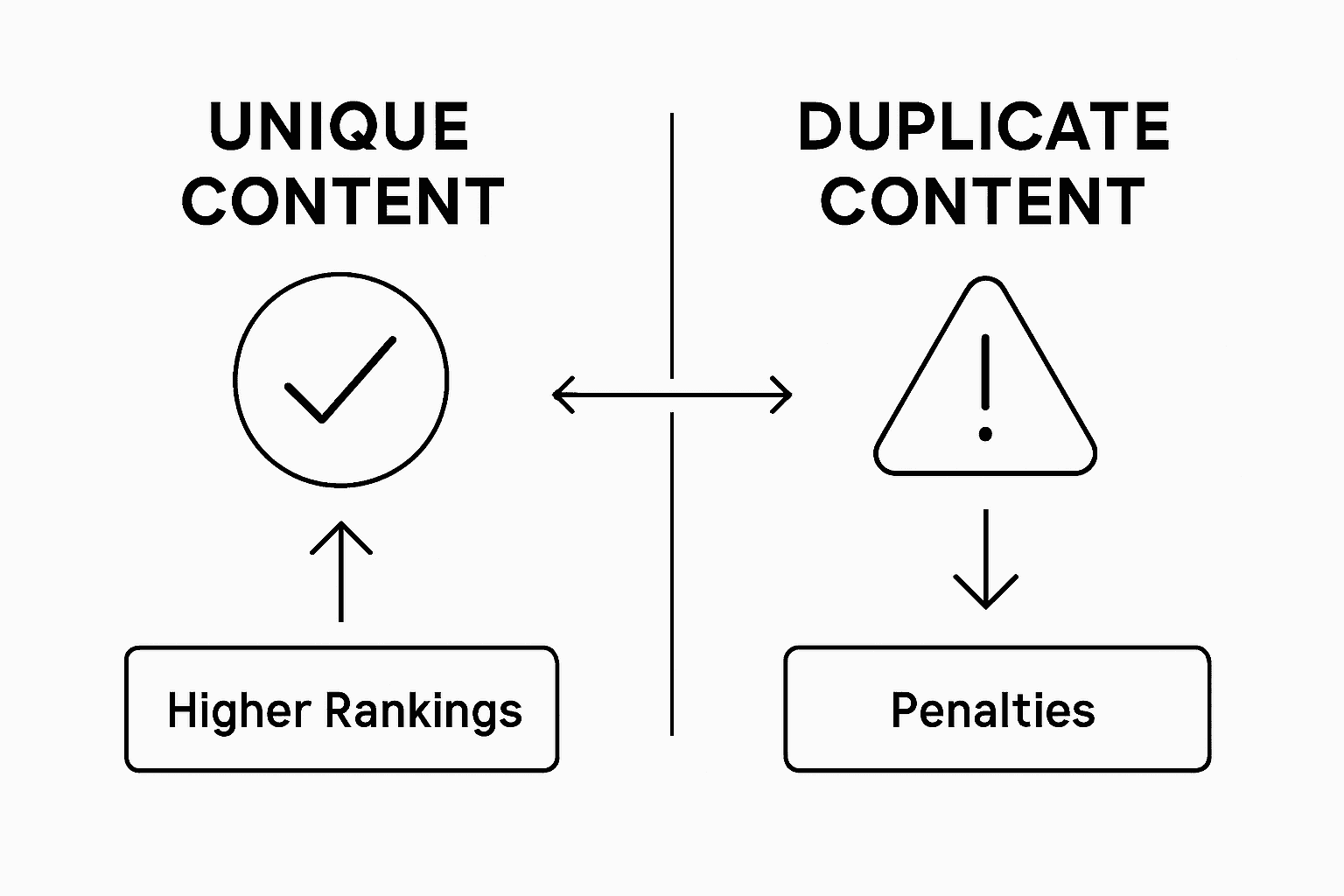
Successful content strategies recognize that search rankings are not just about keyword optimization but about creating genuinely valuable resources. By focusing on developing unique, well-researched content that addresses specific user needs, websites can improve their search visibility, build audience trust, and establish themselves as authoritative sources in their respective domains.
Recognizing the nuanced differences between human and AI-generated text has become increasingly challenging as artificial intelligence technologies continue to advance rapidly. The line between authentic human writing and machine-generated content grows more blurred with each technological iteration, requiring sophisticated detection strategies.
Generative Engine Optimization strategies have emerged to address the complex challenges of distinguishing machine-generated content, highlighting the intricate landscape of digital content creation. These approaches focus on identifying subtle linguistic patterns, contextual inconsistencies, and structural variations that differentiate human creativity from algorithmic text generation.
Key Distinguishing Characteristics:
Search engine result page features provide critical insights into the evolving nature of content authenticity, revealing how technological advancements continue to reshape our understanding of digital communication. AI-generated text often demonstrates remarkable technical proficiency but frequently lacks the subtle emotional intelligence and contextual understanding inherent in human writing.
Ultimately, distinguishing human from AI-generated text requires a multifaceted approach that goes beyond surface-level analysis. Skilled readers and advanced detection technologies must collaborate to identify the nuanced markers of authenticity, recognizing that true human communication transcends mere grammatical correctness and involves deep emotional and contextual understanding.
Navigating the complex landscape of AI content detection requires sophisticated strategies that go beyond simple text manipulation. Content creators must develop nuanced approaches that preserve authentic communication while avoiding algorithmic flagging mechanisms.
Search engine algorithms increasingly influence content creation strategies, compelling publishers to create more sophisticated and contextually rich materials that can bypass automated detection systems. This evolution demands a deep understanding of how AI detection tools analyze and evaluate digital content.
Effective AI Detection Evasion Strategies:
Comparative analysis of search result similarities reveals critical insights into content differentiation, demonstrating that truly unique content stands out through its contextual depth and nuanced expression. Successful evasion requires more than superficial rewording - it demands a fundamental reimagining of content creation that prioritizes genuine human communication.
Ultimately, the most effective approach to AI detection evasion involves creating content that is inherently valuable, contextually rich, and reflective of genuine human expertise. By focusing on delivering substantive insights and maintaining a naturally varied writing style, creators can develop materials that not only bypass detection algorithms but also provide meaningful value to their audiences.
Duplicate content represents a significant threat to digital credibility, potentially devastating a website's search engine performance and professional reputation. Content creators must understand the nuanced implications of unoriginal materials and the substantial risks associated with inadvertent or intentional plagiarism.
Substantial blocks of identical or similar content can trigger severe search engine penalties, compromising a website's visibility and ranking potential. Search algorithms have become increasingly sophisticated in detecting and responding to unoriginal materials, with consequences ranging from reduced search rankings to complete content devaluation.
Primary Risks of Duplicate Content:
Search engine optimization research consistently demonstrates how duplicate content negatively impacts business digital performance, revealing that original content is not just a recommendation but a critical strategic imperative. Organizations that prioritize unique, authentic materials position themselves more effectively in competitive digital landscapes.
Navigating the complex terrain of content originality requires a proactive approach. Successful creators must develop robust strategies for generating genuinely unique materials, understanding that true value emerges from innovative perspectives, deep research, and authentic communication rather than superficial text manipulation.
Creating truly unique content is more than avoiding duplication. It means delivering real human insight, emotional depth, and originality that search engines and audiences value. If you struggle with making AI-generated text feel genuine or worry about penalties from duplicate content, you are not alone. The article highlights key challenges like bypassing AI detection and maintaining natural linguistic variation while boosting SEO performance.
Semihuman.ai offers an AI-powered platform designed specifically to address these pain points. Its intelligent tools help you humanize AI-generated content with expert text restructuring, keyword integration, and detection evasion techniques. By doing so, it ensures your writing reflects the authenticity and originality essential to rank higher and build audience trust. Whether you are a content creator, marketer, or student aiming to enhance your writing's credibility and search rankings, our solution perfectly complements your goals.
Take control of your content’s future today. Discover how Semihuman.ai transforms digital writing into naturally human-like material that excels in SEO and avoids plagiarism risks.

Ready to boost your SEO success with authentic, unique content? Visit Semihuman.ai now and experience how our platform empowers you to create genuinely human content that search engines and readers will love.
Unique content refers to original and innovative material that provides true value to readers, distinguishing itself from existing online resources.
Unique content significantly impacts SEO by enhancing search engine rankings through quality and originality, leading to increased visibility and audience trust.
To create unique content, focus on providing original research, actionable information, and deep insights that fulfill specific audience needs rather than simply rewording existing material.
Using duplicate content can result in severe search engine penalties, reduced website credibility, diminished audience trust, and potential copyright challenges.



Start
Humanizing
for Free!
Humanize