
Loading...

Did you know that almost 70 percent of readers can spot machine-written text within a few lines? The difference between robotic algorithms and genuine human voices shapes trust and engagement in every digital interaction. Transforming stiff machine output into natural, expressive writing can mean the difference between being ignored and truly connecting with your audience. Discover how refined techniques and clever strategies make AI-generated content sound convincingly human and help build authentic relationships through words.
| Point | Details |
|---|---|
| Humanization Enhances Engagement | Transforming machine-generated text creates natural, engaging language that resonates with readers. |
| Techniques Foster Authenticity | Key strategies include linguistic variation, contextual embedding, and conversational adaptation to mimic human writing patterns. |
| Ethical Considerations Are Crucial | The ability to generate human-like text raises concerns about academic integrity, misinformation, and professional standards. |
| Tool Selection Is Essential | Choosing the right humanization tools involves understanding writing needs and ensuring ethical compliance while achieving detection resistance. |
Humanizing machine-written text transforms algorithmic, robotic-sounding content into natural, engaging language that sounds authentically human. This process goes far beyond simple grammar adjustments – it's about creating text that resonates with readers, mimicking the nuanced communication patterns humans instinctively use.
At its core, humanizing AI-generated content involves strategically restructuring text to eliminate telltale machine-like characteristics. These typically include repetitive sentence structures, overly formal language, uniform paragraph lengths, and a lack of contextual understanding or emotional resonance. Effective humanization introduces conversational tone, strategic imperfections, and context-aware language that feels genuinely crafted by a person.
The techniques for humanizing machine text range from subtle linguistic adjustments to comprehensive content transformations. Key strategies include:

Adding personal anecdotes and subjective perspectives
Varying sentence length and structure
Incorporating colloquial expressions and conversational phrases
Introducing intentional minor grammatical "imperfections"
Embedding contextual understanding and emotional nuance
By learning how to humanize AI text effectively, content creators can bridge the gap between algorithmic generation and authentic human communication, producing writing that feels natural, engaging, and genuinely connected to readers.
Humanizing machine-written text involves multiple sophisticated transformation techniques designed to convert algorithmic output into authentic human communication. According to research from the Machine Learning Library, the primary approaches focus on making AI-generated content more engaging by reducing mechanical characteristics and introducing natural language variations.
According to a comprehensive research study, adversarial paraphrasing emerges as a cutting-edge technique for humanization. This method involves strategically rephrasing AI-generated text under the guidance of an AI text detector, effectively creating content optimized to bypass mechanical detection algorithms. The goal is to produce text that not only reads naturally but also successfully mimics human writing patterns.
Key humanization techniques include:
Here's a comparison of key humanization techniques and their primary effects:
| Technique | Description | Resulting Benefit |
|---|---|---|
| Linguistic Variation | Varying sentence structure and length | More natural, engaging flow |
| Contextual Embedding | Adding emotion and subjective perspective | Stronger reader connection |
| Conversational Adaptation | Using colloquialisms and speech patterns | Relatability and authentic tone |
| Imperfection Introduction | Strategic minor grammatical variations | Increased text believability |
| Semantic Restructuring | Rewriting content for organic sound | Reduced algorithmic detection |
Through strategic techniques like those outlined in our guide on humanizing AI text, writers can transform machine-generated content into compelling, authentic narratives that resonate with human readers while maintaining the original informational integrity.
Humanization tools represent sophisticated technological solutions designed to transform machine-generated text into naturally sounding human communication. These advanced systems leverage complex algorithms and natural language processing techniques to detect and modify algorithmic writing patterns, creating content that feels authentic and organic.
According to research from WriteHybrid, specialized AI humanizers employ intricate natural language processing strategies to reconstruct text. For academic writing, these tools meticulously transform AI-generated content into scholarly-sounding prose that maintains proper tone and can successfully bypass AI detection mechanisms. The underlying technology goes beyond simple word replacement, analyzing contextual nuances, sentence structures, and linguistic patterns to produce genuinely human-like text.
The core methodologies of humanization tools typically involve:
For writers seeking comprehensive solutions, exploring undetectable AI tools to humanize text can provide advanced strategies for transforming machine-generated content into compelling, authentic narratives that seamlessly mimic human communication styles.
Humanizing machine-written text introduces a complex landscape of ethical challenges that extend far beyond simple technological manipulation. According to recent research from leading academic institutions, the ability of advanced language models to generate human-like content raises significant moral and professional dilemmas across multiple domains.
According to a comprehensive research study, large language models pose substantial risks of potential misuse, including academic misconduct, systematic disinformation campaigns, and sophisticated fraud mechanisms. The capacity to create undetectable AI-generated content that mimics authentic human communication creates unprecedented challenges for intellectual integrity, particularly in academic, journalistic, and professional writing environments.
Key ethical risks associated with text humanization include:
For professionals navigating these complex ethical terrains, understanding the nuanced implications becomes crucial. Exploring undetectable AI tools can provide insights into responsible technological implementation while maintaining critical ethical standards.
Humanization tools require careful selection and strategic implementation to transform machine-generated content effectively. Choosing the right approach involves understanding the nuanced requirements of different writing contexts and matching them with appropriate technological solutions that can authentically recreate human communication patterns.
According to research from Smodin, successful text humanization involves more than technical manipulation – it requires incorporating subtle linguistic elements that make content feel genuinely human. Best practices include showing authentic emotion, using direct address and engaging questions, and applying conversational language techniques like contractions and informal expressions. These strategies help bridge the gap between algorithmic generation and natural human communication.
Key considerations when selecting humanization tools and approaches include:
For professionals seeking comprehensive guidance, exploring undetectable AI tools can provide invaluable insights into selecting the most effective humanization strategies for specific writing needs.
The challenge of turning machine-generated text into natural, engaging content is real and demanding. This article highlights how humanizing AI text involves overcoming robotic phrasing, repetitive structures, and detection by AI algorithms. If you want to ensure your writing connects emotionally, reads organically, and stays undetected by AI tools like Turnitin or GPTZero, you need powerful, reliable support.
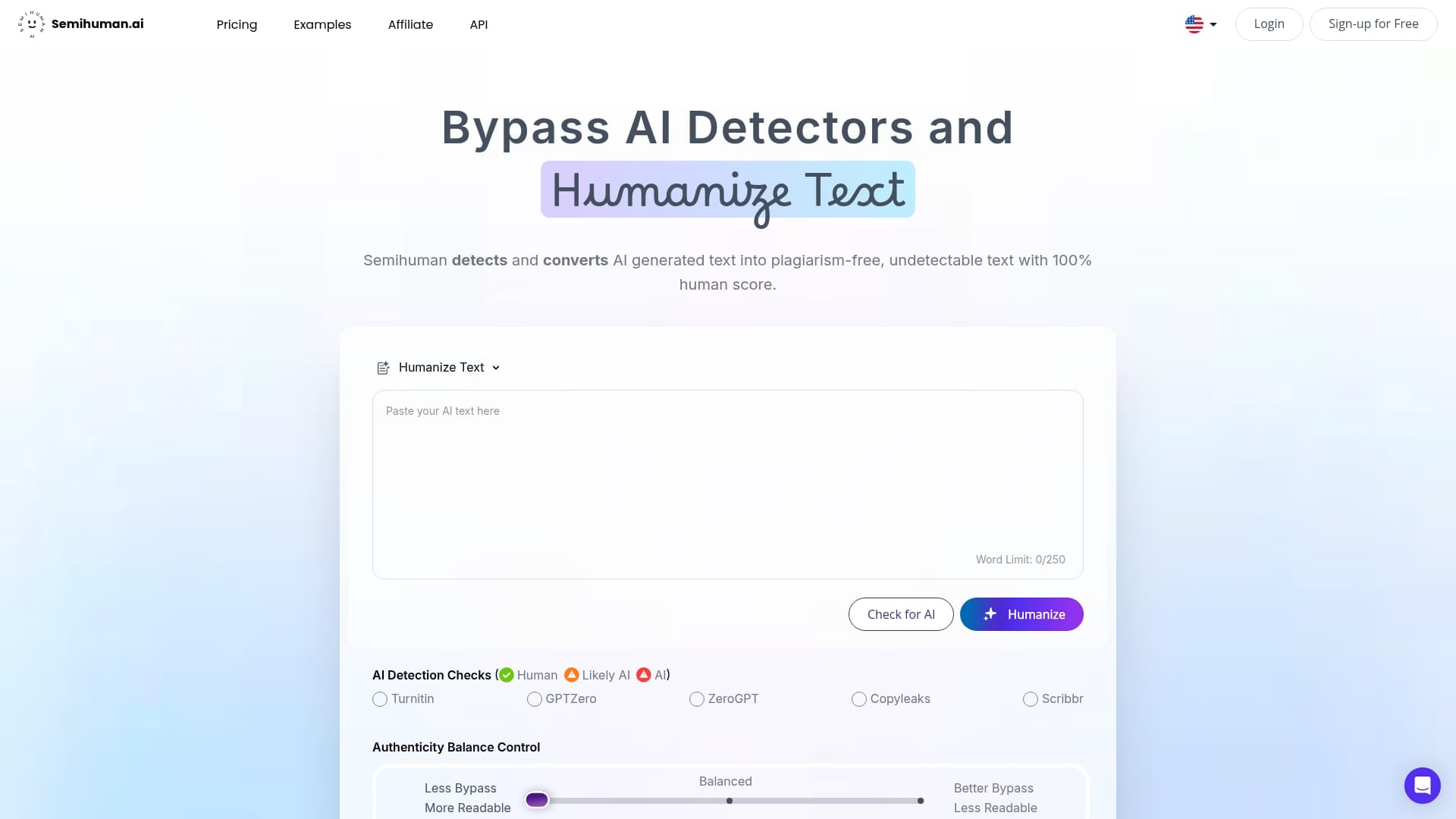
Experience seamless humanization with Semihuman.ai. Our AI-powered platform restructures and enhances your content with natural language variation, emotional nuance, and smart detection evasion strategies. Whether you are a content creator, marketer, or student, you can confidently produce authentic, high-quality text that ranks well and feels genuinely human. Don’t let robotic writing hold you back. Visit Semihuman.ai now to start humanizing your text with ease and precision.
Humanizing machine-written text refers to the process of transforming algorithmic content into natural, engaging language that resonates with readers, mimicking authentic human communication patterns.
Key techniques for humanizing AI-generated content include linguistic variation, contextual embedding, conversational adaptation, strategic imperfect grammar introduction, and semantic restructuring.
Ethical considerations are crucial because humanizing text can lead to academic misconduct, blurring intellectual property lines, and the potential spread of misinformation, affecting the integrity of communication.
Selecting the right tools involves understanding the context of your writing, ensuring detection resistance, and looking for advanced natural language processing capabilities, customization options, and adherence to ethical standards.

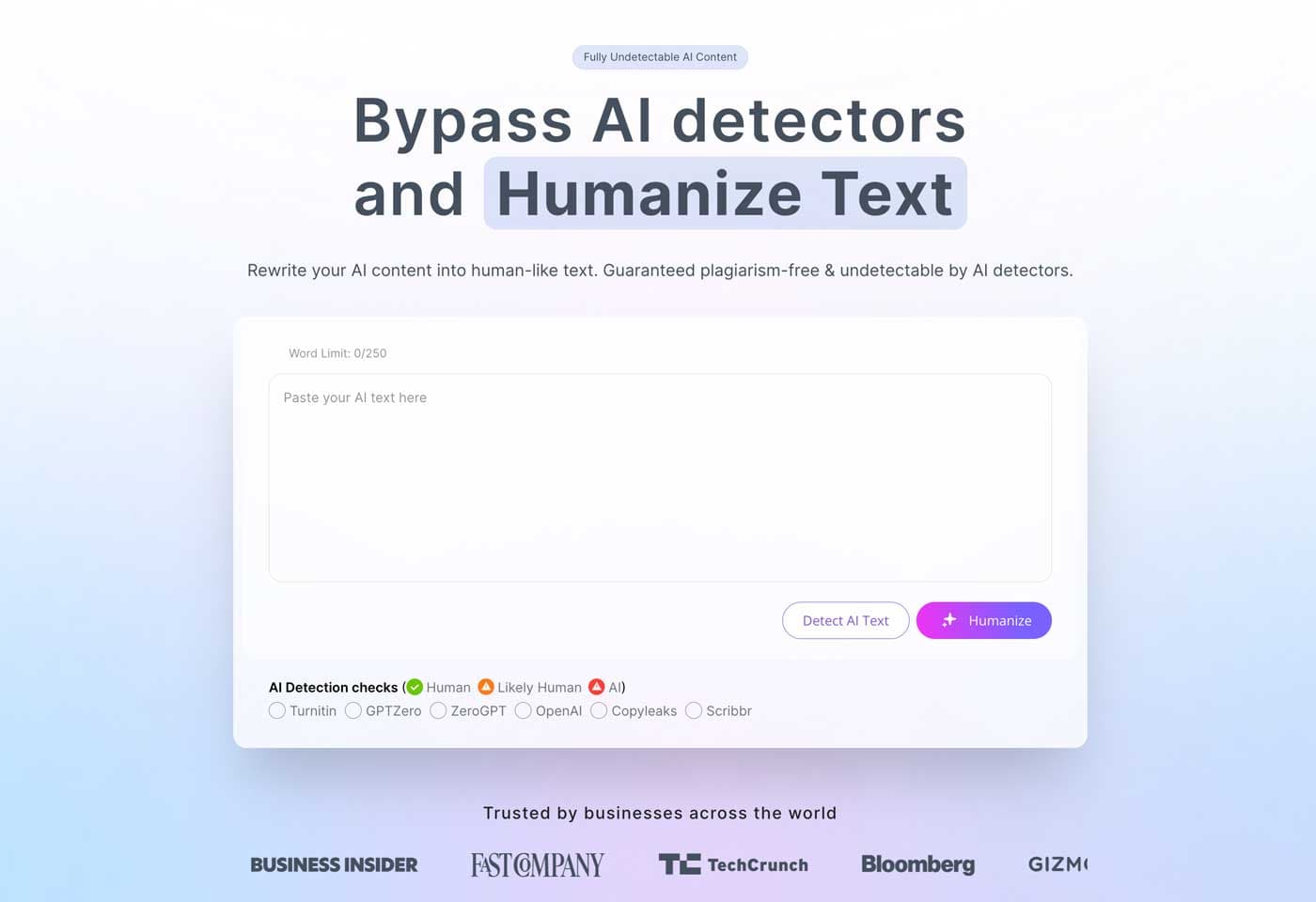

Start
Humanizing
for Free!
Humanize