
Loading...

Most American writers feel frustrated when their message gets lost in robotic or unfocused content. With so many tools promising quick results, creating writing that actually engages real people can seem out of reach. In fact, over 60% of online readers leave pages within seconds when the text sounds inauthentic. These practical steps reveal how to sharpen your objectives, connect with your audience, and make every word you write sound unmistakably human.
| Key Point | Explanation |
|---|---|
| 1. Define a Clear Writing Objective | Establish a specific aim for your writing to streamline communication and focus your content effectively. |
| 2. Understand Your Audience Deeply | Create a detailed audience persona to craft messages that resonate with their needs, preferences, and challenges. |
| 3. Edit AI Text for Natural Flow | Refine AI-generated content to sound more human by varying sentence structure and using conversational language. |
| 4. Integrate Keywords Naturally | Weave in keywords without forcing them; prioritize clarity and readability over strict SEO tactics. |
| 5. Use AI Detection Tools for Authenticity | Verify your writing's human-like quality by using multiple detection tools to ensure it doesn’t feel mechanical or artificial. |
Setting a precise writing objective transforms scattered thoughts into purposeful communication. Your goal is to create a targeted roadmap that guides every paragraph, sentence, and word toward a specific outcome.
Start by asking yourself critical questions: What do you want readers to learn, feel, or do after reading your content? The University of Florida's Center for Teaching Excellence recommends using specific, measurable language that clearly defines your intent. Avoid vague verbs like "understand" or "appreciate" and instead select action-oriented terms that demonstrate tangible skill acquisition.
ProTip: Use the SMART framework when crafting your objective - make it Specific, Measurable, Achievable, Relevant, and Time-bound. For instance, instead of saying "I want to write about marketing," try "I will create a 750-word article explaining three proven social media marketing strategies for small businesses, highlighting actionable tactics entrepreneurs can implement immediately."
By establishing a crystal-clear writing objective upfront, you create a strategic blueprint that keeps your content focused, engaging, and impactful. Ready to refine your approach and transform your writing?
Before you write a single word, you need to understand exactly who will read your content and what they truly want. Your writing success depends on deep audience insights that go far beyond basic demographics.
Excelsior University's Online Writing Lab emphasizes the critical importance of understanding your audience's needs, beliefs, and expectations to craft compelling communication. Start by creating a detailed audience persona. Ask yourself key questions: What is their professional background? What challenges are they trying to solve? What prior knowledge do they bring to the topic?
Pro Tip: Use multiple research methods to build a comprehensive audience profile. Conduct short surveys, review online forums where your target readers gather, and analyze existing content that resonates with them. The goal isn't just knowing who they are but understanding their motivations, learning styles, and information consumption preferences.
Remember that audience analysis is not a one-time task but an ongoing process. As your readers evolve, so should your understanding of their needs. By continuously refining your audience insights, you'll create writing that feels like a personalized conversation rather than a generic broadcast.
Transforming robotic AI-generated content into a fluid human narrative requires strategic editing and a keen ear for authentic language. Your goal is to breathe life into text that currently sounds mechanical and predictable.

Colorado Christian University recommends enhancing writing clarity by defining specialized terms and breaking down complex ideas to create more engaging content. Start by reading the AI-generated text aloud and identifying unnatural patterns. Look for repetitive sentence structures, overly formal language, and generic transitions that interrupt the reading flow.
Pro Tip: Focus on varying sentence length and structure. AI tends to generate uniform sentences of similar length. Mix short punchy statements with longer explanatory sentences. Replace generic connecting phrases with more conversational transitions. Replace technical jargon with accessible language that sounds like a real person speaking. Remove redundant phrases and tighten your language to create a more dynamic reading experience.
Remember that authentic writing feels spontaneous yet purposeful. Your edits should make the text sound like it was crafted by a thoughtful human writer who genuinely wants to communicate ideas clearly. Keep refining until the text feels natural and effortless to read.
Keyword integration is an art form that transforms mechanical text into a natural conversation. Your mission is to weave target keywords into your writing so smoothly that readers never notice you are strategically optimizing content.
Walden University advises creating clear writing plans that involve intentional keyword placement to enhance overall clarity and communication effectiveness. Think of keywords like seasonings in a gourmet meal you want them to enhance the flavor without overwhelming the entire dish. Start by identifying your primary keywords and understanding their semantic context. This means knowing not just the word itself but the broader meaning and related concepts.
Pro Tip: Avoid forced or awkward insertions that disrupt natural language flow. Instead of cramming keywords into sentences, ask yourself how a genuine human would naturally discuss this topic. Vary your keyword usage by including synonyms, related phrases, and contextual variations. Sometimes a strategic rephrasing can make a keyword feel more organic and less like an SEO checkbox.
Remember that authentic writing always prioritizes reader experience over search engine algorithms. Your goal is communication first keyword optimization second. When in doubt read your text aloud and ask yourself would a friend find this engaging or robotic?
Crafting authentic writing is about more than just avoiding robotic language its about creating a genuine connection with your reader. Your goal is to transform clinical text into a conversation that feels like it could have been written by a friend or trusted colleague.
Walden University emphasizes developing writing goals that capture the nuanced human element of communication to make your content truly resonate. Think of your writing as a personal dialogue strip away formal academic barriers and speak directly to your reader. Use contractions naturally. Ask rhetorical questions. Share brief personal insights that make your writing feel alive and breathe personality into every paragraph.
Pro Tip: Read your writing out loud. If it sounds like something a robot would say pause and rewrite. Real humans interrupt their thoughts. We use incomplete sentences. We inject humor. We share unexpected connections. Your writing should feel spontaneous not manufactured. Vary your sentence length dramatically. Mix short punchy statements with longer descriptive passages that pull readers into your narrative world.
Remember that authentic writing is about vulnerability and connection. Your readers want to hear a human voice not a perfectly polished machine output. Embrace imperfection. Write like youre talking to a friend over coffee sharing insights that genuinely matter.
AI detection tools are your final checkpoint in ensuring your content feels genuinely human. Think of these tools as a sophisticated spell check that evaluates the human authenticity of your writing beyond grammatical perfection.
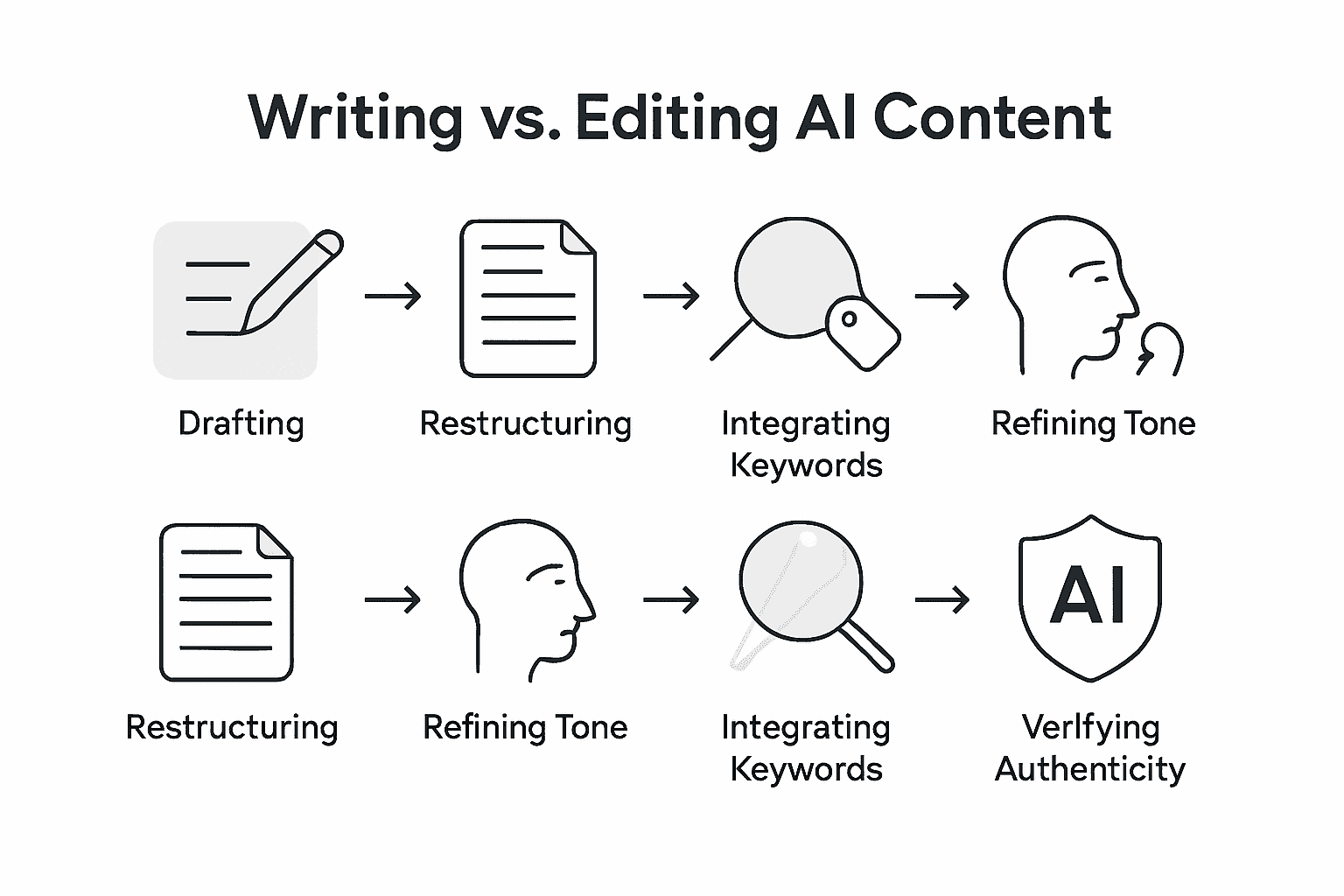
Maastricht University recommends developing clear strategies for verifying content authenticity through systematic evaluation techniques. Start by running your refined text through multiple detection platforms to get a comprehensive assessment. Each tool uses different algorithms some focus on linguistic patterns while others analyze structural nuances that might reveal machine generated content.
Pro Tip: No single AI detection tool is 100% foolproof. Cross reference results from different platforms and look for consistent flags. Pay attention to specific sections that trigger AI warnings. These are your revision hotspots areas where you need to inject more personal flavor unique sentence structures or conversational breaks that feel distinctly human.
Remember that authenticity is not about gaming the system but creating meaningful communication. Your goal is crafting content so natural that AI detection tools struggle to categorize it. Treat these tools as helpful guides not absolute judges of your writing quality.
Struggling to make AI-generated text sound natural and engaging as outlined in "How to Write Natural Content Naturally for Authentic Results"? You are not alone in facing challenges like awkward keyword placement, robotic tone, and AI detection risks. These hurdles can block your content from resonating with readers and succeeding in competitive online spaces.
Semihuman.ai understands these pain points and offers a powerful solution to bridge the gap between machine output and human-like expression. Our platform helps you restructure AI content with ease, seamlessly integrate keywords, and refine tone to pass detection by systems such as Turnitin, GPTZero, and Copyleaks without losing your unique voice.
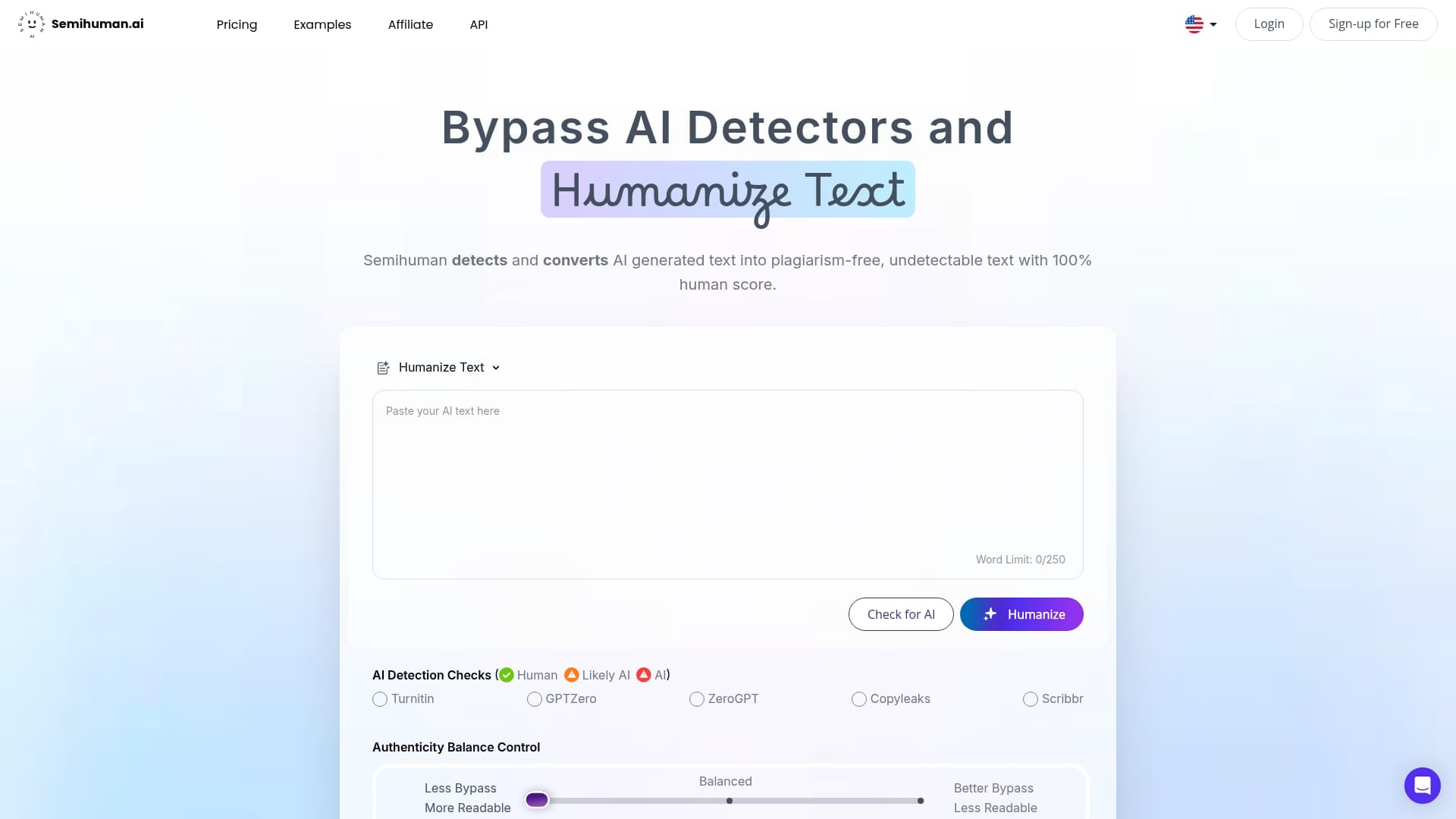
Make your next piece stand out with a genuine human touch using Semihuman.ai. Visit us today at Semihuman.ai and discover how our AI-powered tools can transform your writing process. Don’t let authenticity issues hold you back when creating impactful content, marketing emails, or academic pieces. Experience effortless content humanization now at Semihuman.ai.
Start by defining what you want your readers to learn, feel, or do after reading your content. Use the SMART framework to create a goal that is Specific, Measurable, Achievable, Relevant, and Time-bound, such as "I will write a 750-word article on three effective social media marketing strategies for small businesses."
Understanding your target audience is crucial for effective writing. Create a detailed audience persona by researching their professional background, challenges, and what prior knowledge they have about your topic to ensure your content meets their needs.
To make AI-generated text sound more natural, read it aloud and identify any awkward phrases or repetitive patterns. Vary sentence length and structure, use conversational transitions, and replace technical jargon with accessible language to create a smoother read.
Integrate keywords seamlessly by ensuring they fit naturally into your sentences. Avoid forcing keywords; instead, discuss the topic as if you were having a conversation, using synonyms and variations for a more organic feel.
To create connection in your writing, strip away overly formal language and write as if you're speaking to a friend. Use contractions, rhetorical questions, and share personal insights to make your content more relatable and engaging.
Run your refined text through multiple AI detection tools, checking for consistent flags that indicate machine-generated patterns. Focus on sections that show up as problematic and revise those areas to inject more personal language and unique sentence structures.


Start
Humanizing
for Free!
Humanize