
Loading...

More than 58 percent of writers worry about their content being flagged for plagiarism. The challenge of producing truly original work has never been greater, especially with easy access to digital sources and powerful AI tools. To help you stay ahead, this guide breaks down practical steps for protecting your work’s authenticity, from evaluating source material to using advanced plagiarism detection methods and AI humanization tools.
| Key Point | Explanation |
|---|---|
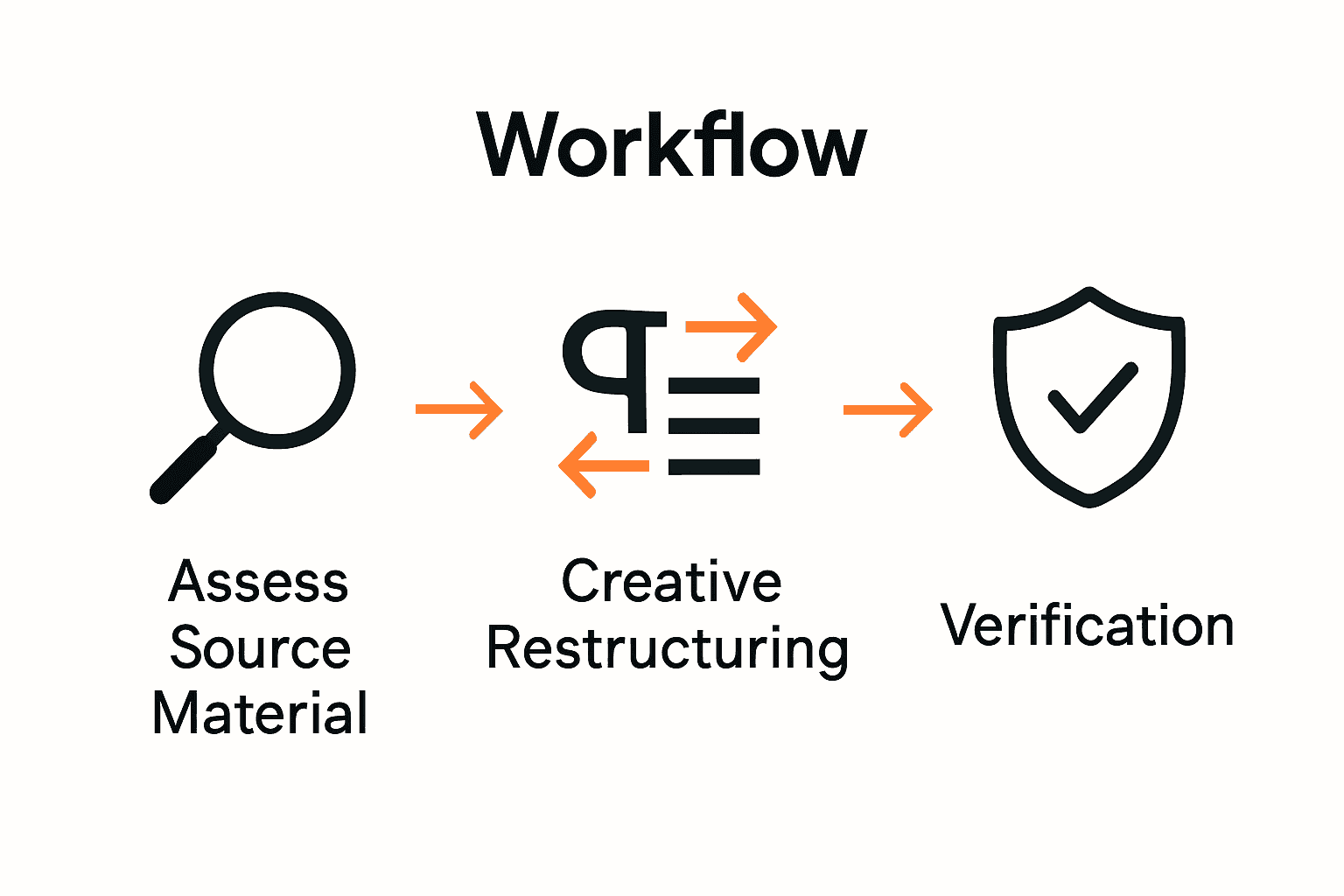
| 1. Assess source materials thoroughly | Evaluate documents to identify potential originality risks, including various plagiarism types, before creating content. |
| 2. Restructure for originality and engagement | Transform text by varying sentence structures and lengths while retaining the core message for better reader engagement. |
| 3. Integrate unique insights and keywords | Weave in personal perspectives and carefully chosen keywords to enhance authenticity and improve search visibility. |
| 4. Utilize AI tools for natural expression | Use AI humanization tools to refine text, ensuring it sounds authentic and engaging while complementing your creative input. |
| 5. Verify originality with multiple tools | Employ plagiarism detection tools like Turnitin and Grammarly to ensure your content is unique and free from unintentional similarities. |
In this crucial step, you'll learn how to systematically evaluate your source materials to identify potential originality risks before they become problematic. Understanding the different types of plagiarism will help you proactively protect your content's authenticity.
Start by carefully examining your source documents through multiple lenses. According to Plagiarism.org, there are several key types of plagiarism you should watch for beyond simple copy-paste scenarios. Direct copying represents the most obvious risk where entire passages are reproduced verbatim. However, more subtle forms like mosaic plagiarism or incremental plagiarism can slip past casual review.
To effectively assess your materials, create a systematic checking process. Pull out original sources and compare them side by side. Look for identical phrasing, structural similarities, and concepts that track too closely to existing work. Use online plagiarism detection tools as a secondary verification method, but never rely on them exclusively. Your human critical thinking remains the most powerful originality assessment tool.
Warning: Always document your research process meticulously. Keeping clear notes about your sources and how you transformed information will protect you if questions about originality arise later.
Once you complete this assessment, you'll be ready to move forward with confidence in your content's unique value and authenticity.
In this step, you will learn how to transform your existing text into a more original and engaging version by strategically restructuring sentences and paragraphs. The goal is to preserve your core message while creating a fresh and unique presentation.
Approach paragraph restructuring as an art of linguistic flexibility. Scribbr suggests that effective rewriting involves maintaining the original meaning while generating multiple text variations. Start by breaking down your existing paragraphs into individual sentences. Analyze each sentence critically and consider alternative ways to express the same idea. Can you change the sentence structure? Swap the order of clauses? Replace specific words with synonyms that add nuance?
To restructure effectively, focus on three key strategies. First, vary your sentence length and complexity to create a more dynamic reading experience. Short sentences can provide emphasis. Longer sentences can explore complex ideas. Second, rearrange your paragraph structure so that the most compelling point leads or concludes the paragraph. Third, look for opportunities to inject your unique voice and perspective into the text.
Warning: Be careful not to compromise clarity while restructuring. Your primary goal is enhanced originality without losing the core message or creating confusion for your readers.
Once you complete this creative restructuring, you will have transformed your text into a more authentic and engaging piece of writing.

In this step, you will learn how to transform your content by weaving in unique personal perspectives and strategically selected keywords that enhance both originality and search visibility. The goal is to create content that resonates with readers while standing out in search results.
According to the Content Marketing Institute, creating unique content starts with deeply understanding your audience and conducting thorough research. Begin by reflecting on your personal experiences and professional insights that nobody else can replicate. What unique angles or perspectives can you bring to the topic? These personal touch points are your secret weapon for originality. As Moz suggests, the key is aligning your keywords with genuine user intent rather than simply stuffing terms into your text.
To integrate keywords effectively, think of them as seasoning rather than the main ingredient. Select 3-5 primary keywords that naturally fit your content's flow. Spread them strategically across your text not just for search engines but to enhance readability. Look for organic places where these keywords can be introduced without disrupting the natural rhythm of your writing. Use variations and related terms to add depth and prevent repetitive language.
Warning: Avoid overcomplicating your content. Your primary goal is clear communication supplemented by strategic keyword placement, not keyword density at the expense of clarity.
Once you complete this integration, you will have a piece of content that feels authentic, speaks directly to your audience, and has strong search potential.
In this crucial step, you will learn how to leverage advanced AI humanization tools to transform machine generated text into authentic writing that sounds genuinely human. These sophisticated platforms help you bridge the gap between algorithmic generation and natural language expression.
Copy.ai demonstrates how AI powered content tools can assist creators in generating human like text with remarkable nuance. When utilizing these tools, approach them as collaborative partners rather than complete replacements for human creativity. Start by inputting your initial draft and allowing the AI to suggest alternative phrasings, sentence structures, and vocabulary choices that sound more conversational and less mechanical.
To maximize the effectiveness of AI humanization tools, follow a strategic approach. First, review the suggested modifications critically. Not every suggestion will improve your text. Look for changes that genuinely enhance readability and sound more natural. Second, always run the humanized text through your personal editing process. Your human judgment remains the ultimate filter for authenticity. Third, experiment with different settings and modes within the tool to understand how slight adjustments can dramatically transform the writing style.
Warning: AI tools are assistants not authors. Never completely outsource your writing to these platforms. Your unique perspective and voice are irreplaceable.
Once you complete this process, you will have a piece of content that feels organic, engaging, and indistinguishable from human authored text.

In this critical step, you will learn how to systematically verify your content's originality using sophisticated plagiarism detection tools. Your goal is to ensure your writing is truly unique and free from unintentional similarities with existing texts.
Turnitin provides a comprehensive approach to originality verification by comparing submitted texts against an extensive global database. As a leading plagiarism detection platform, it reveals potential matches and helps you understand the precise areas where your content might require additional refinement. Similarly, Grammarly offers robust scanning capabilities that compare your text against billions of web pages to identify potential overlap and similarity issues.
To effectively use these detection tools, develop a strategic verification process. First, run your complete document through the plagiarism checker before finalizing your work. Pay close attention to the percentage of similarity and the specific sections flagged. Look beyond simple word matching and examine the context of any identified similarities. If the tool highlights sections that seem too close to existing content, consider rephrasing those segments or adding more original analysis and personal insights.
Warning: No plagiarism tool is 100% perfect. Always use multiple detection platforms and apply your critical thinking to validate the results.
Once you complete this verification process, you will have a thoroughly checked document that represents your authentic voice and meets the highest standards of originality.
Creating content that feels genuinely human and original is a challenge many writers face, especially when trying to avoid unintentional plagiarism or overly mechanical AI-generated text. This article highlights key steps such as restructuring sentences creatively, integrating unique insights, and verifying originality, all vital to maintain authenticity and boost your SEO without losing your unique voice. If you want to overcome the frustration of generic text and ensure your writing truly resonates, you need a solution designed for this exact problem.
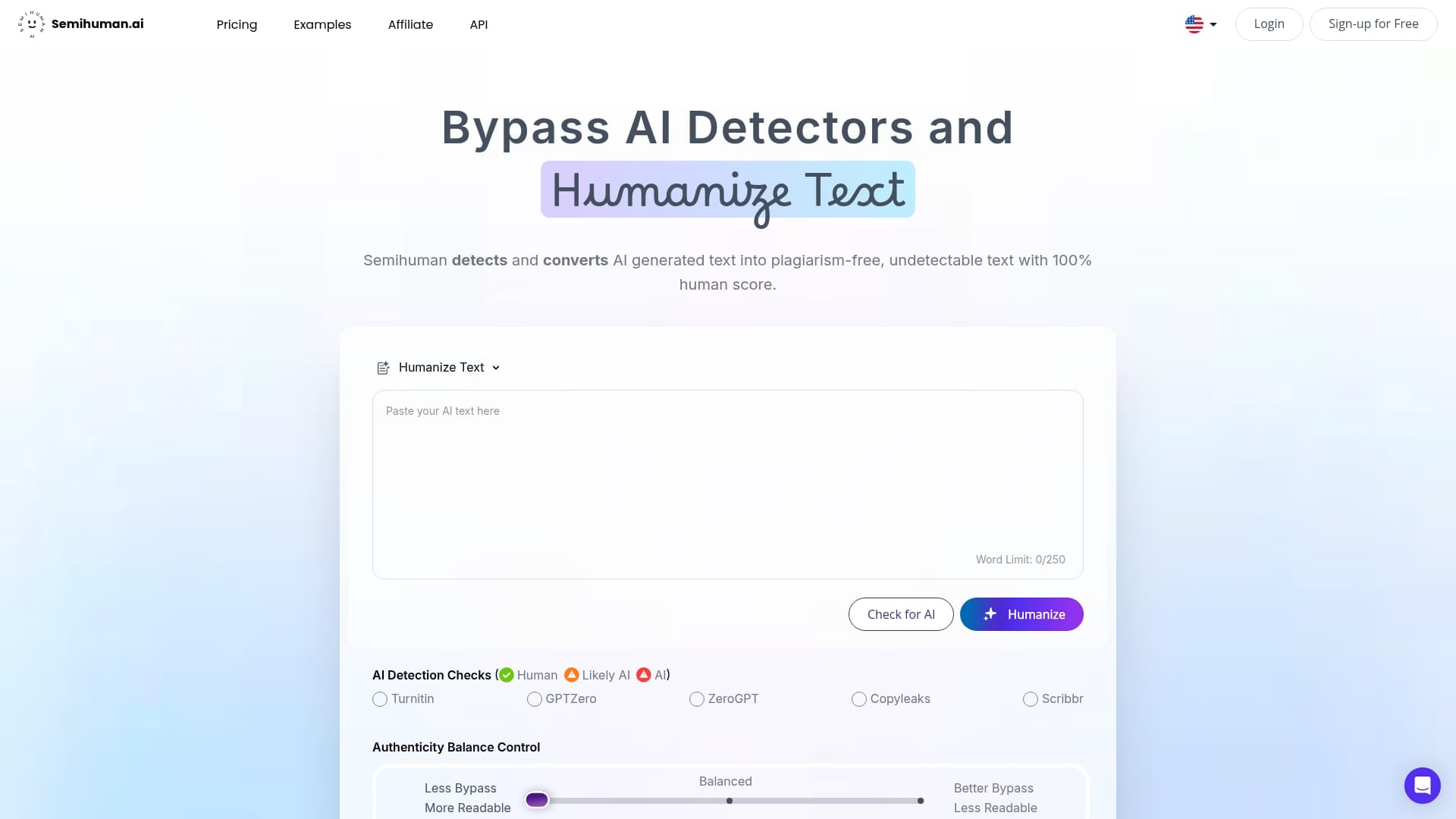
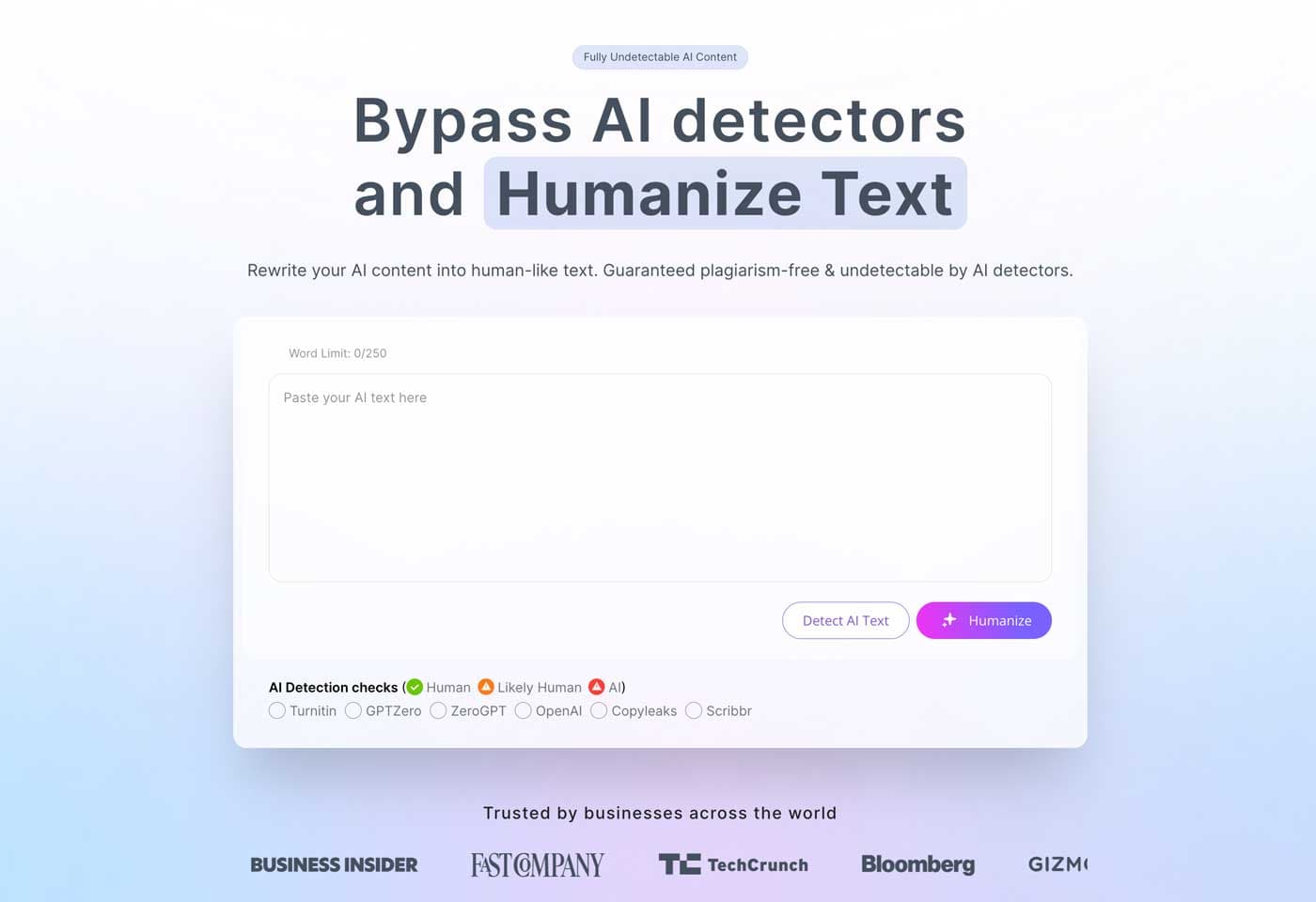
Discover how Semihuman.ai can help you transform AI-generated drafts into smooth, human-like content that bypasses detection tools like Turnitin and GPTZero. Our AI-powered platform not only detects robotic phrasing but also enhances your writing with dynamic restructuring and natural keyword integration so your content stands out. Take control of your originality today and see how effortless authentic writing can become by visiting Semihuman.ai now. Don’t wait—empower your creativity with technology built for genuine expression.
To assess your source material for originality risks, examine documents for potential types of plagiarism beyond direct copying. Create a systematic checking process by comparing your sources side by side and looking for identical phrases or structural similarities. Document your findings to clarify how you transformed the information.
To restructure sentences and paragraphs effectively, break down existing text into individual sentences and explore alternative expressions. Vary sentence length and rearrange paragraph structures to lead with your most compelling point. Focus on injecting your unique voice without losing clarity in your message.
Integrate unique insights by reflecting on personal experiences and professional perspectives that others cannot replicate. Choose 3-5 primary keywords that fit naturally into your writing and spread them thoughtfully throughout your text to enhance readability. Aim to blend these keywords seamlessly for a more authentic feel.
AI humanization tools help transform machine-generated text into more natural, engaging writing. Use these tools to suggest alternative phrasings and structure, while always applying your personal editing process to ensure authenticity and improve readability. Experiment with different settings to enhance your writing style further.
To verify your content's originality, run your completed document through plagiarism detection tools before finalizing your work. Pay attention to highlighted sections and consider rephrasing anything flagged to enhance originality. Utilize multiple detection platforms to ensure a thorough and accurate assessment of your content's uniqueness.


Start
Humanizing
for Free!
Humanize