
Loading...

What makes truly original content stand out in a world where AI-produced text is everywhere? For North American content marketers and SEO specialists, preventing duplication is far more than a technical challenge—it is a matter of trust and credibility. By starting with a thorough content audit and adopting strategies rooted in human creativity, you can sidestep repetition and craft AI-assisted copy that feels unmistakably authentic to both algorithms and audiences.
| Key Point | Explanation |
|---|---|
| 1. Assess content for duplication risks | Perform a thorough audit to identify potential self-plagiarism and overlaps in your existing materials before publication. |
| 2. Restructure AI-generated text for uniqueness | Transform AI content through strategic restructuring, adding personal insights and diverse sentence structures to ensure originality. |
| 3. Integrate unique keywords and language | Use contextually rich and conversational language along with domain-specific terminology to enhance the authenticity of AI-generated content. |
| 4. Utilize detection tools for authenticity verification | Employ multiple detection tools to assess the originality of your content and interpret results with human judgment for accuracy. |
| 5. Refine content for publication readiness | Conduct meticulous editing for flow, coherence, and adherence to stylistic guidelines to ensure your final piece is polished and professional. |
Identifying potential content duplication risks is a critical first step in maintaining your writing's authenticity and integrity. This process involves systematically analyzing your existing content to detect potential areas of overlap or unintentional replication.
Start by conducting a comprehensive content audit across multiple dimensions. You'll want to examine your text through several strategic lenses:
The most effective assessment involves multiple verification techniques. Use specialized plagiarism detection software that can compare your content against extensive databases. These tools can quickly identify percentage matches and highlight specific sections requiring closer review.
Authenticity starts with recognizing potential duplication before publication.
Manual review remains equally important. Read through your content critically, looking for sections that sound suspiciously familiar or seem too similar to previous work. Pay special attention to research-based content where accidental replication is more likely to occur.
Here's a summary comparing manual and automated content duplication assessments:
| Attribute | Manual Review | Automated Tools |
|---|---|---|
| Accuracy | Relies on human judgment | High algorithmic precision |
| Speed | Time-consuming | Very fast results |
| Scope | Limited to human recall | Extensive database coverage |
| Best Use Case | Nuanced, subjective scenarios | Large-scale, repeatable scans |
Pro tip: Keep a comprehensive log of all content sources and previous drafts to simplify tracking potential duplications during your assessment process.
Transforming AI-generated content into a unique, authentic piece requires strategic restructuring techniques that go beyond simple word substitution. Your goal is to create a text that sounds genuinely human while maintaining the original content's core message.
Begin by systematically transforming AI text through several key approaches:
Contextual augmentation is crucial in making AI text feel more authentic. This means adding personal perspectives, specific anecdotes, or industry-specific nuances that AI cannot naturally generate. Think of yourself as a curator refining raw content into a polished, original piece.
Originality emerges when human creativity meets technological generation.
Pay special attention to sentence-level variations. AI tends to generate uniform sentence structures, so deliberately mix your sentence lengths and styles. Combine short, punchy sentences with more complex, descriptive ones to create a more natural rhythm.

Pro tip: Read your restructured text aloud to ensure it sounds like a genuine human conversation, not a robotic recitation.
Embedding authentic, contextually rich language into AI-generated content requires a nuanced approach that goes beyond simple keyword insertion. Your objective is to transform machine-generated text into a seamless, naturally flowing piece that sounds distinctly human.
Human-AI collaborative writing techniques demand strategic keyword integration and linguistic pattern adaptation. Consider these critical approaches:
Contextual keyword embedding involves more than mechanical replacement. It means understanding the subtle nuances of language and inserting terms that reflect genuine human communication. Think about how experts in your field actually speak and write.
Authentic language emerges from understanding context, not just replacing words.
Pay close attention to syntactic variation. AI tends to generate uniform sentence structures, so deliberately introduce conversational rhythms. Mix academic precision with colloquial expressions to create a more natural linguistic landscape.
For quick reference, here’s how AI and human writing patterns differ:
| Characteristic | AI Writing Patterns | Human Writing Patterns |
|---|---|---|
| Sentence Structure | Uniform, repetitive | Varied, dynamic |
| Vocabulary | Formal, generic | Personal, specific |
| Contextual Nuance | Limited depth | Rich context |
| Rhythm | Predictable, monotonous | Conversational, engaging |
Pro tip: Read your text aloud and ask yourself: Would a colleague speak or write this way in a real conversation?
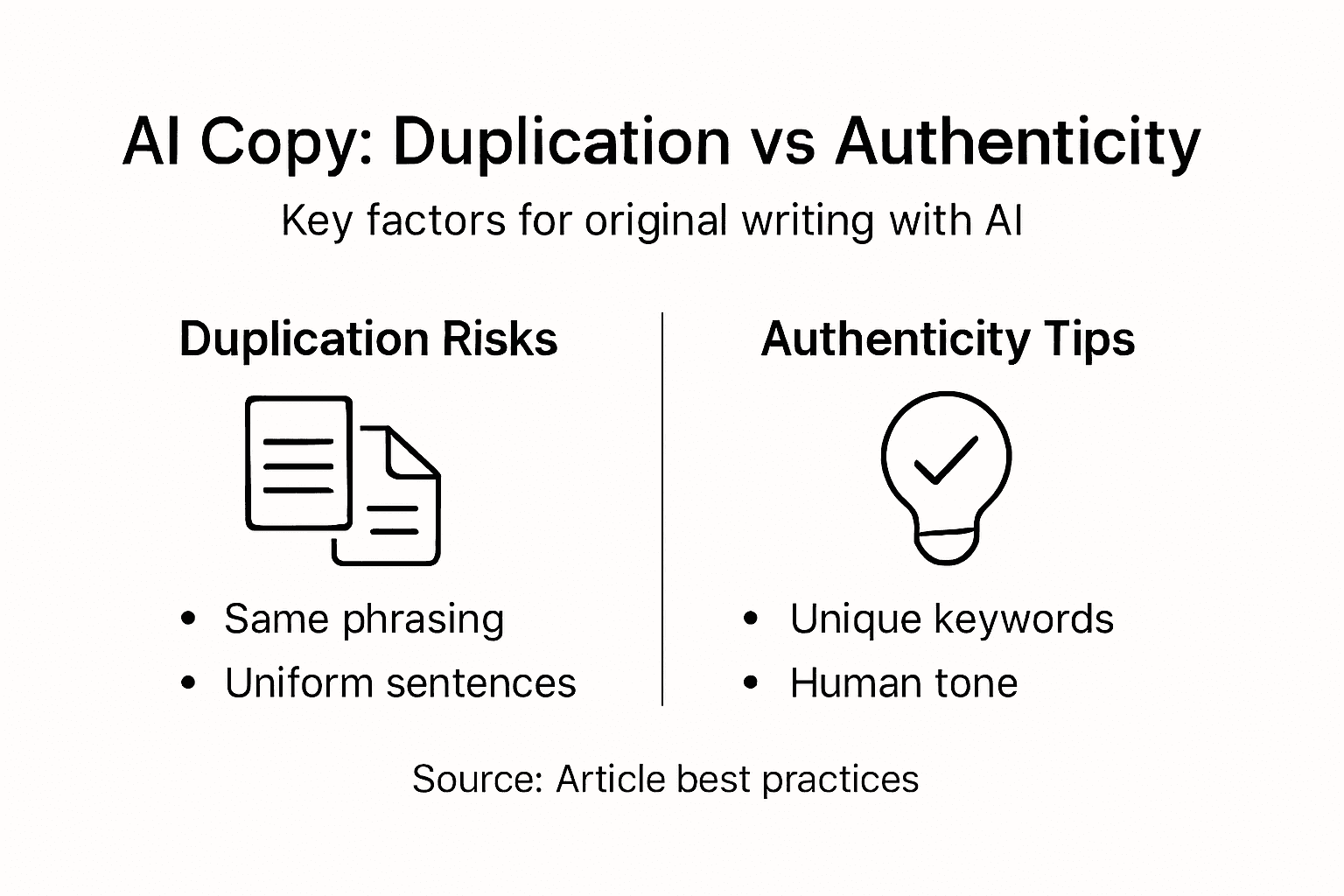
Verifying the originality of AI-generated content requires strategic use of advanced detection technologies. Your goal is to systematically assess and validate the authenticity of your text before publication.
AI content detection techniques reveal critical insights into your text's potential AI footprint. Implement these comprehensive verification strategies:
Comprehensive verification means understanding that no single tool provides absolute certainty. Each detection platform has unique algorithms and strengths, so cross-referencing becomes crucial for reliable results.
Technology supports authenticity, but human judgment remains paramount.
Pay special attention to nuanced detection signals. Modern AI detection tools look beyond simple text patterns, examining linguistic complexity, syntactic variations, and contextual subtleties that distinguish human from machine-generated content.
Pro tip: Always treat detection tool results as guidance, not absolute verdicts, and use human critical thinking to make final authenticity judgments.
Transforming your carefully crafted AI-assisted content into a polished, publication-ready piece requires meticulous attention to detail and strategic refinement. Your final review will ensure the text meets professional standards and maintains authentic quality.
Comprehensive manuscript editing techniques involve a systematic approach to content finalization. Follow these critical refinement steps:
Precision editing transforms raw content into professional-grade text. Each sentence should serve a clear purpose, contributing meaningfully to your overall narrative while maintaining a natural, engaging rhythm.
Exceptional writing emerges through thoughtful, iterative refinement.
Pay special attention to contextual nuances that elevate your writing. Look beyond grammatical correctness to ensure your text reflects genuine human insight and expertise.
Pro tip: Read your final draft out loud, listening for awkward phrasings or unnatural syntax that might reveal AI-generated origins.
Struggling to maintain originality while working with AI-generated text? The article "How to Avoid Content Duplication for Authentic AI Copy" highlights the challenges of preventing content duplication and preserving human-like quality in your writing. Key pain points include managing unintentional replication, restructuring AI outputs for a natural voice, and integrating unique keywords that resonate with your audience. These steps are essential for achieving authentic content that confidently passes AI detection tools like Turnitin and Copyleaks.
Semihuman.ai is designed precisely to tackle these issues by offering powerful solutions that transform AI content into genuinely human-like writing. With features that help restructure text, embed natural keywords, and evade automated detection, the platform supports creators, marketers, and students aiming to elevate SEO rankings and reduce plagiarism risks. Discover how you can protect your content authenticity and publish confidently by exploring the Semihuman.ai landing page.
Ready to humanize your AI-generated content and eliminate duplication concerns today
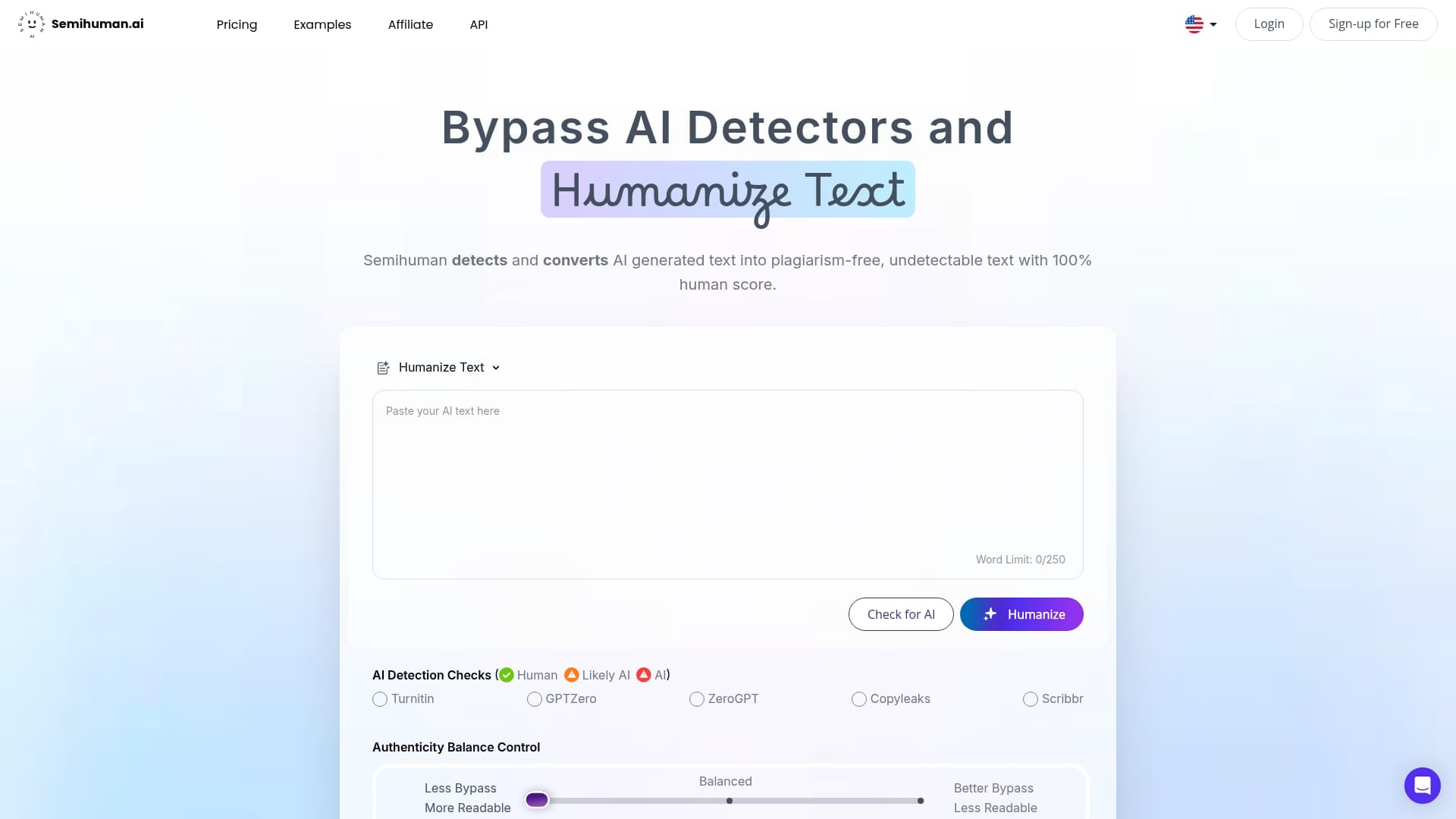
Take control of your writing process now and experience how seamless it is to blend AI efficiency with natural creativity. Visit Semihuman.ai to start transforming your content with expert precision and ease.
To assess your current content for duplication risks, conduct a comprehensive content audit by comparing document versions, check for identical paragraph structures, and review collaborative documents for repeated sections. Use specialized plagiarism detection software to quickly spot overlaps and highlight areas needing closer examination.
To restructure AI-generated text for originality, break down long paragraphs, reorder sentence structures, and integrate personal insights or specific examples. Aim to enrich the content with contextual details that AI typically omits, ensuring it has a genuine human touch.
To integrate unique keywords into AI-generated content, research domain-specific terminology and identify conversational phrases relevant to your target audience. Aim to embed keywords naturally into the text, ensuring that they reflect authentic language and maintain a human-like flow.
To verify the authenticity of AI-generated text, use multiple detection tools for cross-referencing and review detailed breakdowns of AI likelihood. Maintain a balanced approach by combining the results from these tools with your human judgment to assess authenticity accurately.
To refine AI-assisted content before publishing, conduct a thorough structural review, verify logical flow, and eliminate redundant language. Cross-check facts and ensure consistent tone and formatting to elevate your writing to professional standards.


Start
Humanizing
for Free!
Humanize