
Loading...

More than 50 percent of American email marketers now rely on artificial intelligence to personalize campaigns and drive customer engagement. As AI rapidly alters how digital communications are crafted and delivered, the pressure to maintain both effectiveness and a genuine human touch has never been greater. This article breaks down the latest strategies for using AI to create authentic, high-performing emails that sidestep detection tools and strengthen customer relationships.
| Point | Details |
|---|---|
| AI Enhances Email Marketing | Artificial intelligence enables personalized communication by analyzing customer behavior and preferences, transforming email marketing from generic broadcasts to targeted engagements. |
| Advanced Segmentation and Personalization | Marketers can utilize AI-driven techniques for dynamic content adaptation and refined audience segmentation, ensuring each message feels personalized to the recipient. |
| Predictive Analytics for Automation | AI automates email campaign strategies by anticipating customer needs and preferences, allowing for real-time adaptations that enhance customer journeys. |
| Compliance and Sender Reputation | AI tools help marketers maintain compliance with regulations and optimize deliverability by proactively analyzing risks and adjusting strategies accordingly. |
Artificial intelligence has transformed email marketing from a simple broadcast mechanism to a sophisticated, personalized communication channel. Unlike traditional approaches that relied on generic mass messaging, AI now enables marketers to craft highly targeted, intelligent email strategies that respond dynamically to individual customer behaviors and preferences.
Research shows AI is fundamentally reshaping email marketing through advanced data analysis and predictive capabilities. Sophisticated AI technologies are enabling marketers to move beyond basic automation, generating deep customer insights that drive more meaningful engagement. This shift means email campaigns can now anticipate user needs, recommend personalized content, and optimize send times with unprecedented precision.
Key AI capabilities in email marketing include intelligent segmentation, predictive content recommendation, and automated personalization. Marketers can now leverage machine learning algorithms to understand complex customer journey patterns, predict potential interactions, and dynamically adjust email content in real time. These technologies analyze vast datasets, identifying nuanced behavioral signals that traditional marketing approaches would miss entirely.
Pro tip: Start small by implementing AI-driven segmentation before expanding to more complex personalization strategies, allowing your team to build expertise gradually.
Here's a comparison of traditional email marketing and AI-powered approaches:
| Aspect | Traditional Email Marketing | AI-Powered Email Marketing |
|---|---|---|
| Targeting | Basic demographic groups | Dynamic behavioral segments |
| Content Personalization | Generic messages | Real-time personalized content |
| Send Time Optimization | Fixed scheduling | Predictive optimization by user |
| Customer Insights | Limited analytics | Deep behavioral analysis |
| Campaign Adaptation | Manual changes | Automated, continuous adaptation |
AI-driven personalization represents a quantum leap in email marketing, transforming generic communication into deeply individualized customer experiences. Modern marketers now leverage sophisticated machine learning algorithms that analyze complex behavioral patterns, enabling unprecedented levels of targeting and relevance.
Advanced personalization techniques allow email campaigns to dynamically adapt content based on real-time user interactions. By processing extensive customer data including browsing history, purchase patterns, and engagement metrics, AI can generate hyper-targeted segments that respond to individual preferences with remarkable precision.

The segmentation process now goes far beyond traditional demographic categorization. Machine learning models continuously refine audience segments, identifying subtle behavioral triggers that predict potential customer actions. These intelligent systems can automatically cluster subscribers based on nuanced characteristics like engagement frequency, content preferences, and predicted lifetime value, enabling marketers to craft messaging that feels personally curated for each recipient.
Pro tip: Begin implementing AI segmentation by focusing on three core behavioral attributes: engagement recency, purchase frequency, and content interaction patterns, which provide the most actionable initial insights.
AI has revolutionized email marketing automation by introducing predictive intelligence that goes far beyond traditional trigger-based workflows. Unlike previous approaches that relied on static rules, modern AI systems can dynamically anticipate customer behaviors, creating sophisticated campaign strategies that adapt in real time.
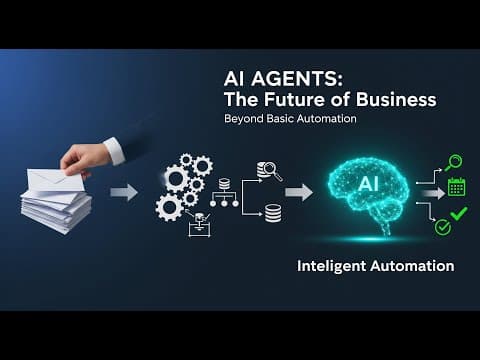
Predictive marketing analytics enable marketers to forecast customer interactions with unprecedented accuracy. These intelligent systems analyze complex behavioral patterns, engagement metrics, and historical data to automatically optimize email campaign elements such as send times, content variations, and segmentation strategies. By continuously learning from each customer interaction, AI transforms email marketing from a reactive to a proactive communication channel.
The core strength of advanced automation lies in its ability to create personalized customer journeys at scale. Machine learning algorithms can now predict individual customer preferences, automatically generating tailored content sequences that respond to specific user signals. These predictive campaigns can dynamically adjust messaging, recommended products, and engagement triggers based on real-time insights, ensuring that each communication feels uniquely crafted for the recipient.
Pro tip: Start by implementing predictive automation with three key metrics: customer lifetime value prediction, engagement probability scoring, and content relevance ranking to build a robust initial AI-driven email strategy.
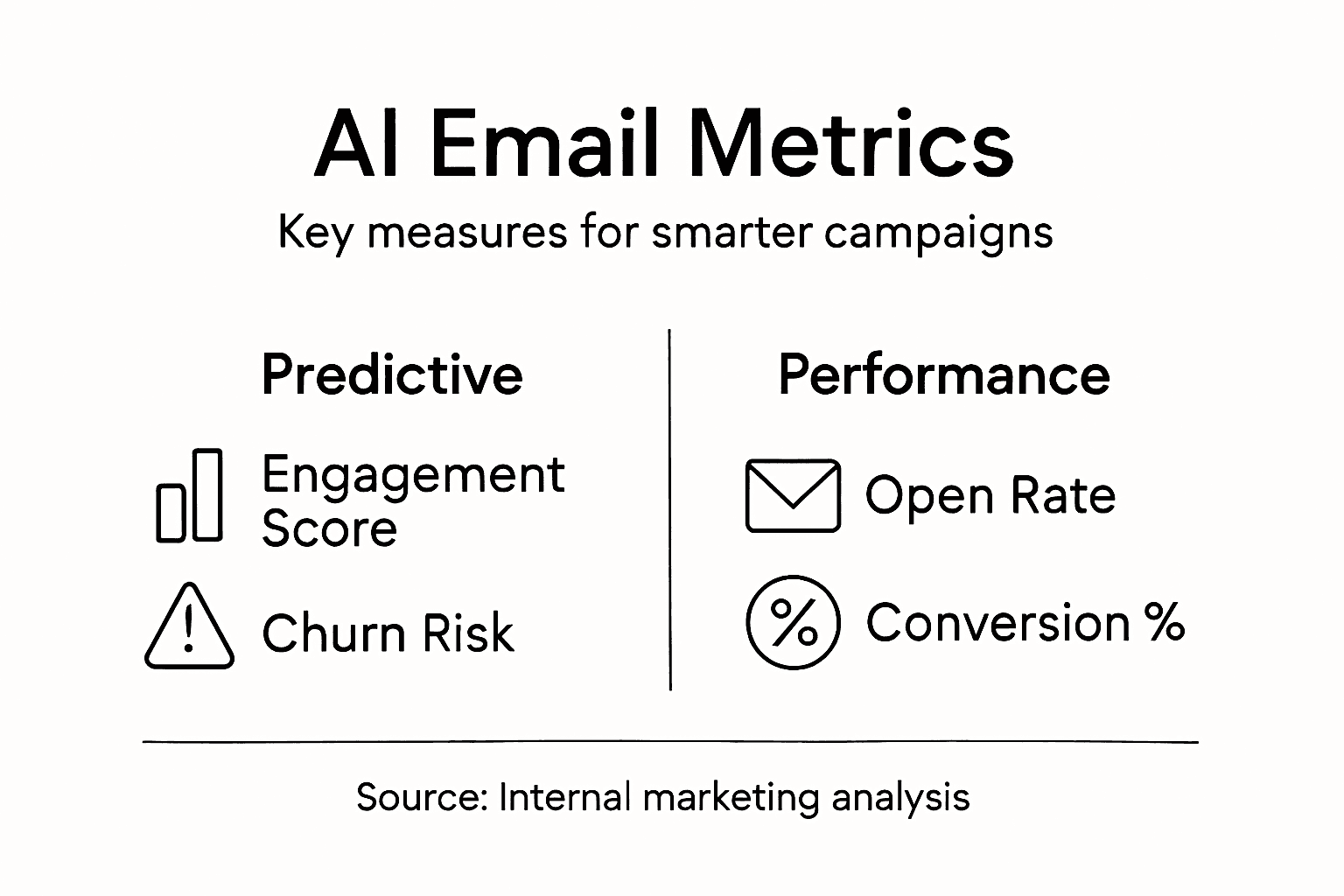
Below is a summary of essential AI metrics for effective email automation:
| Metric | Definition | Business Value |
|---|---|---|
| Lifetime Value Prediction | Estimates total revenue per user | Focuses resources on high-value customers |
| Engagement Probability | Scores likelihood of user interaction | Streamlines campaign targeting efforts |
| Content Relevance Ranking | Rates email content for each user | Improves open and conversion rates |
AI is fundamentally transforming the complex landscape of email marketing compliance and deliverability, providing sophisticated solutions that go far beyond traditional monitoring techniques. Modern email marketers now have powerful tools that can proactively manage sender reputation, detect potential regulatory risks, and optimize communication strategies in real time.
Email compliance technologies enable marketers to navigate intricate regulatory environments with unprecedented precision. Artificial intelligence systems continuously analyze sending patterns, engagement metrics, and content characteristics to prevent potential violations of data protection regulations. These intelligent mechanisms can automatically flag potential spam triggers, ensure consent management, and maintain alignment with international privacy standards like GDPR and CAN-SPAM Act.
The most advanced AI compliance tools now provide multi-layered protection for email marketing campaigns. Machine learning algorithms can dynamically assess risk factors, predict potential deliverability challenges, and automatically adjust email strategies to maintain optimal sender reputation. By analyzing complex signals such as recipient engagement, bounce rates, and spam complaint frequencies, these systems create a proactive approach to maintaining high-quality email communication channels that respect both regulatory requirements and recipient preferences.
Pro tip: Implement AI-driven compliance monitoring with regular automated audits focusing on consent tracking, content analysis, and engagement metrics to preemptively address potential regulatory risks.
The rise of AI in email marketing has created a critical challenge: generating content that feels genuinely human while leveraging technological efficiency. Marketers must now walk a fine line between automation and authentic communication, ensuring their messages resonate on a personal level without triggering AI detection mechanisms.
Content humanization techniques have become essential in maintaining the delicate balance between technological innovation and human connection. Advanced AI tools now incorporate natural language processing that mimics human writing patterns, introducing subtle variations in tone, syntax, and emotional nuance. These sophisticated approaches go beyond simple word substitution, creating email content that feels organic and spontaneous rather than algorithmically generated.
The most effective humanization strategies focus on understanding contextual communication subtleties. Machine learning models can now analyze thousands of authentic human communications to identify unique stylistic elements that make writing feel genuine. By incorporating natural imperfections, contextual references, and emotionally intelligent language patterns, AI-generated emails can bypass detection systems while maintaining a sense of authentic human interaction. This approach requires a deep understanding of linguistic nuance and the psychological triggers that distinguish human communication from mechanical text generation.
Pro tip: Develop a consistent voice profile that includes intentional variations in sentence structure, occasional conversational asides, and context-specific language to enhance content authenticity.
The article highlights the transformative power of AI in email marketing, especially the challenge of balancing automation with genuine human engagement. Marketers struggle to create content that not only leverages AI’s powerful personalization and predictive capabilities but also feels authentic and human-like to avoid detection by AI monitoring tools. Key pain points include maintaining sender reputation, bypassing AI detection, and crafting emails that resonate on a personal level through advanced content humanization.
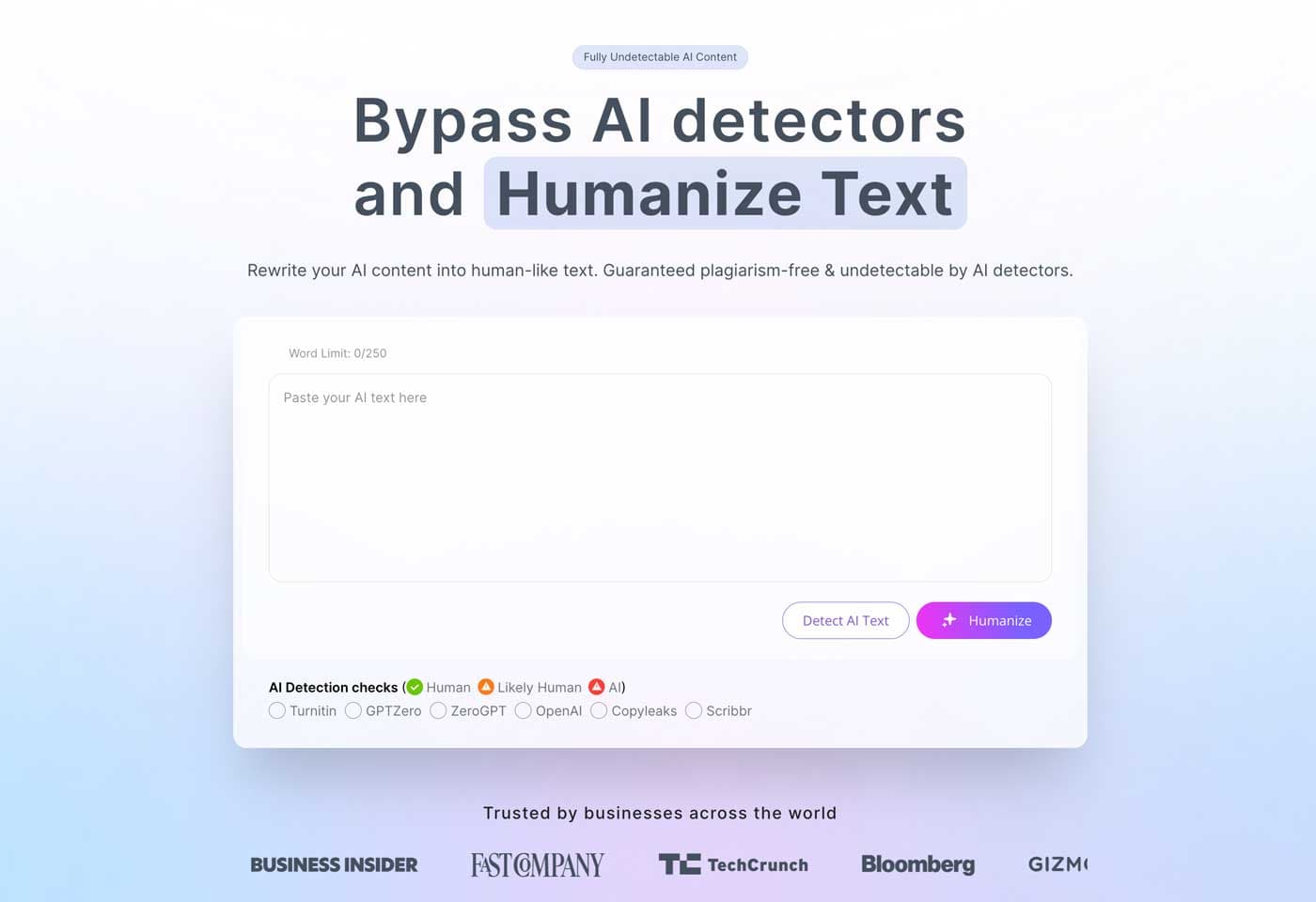
This is where Semihuman.ai steps in to bridge that gap. Our AI-powered platform is expertly designed to transform AI-generated email content into naturally human-like messages that improve deliverability, enhance authenticity, and boost engagement. Using features like text restructuring, keyword integration, and AI detection evasion, Semihuman.ai helps marketers create genuinely personalized emails that align with compliance standards and stand out in crowded inboxes.
Ready to harness the full potential of AI-driven personalization while preserving the warmth of human communication? Discover how Semihuman.ai can help you humanize your email marketing content effectively and safeguard your sender reputation.
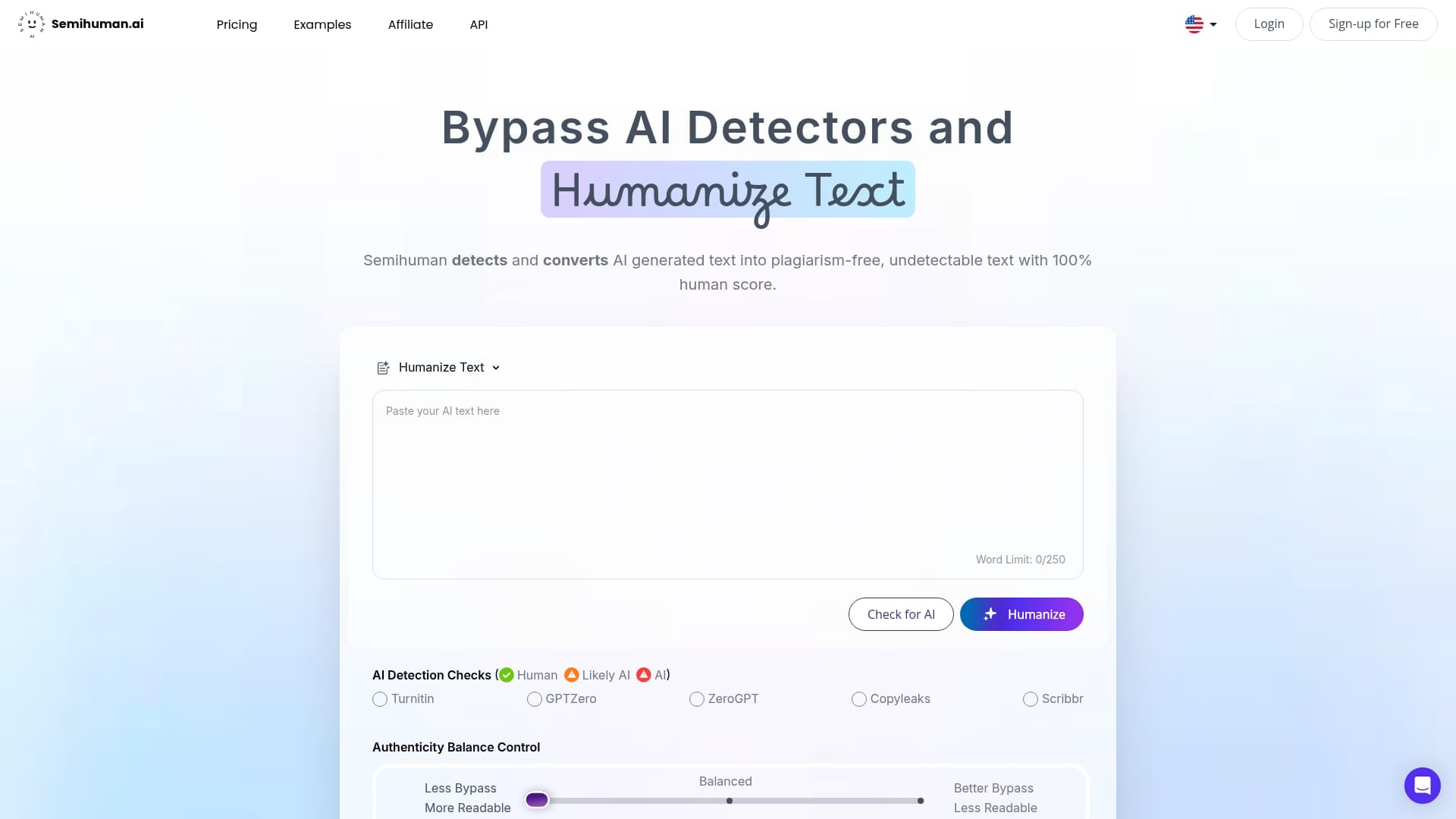
Unlock authentic email marketing today with Semihuman.ai. Visit our platform now to start creating AI-powered emails that truly connect. Don’t let your messages get lost in automation—make every email feel genuinely human and watch your engagement soar.
AI enhances email marketing personalization by utilizing machine learning algorithms to analyze customer behavior, enabling marketers to create hyper-targeted segments and dynamically adapt content based on real-time interactions, resulting in a more meaningful communication experience.
AI-driven segmentation allows for more accurate targeting by identifying subtle behavioral signals that traditional methods might miss, helping marketers refine audience segments based on engagement frequency, content preferences, and predicted lifetime value.
Predictive automation transforms email marketing by enabling systems to anticipate customer behaviors and preferences, allowing for real-time adjustments to email content, send times, and overall campaign strategies, leading to more effective and engaging email communication.
AI plays a crucial role in maintaining email compliance and deliverability by continuously analyzing sending patterns and engagement metrics to identify potential regulatory risks, prevent spam triggers, and optimize strategies that uphold sender reputation, ensuring effective and lawful email marketing.


Start
Humanizing
for Free!
Humanize