
Loading...

TL;DR:
- Effective feedback relies more on quality, clarity, and structure than on volume or speed.
- Combining AI, peer, and human feedback improves authenticity and overall writing quality.
- Delayed, deliberate feedback cycles foster trust and produce more authentic, high-performing content.
Feedback is supposed to make writing better. But here's what most creators, students, and marketers get wrong: they assume more feedback or faster feedback automatically produces stronger work. The reality is more nuanced. Research shows that feedback timing alone has near-zero effect on writing outcomes, and the type of feedback matters far more than the volume. For anyone working with AI-generated content, these distinctions are not just academic. They are the difference between polished, authentic writing and generic text that fools no one. This guide breaks down what the science actually says, which feedback methods move the needle, and how to build a practical system that works for real writing.
| Point | Details |
|---|---|
| Quality trumps quantity | Targeted, structured feedback significantly outperforms generic or excessive comments. |
| Mix feedback sources | Combine AI, peer, and expert review for the most authentic and improved content. |
| Timing isn’t everything | When you get feedback matters less than how you use and act on it. |
| Protocols drive results | Clear frameworks for giving and applying feedback boost writing outcomes. |
Feedback is not just a nice-to-have in writing. It is a core engine of improvement. Whether you are a student revising an essay, a marketer refining a campaign, or a content creator editing an AI draft, feedback gives your writing a mirror. Without it, you repeat the same patterns, miss structural gaps, and lose the reader's trust.
The science backs this up. Writers who receive structured feedback tied to clear criteria improve significantly faster than those who get vague, general comments. One key finding from research on EFL (English as a Foreign Language) students shows that rubric plus exemplar feedback outperforms in-text comments for writing improvement, especially when students are asked to defend or rewrite their work. This is not just for language learners. The same principle applies to anyone writing professionally.
"Feedback that is tied to clear standards and examples consistently produces stronger writing outcomes than open-ended editorial comments."
Why does this matter for AI-generated content? Because AI tools tend to produce writing that is structurally sound but authentically thin. Feedback helps you catch exactly those gaps. You can learn more about AI tools for student writing and how they interact with feedback cycles.
Here are the core benefits that well-structured feedback delivers:
Different feedback sources each play a role. AI tools deliver fast, mechanical corrections. Peer reviewers catch clarity and engagement issues. Expert human reviewers address deeper quality, tone, and context. AI for writing feedback is most powerful when it complements, rather than replaces, human judgment.
Knowing feedback matters is one thing. Knowing which type to use and when is where most writers lose ground. There is no single best method. Each type has a purpose, and combining them strategically is where the real gains happen.
| Feedback type | Strengths | Best use case |
|---|---|---|
| Rubric + exemplar | Structure, coherence, deeper features | First revisions and peer review sessions |
| In-text comments | Specific word-level fixes | Late-stage editing and proofreading |
| Peer/teacher feedback | Engagement, tone, authenticity | Mid-draft development |
| AI feedback | Speed, grammar, mechanics | Initial draft cleanup |
Research confirms that rubric plus exemplar methods are more effective for deeper features like structure and coherence than in-text comments alone. The reason is simple: rubrics give writers a framework, not just a correction. They understand why something needs to change, not just what.
More feedback is not always better. Piling on 40 in-text comments overwhelms writers and often leads to surface-level fixes rather than real improvement. Editing AI writing effectively requires knowing when to stop adding notes and start building a revision process.
Here is a step-by-step method for combining human and AI feedback:
For AI-generated content specifically, this process helps surface authenticity issues that automated tools miss. Humanizing AI-generated content becomes more effective when feedback is layered rather than applied all at once. You can also explore combining AI, peer, and teacher feedback for the strongest results.
Pro Tip: Use rubrics to address structure and coherence first. Then bring in peer feedback with a specific protocol, such as asking reviewers to flag any sentence that felt flat or unconvincing.
Feedback myths are surprisingly persistent, and they cost writers time and quality. The most common one is that faster feedback is better feedback. Turns out, that is largely false.
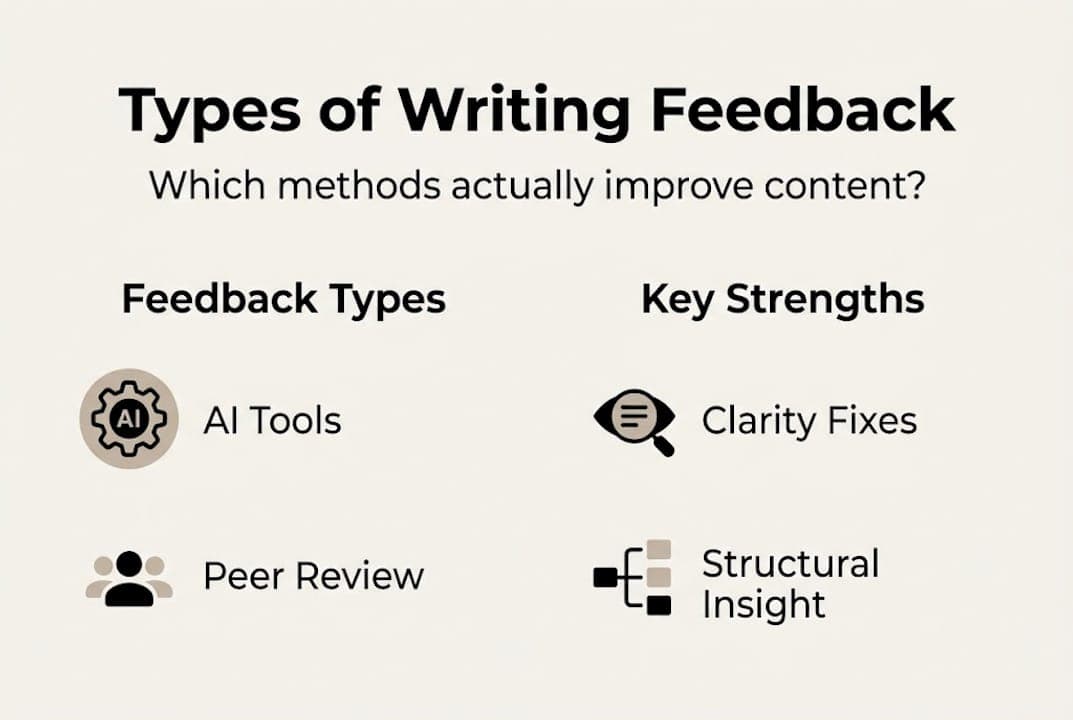
A large-scale meta-analysis found that feedback timing has near-zero impact on writing and learning outcomes, with an effect size of just g=0.03. Context, type, and specificity matter far more than speed.
| Myth | Reality | Effect size |
|---|---|---|
| Faster feedback improves outcomes | Timing alone has negligible impact | g=0.03 |
| More comments mean better results | Quality and structure outweigh volume | N/A |
| AI feedback is always sufficient | AI misses authenticity and context gaps | N/A |
"Feedback timing does not significantly affect outcomes—context matters more than when feedback arrives."
So when is delayed feedback actually better? When the writer needs time to process, reflect, or attempt revision independently first. Immediate feedback can short-circuit the thinking process, especially for students developing critical thinking skills. Feedback timing research reinforces that the learning environment and task type shape whether fast or slow feedback is helpful.
Here are the most common pitfalls creators and marketers fall into:
For marketers especially, authenticity is non-negotiable. Balancing AI and authenticity in content is not just a stylistic choice. It directly affects trust, engagement, and SEO performance.
Knowing the science and avoiding the myths is half the battle. The other half is building a repeatable process that actually improves your drafts, whether you are a student, a content creator, or a marketer.
Research shows that a mix of AI-driven and human feedback strengthens both authenticity and overall quality in AI-generated content. No single source of feedback is enough on its own.
Here is a practical, step-by-step framework:
Pro Tip: Use AI feedback for mechanics and initial clarity checks. Reserve human and peer feedback for structural authenticity, tone, and whether the piece actually sounds like a real person wrote it.
For content marketers, boosting authenticity with AI content is a measurable goal, not just a vague aspiration. Structured feedback loops reduce the revision cycles and help you publish with more confidence. AI in content marketing is evolving fast, and writers who build strong feedback habits now will outperform those who rely on automation alone.
Here is what most feedback guides will not tell you: the fastest feedback loop is often the least useful one. When creators rely primarily on instant AI suggestions, they get polished mechanics and hollow writing. It reads clean. It also reads forgettable.
The writers and marketers who consistently produce authentic, high-performing content are not the ones refreshing their AI dashboards. They are the ones building slower, more deliberate feedback cycles that force them to think about why a passage is not working, not just what to change.

Iterative feedback, where you revise, share, wait, revise again, builds writing instinct. It is uncomfortable because it requires patience in an industry obsessed with speed. But the payoff is real: content that earns trust, holds attention, and survives algorithm changes because it sounds genuinely human.
The most overlooked strategy? Treat every round of feedback as a diagnostic, not a checklist. Ask not just "what did they flag?" but "what does this tell me about my blind spots?" Ethical content strategies are built on exactly this kind of self-aware improvement process.
You now have the framework, the research, and the myths debunked. The next step is putting these strategies to work with tools built for exactly this purpose.
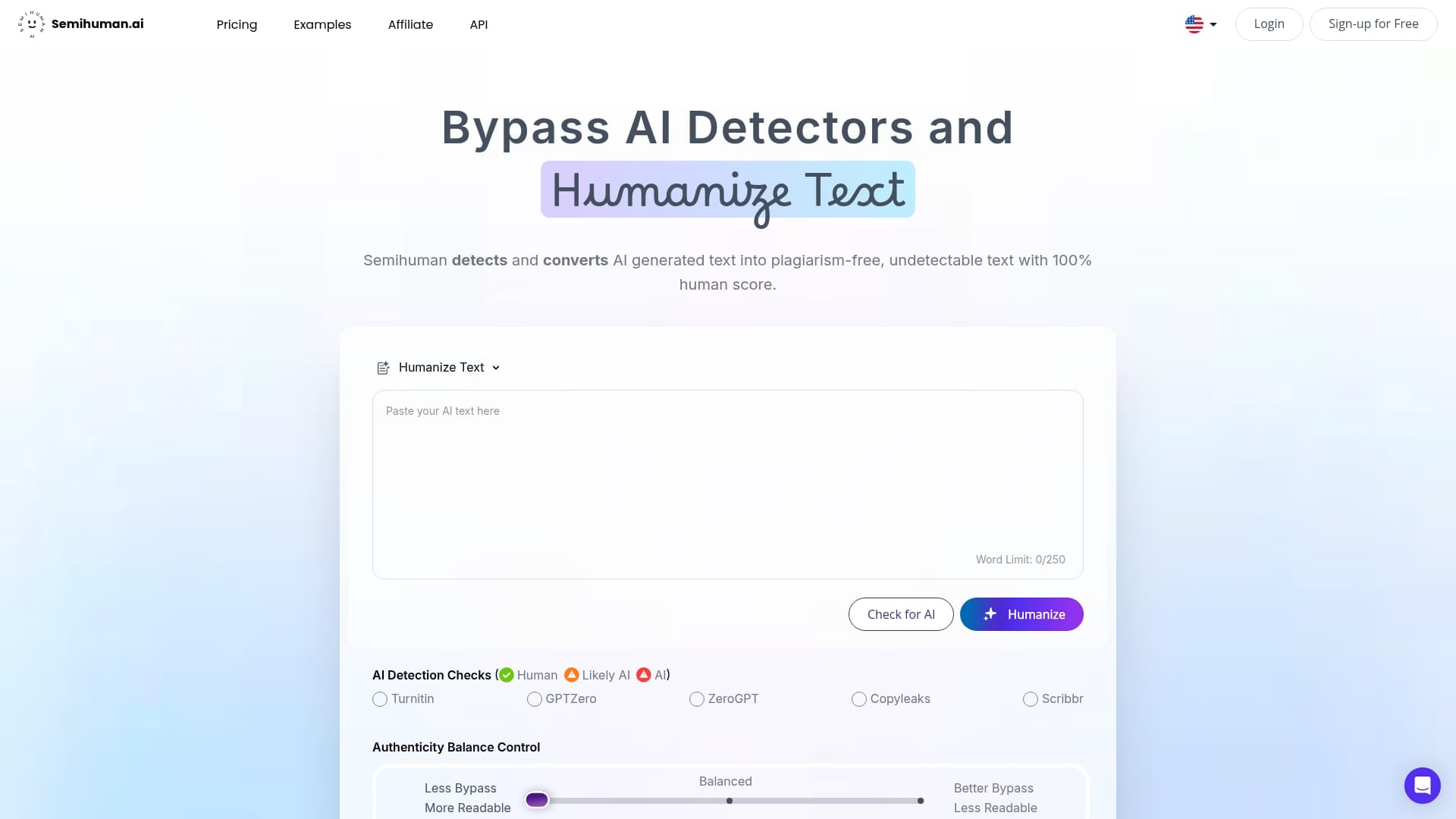
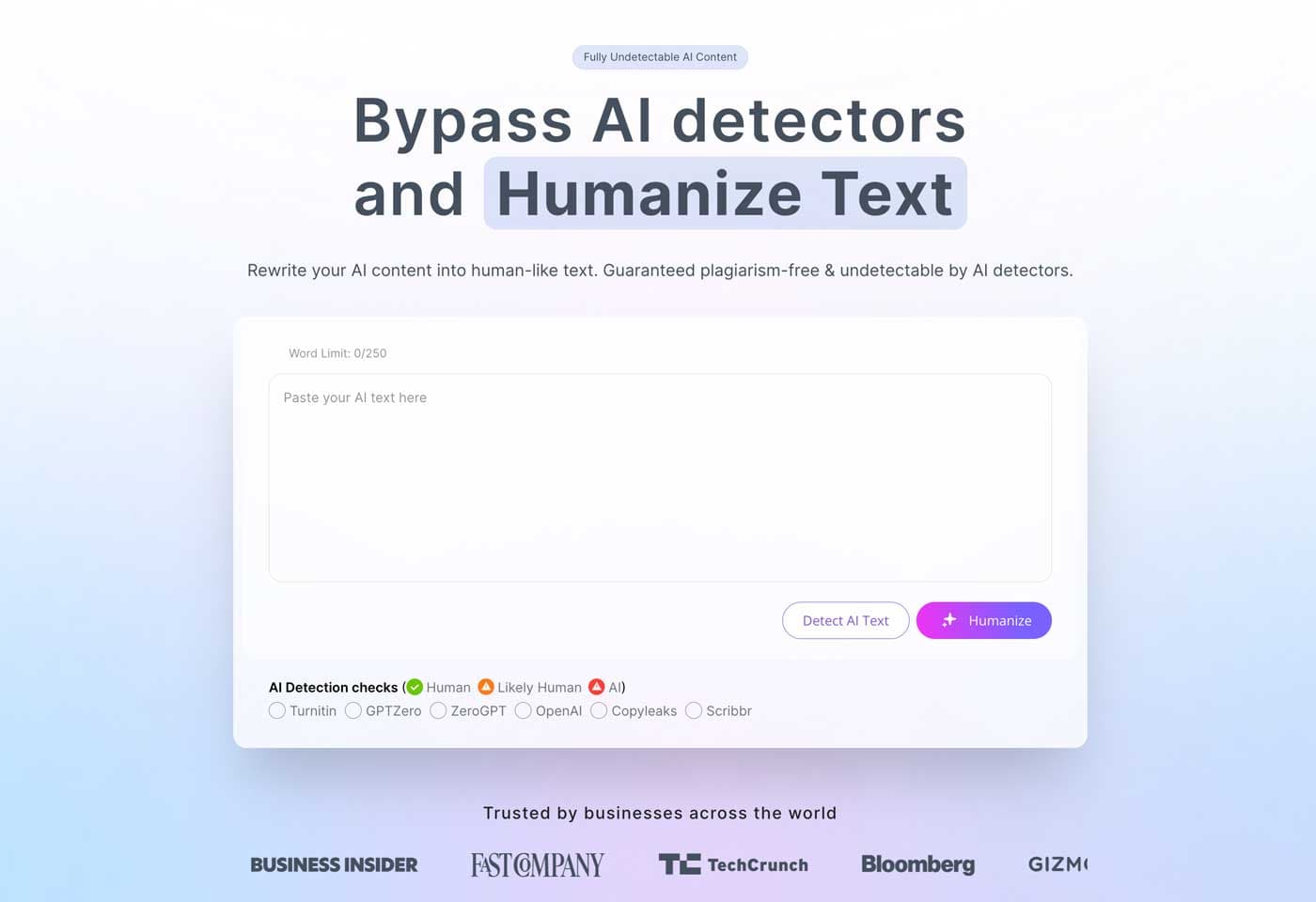
Semihuman.ai helps you move from raw AI output to polished, authentic content that passes detection tools like Turnitin, GPTZero, and Copyleaks. Whether you are optimizing for SEO with the AI SEO text generator or running your draft through tools that bypass AI detectors, the platform supports every stage of your feedback and revision process. You get writing that sounds human because it has been shaped by the kind of structured, intentional process this article describes. Try it and see the difference in your next draft.
Research shows that timing alone has a near-zero effect on writing improvement (g=0.03). The type and specificity of feedback matter far more than when it arrives.
A combination of AI, peer, and teacher feedback produces the strongest results. AI works best for early draft mechanics, while human and peer feedback addresses authenticity and depth.
No. Structured rubrics consistently outperform scattered comments for writing improvement. Quality and specificity outweigh sheer volume every time.
Students should start with AI tools for quick draft reviews, then actively seek peer and teacher feedback for deeper revisions. Combining these sources builds greater ownership and stronger writing habits.
Marketers should prioritize structured review protocols and authenticity over speed. Protocols and context consistently outperform feedback that prioritizes volume or quick turnaround.


Start
Humanizing
for Free!
Humanize