
Loading...

Did you know that stories are up to 22 times more memorable than facts alone? When you write content that feels human, readers stop to listen instead of just scrolling past. Personal stories, emotional language, and conversational tone turn dry advice into something people actually remember and share. Discover how tapping into storytelling and authentic voice can help your message truly connect.
| Takeaway | Explanation |
|---|---|
| 1. Anecdotes Engage Readers Emotionally | Personal stories humanize information, creating emotional connections that help simplify complex ideas. |
| 2. Be Authentic in Storytelling | Share genuine experiences that reflect personal growth or challenges, making your message relatable and sincere. |
| 3. Use a Conversational Tone | Write as if you're having a friendly chat, making your content approachable and engaging for readers. |
| 4. Tailor Content to Audience Needs | Understand your audience's emotions and challenges to create personalized experiences that resonate more deeply. |
| 5. Craft Engaging Conclusions | End with an emotional call to action that invites further connection rather than a generic summary. |
Anecdotes are the secret weapon of compelling content creation. They transform dry information into memorable narratives that connect directly with your audience.
According to Writing Commons, anecdotes excel at making abstract ideas tangible by creating emotional connections that simplify complex concepts. Think of them as miniature stories that bridge the gap between raw data and human understanding.
Why Anecdotes Work
Personal stories tap into our fundamental human desire to relate and understand. When you share a concise, authentic story, readers instantly become more engaged. They stop scanning and start listening. An effective anecdote does three critical things:
How to Craft Powerful Anecdotes
Start by selecting stories from your own experience that directly illustrate your core message. Keep them brief the most impactful anecdotes are usually short and punchy. Aim for stories that are:
"The best stories are ones that reveal something true about the human experience." - Storytelling Expert
For example, instead of saying "communication is important," you might share a quick story about a misunderstanding that cost a project or relationship. This approach transforms an abstract concept into a vivid, memorable lesson that resonates far more powerfully than generic advice.
Remember that great storytelling is not about perfection. It is about genuine connection. Your audience wants to hear real experiences that reveal vulnerability, learning, and growth.
Personal experiences are the hidden gems of authentic content creation. They transform ordinary writing into extraordinary storytelling by injecting genuine human emotion and relatability.
According to Educational Insights, sharing personal experiences creates a powerful connection that fosters trust and engagement. When you open up about your real life journey, readers feel an immediate sense of connection and understanding.
The Power of Personal Stories
Why do personal experiences resonate so deeply? Because they break down barriers. They show vulnerability, demonstrate learning, and reveal the human behind the words. Research from academic journals suggests that personal narratives have an unparalleled ability to humanize information and make complex concepts accessible.
Strategies for Sharing Personal Experiences
Effective personal storytelling requires more than just recounting events. You need a strategic approach that transforms your experiences into meaningful content:
Practical Implementation
Start small. Pick a moment from your professional or personal journey that illustrates a key point. Maybe it is a mistake you made, a challenge you overcame, or an unexpected lesson you learned. The magic is in the details that make your story uniquely yours.
"Your story is the gift you give to others who might be walking a similar path."
For example, if you are writing about productivity, do not just list generic tips. Share how you struggled with procrastination, the specific strategies you developed, and how they transformed your workflow. This approach turns generic advice into a compelling narrative that readers can truly connect with.
Remember personal experiences are not about perfection. They are about showing real human growth, vulnerability, and continuous learning.
Formal writing is out. Genuine conversation is in. Your readers want to feel like they are chatting with a friend who happens to be super knowledgeable about the topic.
According to Edutopia, a conversational tone creates trust and deeper engagement. It is about breaking down barriers and making complex ideas feel approachable and friendly.
Why Conversational Writing Works
Imagine reading something that sounds like a textbook versus something that feels like advice from a trusted friend. Which would you prefer? Conversational writing transforms information from distant and academic to immediate and personal.
Key Elements of Conversational Writing
To truly nail a conversational tone, focus on these critical aspects:
Practical Translation Techniques
Take your existing formal content and run it through a "conversation filter". Replace academic language with natural speech patterns. Instead of saying "Research indicates," try "Here is what we know." Instead of "Methodology suggests," say "Here is what works."
"Write to your reader like you are having a cup of coffee together."
Avoiding Common Mistakes
Do not confuse conversational with unprofessional. You want to sound approachable while maintaining credibility. Think of it as presenting complex ideas in a friendly way. Your goal is clarity plus warmth.
Practice by reading your writing out loud. If it sounds stiff or awkward when you speak it, rewrite until it flows naturally. Your readers will thank you for making learning feel like a conversation rather than a lecture.
Words are not just information. They are emotional vehicles that transport readers from passive observation to active engagement. Emotional language transforms content from forgettable text to memorable experience.
According to Academic Research, personal anecdotes have a remarkable ability to humanize data and create deep emotional connections that simplify complex ideas.
The Science of Emotional Connection
Our brains are wired for emotional storytelling. When you tap into feelings like curiosity, empathy, or surprise, you create neural pathways that make your message stick. Rational facts inform. Emotional language transforms.
Emotional Language Strategies
Integrating emotions is not about being dramatic. It is about being genuine. Here are practical ways to infuse emotional depth:
Practical Implementation Techniques
Start by asking yourself questions that reveal emotional layers. Instead of stating "Marketing requires strategy," share why marketing matters to you. What personal challenge did you overcome? What inspired your journey?
"Emotions are the secret language that turns readers into believers."
For example, do not just explain a technical process. Tell the story of how that process changed your perspective. Did it solve a problem? Create an unexpected breakthrough? These emotional threads transform information into inspiration.
Remember emotional language is not manipulation. It is connection. Your goal is to create genuine resonance that makes readers feel seen, understood, and motivated.
Knowing your audience is like having a secret map to their hearts and minds. It is the difference between talking at people and talking with them.
According to Edutopia, creating a space where people feel valued starts with understanding their unique perspectives and needs. This principle applies whether you are teaching a class or writing content for an online audience.
The Audience Empathy Approach
Audience tailoring is not about demographics. It is about understanding motivations, challenges, and emotional landscapes. Effective creators do not just share information. They create experiences that feel personally crafted for each reader.
Audience Research Strategies
To truly understand your audience, go beyond surface level research:
Practical Personalization Techniques
Start by asking yourself critical questions. What keeps your audience up at night? What solutions are they desperately seeking? What language resonates with their experiences?
"Speak to their pain points. Show them you understand before you try to help."
For instance, if you are writing for entrepreneurs, do not just share generic success tips. Dive into the specific struggles of building a business from scratch. Share real stories that demonstrate genuine understanding.
When you explore copywriting techniques that connect emotionally, you transform content from information to inspiration. Your goal is not just to inform but to make your audience feel truly seen and understood.
Keywords are not about stuffing. They are about strategic storytelling that helps search engines understand your content while keeping readers totally engaged.
According to Research on Communication, effective messaging is about creating relatable and memorable content. The same principle applies to SEO writing.
Understanding Organic Keyword Integration
Think of keywords like seasoning. Too little and your content feels bland. Too much and it becomes unpalatable. The goal is finding that perfect balance where keywords feel completely natural.
Strategic Keyword Placement Techniques
Successful keyword integration involves more than random insertion. Consider these approaches:
Practical Implementation Strategy
Start by writing your content as if no keyword exists. Then carefully weave in your target phrases where they make logical sense. Your primary goal should always be communicating clearly and engagingly.
"Write for humans. Optimize for algorithms."
For instance instead of forcing "best marketing strategy" into every paragraph, let it emerge organically within your narrative. Explain concepts. Share insights. Let keywords complement your storytelling.
When you explore copywriting techniques that balance human connection with strategic optimization, you create content that resonates with both readers and search engines.
Your conclusion is not a farewell. It is your final opportunity to connect deeply and inspire action. Think of it as the emotional handshake that leaves a lasting impression.
According to Academic Research, personal stories have the power to transform abstract concepts into tangible emotional experiences.
Beyond Generic Closing Statements
Traditional conclusions feel like corporate boilerplate. Humanized conclusions feel like a conversation with a trusted friend. They do not just summarize. They motivate. They inspire. They create a genuine connection.
Crafting Emotionally Resonant Conclusions
Transform your calls to action from transactional to transformational:
Practical Implementation Strategies
Start by asking yourself: What emotional journey have we just completed together? What hope or possibility am I leaving the reader with?
"A great conclusion does not end a piece of writing. It begins a new conversation."
When learning how to write a powerful conclusion, remember that authenticity trumps perfection. Your goal is to make readers feel understood, motivated, and connected.
Instead of saying "Click here," tell them why this matters to their life. Share a brief story. Reveal the human potential behind the action. Make them feel something.
Below is a comprehensive table summarizing the storytelling techniques, strategies, and benefits discussed throughout the article, focusing on engaging content creation.
| Concept | Description | Benefits/Outcomes |
|---|---|---|
| Anecdotes | Miniature stories that bridge abstract concepts with human understanding. | Humanizes information, emotional resonance, simplification of complex ideas. |
| Personal Experience | Sharing genuine stories from personal or professional life. | Builds trust, enhances relatability, humanizes content. |
| Conversational Tone | Writing that feels like a friendly chat rather than a lecture. | Increases engagement, builds trust, makes complex ideas approachable. |
| Emotional Language | Using words to create emotional connections and engagement. | Transforms content from informative to memorable, engages emotional pathways. |
| Audience Tailoring | Understanding the audience's unique needs and challenges. | Creates deeper connections, personalizes content, increases relevancy. |
| Keyword Integration | Natural embedding of SEO keywords in the content. | Balances reader engagement with SEO effectiveness, enhances discoverability. |
| Humanized Conclusions | Crafting endings that connect emotionally and inspire action. | Motivates readers, creates genuine connections, prompts follow-through. |
The challenge of creating content that truly connects with your audience without sounding robotic or forced is real. This article highlights how storytelling techniques, personal experience, conversational tone, and emotional language elevate content from ordinary to unforgettable. Yet balancing authenticity with SEO and avoiding AI detection systems can feel like walking a tightrope.
That is where Semihuman.ai becomes a game changer. Our AI-powered platform helps you transform AI-generated text into naturally human-like writing that resonates emotionally and ranks higher. Whether you want to refine your anecdotes, integrate natural keywords, or craft conversations that build trust Semihuman.ai gives you the tools to keep your content genuinely human and effective.
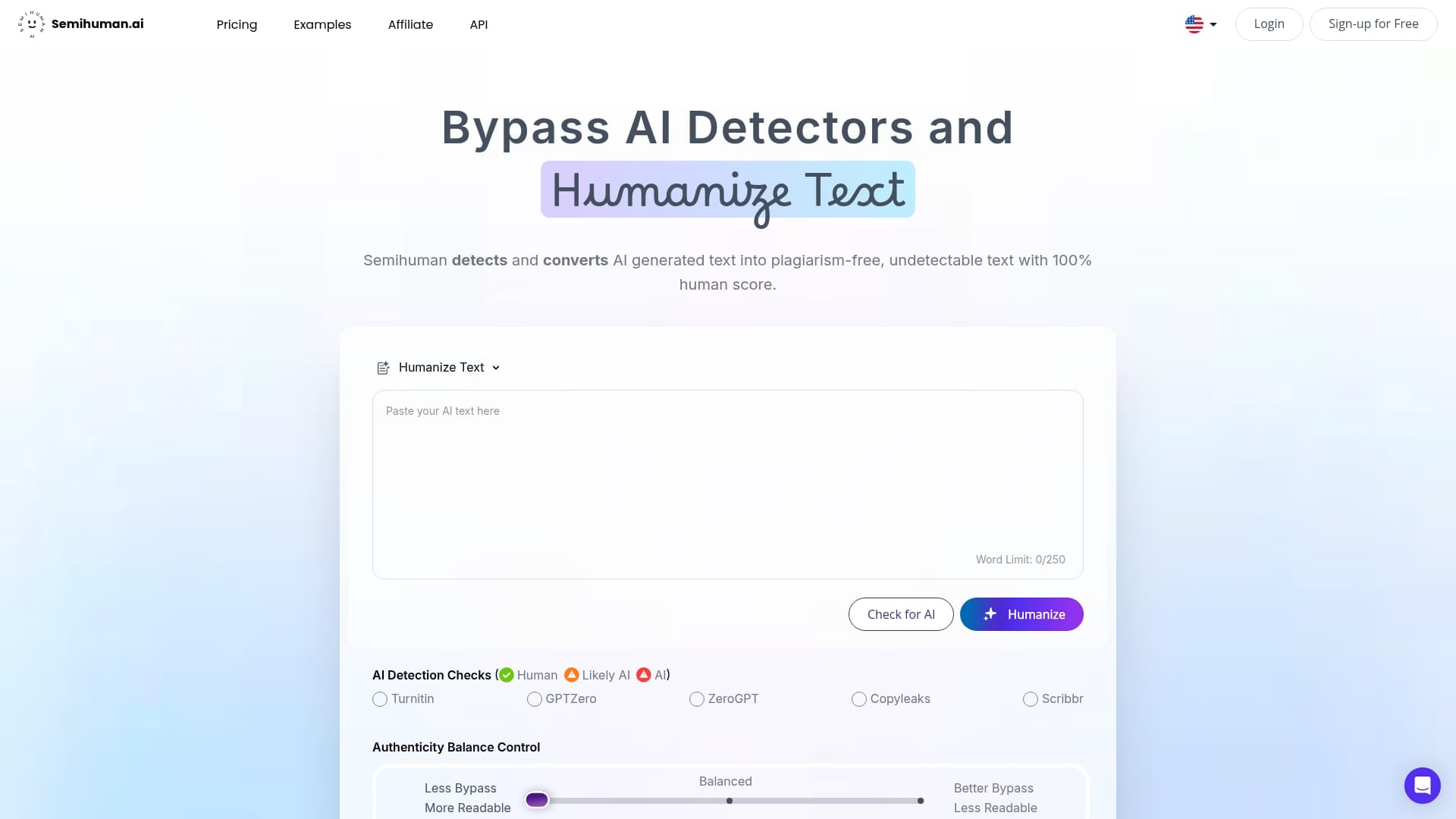
Ready to make every word count and connect deeply with your readers? Experience how our smart text restructuring and detection evasion features empower creators like you to produce authentic content that stands out in today’s competitive digital world. Visit Semihuman.ai to get started today and turn your AI writing into human stories that truly speak.
Craft anecdotes, use personal experiences, and adopt a conversational tone. Start by selecting relatable stories that illustrate your message, making complex topics feel more accessible and engaging.
Share authentic, relevant moments from your life that connect with your message. This helps create trust with your audience and can transform generic advice into relatable narratives, making readers feel seen and understood.
A conversational tone involves using everyday language, asking questions, and writing as if you’re talking to a friend. Focus on making your writing flow naturally to create a warm, friendly atmosphere that encourages reader engagement.
Use descriptive language to express feelings, share struggles, and reveal personal growth. Start by reflecting on your experiences and asking what emotional layers can be added to resonate with your audience on a deeper level.
Conduct audience research by engaging in online communities, reading feedback, and analyzing interaction patterns. This will help you customize your messaging to address the specific challenges and motivations of your readers, making your content more relevant and impactful.
Transform your conclusion into a conversational goodbye that highlights the emotional journey you've taken with your readers. Share a personal reflection or insight, and invite them to take action that feels meaningful, enhancing their experience and connection to your message.



Start
Humanizing
for Free!
Humanize