
Loading...

TL;DR:
- Ethical AI marketing emphasizes transparency, authenticity, accountability, and fairness in content creation.
- Common risks include bias, hallucinated facts, privacy breaches, and manipulative tactics.
- Building a culture of oversight and disclosure ensures trust and long-term success in AI-driven marketing.
Most marketers know AI can speed up content production. But 79% of consumers say humans understand them better than AI-generated content, and that gap is widening fast. The pressure to adopt AI tools is real, budgets are tighter, deadlines are shorter, and competitors are publishing more than ever. But speed without ethical guardrails is a liability, not an advantage. This guide walks you through what ethical digital marketing actually looks like in 2026, where the common traps are, and how to build a workflow that earns consumer trust without sacrificing efficiency.
| Point | Details |
|---|---|
| Human oversight required | Always review and fact-check AI-generated content to preserve authenticity and build trust. |
| Disclose AI use wisely | Label AI content based on risk rather than universally, preventing trust erosion or disclosure fatigue. |
| Avoid manipulative tactics | Steer clear of unethical strategies like keyword stuffing, hidden bias, and fake personas in AI-powered marketing. |
| Ethics beats efficiency | Marketers who prioritize transparency and compliance secure long-term trust and outperform competitors using shortcuts. |
Ethical digital marketing has always been about honesty, respect, and accountability. AI changes the scale and speed at which those values can either be honored or broken. When a single prompt can generate 2,000 words in seconds, the responsibility for what gets published shifts entirely to the human pressing "publish."
At its core, ethical AI marketing means:
The tension here is real. Advertisers want efficiency and scale. Consumers want to feel understood and respected. AI recommendations can amplify personal responsibility or diffuse it across teams, making it easy for no single person to feel accountable for a problematic piece of content.
"The question isn't whether AI can write your content. It's whether your team is willing to own what AI produces."
Many marketers treat AI as a purely neutral efficiency tool. That framing is dangerous. Every AI model reflects the data it was trained on, the prompts it receives, and the editorial choices made downstream. Treating it as a black box removes you from the ethical equation entirely.
The smarter approach is balancing tech and authenticity by treating AI as a capable but imperfect collaborator. You set the direction, you fact-check the output, and you take responsibility for the final product. That mindset is the foundation of everything else in this guide. Learning more about humanizing AI for authenticity is a practical next step for any team building this foundation.
With the foundation set, let's break down the real-world risks and missteps marketers must watch for when harnessing AI.
The most common issues aren't dramatic scandals. They're quiet, gradual failures that erode trust over time. Bias, hallucinations, and privacy risks are the edge cases that turn into headline problems when left unchecked.
Here's what to watch for:
Understanding AI writing risks before you scale your content operation is far cheaper than managing the fallout after.
| Practice | Ethical | Unethical |
|---|---|---|
| AI-assisted blog drafts | Human reviews and edits every draft | Publishing raw AI output without review |
| SEO keyword use | Natural integration into helpful content | Keyword stuffing for ranking manipulation |
| Customer testimonials | Real quotes with permission | AI-generated fake reviews |
| Data use in prompts | Anonymized, aggregated insights | Pasting identifiable customer data |
| Content sourcing | Cited, verified facts | Hallucinated statistics presented as real |
Pro Tip: Before scaling any AI content workflow, run a small batch through a manual audit. Check for factual accuracy, tone consistency, and any signs of bias. Catching problems at small scale prevents them from becoming systemic. You can also review SEO pitfalls in content to sharpen your editorial checklist.
Given these risks, marketers need robust frameworks to preserve trust while leveraging AI efficiency.
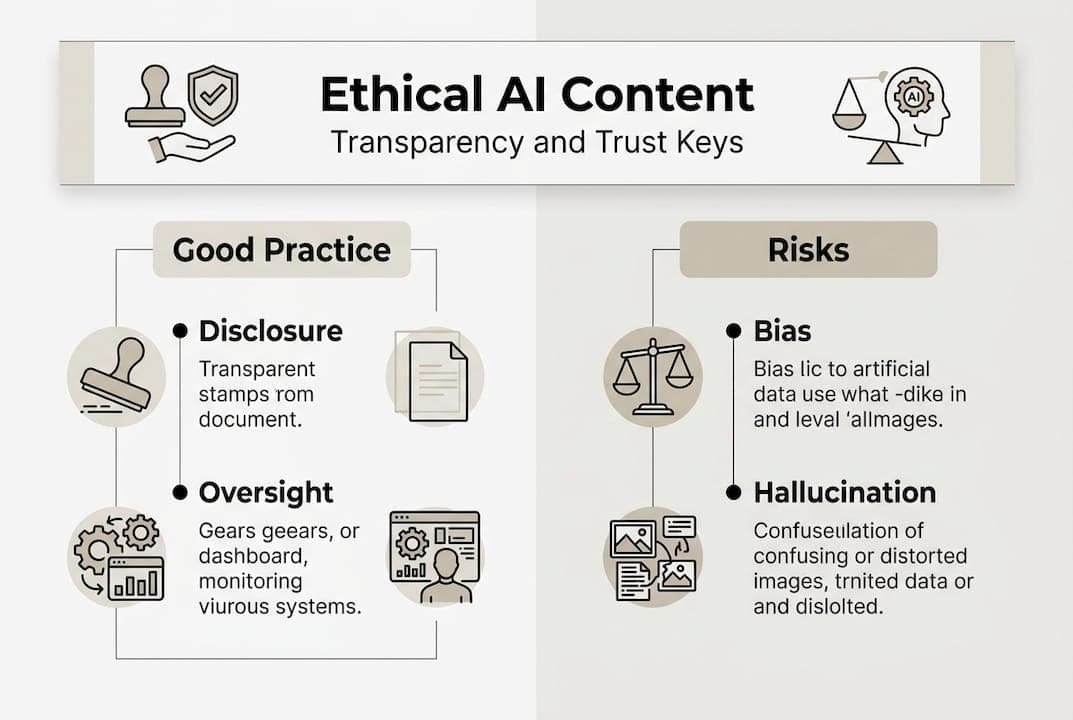
The IAB released the industry's first AI transparency framework in 2025, and it remains the clearest standard available. The core principle is risk-based disclosure: you don't need to label every AI-assisted sentence, but you do need to disclose AI involvement when there's a meaningful risk of misleading your audience about authorship, identity, or factual accuracy.
Here's a practical framework you can apply today:
| Content type | Transparent approach | Non-transparent approach |
|---|---|---|
| Blog post | "AI-assisted, human-edited" label in byline | No disclosure, implied human authorship |
| Email newsletter | Clear sender identity, human-reviewed copy | AI persona posing as a real person |
| Social media | Disclosed AI-generated imagery | Synthetic images without labeling |
| Product descriptions | Accurate, verified specs | AI-hallucinated features |
For deeper guidance on this, explore content authenticity best practices and the specific risks around undetectable AI content. Understanding AI publication ethics is also essential for teams navigating compliance requirements.
The stakes are clear: ethical leaders gain a measurable trust advantage over competitors who cut corners, while laggards face fines, platform penalties, and reputational damage that takes years to repair.
With frameworks in place, let's turn to real-world actions marketers and creators can implement right away.
Ethics in AI content isn't theoretical. It shows up in your daily workflow, your review process, and the standards your team holds each other to. Here's a step-by-step approach that works:
Pro Tip: Use AI for ideation and first drafts, but treat every AI output as a rough sketch, not a finished product. The human editorial layer is where your brand voice, accuracy, and ethical standards actually live. This applies especially to humanizing AI for newsletters and other high-trust formats.
For email specifically, the ethical bar is high because you're speaking directly to individuals. Review how AI impacts email marketing and how to maintain email authenticity when AI is part of your production stack.

Marketers who treat ethics as a competitive advantage rather than a compliance burden consistently outperform those who don't. Ethical laggards risk fines and reputation loss, while leaders build audiences that trust them enough to buy, share, and return.
Most guides give you a checklist and call it done. That's not how ethics works in practice.
Ethical digital marketing is a muscle. You build it by making the right call in small moments: when a deadline is tight and the AI draft is "good enough," when a client wants more volume than your review process can handle, when a competitor is clearly cutting corners and gaining traffic. Those are the moments that define your team's actual standards.
Advertisers who innovate for efficiency without resisting manipulative tactics eventually pay the price in trust erosion. The teams that win long-term are the ones who treat transparency and fact-checking as non-negotiable, not as optional extras.
The overlooked signal is culture. Does your team feel safe flagging an AI output that seems off? Is there a review process, or is speed the only metric that matters? The answers to those questions predict your ethical outcomes better than any policy document.
Building authenticity in AI marketing into your daily habits means reviewing AI outputs critically, celebrating catches (not just completions), and treating every published piece as a reflection of your brand's integrity. That mindset compounds over time into a genuine trust advantage that no competitor can replicate quickly.
If you're ready to make ethical marketing a seamless part of your workflow, Semihuman AI offers solutions that align directly with these best practices.
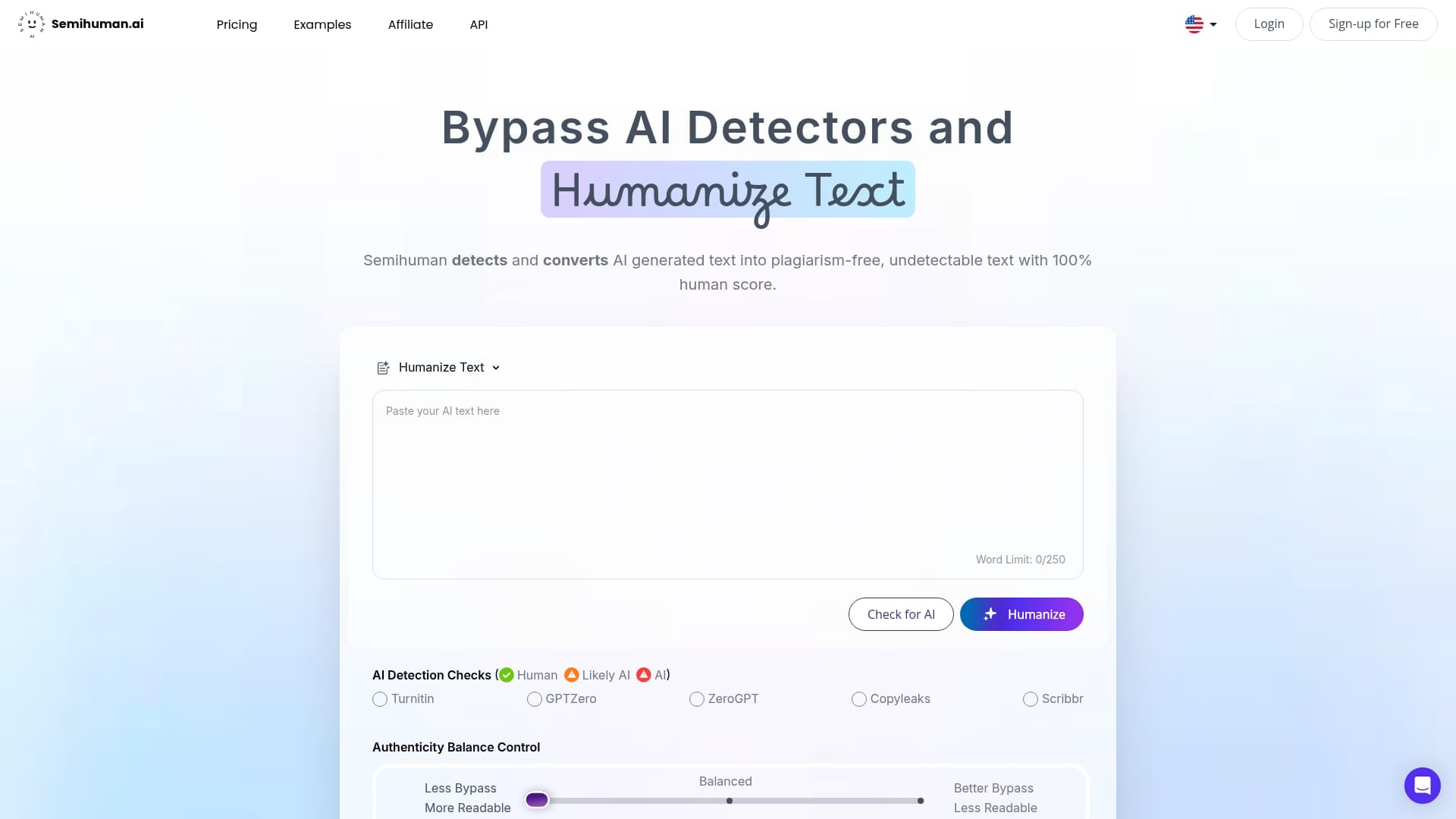
Semihuman AI is built for marketers and creators who want to use AI efficiently without sacrificing authenticity or compliance. Whether you need to refine AI drafts into genuinely human-sounding copy, optimize content for SEO without keyword stuffing, or ensure your output passes editorial review, the platform has you covered. Use the SEO text generator to create search-optimized content that reads naturally, the AI text paraphraser to restructure drafts for clarity and tone, or the AI proof writing tools to catch errors before they go live. Ethical content at scale starts here.
Ethical digital marketing with AI involves using automation and content generation that prioritizes authenticity, clear disclosure, and the avoidance of manipulative or misleading tactics. It means AI introduces efficiency but human oversight ensures trust is never compromised.
Use risk-based disclosure: clearly label AI involvement when content could mislead or when authenticity would be questioned, following the IAB transparency framework as your standard.
Risks include fact errors, bias, privacy loss, manipulative content, and reputational or regulatory fallout. Bias, hallucinations, and privacy risks are the most common edge cases that require active human oversight to manage.
Most consumers prefer human-created content. 79% of consumers say humans understand them better than AI, signaling clear skepticism toward AI-generated marketing messages that lack a human touch.

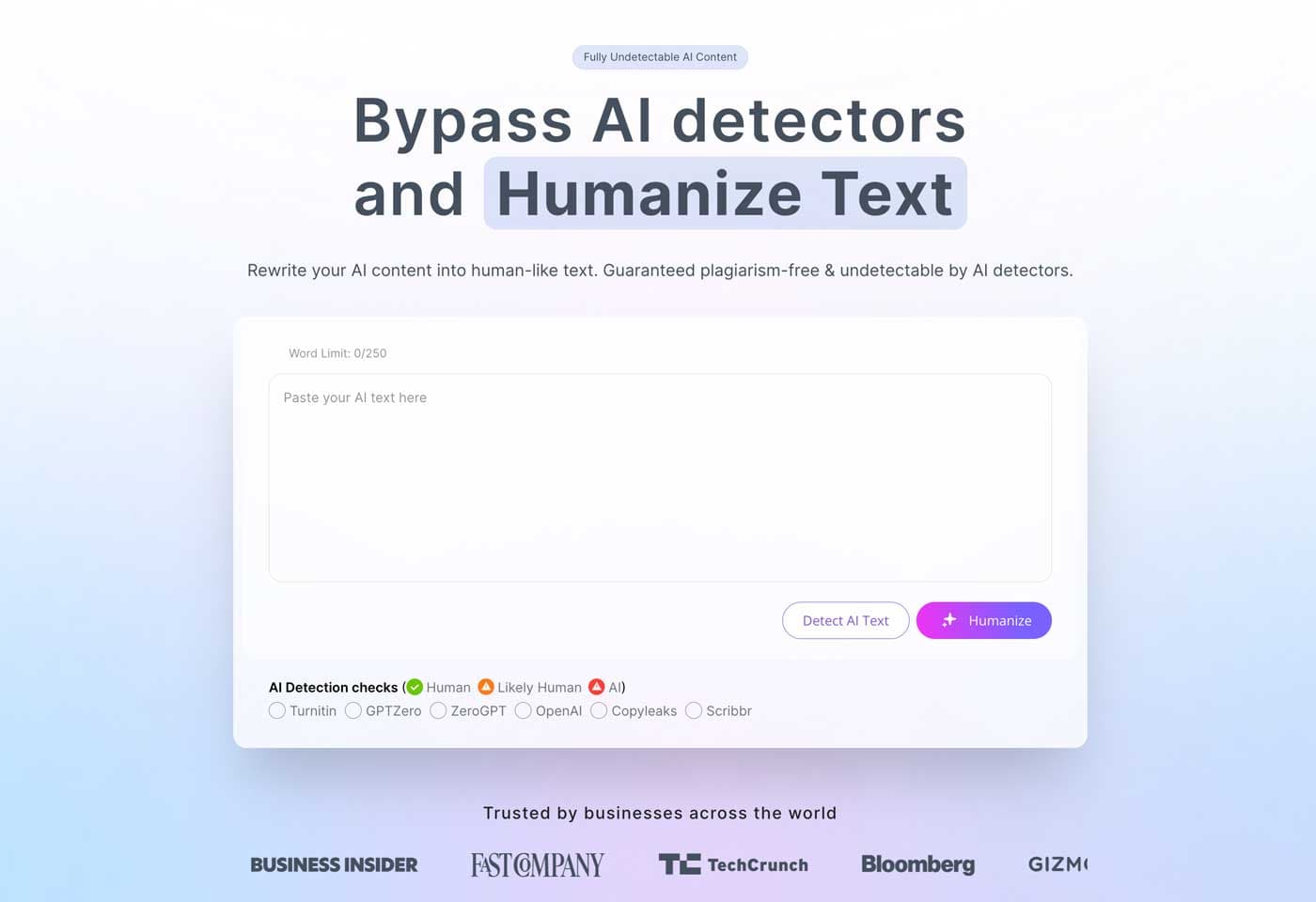
Start
Humanizing
for Free!
Humanize