
Loading...

TL;DR:
- Google's focus is on content quality, not AI generation, rewarding genuine expertise and true answers.
- Human oversight and E-E-A-T signals are crucial for AI content to rank and sustain rankings over time.
- Technical SEO fundamentals, including crawlability and structured data, are essential for AI-driven content visibility.
Content marketers are generating more AI-assisted content than ever before, but most are flying blind when it comes to what actually moves the needle in search. Google does not penalize AI-generated content as a category, but that doesn't mean all AI content ranks equally. The gap between AI content that climbs to page one and content that stagnates on page five comes down to a handful of specific, repeatable decisions made before, during, and after publication. This guide breaks them down into a concrete, actionable framework you can apply to every article you publish.
| Point | Details |
|---|---|
| AI content quality matters | Google rewards helpful, people-first content no matter how it is produced. |
| E-E-A-T is essential | Always demonstrate experience, expertise, authority, and trustworthiness in all AI articles. |
| Technical SEO cannot be skipped | Schema, crawlability, and speed are critical for AI content visibility. |
| Human oversight wins | Editorial review and unique human experience prevent rapid ranking drop-offs for AI domains. |
The biggest misconception circulating in content marketing right now is that Google has it out for AI-generated text. It doesn't. What Google targets is low-quality, manipulative, or scaled content spam, regardless of whether a human or a machine wrote it.
"Our focus is on the quality of content, not whether it was generated by AI or by a human. Content created primarily to game search rankings is the problem, not the tool used to create it." — Google Search Central
That distinction matters enormously for how you allocate your editorial resources. If you've been spending energy trying to "hide" the fact that AI helped write your content, you're solving the wrong problem. The actual signal Google rewards is people-first quality, meaning content written to genuinely serve a reader's needs, backed by real expertise.
Here's what separates valuable AI content from problematic AI content:
Running a proper AI website audit checklist before and after publishing helps surface the exact gaps that get AI content penalized. The most common AI content SEO mistakes aren't about being AI-generated at all. They're about being shallow, uncrawlable, or untrustworthy.
Google's quality framework, Experience, Expertise, Authoritativeness, and Trustworthiness (E-E-A-T), is the most important lens to apply when reviewing AI-generated content. The framework existed before AI content was widespread, and it remains the core of how human quality raters assess pages.
Each element requires something specific from your editorial process:
The key insight from Google's own guidance is that E-E-A-T applies regardless of how content is created. A perfectly human-first approach to content creation means the creation method is irrelevant. What matters is whether the output demonstrates these four signals clearly and consistently.
Pro Tip: Add a short "What we verified" note at the end of AI-assisted articles, listing the claims you fact-checked and the sources you confirmed. This micro-transparency signal reinforces trust with both readers and Google's quality raters.
For teams scaling output with AI, humanized SEO best practices offer a reliable framework to layer E-E-A-T signals systematically rather than case by case. Knowing how to humanize AI content effectively at the sentence level is just as important as the structural decisions you make before drafting.
Strong content signals can't compensate for technical SEO failures. If your AI-generated articles aren't crawlable, don't load fast, or lack structured data, they're invisible to Google regardless of how polished the writing is.

Here's a quick-reference table of the must-do technical steps for every AI-generated article:
| Technical check | Why it matters | Priority |
|---|---|---|
| robots.txt configuration | Ensures AI bots and Googlebot can crawl your pages | Critical |
| Core Web Vitals (LCP, CLS, FID) | Directly impacts rankings and user experience | Critical |
| XML sitemap submission | Speeds up indexing for new AI-published content | High |
| Schema markup (Article, FAQ, HowTo) | Enables rich results and improves click-through rate | High |
| Canonical tags | Prevents duplicate content issues across AI-scaled output | High |
| Internal linking structure | Distributes authority and helps Google understand content hierarchy | Medium |
| Mobile optimization | Google uses mobile-first indexing for all content | Critical |
The technical SEO checklist for AI-heavy sites has one extra layer that traditional blogs don't always consider: crawl budget. If you're publishing dozens of AI-generated articles per week, you need to prioritize which pages get crawled first and how quickly new content gets indexed. Poorly configured technical AI website audit setups can mean your best content sits unindexed for weeks.
Here's the numbered workflow to get technical SEO right for AI content:
Pro Tip: Use data-driven content optimization reports from Google Search Console's Performance tab to identify which AI articles are getting impressions but low clicks. That's usually a title or meta description fix, not a content overhaul.
Staying on top of digital marketing SEO tips as algorithm updates roll out is essential when you're running an AI-heavy content operation. A single core update can shift rankings dramatically for sites that haven't maintained technical hygiene alongside content quality.
Theory is useful. Real data is better. A widely cited experiment tested 2,000 AI-generated articles across 20 brand-new domains to measure exactly how Google treats pure AI content over time.
The results were striking. At launch, 71% of articles indexed within the first few weeks. That's actually a strong indexing rate, and it misled some early observers into thinking AI-only content was performing well. Then the six-month mark arrived.
By month six, only 3% of those articles ranked in the top 100 results.
That collapse wasn't caused by a penalty for using AI. It was caused by a complete absence of E-E-A-T signals. The domains had no authority, no real author profiles, no backlinks from credible sources, and no human editorial layer. Google's systems, over time, simply identified the content as low-value and deprioritized it.
Here's how the performance breakdown compared across content approaches:
| Metric | Pure AI content | Human + AI oversight |
|---|---|---|
| Initial indexing rate | 71% | 68% |
| Top 100 ranking at 6 months | 3% | 41% |
| Average backlinks earned | Near zero | Moderate to strong |
| E-E-A-T signals present | Absent | Systematic |
| Ranking persistence at 12 months | Near zero | Stable or growing |
The AI content E-E-A-T case for human oversight isn't theoretical. The data shows unambiguously that automation without authority always decays in search. The content that persisted and grew was the content where humans contributed real experience, verified claims, and built genuine topical authority over time.
Pull this checklist into your content operations workflow. Run every AI-generated article through it before clicking publish.
Pre-draft:
During drafting: 4. Ensure E-E-A-T criteria are baked into the structure from the first draft, not added as an afterthought. 5. Write or edit the introduction and conclusion yourself. These are the sections Google's systems and human readers weigh most heavily. 6. Integrate the target keyword naturally in the H1, first 100 words, at least two H2s, and the meta description.
Pre-publish review: 7. Run the article through a technical SEO checklist to confirm schema, canonical tags, and internal links are in place. 8. Fact-check every statistic and verify every external link is active and authoritative. 9. Add or update the author bio with relevant credentials and a link to a credible professional profile. 10. Read the article aloud. If a sentence sounds robotic, rewrite it. Natural cadence matters for time-on-page, and time-on-page signals quality.
Pro Tip: Reserve 20% of your editing time for adding atypical, human-centric signals: a specific failure you learned from, a counterintuitive finding from your own testing, or a short quote from a real person your team interviewed. These are the signals that AI content optimization tips consistently identify as differentiators for sustained rankings.
Here's the uncomfortable truth that most AI content vendors won't tell you: full automation is a dead end in search. Not because Google penalizes it on day one, but because the content ecosystem naturally filters it out over time.
We've seen this pattern consistently. Content teams that treat AI as a replacement for human judgment see initial volume gains followed by slow, grinding ranking losses. Content teams that treat AI as an acceleration layer, handling structure, research summaries, and first drafts, while humans inject authority, experience, and genuine perspective, build compounding search assets.
The people-first standard Google applies isn't just a ranking signal. It's a description of what readers actually engage with and share. A fully automated article might match a keyword perfectly. But it won't make a reader feel understood, surprised, or smarter. Those emotional responses drive the behavioral signals, shares, return visits, long dwell time, that make rankings stick.
"The content that ranks next year won't be the content generated fastest. It'll be the content trusted most."
The most honest framing is this: AI content strategies that work long-term use automation to scale what humans are already doing well, not to replace the human contribution entirely. Your subject matter experts have insights that no language model can replicate. Your brand has experiences that no training dataset includes. Those are your actual competitive advantages, and AI should amplify them, not replace them.
Applying this checklist manually across dozens of articles is exactly the kind of workflow where the right tools make a measurable difference.
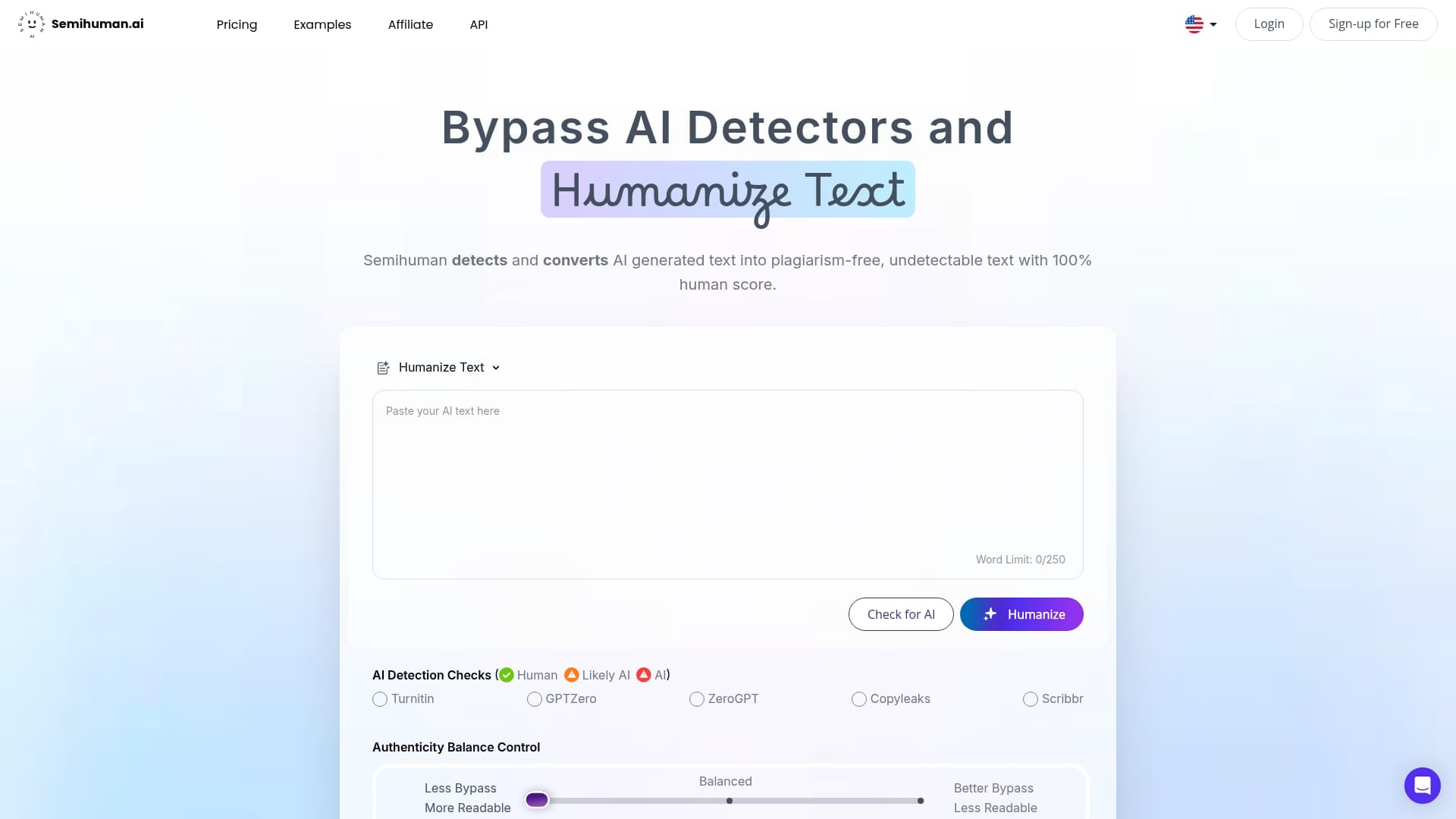
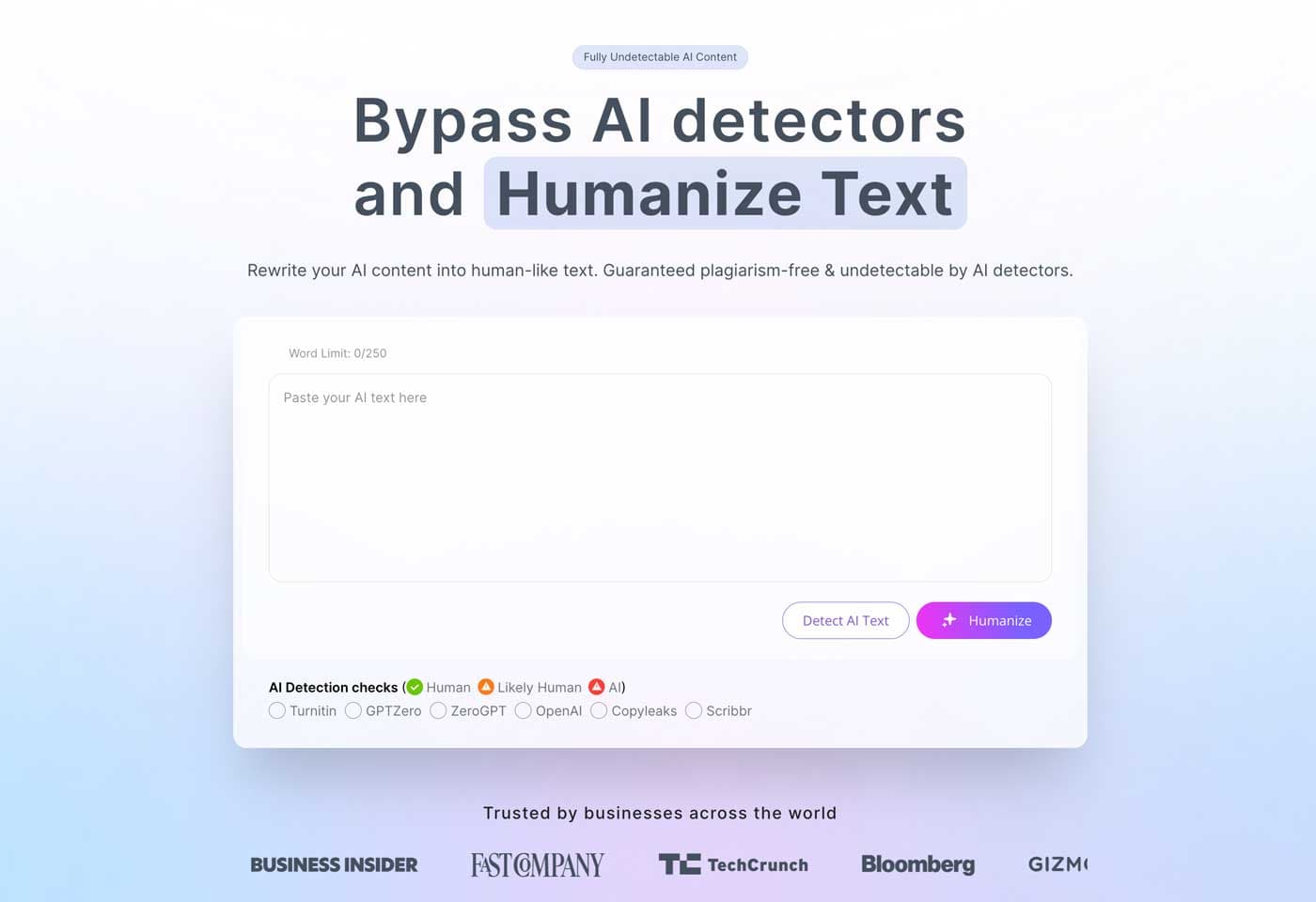
Semihuman.ai is built specifically for content marketers who need AI-generated text that holds up to editorial scrutiny and search engine evaluation. The platform's SEO text generator produces structured, keyword-integrated drafts that already account for the signals this checklist covers. When your content also needs to pass AI detection tools without sacrificing quality or authenticity, Semihuman's ability to bypass AI detectors gives your team the confidence to publish at scale. Ready to run this checklist at speed without cutting corners on quality? Semihuman is the operational layer that makes it possible.
No, Google does not penalize content solely for being AI-generated. Penalties arise specifically from low-quality, unoriginal, or scaled spam content, whatever its origin.
AI-only content published without E-E-A-T elements or domain authority tends to drop to 3% visibility in top 100 results within six months, even if it indexed well at launch.
Human review is essential. Google's people-first standard requires demonstrated experience, expertise, and trustworthiness, all of which depend on human editorial oversight to implement consistently.
Prioritize crawlability, fast Core Web Vitals, accurate robots.txt configuration, and schema markup implementation across Article, FAQ, and HowTo formats for every AI-generated page you publish.


Start
Humanizing
for Free!
Humanize