
Loading...

Trying to make your AI-generated content sound truly human is a challenge you can't ignore. When your writing feels generic or lacks a fresh perspective, readers and search engines notice, and your credibility takes a hit. These days, originality is more than just a buzzword—it's the foundation for credibility and long-term trust in any field.
The right strategies will help you create content that stands out, earns respect, and feels authentic. By following proven steps, you can combine the power of AI with your own insights to produce writing that attracts attention and leaves a lasting impression. Get ready to discover practical techniques that bring your unique voice to the forefront and make your content unmistakably your own.
| Takeaway | Explanation |
|---|---|
| 1. Prioritize Content Originality | Original content builds trust and ranks better on search engines, leading to higher engagement and conversions. |
| 2. Infuse Your Authentic Voice | An authentic voice personalizes content, making it relatable and memorable, particularly when using AI tools. |
| 3. Blend AI and Human Insight | Combining AI output with your expertise adds depth and makes content valuable, enhancing credibility. |
| 4. Use Varied Sentence Structures | Varying sentence structures maintains reader engagement and prevents content from feeling robotic. |
| 5. Cite Credible Sources | Citing reputable sources enhances the authority of your content and prevents plagiarism issues. |
Content originality is the foundation of everything you build as a marketer or SEO specialist. When your content lacks originality, it fails to stand out, loses credibility with your audience, and performs poorly in search rankings. Search engines reward unique, valuable content that provides genuine insights rather than recycled information. Your readers want to encounter fresh perspectives and actionable information they cannot find elsewhere, and original content delivers exactly that.
Originality matters for several critical reasons. First, it establishes trust and authority. When you produce work that demonstrates original thinking and genuine research, your audience recognizes the effort and values your perspective. Second, original content performs better in search algorithms because Google and other engines prioritize content that adds value to the web rather than duplicating existing material. Third, originality in research is foundational for credibility, which directly translates to your brand reputation and long-term success. For AI-generated content creators specifically, ensuring originality becomes even more critical since audiences increasingly scrutinize whether content feels authentically human-written. If your AI-generated material reads like every other AI output, it will neither engage readers nor rank well.
The practical impact shows up immediately in your metrics. Content that originates from genuine research, unique data analysis, or fresh angles generates higher engagement rates, longer time on page, and better conversion performance. When you prioritize originality, you're not just following best practices, you're building sustainable competitive advantage. Your audience learns to associate your brand with quality thinking rather than regurgitated information. This distinction becomes increasingly valuable as AI-generated content floods the internet and authentic, original voices command premium attention and trust.
Pro tip: Audit your existing content for originality by comparing key sections against top-ranking competitors in your niche, then identify gaps where you can add genuinely unique data, case studies, or perspectives that others haven't covered.
Your authentic voice is what separates compelling content from generic material that blends into the background. When you infuse your writing with genuine personality and perspective, readers connect with your ideas on a human level, which becomes especially important when your content originates from AI assistance. An authentic voice means your reader recognizes you through your word choices, pacing, and the unique angle you bring to familiar topics. This personalization transforms standard information into something memorable and trustworthy.
Building an authentic voice starts with understanding that authentic voice demonstrates originality and research stance. Your personal interpretation and perspective matter more than simply regurgitating facts. When you use AI tools to generate content, treat them as writing assistants rather than replacements for your own thinking. The most effective approach involves reviewing what AI produces, then rewriting sections in your own words, adding your specific examples, and inserting your distinct viewpoint. This process, sometimes called metacognitive engagement, ensures your voice remains front and center even when AI helps with initial drafting or research organization.
In practical terms, develop your voice by identifying your speaking style offline. Do you tend toward humor? Are you direct and straightforward? Do you use lots of analogies or prefer concrete examples? These natural patterns should flow into your written work. Notice how you explain concepts to colleagues or clients in conversation, then mirror that tone in your content. When working with AI generated material, pay special attention to sections that feel stiff or overly formal. Replace those passages with your preferred explanatory style. Your readers come to you because they value your perspective, not because they want perfectly polished corporate speak. The most human-like content always includes your fingerprints throughout.
Pro tip: Read your AI-generated content aloud before publishing, marking any sections that don't sound like the way you naturally speak, then rewrite those passages until they feel authentically yours.
AI can generate frameworks and initial drafts quickly, but it cannot replace your lived experience, professional knowledge, or industry expertise. The sweet spot for creating original, human-like content happens when you combine what AI produces with your real-world insights and critical judgment. This blend transforms generic AI output into something genuinely valuable. Your role shifts from pure writer to curator and enhancer, taking AI suggestions and enriching them with context, examples, and perspectives only you possess.
Why does this matter so much? Because balancing AI content with human expertise maintains research quality. When you rely solely on AI, you get safe, competent, but undifferentiated content. When you integrate your real-world knowledge, you add layers that make your writing irreplaceable. Think about your specific audience. You understand their pain points because you work with them daily. You know which solutions actually work in practice versus which ones sound good in theory. You have case studies, client testimonials, and failed experiments in your memory. AI has none of this. By anchoring AI-generated content to your actual experience, you create material that feels authentic because it reflects genuine knowledge.
The practical application is straightforward. Start with AI to generate a rough outline or initial draft. Then, critically evaluate every section. Where can you add a real example from your work? Which claims need validation based on your experience? What nuance is missing because the AI lacks context? Replace generic statements with specific details from your industry. If AI writes "companies see improved results after implementing this strategy," replace it with "When our retail clients implemented this strategy, their average transaction value increased by 23 percent within six weeks." This specificity combined with AI assistance produces more authentic texts. Your readers immediately sense the difference between borrowed wisdom and earned wisdom.
Pro tip: Keep a running document of compelling real-world examples, client stories, and data points from your professional work, then systematically layer these into AI-generated drafts to create content that no one else can replicate.
One telltale sign of AI-generated content is the repetitive rhythm of sentence construction. AI tends to favor similar patterns, which makes text feel robotic and formulaic. Humans naturally vary their sentence structures depending on the idea being conveyed and the emotional weight they want to add. By deliberately mixing short, punchy sentences with longer, more complex ones, you create a reading experience that feels authentically human and maintains reader engagement throughout.
Sentence variety matters because varied sentence structures improve readability and engagement. When every sentence follows the same construction pattern, readers experience cognitive fatigue. Their brains go into autopilot, and they stop absorbing your message. Conversely, when you shift between short declarative statements, questions, compound sentences, and complex structures, you activate your reader's attention. Your brain has to adapt to each new rhythm, which keeps you engaged. This variation also helps you communicate ideas more precisely. Sometimes a short sentence lands with impact. Other times you need a longer structure to show how multiple ideas connect.
Applying this technique means becoming aware of your sentence patterns. After you generate content with AI, read it aloud and listen for monotony. Do most sentences start the same way? Are they roughly the same length? If you hear a droning rhythm, deliberately restructure sections. Break a long sentence into two shorter ones. Combine three simple sentences into one complex statement. Add a question that invites reader reflection. Here's a practical example. Instead of "Content marketers should focus on originality. Originality builds trust. Trust increases engagement," try this "What separates memorable content from the forgettable stuff? Originality. When your audience encounters genuinely original insights, trust builds naturally, and engagement follows." Same core message, but the varied structure holds attention better.
Your AI-generated drafts often contain clues about where structure varies too little. Paragraphs that feel heavy or dense usually signal repetitive sentence patterns. Sections that drag are often victims of similar sentence lengths stacked consecutively. The fix requires reading with a critical ear, then consciously rewriting problem areas. This human edit layer is exactly what transforms AI output into content that reads like it came from a real person with actual perspective.
Pro tip: After AI generates your first draft, count the words in each sentence and map out sentence types, then deliberately rewrite sections where you see three or more consecutive sentences of similar length or starting structure.
Citations are more than academic formalities. They are proof of your diligence and a signal to your reader that you have done your homework. When you cite credible sources throughout your content, you immediately establish authority and trustworthiness. For content marketers working with AI-generated material, strategic citations become even more valuable because they demonstrate that you have vetted the information and positioned it within a broader context of credible knowledge. This practice transforms generic AI output into well-researched, authoritative content that readers respect.
Citing credible sources establishes trustworthiness and research depth. When you reference peer-reviewed studies, industry reports, or recognized experts, you are essentially saying to your audience, "This claim isn't just my opinion. It's backed by real evidence." This anchors your argument in reality and prevents your content from floating in a vacuum of speculation. Additionally, proper citations help you avoid plagiarism concerns, which matters increasingly as organizations become more vigilant about content authenticity. The irony is that thorough citation practices actually enhance your credibility when using AI tools because you are clearly doing the intellectual heavy lifting of research and verification. You are not just publishing what an algorithm generated. You are curating, validating, and presenting information responsibly.
Practically speaking, the approach is straightforward. After AI generates your draft, identify claims that need supporting evidence. Go find credible sources for those claims. This might be academic research, industry data, expert commentary, or case studies from established organizations. Then weave those citations naturally into your content. Don't just drop citations randomly. Integrate them where they strengthen your argument. For example, instead of stating "Companies see improved efficiency with this method," write "According to a study published by Industry Research Institute in 2024, companies implementing this method reported a 34 percent improvement in operational efficiency." The specific statistic plus the credible source transforms a vague claim into a concrete, believable assertion. This layering of research and citation over AI-generated frameworks creates content that reads as thoroughly investigated and professionally executed.
Pro tip: Create a source library before writing by gathering three to five credible references per topic, then strategically integrate those sources into AI-generated drafts to strengthen claims and add depth that appears naturally researched.
Keywords are essential for search engine optimization, but they can also betray AI-generated content if used poorly. When keywords feel shoehorned into sentences or repeated awkwardly, readers immediately sense something is off. The content reads stiffly, like it was written by someone checking boxes rather than communicating naturally. Finding the balance between strategic keyword placement and natural language flow separates content that ranks well from content that looks like AI wrote it.
Balancing keywords naturally maintains readability and organic flow. This matters because search engines increasingly reward user experience metrics like time on page and bounce rate, which depend heavily on whether readers find your content engaging. When your keywords feel forced, readers leave quickly, signaling to Google that your content isn't valuable. Conversely, when keywords appear where they logically belong within naturally flowing sentences, readers stay engaged and search algorithms register that engagement as a quality signal. The best approach treats keywords as ideas rather than strings to be inserted. Instead of fighting to fit a keyword phrase into every paragraph, you ask yourself where that concept would naturally appear in a conversation about your topic.
Practically, this means editing AI-generated content with keyword awareness. Run your draft through your outline and identify where key terms should logically appear based on the narrative flow, not based on hitting a target keyword density. If your primary keyword is "content originality strategies," it should appear in your introduction and conclusion naturally because that is the core topic you are discussing. But forcing it into every paragraph creates awkward phrasing like "When using content originality strategies for your content originality challenges, content originality strategies matter." Instead, write naturally about the topic and let the keyword emerge organically. You might phrase it as "What makes content truly original?" or "Building more original content requires understanding your audience." The concept is there without the mechanical repetition. After drafting, search for your target keyword and evaluate each instance. Does it read naturally? If not, rewrite the sentence to incorporate the concept without the exact phrase, or move the keyword to a location where it flows better. This human editing layer transforms AI drafts into content that serves both search engines and readers.
Pro tip: Create a keyword map listing your primary and secondary terms, then after AI generates your draft, manually place keywords only where they fit naturally within your existing sentences rather than rewriting sentences around keywords.
Before publishing any content you have developed with AI assistance, run it through detection tools as your final quality checkpoint. AI detection tools analyze text patterns, word choice frequency, and structural characteristics to identify whether content likely originated from an AI system. By testing your own content before it goes live, you catch sections that still read too mechanically and need additional human editing. This proactive approach protects your reputation and ensures your audience receives genuinely original, human-like material.
Why use detection tools yourself? Because AI detection tools identify AI-generated text and verify content authenticity. If you publish content without checking, your readers or institutions might run it through detection systems and find it flagged as AI-generated. That discovery damages credibility immediately. By running detection checks yourself first, you can identify problem areas and revise them until the content reads authentically human. Think of it as quality assurance before distribution. Additionally, detection tools serve as a final checkpoint for academic integrity. They help you verify that your published work meets originality standards and doesn't appear suspiciously AI-like. This is especially important if your content will be submitted to institutions, clients, or platforms that scan for AI usage.
The practical workflow is simple. After you finish editing and personalizing your AI-generated draft, paste it into one or more detection tools. Reputable options include Turnitin, GPTZero, and Copyleaks. Review the results. Most tools highlight sections they flag as potentially AI-generated. Read those flagged sections carefully. Do they still sound stiff or formulaic? If yes, rewrite them. Add more specific examples, inject personal anecdotes, or restructure sentences to sound more conversational. Then run the revised version through detection again. Continue this cycle until your content scores well on human-likeness metrics. This iterative process between your editing and detection tool feedback creates increasingly authentic content. You will notice that sections with concrete examples, natural sentence variation, and personal voice consistently score better than generic, repetitive passages. Let the detection results guide your final revisions.
Pro tip: Run your content through at least two different detection tools to get multiple perspectives on authenticity, as different algorithms flag different patterns, and cross-checking helps you identify which sections genuinely need revision.
Below is a comprehensive table summarizing the main points and strategies discussed throughout the article regarding creating original, personalized, and authentic content utilizing AI technologies and human insights.
| Topic | Description | Key Takeaways |
|---|---|---|
| Content Originality | Creating unique content that stands out and builds credibility. | Ensures trust, improves SEO rankings, and commands audience trust. |
| Personalizing Writing | Infusing personal voice into AI-generated drafts. | Enhances reader connection and prevents generic impressions. |
| Integrating AI with Expertise | Combining AI outputs with real-world knowledge for authentic content. | Produces insightful material reflecting professional-depth. |
| Sentence Structure | Varied sentence patterns for natural readability. | Keeps engagement high and prevents a robotic feel. |
| Source Credibility | Providing reliable citations to substantiate content. | Establishes authority and avoids plagiarism concerns. |
| Keyword Strategy | Using keywords organically in AI-generated texts. | Optimizes SEO while maintaining natural language flow. |
| Leveraging AI Detection Tools | Testing content for AI-like patterns before publishing. | Assures quality and authentic presentation. |
Struggling to make AI-generated content feel genuinely original and engaging? The article "7 Essential Content Originality Tips for Human-Like Text" highlights critical challenges such as avoiding robotic phrasing, balancing keyword use naturally, and blending AI insights with real-world expertise to build trust and boost SEO. If you want to overcome these pain points and ensure your content carries a unique voice that resonates, it is time to leverage the power of smart technology designed specifically for this purpose.
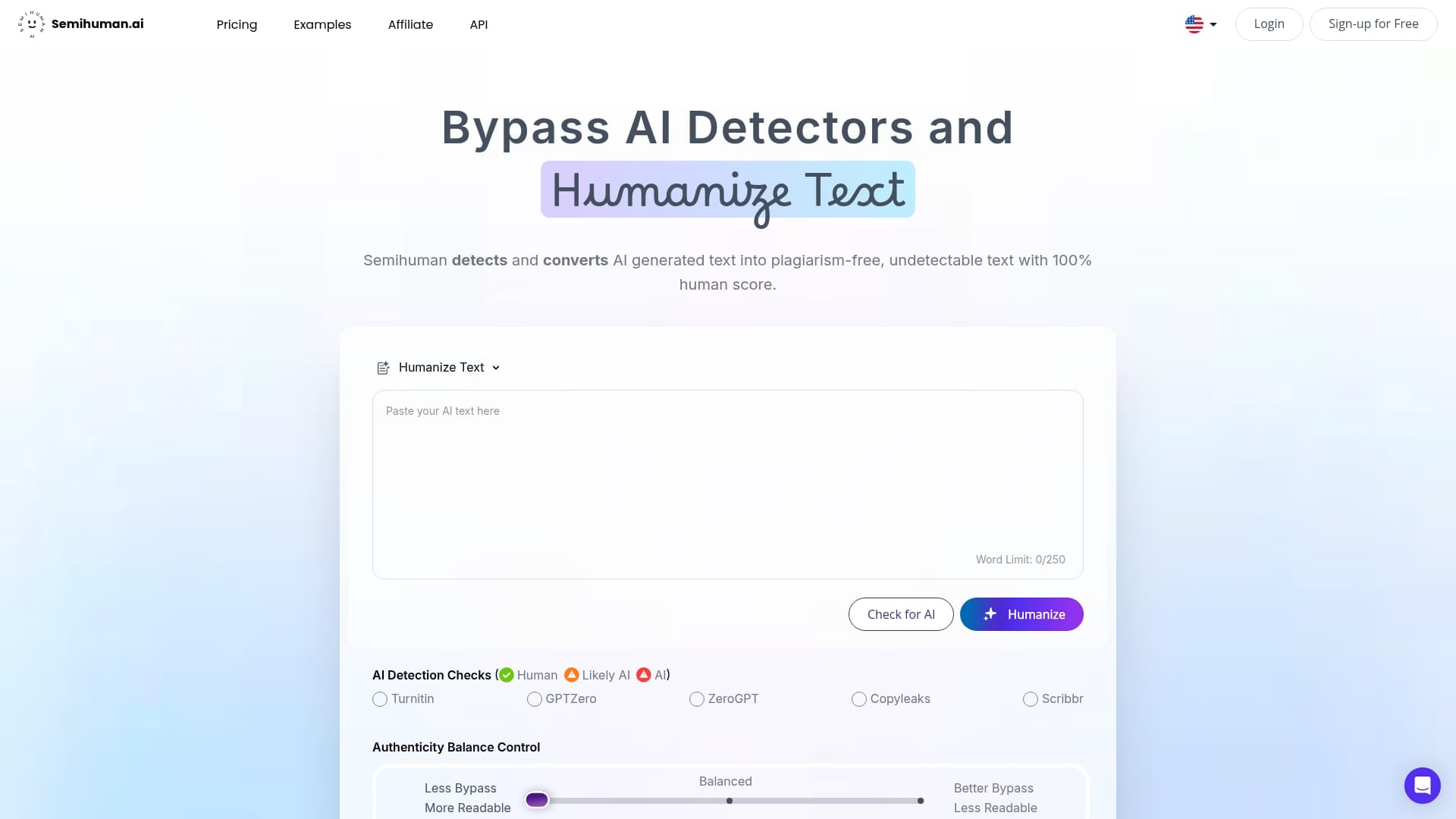
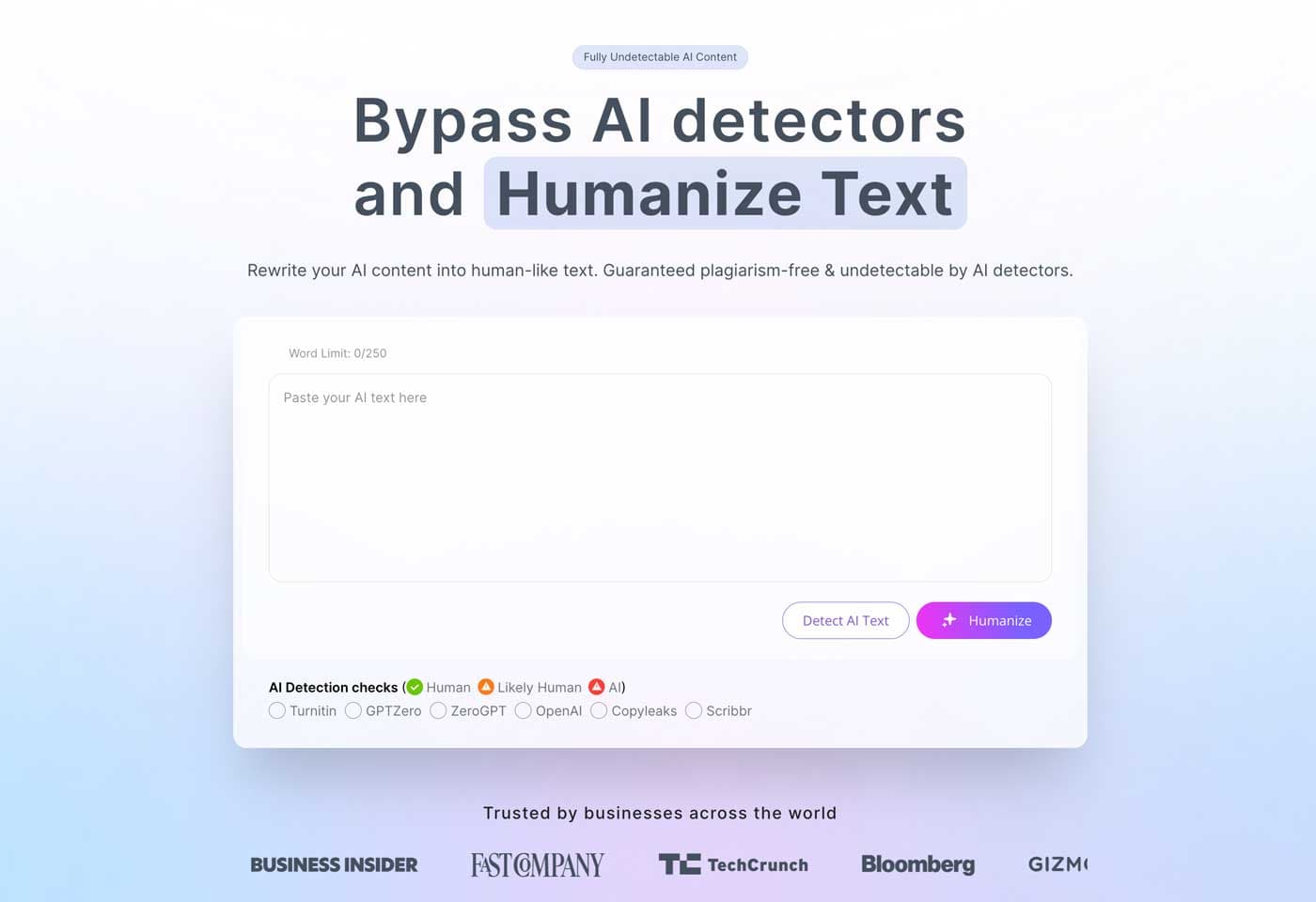
Discover how Semihuman.ai transforms ordinary AI outputs into naturally flowing, humanized text that passes advanced AI detection systems like Turnitin and GPTZero with ease. With features including text restructuring, authentic keyword integration, and seamless detection evasion, Semihuman.ai empowers creators, marketers, and students to produce compelling, trustworthy content that stands out in competitive digital landscapes. Don't let generic AI content hold you back. Visit Semihuman.ai now and unlock the full potential of your writing by combining the best of AI and human originality.
Start your journey toward authentic, high-performing content today at Semihuman.ai
Content originality establishes trust and authority, enhances search engine rankings, and improves audience engagement. Focus on creating unique content that demonstrates genuine research and offers fresh perspectives to build credibility.
To audit your existing content, compare key sections against top-ranking competitors within your niche. Identify areas where you can integrate unique data, case studies, or insights that others haven't covered, and update those sections to strengthen originality.
Start by understanding your offline speaking style and incorporate it into your writing. Review AI-generated content and rewrite sections that sound too formal or stiff, ensuring your personal tone comes through authentically.
Begin with AI to generate a framework, then enrich the content by adding specific examples and insights from your professional experience. This combination will create material that is both valuable and authentic, providing a unique viewpoint that AI alone cannot offer.
To ensure natural keyword usage, treat keywords as ideas rather than phrases to insert. Edit your draft after generating it, placing keywords where they logically fit within the context of your content to avoid awkward phrasing and improve readability.
Run your completed content through multiple AI detection tools to identify sections that may still read as AI-generated. Revise flagged areas to ensure they feel more conversational and human-like, and repeat this process until the content scores well for authenticity.


Start
Humanizing
for Free!
Humanize