
Loading...

TL;DR:
- A recent Stanford study reveals that most students struggle to distinguish AI-generated content from human writing and often accept AI hallucinations as facts. This highlights the urgent need to improve digital literacy skills, especially in evaluating content authenticity and understanding AI's influence on information. Building critical oversight frameworks like SIFT and promoting continuous vigilance are essential for maintaining trust and credibility in AI-augmented content creation.
A 2025 Stanford study found that 72% of students aged 10 to 18 could not distinguish AI-generated text from human-written content, and 56% accepted AI-hallucinated facts as true. Those numbers should stop every content creator, marketer, and educator cold. We are producing more content than ever before, yet the skills required to critically evaluate that content are lagging dangerously behind. This guide gives you evidence-backed, practical strategies to sharpen your digital literacy, protect the authenticity of your content, and build genuine audience trust in an environment where AI is everywhere.
| Point | Details |
|---|---|
| Critical thinking first | Digital literacy for content creators means evaluating authenticity, not just mastering tools. |
| Practical frameworks | Methods like SIFT help you and your audience identify AI-generated or biased information. |
| Recognize new challenges | AI detectors and high digital literacy have real limitations—ongoing skepticism is critical. |
| Apply blended approaches | Use both AI technology and human oversight for authentic, effective content. |
Digital literacy used to mean knowing how to send an email or navigate a website. That definition is now dangerously outdated. Today, digital literacy means understanding how digital tools, including AI content generators, algorithmic feeds, and automated publishing platforms, actively shape the information you produce and consume. It means knowing not just how to use a tool, but what that tool is quietly doing to the ideas you share and the trust your audience places in you.
"Digital literacy is no longer a supplementary skill. It is the foundation of credible communication in any field that touches the internet."
UNESCO promotes Media and Information Literacy (MIL) as essential for critical engagement with AI-generated content, addressing misinformation, and building trust in digital ecosystems. The reasoning is straightforward: when audiences cannot tell authentic human insight from machine-generated filler, the value of all content drops. Your credibility takes the hit, not just bad actors.
The professional stakes are just as real. The World Economic Forum reports that technology literacy is a core skill requirement for 51% of organizations in 2025, rising sharply to 68% by 2030, with demand for AI and big data skills increasing faster than almost any other competency. If you are creating, managing, or teaching content without a working command of AI literacy, you are already behind the curve that hiring managers and clients are tracking.
Here is what the lack of strong digital literacy actually costs you in practice:
The good news: digital literacy is a learnable, practicable skill set. It just requires deliberate effort and the right frameworks.
Now that we understand its importance, let's zoom out to see how digital literacy education is approached around the globe. The picture is uneven, and that unevenness matters for anyone who publishes to a global or multicultural audience.
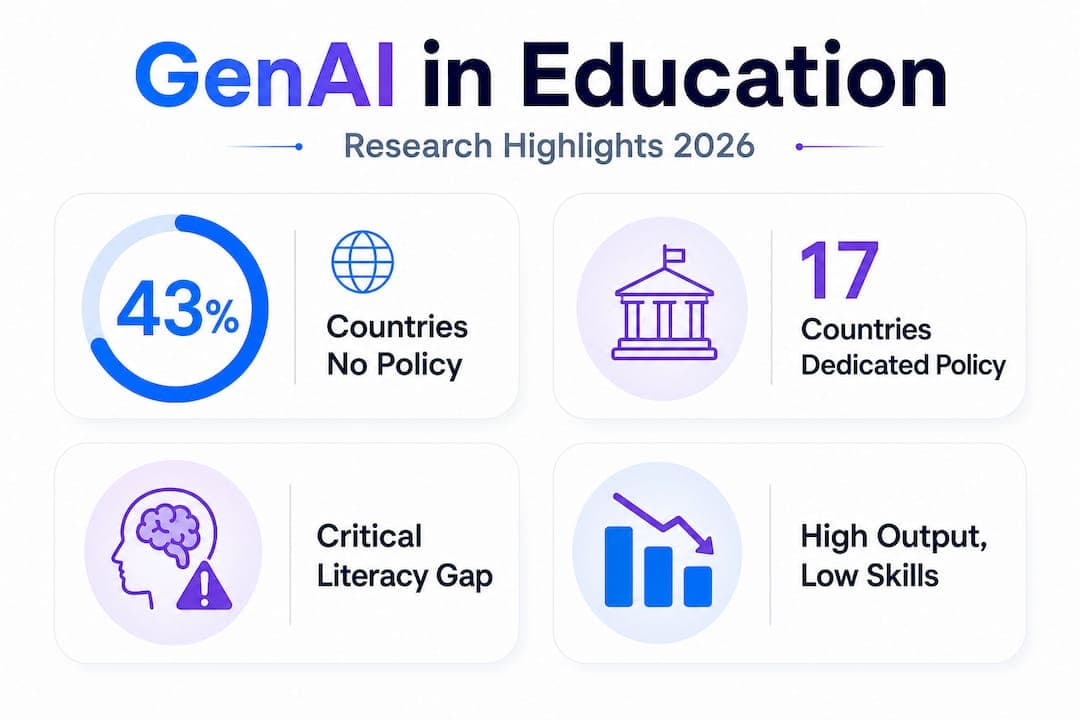
According to a UNESCO Issue Brief on global MIL gaps, only 17 countries have dedicated MIL policies. While 43% of countries incorporate MIL into formal education in some form, 29% limit their approach to technical skills only, entirely missing the critical thinking dimension that makes literacy meaningful in an AI environment.
That gap between technical training and genuine critical literacy is where most content professionals get tripped up. Knowing how to use a content management system is not the same as knowing how to evaluate whether the content you just published is trustworthy or even accurate.
| Region | MIL policy status | Focus area | Key gap |
|---|---|---|---|
| Western Europe | Strong national policies | Critical thinking + tech | Implementation consistency |
| North America | Fragmented by state/province | Tech-heavy curricula | Lack of AI-specific MIL |
| Sub-Saharan Africa | Emerging frameworks | Basic digital access | Infrastructure + training |
| Southeast Asia | Growing, uneven | Technical skills | Critical evaluation skills |
| Latin America | Partial integration | Civic media literacy | AI content awareness |
The table above illustrates that even in regions with strong policy frameworks, the application of those policies varies enormously at the classroom or organizational level. For content creators and marketers, this means you cannot assume your audience, your team members, or even your editors share a baseline level of critical digital literacy. You have to build it intentionally.
Pro Tip: Do not confuse technical proficiency with true digital literacy. Someone who edits videos, manages ad accounts, or codes a website may still lack the critical evaluation skills to recognize AI-generated bias or fabricated sourcing. Skills-based training and critical thinking training need to happen together, not separately.
Given the uneven global landscape, what practical approaches should you use for boosting your own and your audiences' digital literacy? The most effective methods combine structured frameworks with hands-on critical practice, and they treat AI as a partner that still requires human oversight rather than an oracle you trust blindly.
The SIFT framework adapted for AI content

The SIFT method, which stands for Stop, Investigate the source, Find better coverage, and Trace claims to their origin, was built for media literacy and translates powerfully into AI content evaluation. Edutopia recommends teaching SIFT specifically adapted for AI, including evaluating AI outputs for bias and authenticity and using AI as a teaching partner with active human oversight rather than passive acceptance.
Here is how to apply it in your daily content workflow:
What the research says about GenAI in education
The OECD Digital Education Outlook 2026 makes a finding that every educator and content trainer should know: general-purpose generative AI enhances short-term task performance but does not improve actual learning without strong pedagogical guidance. Educational GenAI applications designed with structured oversight, by contrast, show sustained learning improvements. In plain terms: giving someone an AI tool without teaching them to critically use it makes them faster but not smarter.
| Approach | Short-term output | Long-term skill development | Best for |
|---|---|---|---|
| AI tool, no guidance | High | Low | Quick drafts only |
| SIFT + AI oversight | Medium | High | Teams and classrooms |
| Structured educational GenAI | High | High | Formal learning environments |
| Traditional literacy only | Low | Medium | Baseline, not sufficient |
Pro Tip: Frameworks like SIFT should be adapted to fit your specific audience, not adopted wholesale. A newsroom, a marketing agency, and a high school classroom all have different blind spots. Build in verification steps that match the actual risks your team faces.
Even with strong methods and global best practices, the new age of AI presents nuanced risks to digital literacy. Here is how to navigate them without falling into false confidence.

AI detectors are not neutral tools. The OECD's research highlights that AI detectors show bias toward certain languages and creative writing formats. A non-native English writer producing dense, structured text can be flagged as AI-generated. A highly stylized creative piece may evade detection entirely. Relying on a single detector to gatekeep content authenticity is not a strategy.
Overreliance on GenAI risks metacognition loss. Metacognition, the ability to think about and evaluate your own thinking, is precisely the skill AI cannot replicate but can quietly atrophy in users who outsource too much of their reasoning. If your team uses AI to draft, summarize, outline, and edit without regular critical practice, their independent analytical ability weakens over time. This is one of the less-discussed but most serious challenges in overcoming AI automation challenges.
Consider these risks carefully:
"The greatest risk in the AI content era is not that machines write badly. It is that humans stop questioning what they read."
Building resilience against these risks means treating digital literacy as a living practice rather than a certification you earn once and forget. It means creating team habits, not just individual skills.
Here is the part most digital literacy guides skip. They teach you what digital literacy is, hand you a framework, and call it done. But anyone who has actually managed a content team through an AI transition knows that the real challenge is behavioral, not conceptual.
Traditional literacy training focuses on decoding text and evaluating sources at a single moment in time. Digital literacy in the AI era requires continuous, real-time skepticism applied to content you yourself helped create. That is a fundamentally different cognitive demand. It means questioning your own drafts, not just someone else's.
The creators and teams who do this well share a few habits that you rarely see listed in official literacy curricula. First, they treat every AI-assisted draft as a starting point, not a deliverable. They know their name goes on the content, not the model's, so they verify actively rather than just proofing. Second, they stay current on how AI tools are evolving because the risks shift as the tools do. Knowing the AI writing risks associated with your current toolkit is not paranoia; it is professional responsibility.
Third, and perhaps most importantly, they invest in building audience trust through consistency over time. No single piece of content establishes credibility. Authenticity compounds the same way debt does: slowly, then unmistakably. When you cut corners by publishing unverified AI output, you make small withdrawals from an account that took years to fill. The digital literacy skills discussed throughout this guide are not just about protecting your content from detection. They are about protecting the relationship you have worked to build with your audience.
The uncomfortable truth is that AI makes content creation easier and the standard for trust harder to meet at the same time. Rising to that challenge is what separates professionals who use AI well from those who are eventually replaced by it.
To put these principles into action and future-proof your workflows, explore advanced AI content solutions tailored for the conscientious creator.
Semihuman.ai is built for exactly this moment in content creation. Whether you need to bypass AI detectors while preserving the quality and intent of your work, generate performance-optimized content with the SEO text generator, or produce polished AI proof writing that reads and ranks like it was written by an expert, Semihuman.ai gives you the tools to operate at the intersection of efficiency and authenticity. You have done the work of understanding digital literacy. Now use a platform that is designed to put those principles into action, helping your content stand out for the right reasons.
Critical engagement with AI-generated content, source evaluation, and bias detection are now essential alongside traditional tech and media skills, as UNESCO identifies MIL as a foundation for navigating today's information ecosystem.
Frameworks like SIFT, adapted for AI outputs, plus regular source checking and active oversight, help students recognize unreliable or AI-hallucinated facts, as Edutopia recommends pairing these methods with human-led review rather than passive AI acceptance.
No. According to OECD research, being digitally literate does not automatically translate into stronger security or privacy awareness, which requires separate, dedicated training.
AI detectors have known biases by language and creative format, meaning they can both falsely flag human writing and miss AI-generated text depending on the context and the tool used.

Start
Humanizing
for Free!
Humanize