
Loading...

AI-generated content has revolutionized how we create blogs, but it's sparked a critical question: can machine-written text truly connect with readers? The answer is yes, when you blend AI efficiency with authentic human insight. This guide reveals proven strategies to transform AI-generated drafts into genuine, trustworthy content that resonates with your audience while satisfying search engines. You'll discover how to maintain your unique voice, evade detection systems, and build lasting reader trust through thoughtful content practices that merge technology with human creativity.
| Point | Details |
|---|---|
| Authentic content matters | Authentic content builds trust and signals expertise to readers and search engines. |
| Thoughtful AI use | AI should augment human insight rather than replace it, with careful editing and fact checking. |
| Verification and sourcing | Verify every statistic or claim against current authoritative sources to ensure credibility. |
| Preserve human voice | Edit AI drafts to keep your unique tone and add personal experiences and examples. |
| Natural language flow | Favor natural sentence rhythm over keyword stuffing to satisfy readers and search engines. |
Content authenticity means your blog posts reflect genuine expertise, original perspectives, and verifiable information that serves your readers' actual needs. In 2026, authenticity has become the dividing line between content that builds authority and generic text that gets ignored. Many creators wrongly assume AI-generated content automatically lacks a genuine voice, but the real issue is how you use these tools.
Authentic content significantly impacts trust and credibility among marketing audiences. Search engines have evolved to recognize shallow, keyword-stuffed articles that provide no real value. They reward content that demonstrates expertise through detailed examples, unique insights, and practical guidance. Your readers can spot the difference between a blog post that genuinely helps them and one that merely exists to rank for keywords.
The authenticity gap emerges when creators rely entirely on AI output without adding human context, personal experience, or fact-checking. Superficial content reads like a generic summary, while deeply authentic messaging includes specific examples, acknowledges nuances, and addresses real reader concerns. Several factors contribute to perceived authenticity: consistent voice across posts, transparent sourcing, admission of limitations, and evidence of subject matter expertise.
Think of AI as your research assistant and first draft generator. The authenticity comes from what you add: your professional insights, case studies from your experience, and the unique angle only you can provide. This approach lets you leverage AI efficiency while maintaining the genuine connection that turns casual readers into loyal followers.
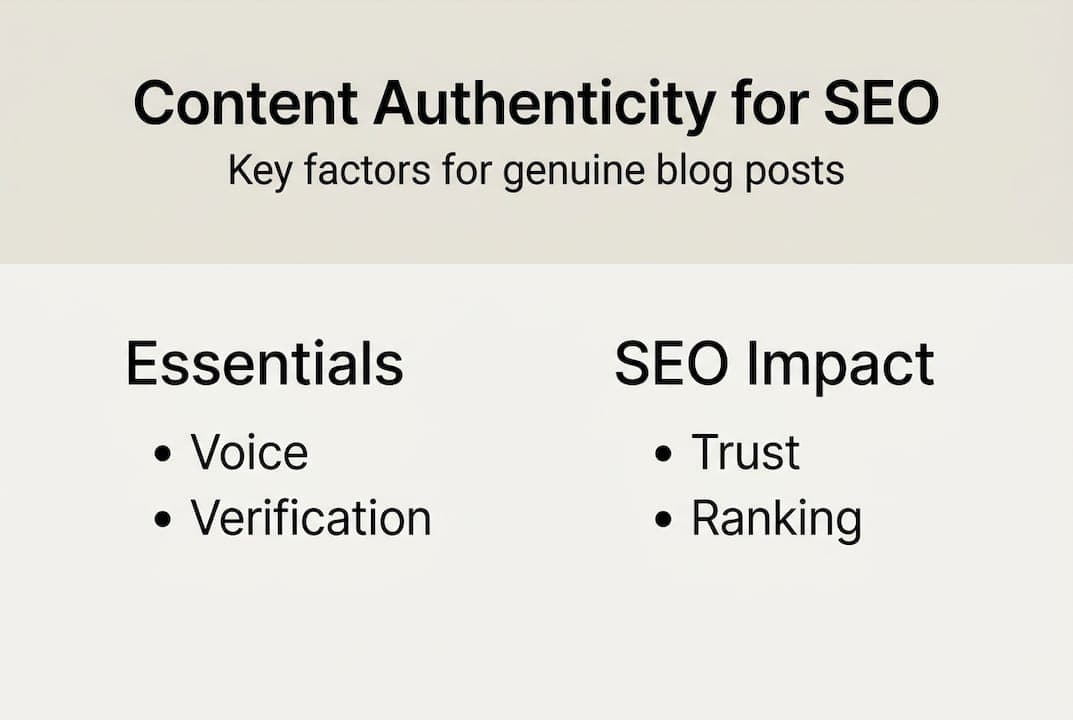
Creating authentic content with AI assistance requires specific elements working together. Voice consistency stands at the foundation. Your blog should sound like the same person wrote every post, with recognizable patterns in how you explain concepts, address readers, and structure arguments. When AI generates your base content, you must edit it to match your established tone, whether that's conversational, technical, or somewhere between.

Verification and fact-checking separate credible content from misinformation. Content authenticity checklists for marketers improve credibility by systematizing accuracy reviews. Every statistic, claim, or recommendation needs verification against current, authoritative sources. AI models can generate plausible-sounding but incorrect information, so human oversight is non-negotiable.
Natural language flow matters more than keyword density. Search engines in 2026 prioritize content that reads naturally over articles stuffed with exact-match phrases. Your sentences should vary in length and structure. Short, punchy statements work alongside longer explanatory passages. This rhythm mirrors how humans actually write and think.
Original insights elevate AI-generated base material into valuable content. Take the AI draft as your starting point, then add commentary based on your experience. Share what worked in your projects, what failed, and why. Include specific examples with numbers and outcomes. These details prove you're not just rehashing information but contributing genuine expertise.
Pro Tip: Create a personal style guide documenting your preferred phrases, sentence patterns, and formatting choices. Use this to edit AI drafts consistently, making every post recognizably yours.
| Authenticity Factor | Common AI Pitfall | Solution |
|---|---|---|
| Personal voice | Generic, formal tone | Edit for conversational style with "you" and "we" |
| Specific examples | Vague generalizations | Add real case studies and data from experience |
| Current information | Outdated or incorrect facts | Verify all claims against 2026 sources |
| Natural flow | Repetitive sentence structure | Vary length and complexity throughout |
| Unique perspective | Rehashed common knowledge | Inject original analysis and counterintuitive insights |
Evading AI detection systems requires understanding what triggers them. Detection tools flag content based on predictable patterns: uniform sentence length, overuse of transitional phrases, lack of idiomatic expressions, and overly formal language. Your goal is making content read naturally human without sacrificing clarity or SEO value.
Content marketing mistakes impact authenticity when creators prioritize volume over quality. The balance between SEO optimization and natural voice requires strategic keyword placement. Your target terms should appear in headings and naturally within explanatory text, not forced into every paragraph. Search engines recognize when keywords flow naturally versus when they're artificially inserted.
Pro Tip: Run your edited content through multiple AI detection tools before publishing. If scores show high AI probability, focus your revisions on the specific paragraphs flagged rather than rewriting everything.
| Detection Flag | Authentic Writing Trait | Implementation |
|---|---|---|
| Uniform sentence rhythm | Variable sentence length | Mix 5-word and 25-word sentences in same paragraph |
| Formal transitions | Conversational connectors | Use "So," "Now," "Here's the thing" instead of "Therefore" |
| Perfect grammar | Strategic informality | Occasional sentence fragments for emphasis |
| Generic examples | Specific, detailed scenarios | Include actual numbers, names, and outcomes |
| Predictable structure | Unexpected insights | Add counterintuitive points that challenge assumptions |
Iterative review strengthens authenticity. Publish your content, then monitor engagement metrics and reader comments. This feedback reveals which sections resonated and which felt disconnected. Use these insights to refine your AI editing process, gradually developing an approach that consistently produces authentic content while maintaining efficiency.
Systematizing authenticity transforms it from an occasional concern into a reliable content quality standard. Your editorial calendar should include dedicated time for authenticity reviews, not just content creation and publication. This means scheduling verification checks, voice consistency edits, and engagement analysis as regular workflow steps.
AI tools support your creativity rather than replacing it. Use AI to generate outlines, research topics, and create first drafts that cover essential points. Then apply your expertise to restructure arguments, add industry-specific insights, and inject the personality that makes your content distinctive. This division of labor maximizes efficiency while preserving authenticity.
Regular content audits catch authenticity issues before they damage credibility. Building authority with content requires consistent quality over time. Monthly reviews should examine whether your recent posts maintain voice consistency, include sufficient original insights, and demonstrate clear expertise. Track metrics like time on page, scroll depth, and social shares to identify which content truly resonates.
Audience engagement provides the ultimate authenticity validation. Readers who find your content genuinely helpful will comment with questions, share posts with their networks, and return for new articles. Monitor these signals closely. Low engagement despite decent traffic suggests your content lacks the authentic connection that turns visitors into community members.
Implement these tasks at different intervals:
The key is treating authenticity as an ongoing practice, not a one-time checkbox. Your voice will evolve, your expertise will deepen, and your audience's needs will shift. Regular workflow integration ensures your content authenticity grows stronger over time rather than degrading through rushed production or over-reliance on automation.
You've learned the strategies, now implement them efficiently. Semihuman AI provides specialized tools designed specifically for content creators who want to blend AI power with authentic human voice. Our platform helps you generate SEO-optimized content that reads naturally and connects genuinely with your audience.
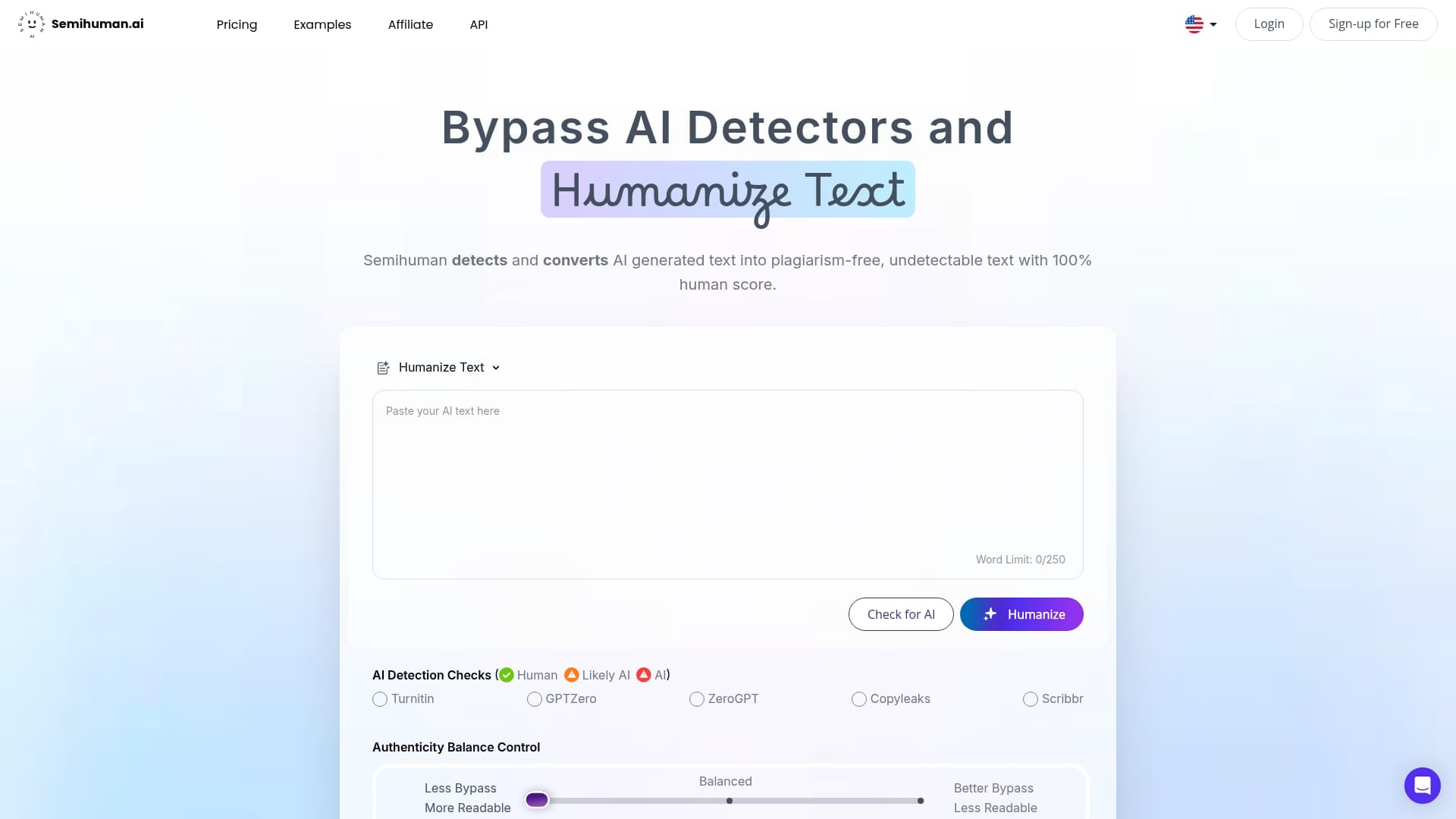
The SEO text generator creates keyword-rich drafts that serve as your foundation, saving hours of research and outlining. Then our AI text paraphraser helps you customize that content, adjusting tone and structure to match your unique voice while maintaining SEO value. These tools work together in your workflow, handling the heavy lifting so you can focus on adding the insights and personality that make content truly yours.
Thousands of marketers and content creators use Semihuman AI to produce authentic, engaging content at scale without sacrificing quality. The platform helps you evade AI detection naturally by restructuring sentences and varying language patterns, all while preserving your message and optimizing for search engines. This balanced approach delivers content that ranks well and builds lasting reader trust.
Authenticity comes from human editing that adds personal voice, specific examples, and verified information to AI drafts. Start with AI-generated base content, then inject your expertise through case studies, industry insights, and conversational tone adjustments. Fact-check every claim and rewrite sections that sound generic or overly formal.
Use SEO text generation tools that prioritize natural language alongside keyword optimization. Pair these with AI paraphrasing platforms that help customize tone and structure. Implement systematic content authenticity checklists that verify facts, check voice consistency, and ensure original insights appear throughout your posts.
Authentic content significantly impacts trust and credibility, which search engines reward with higher rankings. Google's algorithms in 2026 prioritize content that demonstrates genuine expertise and serves user intent. Trustworthy, well-researched posts earn more backlinks, longer engagement times, and better click-through rates, all signals that boost your search visibility.
Over-reliance on AI without human editing creates generic content that lacks distinctive voice. Keyword stuffing sacrifices natural flow for SEO tactics that no longer work. Failing to verify facts undermines credibility when readers spot errors. Publishing without reading your content aloud lets robotic phrasing slip through, triggering both detection tools and reader skepticism.
Conduct monthly audits reviewing your last 10 published posts for voice consistency, factual accuracy, and original insight density. Perform quarterly deep dives that include reader surveys and engagement analysis. Daily authenticity checks should happen during your editing process, before any content goes live, ensuring every post meets your standards from the start.


Start
Humanizing
for Free!
Humanize