
Loading...

Every digital marketer faces the challenge of blending search engine needs with genuine human connection. The pressure to deliver content that satisfies both SEO demands and reader expectations grows as AI-generated writing becomes more common. This guide unpacks a step-by-step process for building a content framework that not only drives organic visibility but also stays authentic and human, helping you sidestep detection tools and engage your audience naturally.
| Essential Insight | Explanation |
|---|---|
| 1. Define Clear Objectives | Establish specific marketing goals to guide your content framework development effectively. |
| 2. Integrate Keywords Naturally | Prioritize readability by embedding keywords in a way that feels organic and conversational rather than forced. |
| 3. Humanize AI-Generated Content | Edit machine-generated text to include personal storytelling and emotional context, making it relatable to readers. |
| 4. Ensure Content Authenticity | Use detection tools and refine content to ensure it appears human and passes AI scrutiny without losing quality. |
| 5. Conduct a Thorough Final Review | Execute comprehensive checks on grammar, SEO elements, and mobile compatibility before publishing content. |
Building a robust content framework is your strategic roadmap for digital marketing success. This process transforms scattered content efforts into a cohesive, goal-driven strategy that resonates with search engines and your target audience.
To create an effective framework, start by defining clear objectives and understanding your audience's needs. Content strategy fundamentals involve systematic planning that connects your business goals with audience expectations. Your framework should include these critical components:
Next, conduct a comprehensive competitive analysis to identify content gaps and opportunities. Pillar-cluster content models can help you organize topics strategically, creating interconnected content that signals topical authority to search engines.
A well-structured content framework transforms random content into a powerful SEO asset.
Key steps in framework development include:
Pro tip: Regularly audit and refine your content framework to maintain alignment with evolving audience needs and search engine algorithms.

Successfully blending keywords into your content requires a strategic and nuanced approach that prioritizes readability and user experience. Your goal is to create content that feels authentic while still signaling relevance to search engines.
Keyword integration fundamentals go beyond simple repetition - they involve understanding semantic relationships and user search intent. This means thinking about how your audience naturally discusses topics and incorporating variations that capture their language patterns. Your keyword strategy should include:
Focus on creating content where keywords flow seamlessly, avoiding forced insertions that disrupt reading rhythm. Search engine guidelines emphasize that keywords should enhance rather than interrupt the natural content narrative.
Effective keyword integration feels like a natural conversation, not a calculated SEO strategy.
Key techniques for organic keyword placement include:
Pro tip: Read your content aloud to ensure keywords integrate smoothly without compromising natural language flow.
Transforming AI-generated content from robotic text to engaging narrative requires strategic editing and a deep understanding of human communication nuances. Your mission is to breathe life into machine-produced writing, making it feel authentic and relatable.
Content optimization techniques involve more than surface-level edits - they demand a holistic approach to humanizing text. This means infusing your content with personality, emotional depth, and contextual understanding that resonates with your target audience. Key strategies include:
Successful humanization goes beyond grammar and syntax. It requires understanding the subtle art of communication, where empathy and connection take precedence over mechanical precision. This means adding personal anecdotes, using first and second-person pronouns, and creating a narrative that feels like a genuine conversation.
Here's a quick comparison of humanizing versus unedited AI-generated content:
| Aspect | Unedited AI Content | Humanized AI Content |
|---|---|---|
| Tone | Robotic, formal | Conversational, natural |
| Engagement | Low, generic | High, personal touch |
| Emotional impact | Minimal | Resonates with readers |
| Readability | Often stiff | Flows like real speech |
Humanizing AI content is about transforming data into a story that speaks directly to the reader's experience.
Practical steps for content transformation include:
Pro tip: Read your humanized content out loud to ensure it sounds like something you would actually say in a real conversation.
Navigating the complex landscape of AI content detection requires a strategic and nuanced approach to ensure your writing remains undetectable while maintaining high-quality standards. Your ultimate goal is to create content that passes scrutiny without compromising its inherent value and readability.
Content optimization strategies emphasize the importance of comprehensive authenticity testing. This involves using multiple detection tools, analyzing potential machine-generated markers, and systematically refining your content to appear more human-like. Key areas of focus include:
Detection evasion is not about tricking systems but about genuinely enhancing content quality. Authentic writing requires a deep understanding of how AI detection algorithms work, allowing you to strategically modify text while preserving its core message and intent.
Successful content testing transforms machine-generated text into a natural, engaging narrative that feels genuinely human.
Practical steps for authenticity verification include:
Pro tip: Rotate between different AI detection tools to get a comprehensive assessment of your content's human-like qualities.
Preparing your content for publication is the critical final stage that transforms your draft into a polished, search-engine-friendly piece that captivates readers and ranks effectively. This process demands meticulous attention to detail and strategic optimization across multiple dimensions.
SEO content optimization requires a comprehensive review that goes beyond basic grammar and spelling checks. Your goal is to ensure the content meets both technical SEO requirements and user engagement standards. Key refinement areas include:
Effective content finalization involves a multi-layered approach that balances technical precision with creative expression. Strategic editing means carefully examining each element to ensure it contributes meaningfully to your overall communication objectives while maintaining a natural, engaging tone.
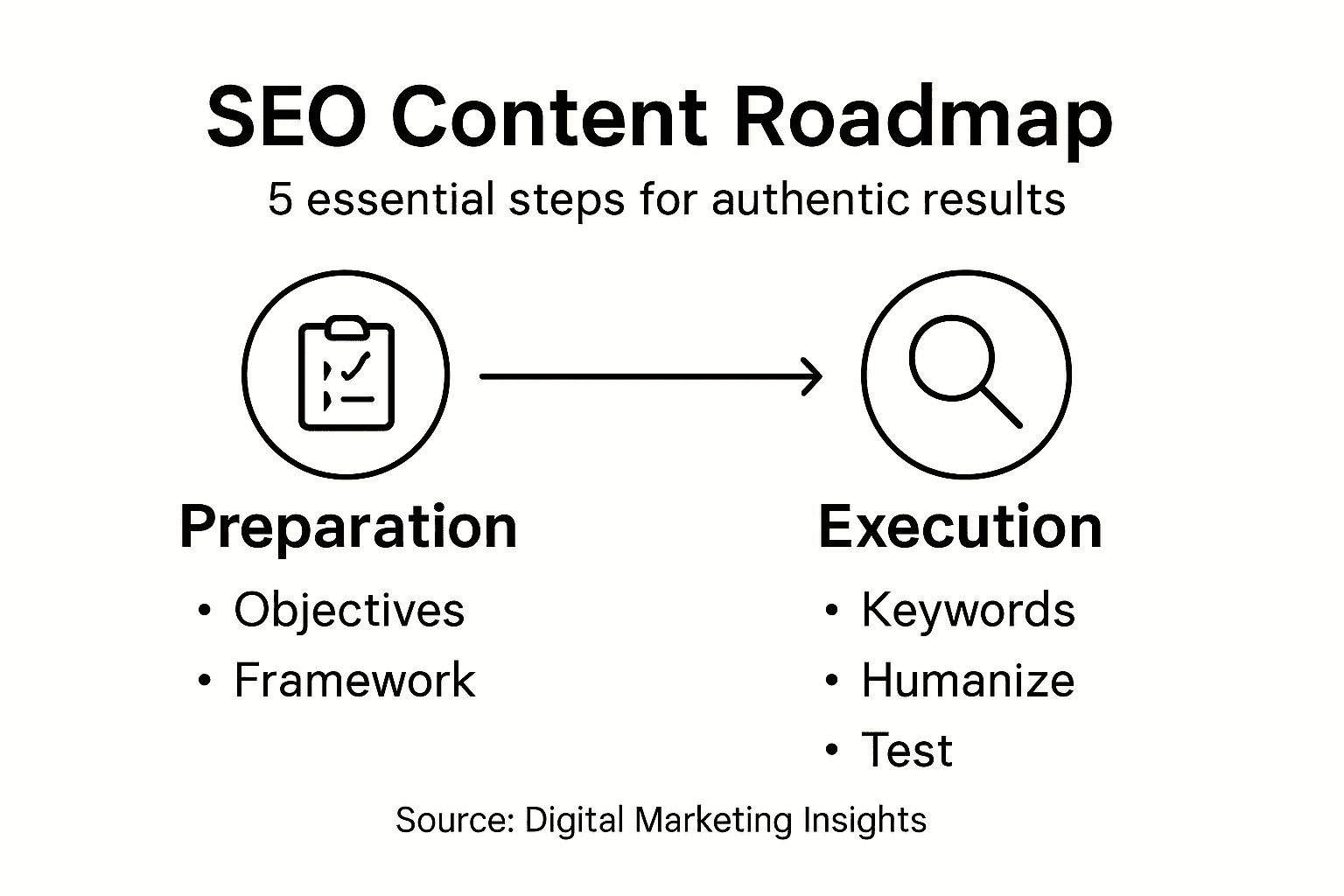
Below is an overview of critical checks before publishing SEO-optimized content:
| Review Area | Why It Matters | Tools/Methods |
|---|---|---|
| Grammar & Spelling | Enhances credibility | Grammarly, Hemingway |
| Meta Data | Boosts search visibility | Yoast, SEMrush |
| Keyword Integration | Improves ranking | Manual review, SurferSEO |
| Mobile Compatibility | Reaches wider audience | Google Mobile Test |
Exceptional content is not just written - it is carefully crafted and strategically refined.
Practical steps for content refinement include:
Pro tip: Create a final review checklist that you consistently use to ensure no critical optimization steps are overlooked.
Struggling to transform AI-generated text into naturally flowing, human-like content that resonates with readers and search engines alike? This article highlights key challenges such as keyword integration, content humanization, and evading AI detection—critical pain points that can hold back your SEO success. With the demand for authentic, engaging, and undetectable content rising, it is essential to move beyond robotic writing and build genuine connections through your digital marketing efforts.
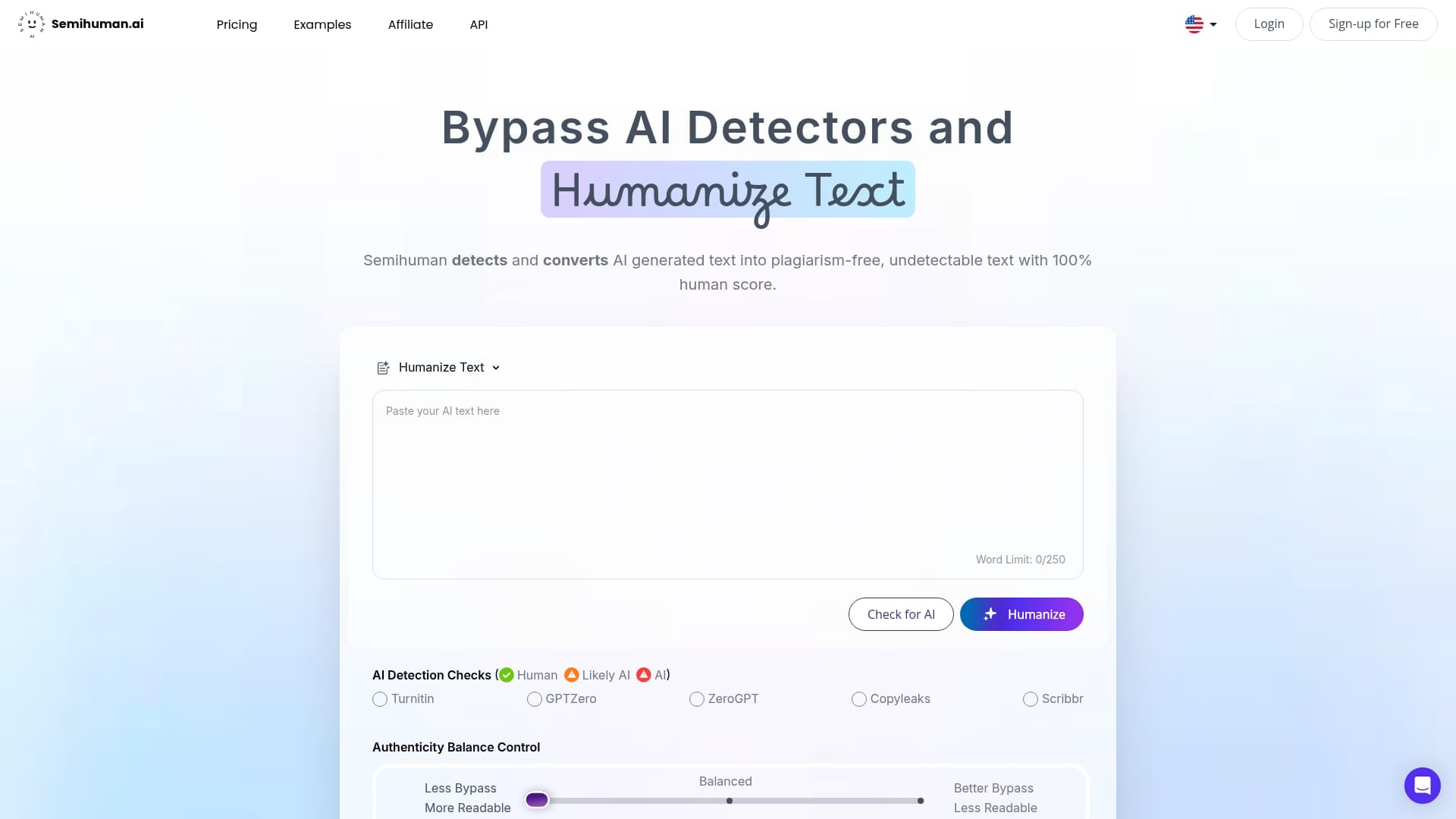
Unlock the power of Semihuman.ai, a specialized AI-driven platform designed precisely to solve these challenges. Whether you want to refine your content framework, naturally embed keywords, or humanize text for better engagement and detection evasion, Semihuman.ai offers tailored tools to elevate your content. Explore how our humanizing techniques can seamlessly transform your AI drafts into compelling stories. Don’t let automated detection tools or stiff phrasing limit your growth. Start using Semihuman.ai today and give your content the genuine voice it deserves.
A content framework is a strategic structure that organizes your content efforts into a cohesive strategy. To create one, define your marketing objectives, understand your audience, and map out keywords to guide your content creation.
To integrate keywords effectively, use them in headings, introductory paragraphs, and throughout your content while maintaining a conversational tone. Focus on incorporating variations and synonyms that match how your audience discusses topics, ensuring a seamless reading experience.
You can humanize AI-generated content by adding personal stories, using conversational language, and infusing emotional context. Review the AI draft critically and inject unique perspectives to make the text relatable and engaging for your audience.
To ensure your content appears authentic and human-like, run multiple AI detection scans and analyze the feedback. Use this information to manually edit flagged sections, focusing on unique perspectives and varied syntax before retesting the content.
Before publishing, review your content for grammar, meta data, keyword integration, and mobile compatibility. Conduct a thorough check to enhance the credibility and reach of your content, ensuring it meets both search engine and user engagement requirements.

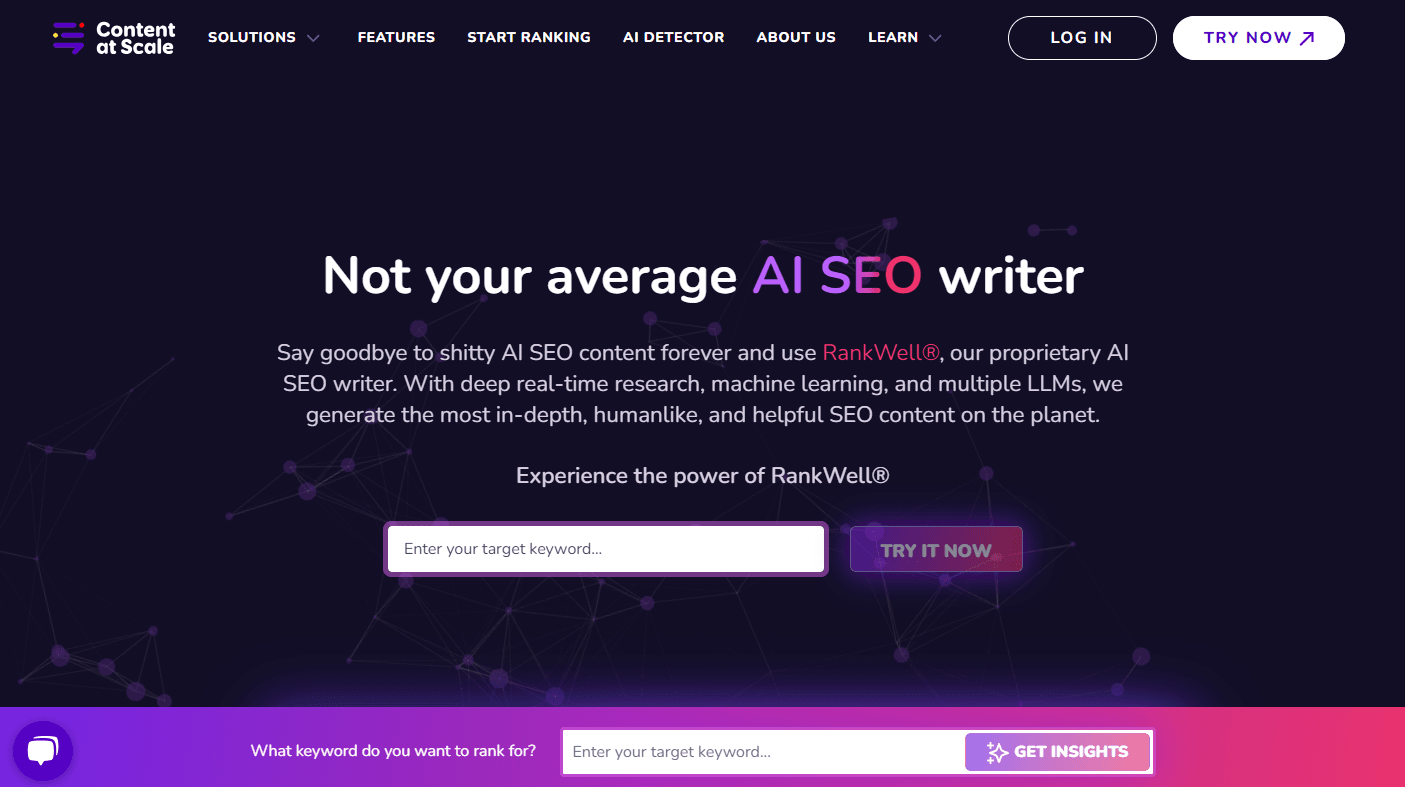
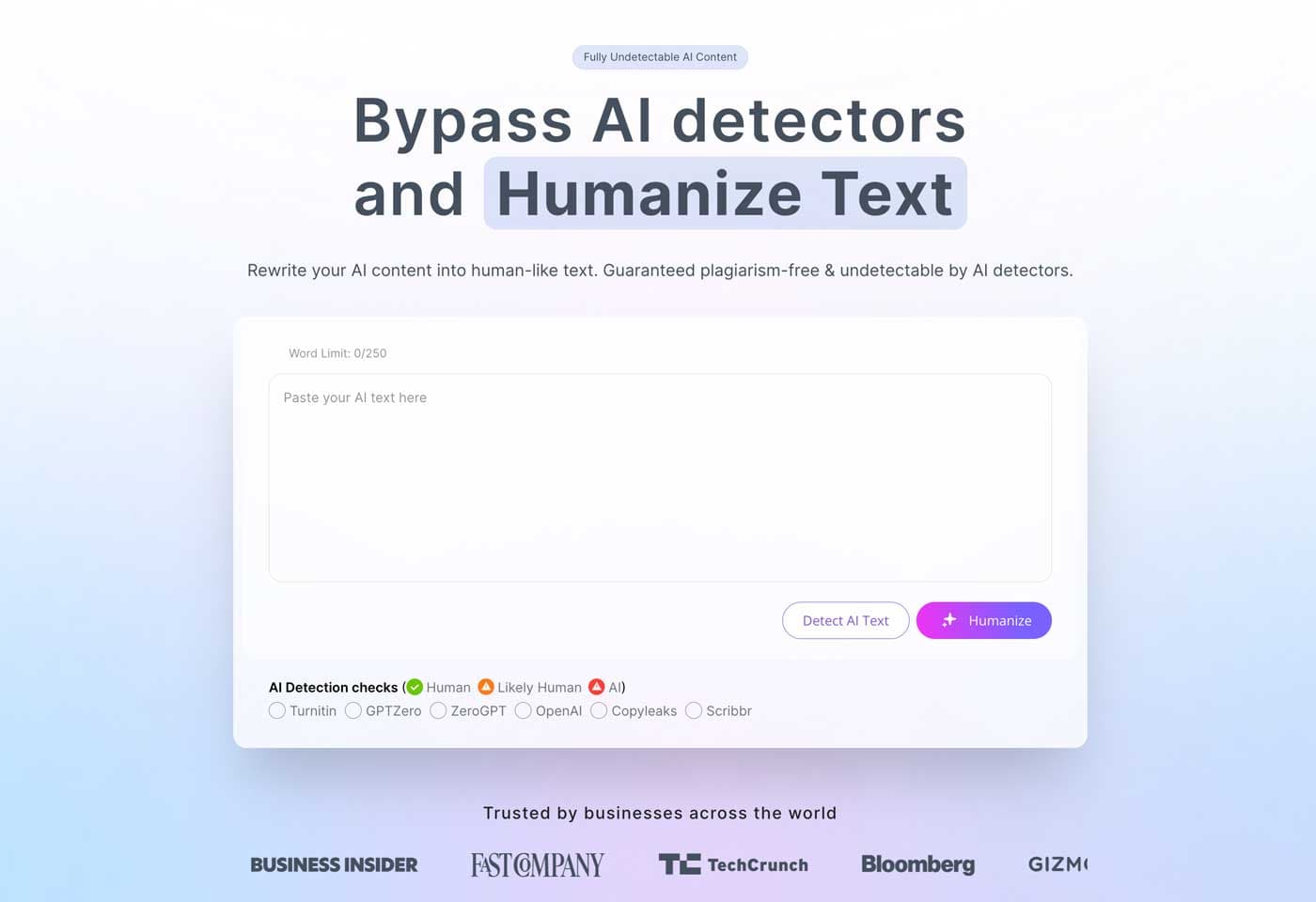

Start
Humanizing
for Free!
Humanize