
Loading...

Nearly every American content strategist today faces the pressure to optimize AI-generated content that fools both readers and detection tools. With search algorithms growing sharper, the margin for error keeps shrinking. This guide reveals practical methods to gather trustworthy data, track real performance, edit for true human tone, strengthen SEO, and verify authenticity, setting you up to lead the next frontier in digital marketing.
| Key Point | Explanation |
|---|---|
| 1. Use Reliable Data Sources | Identify and select trustworthy data sources for high-quality AI content generation. Focus on credibility and structured information. |
| 2. Monitor Key Performance Metrics | Establish a measurement framework to track engagement, organic search, and conversion metrics for content effectiveness. |
| 3. Humanize AI Content | Transform machine-generated text by improving readability through varied sentence structure and personalized elements for better engagement. |
| 4. Implement SEO Keyword Strategy | Incorporate target keywords naturally and avoid overstuffing to enhance search engine rankings and maintain content quality. |
| 5. Ensure Content Authenticity | Use nuanced linguistic variations and advanced editing techniques to bypass AI detection tools while ensuring originality of the content. |
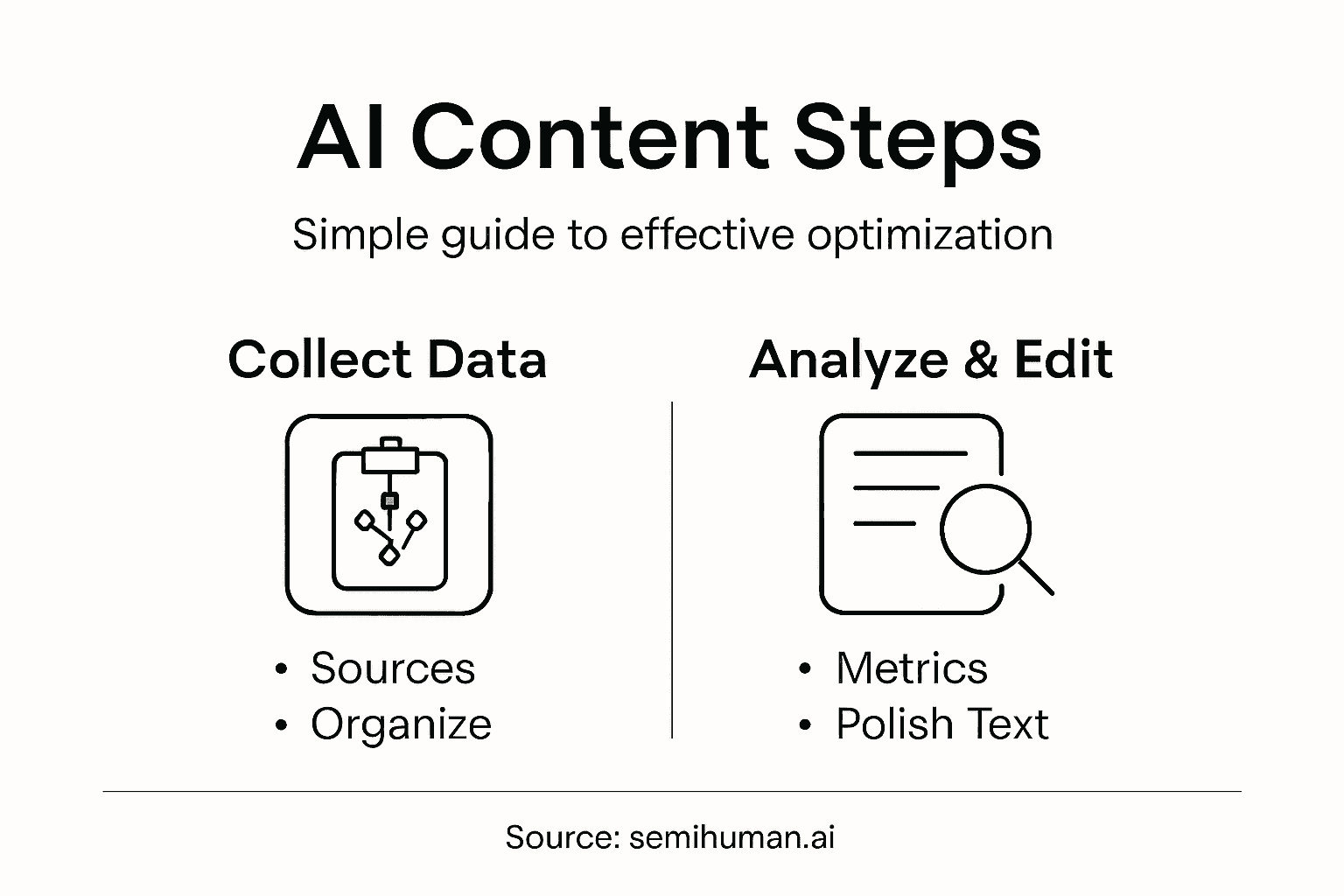
Successfully collecting data for AI-generated content requires a strategic and methodical approach that balances technical precision with ethical considerations. Systematic data collection methods form the critical foundation for developing high-quality AI content generation capabilities.
Begin by identifying reliable data sources that match your specific content requirements. This involves selecting databases, academic repositories, industry publications, and verified online platforms that provide structured and comprehensive information. Focus on sources with well-documented metadata, clear licensing terms, and high-quality content. Implement a robust data screening process that evaluates potential sources based on relevance, accuracy, recency, and originality. Use advanced filtering techniques to eliminate duplicate or low-quality content, ensuring your dataset maintains exceptional standards.
Organize your collected data using a systematic taxonomy that enables efficient retrieval and analysis. Create clear categorization schemas that tag content by domain, topic, complexity level, and other relevant attributes. This structured approach will help AI models understand contextual nuances and generate more precise, contextually appropriate content.
Pro tip: Regularly audit and refresh your data collection strategy to maintain dataset quality and adapt to emerging content trends.
Here’s a comparison of common data sources for AI-generated content projects:
| Data Source Type | Strengths | Potential Drawbacks |
|---|---|---|
| Academic Repositories | High credibility, rich detail | May be niche, slower updates |
| Industry Publications | Topical relevance, expertise | Possible paywalls, bias |
| Online Platforms | Diverse, current topics | Quality varies, licensing concerns |
| Structured Databases | Clean metadata, organization | Limited context, rigid formats |
Understanding your AI-generated content's performance requires a comprehensive approach to tracking meaningful metrics that reveal true impact and effectiveness. Content performance metrics provide critical insights into how your AI-generated content resonates with audiences and drives strategic objectives.

Start by establishing a robust measurement framework that captures both quantitative and qualitative performance indicators. Focus on key engagement metrics such as page views, average time on page, bounce rate, and social shares. These metrics help you understand how readers interact with your content and identify areas for improvement. Track organic search performance by monitoring keyword rankings, search visibility, and the volume of targeted traffic generated by each piece of content. Pay special attention to conversion metrics like lead generation rates, click through rates, and downstream actions taken by readers after consuming your AI-generated content.
Implement a systematic approach to data collection and analysis by using advanced analytics platforms that can provide granular insights. Create comparative benchmarks across different content pieces to understand which AI-generated content strategies yield the most compelling results. Regularly review and adjust your content optimization strategies based on these performance insights, ensuring continuous improvement and alignment with your target audience's evolving preferences.
Pro tip: Develop a standardized reporting template that allows quick visual comparison of content performance metrics across different AI-generated content pieces.
The table below summarizes key performance metrics for analyzing AI-generated content:
| Metric | What It Measures | Business Impact |
|---|---|---|
| Page Views | Audience reach | Indicates topic popularity |
| Avg. Time on Page | Reader engagement | Shows content depth value |
| Bounce Rate | Session quality | Reveals landing page fit |
| Conversion Rate | Action effectiveness | Tracks lead generation |
Transforming AI-generated content into natural, engaging text requires a strategic approach that goes beyond simple editing. Humanizing machine-written text involves carefully dismantling robotic language patterns and rebuilding content with authentic human expression.

Begin by conducting a comprehensive review of your AI-generated draft, focusing on identifying mechanical language patterns that create unnatural reading experiences. Pay close attention to sentence structure, removing overly complex or repetitive phrasing that sounds artificially generated. Introduce variation in sentence length and complexity to mimic natural human writing. Incorporate conversational elements like rhetorical questions, personal insights, and contextual anecdotes that add depth and personality to the text. Replace generic terminology with specific, vivid language that demonstrates genuine understanding rather than algorithmic generation.
Develop a systematic editing process that targets specific aspects of AI-generated text. Break down long paragraphs, vary your writing rhythm, and inject emotional nuance that resonates with your target audience. Use active voice, incorporate colloquial expressions appropriate to your content's context, and remove unnecessary technical jargon that creates distance between the reader and the content. Focus on creating a smooth, natural flow that feels like a genuine human conversation rather than a machine-generated document.
Pro tip: Read your transformed text aloud to identify any remaining robotic language patterns that might have slipped through your initial editing process.
Selecting and strategically incorporating target keywords is fundamental to maximizing your AI-generated content's search engine visibility. Search engine optimization techniques provide a systematic approach to enhancing content discoverability and ranking potential.
Begin your keyword integration strategy by conducting comprehensive research using advanced analytics tools that reveal search volume, competition levels, and user intent behind specific search terms. Focus on identifying long tail keywords and semantic variations that align closely with your content's core message. Implement these keywords naturally throughout your text, prioritizing placement in critical areas such as titles, headings, introductory paragraphs, and concluding sections. Aim for a balanced approach that maintains readability while strategically signaling relevance to search algorithms. Avoid overstuffing keywords, which can trigger negative ranking penalties and diminish content quality.
Develop a nuanced keyword mapping strategy that considers semantic relationships and contextual relevance. Distribute keywords thoughtfully across your content, ensuring they flow seamlessly within the narrative structure. Use variations and related terms to create a comprehensive topical coverage that demonstrates depth of understanding. Cross reference your keyword selections with current search trends and audience research to maintain alignment with evolving user interests and search behaviors.
Pro tip: Create a keyword density worksheet to track and optimize keyword usage without compromising the natural reading experience.
Authenticity verification requires a sophisticated approach to navigating the complex landscape of AI content detection technologies. AI detection tool limitations reveal critical vulnerabilities that content creators can strategically leverage to maintain originality and bypass automated screening systems.
Develop a multi layered strategy for content transformation that goes beyond surface level modifications. Start by thoroughly understanding how AI detection algorithms identify machine generated text. Focus on creating nuanced linguistic variations that disrupt predictable language patterns. This involves carefully restructuring sentence constructions, introducing contextual complexity, and integrating unique personal perspectives that artificial systems struggle to replicate. Incorporate specific domain knowledge, industry specific terminology, and subtle narrative techniques that demonstrate genuine human understanding and experiential depth.
Implement advanced text modification techniques that target specific markers used by detection algorithms. Vary your writing rhythm, introduce intentional imperfections, and craft content with subtle contextual references that artificial systems cannot easily reproduce. Use natural language processing techniques to add semantic depth and contextual richness that distinguishes your text from standard AI generated content. Regularly test your content against multiple detection platforms to refine your approach and ensure maximum authenticity.
Pro tip: Maintain a reference library of your original writing styles to consistently benchmark and improve your content transformation strategies.
If you are navigating the complex challenges of transforming AI-generated text into genuinely engaging and readable content you understand the importance of making your content human-like while optimizing for SEO and bypassing AI detection tools such as Turnitin or GPTZero. The article highlights crucial steps like text restructuring keyword integration and enhancing content authenticity—all of which can feel overwhelming without the right support.

Semihuman.ai offers a powerful solution designed specifically for creators marketers and academic writers who want to master data-driven content optimization for AI content. With features that detect and humanize AI-produced text by restructuring language naturally integrating target keywords and evading AI detection systems you gain the competitive edge needed to boost SEO rankings and maintain a genuine human touch. Don’t risk your content appearing robotic or getting flagged by detection tools. Experience how Semihuman.ai can elevate your AI content transformation efforts and help you deliver authentic and highly effective content with confidence.
Explore how you can start enhancing your AI-generated content today on the landing page. Take control of your content’s performance and authenticity with Semihuman.ai now to turn your AI writing into trusted human-like content that connects.
To set up data collection effectively, begin by identifying reliable sources like academic repositories and industry publications. Implement a robust data screening process to evaluate these sources based on relevance and quality, and organize your data using a clear taxonomy for easy retrieval.
Focus on metrics such as page views, average time on page, and conversion rates to understand engagement and effectiveness. Regularly track these metrics and adjust your content strategy based on the insights gathered to improve performance continuously.
Transform AI-generated text by reviewing it carefully and removing robotic language patterns. Introduce variation in sentence length and incorporate conversational elements to make the content feel more natural and engaging for readers.
Conduct thorough keyword research to identify relevant long-tail keywords and incorporate them naturally within the text. Aim for a balanced placement in key areas such as titles and headings, while ensuring that the content remains readable and engaging.
To verify authenticity, focus on transforming content by restructuring sentences and adding unique personal perspectives. Utilize advanced text modification techniques and test your content against AI detection platforms to ensure it meets originality standards.



Start
Humanizing
for Free!
Humanize