
Loading...

TL;DR:
- Shareable blog content activates psychological triggers like social currency, high-arousal emotion, and practical value to encourage sharing. Structuring posts for scanning, using original examples, and explicitly asking readers to share significantly boost distribution. Focusing on the sharer's identity and emotional engagement, rather than just information, leads to more impactful and widely shared content.
Shareable blog content is defined as posts people choose to distribute because they deliver practical value, emotional resonance, and social currency beyond raw information. Creating shareable blog content is the difference between a post that dies at 50 views and one that spreads across LinkedIn, Reddit, and email threads for months. Tools like Grammarly, ContentStudio, and Semihuman AI help creators refine and optimize posts, but the real leverage comes from understanding why people share in the first place. Get that right, and every other tactic compounds.
Sharing is not a passive act. 94% of people consider how shared content reflects on them before they hit the share button. That single finding reframes everything: readers are not sharing your post because it is accurate or well-written. They are sharing it because it makes them look smart, caring, or well-informed to their network.
Researchers Jonah Berger and Katherine Milkman identified several core sharing drivers that hold up across content formats and platforms. Understanding these is the foundation of any serious shareable content strategy:
"Treat shareability as a design and distribution constraint, starting with reader triggers like practical value and social currency before content creation." — Revid.ai
The practical implication is direct: before you write a single sentence, ask yourself which of these triggers your post activates. If the answer is none, the post will not spread regardless of how well it is written. You can explore the psychology of social sharing in more depth to map these triggers to specific content formats.

Before writing, you need the right infrastructure. Google's E-E-A-T framework (Experience, Expertise, Authoritativeness, Trustworthiness) now shapes how search quality raters evaluate content. Demonstrating first-hand experience through original examples, screenshots, and specific case references is no longer optional for content that ranks and gets shared. Readers and algorithms both reward specificity over generic claims.
Here is a comparison of the core tools content creators use at each stage of the process:
| Tool | Primary function | Best for |
|---|---|---|
| Grammarly | Grammar, clarity, tone checking | Polishing drafts before publishing |
| Semihuman AI SEO Text Generator | SEO-optimized content generation | Creating search-ready blog drafts |
| ContentStudio | Content scheduling and analytics | Distribution and performance tracking |
| Semihuman AI Text Paraphraser | Rewriting for originality and flow | Refreshing existing content |
| Google Search Console | Search performance data | Identifying high-potential topics |
Audience research sits underneath all of these tools. A persona built from real reader data, not assumptions, tells you which psychological triggers to activate and which topics carry social currency in your niche. Survey your existing readers, analyze comment sections, and mine Reddit or Quora threads for the exact language your audience uses to describe their problems.
Pro Tip: Run your draft through Semihuman AI's SEO Text Generator before publishing to check keyword integration and readability simultaneously. It cuts the revision cycle significantly.
Google's Helpful Content system evaluates quality site-wide, not just at the individual post level. One cluster of thin, unhelpful posts can suppress your entire domain's visibility. Audit your existing content catalog before publishing new posts, and remove or upgrade anything that does not serve a clear reader need.
A repeatable workflow removes the guesswork from creating engaging blog content. ContentStudio's 7-step framework for shareable posts maps directly onto what the research on psychological triggers recommends.
Here is a summary of the key action at each stage:
| Stage | Key action | Primary goal |
|---|---|---|
| Topic selection | Validate demand with real data | Choose topics with proven sharing history |
| Title writing | Use numbers, specificity, identity signals | Maximize click-through and share motivation |
| Opening paragraph | State the core claim immediately | Reduce friction, signal value fast |
| Body structure | Headings every 200 to 300 words | Enable scanning and navigation |
| AI assistance | Draft and optimize, then humanize | Speed without sacrificing authenticity |
| Call to action | Ask for the share explicitly | Convert readers into distributors |
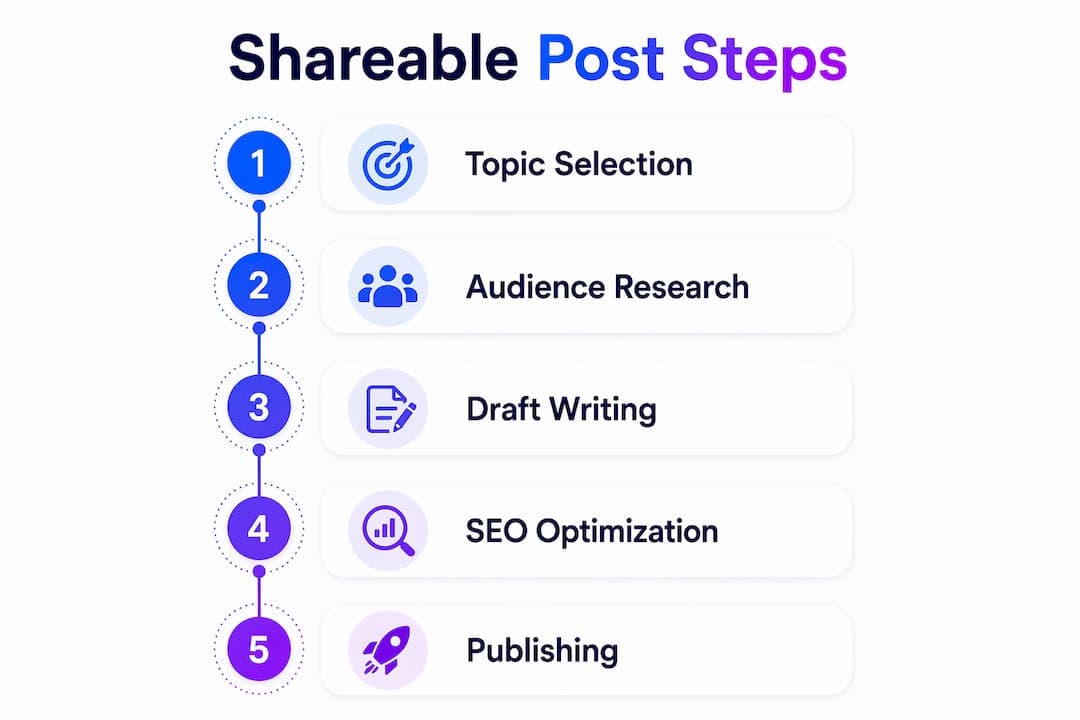
Pro Tip: When writing catchier blog titles, test two or three variations using a free headline analyzer like CoSchedule's Headline Studio before committing. Title performance varies more than most creators expect.
Most blog posts fail to spread not because the writing is bad but because they ignore the reader's motivation to share. Recognizing these patterns early saves significant time and effort.
Shareable blog content requires activating psychological triggers first and optimizing for search second. Every structural and editorial decision should serve the reader's motivation to pass your post along.
| Point | Details |
|---|---|
| Social currency drives sharing | Design content that makes the sharer look competent or helpful, not just content that is accurate. |
| Structure enables scanning | Use headings every 200 to 300 words and keep paragraphs short so 79% of scanning readers can extract value fast. |
| E-E-A-T signals build trust | Add original examples, screenshots, and first-hand perspective to meet Google's experience standards. |
| AI tools accelerate, humans authenticate | Use AI for drafts and SEO optimization, then layer in original voice and specific examples before publishing. |
| Promotion is part of the workflow | An explicit share request and a 24-hour distribution plan are non-negotiable steps, not afterthoughts. |
I have reviewed hundreds of blog posts from marketers who write well but share poorly. The pattern is almost always the same: the post is accurate, thorough, and completely forgettable. It gives the reader no reason to pass it along because it does not make the sharer look good. It just informs.
The shift that changes everything is designing content around the sharer's identity, not the reader's information gap. When I started framing posts around what sharing them signals about the person doing the sharing, engagement numbers moved in ways that better writing never achieved on its own. A post titled "The Framework I Use to Audit Blog Content Every Quarter" outperforms "How to Audit Blog Content" because the first version hands the reader a piece of identity to carry into their network.
The other thing I have learned is that emotional flatness is a choice, not a default. Every topic has a high-arousal angle if you look for it. A post about content metrics can be framed around the anxiety of publishing into silence. A post about AI tools can tap into the genuine excitement of watching a workflow compress from hours to minutes. Find the emotional register and write toward it deliberately.
Balancing SEO with helpfulness is not the tension most people think it is. When you write for the sharer's identity and activate real emotion, you naturally produce the specific, experience-grounded content that Google's quality systems reward. The two goals reinforce each other. The mistake is treating them as competing priorities.
— Tilen
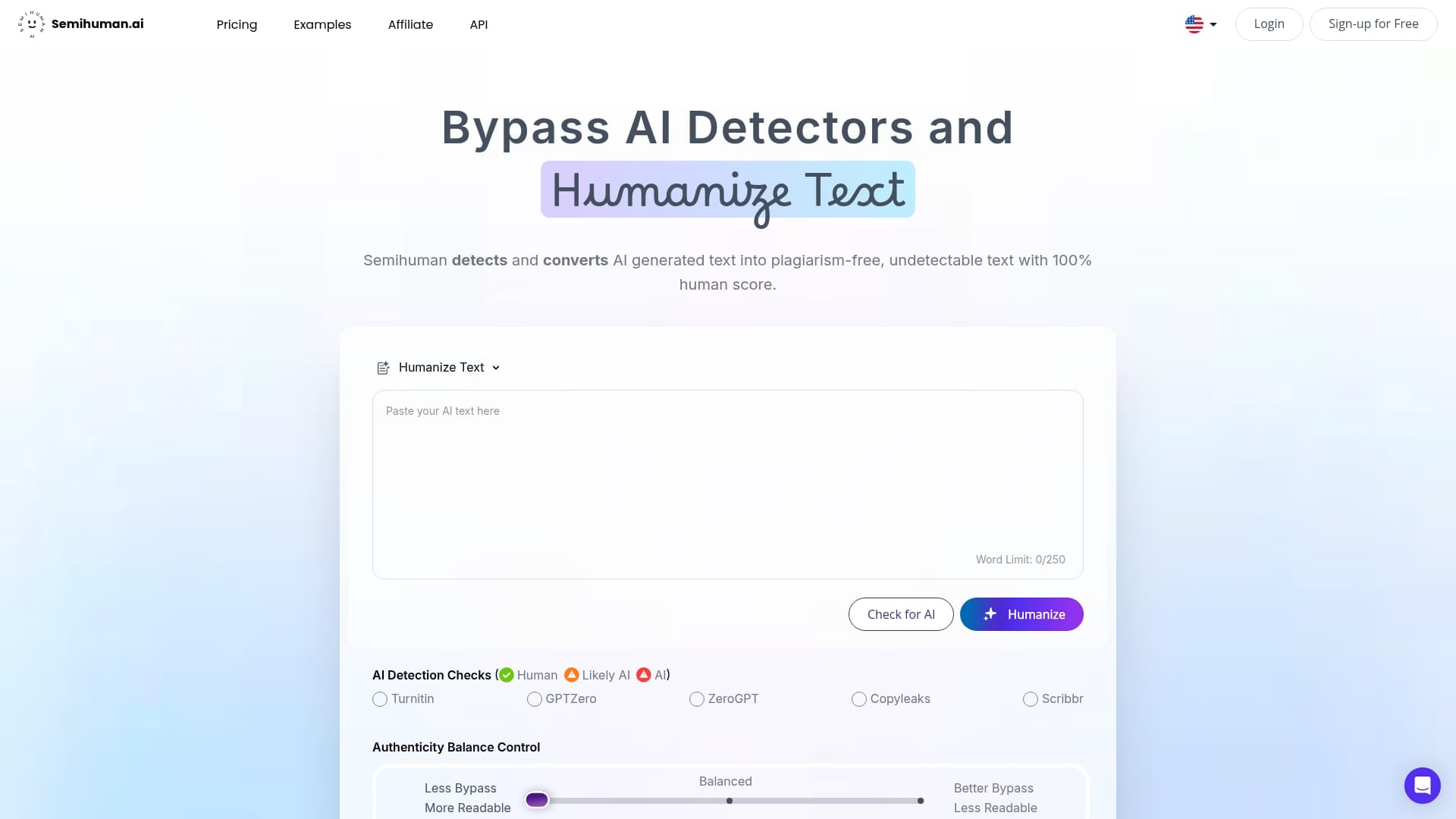
Semihuman AI gives content creators and marketers two tools that directly address the biggest friction points in producing shareable posts. The SEO Text Generator builds keyword-optimized drafts that are structured for scanning and search visibility from the first sentence. The AI Text Paraphraser takes existing AI-generated or recycled content and restructures it into natural, human-sounding prose that passes authenticity checks and reads the way your audience expects. Both tools are built for creators who want to move faster without sacrificing the originality and voice that make posts worth sharing. If you are serious about content metrics and SEO performance, Semihuman is worth adding to your workflow today.
Shareable blog content activates psychological triggers including social currency, high-arousal emotion, and practical value. 94% of people evaluate how sharing content reflects on them before distributing it, so posts that make the sharer look competent or helpful travel farthest.
Structure directly determines whether readers extract enough value to share. Because 79% of users scan rather than read, posts with clear headings, short paragraphs, and generous whitespace perform significantly better than dense, unbroken text.
Unreviewed AI content often lacks the first-hand experience signals that both readers and Google's E-E-A-T framework require. Using an AI tool like Semihuman AI to humanize and restructure drafts before publishing preserves speed while maintaining the authenticity that drives shares.
Google's Helpful Content system applies quality signals site-wide, so a quarterly audit that upgrades or removes low-value posts protects your entire domain's visibility and shareability potential.
Lead with the answer. Placing your core claim in the first paragraph reduces reading friction and signals value immediately, which is the condition most likely to convert a reader into a sharer.


Start
Humanizing
for Free!
Humanize