
Loading...

Over 60 percent of top-performing global brands rely on cultural research before launching american-focused content. Understanding what resonates with different audiences is vital for authentic communication, especially when your message crosses borders. When you grasp the unique habits and preferences of your american and worldwide readers, you become poised to create truly engaging content that avoids missteps and builds lasting connections.
| Key Point | Explanation |
|---|---|
| 1. Research audience needs | Conduct thorough research to understand global audience preferences through analytics, surveys, and direct engagement. |
| 2. Customize tone and style | Use clear, consistent language and avoid slang to ensure messages resonate universally and minimize misunderstandings. |
| 3. Optimize with regional keywords | Implement regional keyword analysis to tailor content for local search behavior and improve discoverability. |
| 4. Humanize AI-generated content | Utilize tools like Semihuman.ai to refine AI text into more relatable and natural human-like writing. |
| 5. Review for accuracy and engagement | Systematically review your content to ensure clarity, cultural neutrality, and emotional connection with readers before publishing. |
Understanding your global audience requires strategic research and cultural intelligence. By analyzing communication patterns and audience demographics, you can craft content that resonates across different cultural landscapes.
Start by conducting comprehensive audience research through multiple channels. Use web analytics to track geographic origins of your website visitors, survey tools to understand cultural preferences, and social media insights to gauge engagement patterns. Pay special attention to language nuances, communication styles, and content consumption habits specific to different regions. Academic writing emphasizes the importance of understanding tone and context when communicating with diverse audiences, so invest time in developing deep cultural insights.
Pro tip: Don't rely solely on digital metrics. Engage directly with representatives from target regions through interviews, focus groups, or collaborative platforms to gain authentic perspectives about their content preferences and communication expectations. This human connection will provide invaluable insights that raw data cannot capture.
With a clear understanding of your global audience's needs, you're now prepared to move forward and develop targeted, culturally sensitive content strategies.
Customizing your content for global audiences requires precision and cultural sensitivity. Developing a scholarly voice involves strategic language choices that communicate ideas with maximum clarity and minimal potential for misunderstanding.
Begin by standardizing your writing style through consistent terminology and impersonal language structures. Academic communication thrives on maintaining uniform language conventions that transcend cultural boundaries. This means avoiding colloquialisms, regional slang, and idiomatic expressions that might confuse international readers. Instead, opt for clear, direct language that communicates your message with precision. Use simple sentence structures, define technical terms when first introduced, and prioritize active voice to enhance comprehension.
Pro tip: Create a style guide specific to your global content that outlines language preferences, prohibited terms, and preferred communication approaches. This document will serve as a critical reference point for maintaining consistency across different content creators and ensuring your message remains universally accessible.
With your tone and style strategically aligned, you are now ready to develop content that speaks effectively across cultural landscapes.
Optimizing content for global search audiences requires strategic keyword research that goes beyond traditional language boundaries. Understanding how different regions search and consume online content will help you create more targeted and discoverable materials.

Begin by conducting comprehensive regional keyword analysis using specialized tools that reveal search patterns in specific geographic markets. Pay close attention to local language variations, colloquial terms, and cultural nuances that might impact search behavior. Scholarly content demands precision in language selection to ensure maximum searchability and reader engagement. This means developing a multilayered keyword strategy that includes direct translations, culturally relevant synonyms, and region-specific terminology.
Pro tip: Create a dynamic keyword matrix that categorizes terms by region, language, and search volume. This living document will help you track evolving search trends and maintain a flexible approach to international content optimization.
By implementing these targeted keyword strategies, you are now positioned to create content that speaks directly to diverse global audiences while maintaining strong search visibility.
Transforming machine-generated text into authentic human-like content requires strategic linguistic refinement beyond simple editing. Semihuman.ai offers a sophisticated approach to converting algorithmic output into nuanced, contextually appropriate writing that resonates with global audiences.
Start by uploading your AI-generated content into the platform and selecting region-specific tone and style preferences. Analyze the text using advanced linguistic categorization tools that identify potential mechanical patterns and suggest natural language improvements. The platform will help you restructure sentences, adjust vocabulary, and inject subtle conversational elements that make your content feel genuinely human-crafted. Focus on maintaining the original message while eliminating telltale signs of machine generation such as repetitive structures, overly formal language, or unnatural phrasing.
Pro tip: Run multiple humanization passes and compare outputs. Each iteration can reveal different opportunities for enhancing the text's authenticity and emotional resonance.
With your content now transformed into a naturally compelling piece, you are prepared to connect more meaningfully with your target audience.
Text transformation strategies play a critical role in developing undetectable content that maintains originality while avoiding AI detection mechanisms. Your goal is to create writing that sounds authentically human across multiple evaluation platforms.
Implement comprehensive linguistic analysis techniques to assess and refine your content before publication. Begin by running your text through multiple AI detection tools to identify potential machine learning markers. Focus on adjusting sentence structures, introducing subtle variations in vocabulary, and incorporating nuanced conversational elements that distinguish human writing. Pay particular attention to contextual flow, emotional undertones, and natural language patterns that typical AI generators struggle to replicate accurately.
Pro tip: Create a testing workflow that includes at least three different AI detection platforms. Cross reference their results and look for consistent patterns that might reveal algorithmic origins. Each detection test provides an opportunity to further humanize your content.
Mastering content authenticity requires continuous refinement and a strategic approach to language adaptation.
Crafting compelling content requires meticulous review and strategic refinement that transforms technical writing into engaging communication. Your final review process will determine whether your content truly resonates with global readers.
Approach your refinement process systematically by examining each section through multiple lenses. Develop a structured review framework that prioritizes academic precision and reader connection, focusing on eliminating unnecessary complexity while maintaining intellectual depth. Read your content aloud to identify awkward phrasings, check for logical flow, and ensure your arguments progress smoothly. Verify that technical terms are clearly explained, statistical claims are accurately represented, and your overall narrative maintains a consistent, authoritative voice that speaks directly to your intended audience.
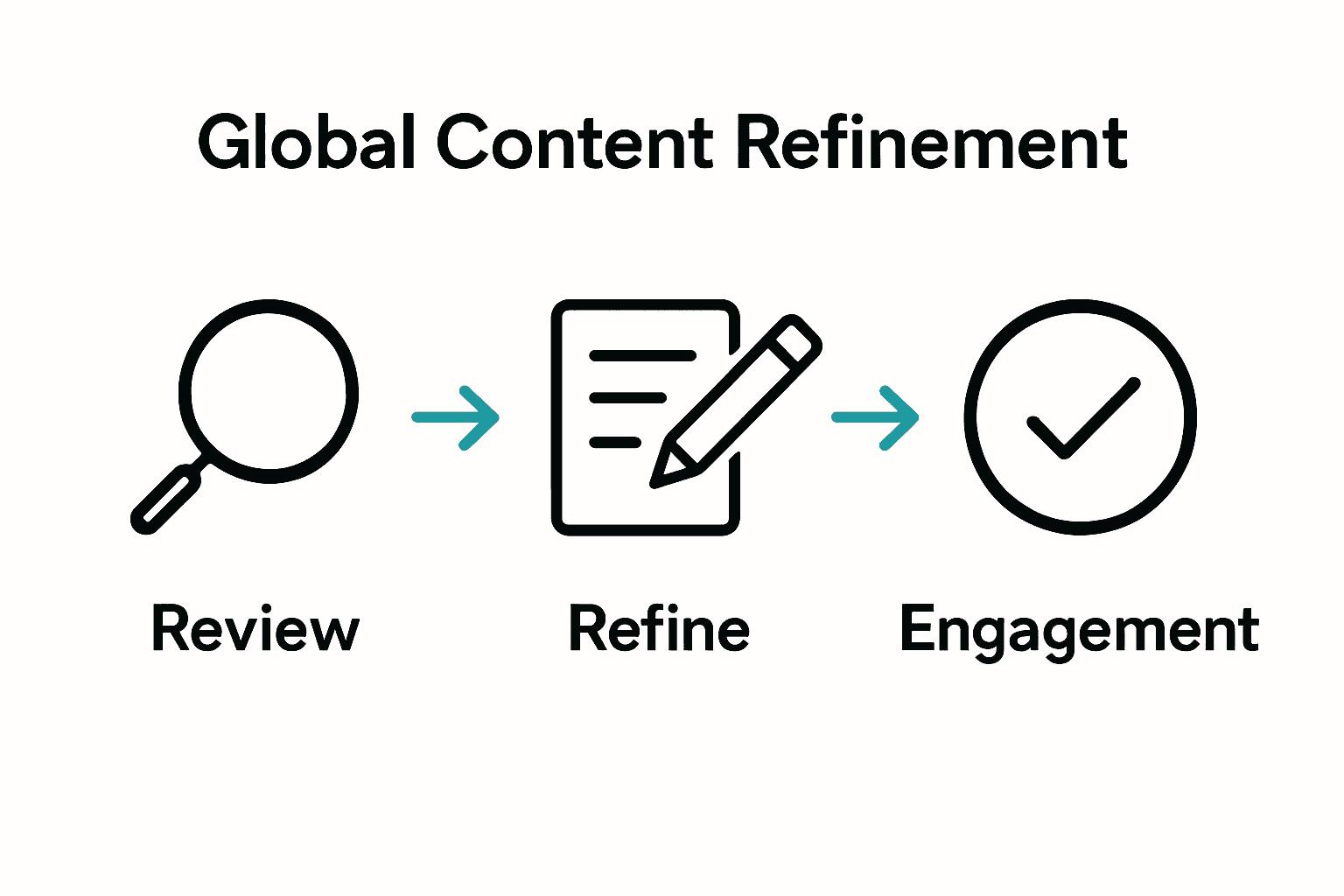
Pro tip: Create a personalized editing checklist that includes specific criteria for global audience engagement. Include items like cultural neutrality, clarity of technical concepts, emotional resonance, and potential misinterpretation risks.
With your content polished and primed for maximum impact, you are now ready to share your message with the world.
Creating content that truly connects with diverse audiences demands more than just translation or keyword tweaks. As the article highlights, customizing tone, integrating region-specific SEO, and refining language to evade AI detection are critical challenges that can easily overwhelm content creators and marketers alike. You need a solution that not only transforms AI-generated drafts into natural, culturally sensitive writing but also ensures your work stands out with genuine human resonance.
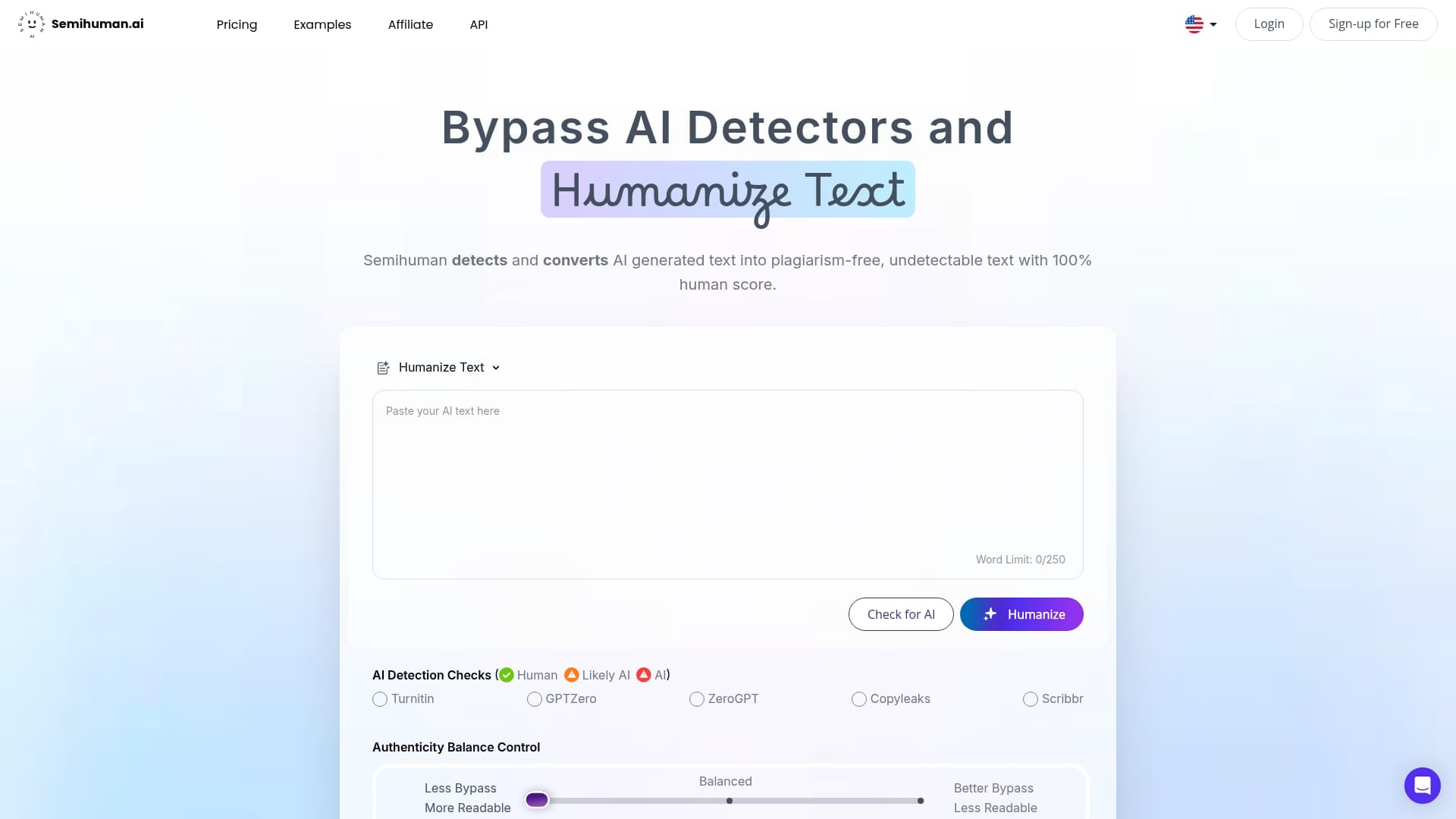
Discover how Semihuman.ai empowers you to master every step of this complex process. From seamlessly restructuring text to injecting authentic conversational flow and optimizing for global SEO, our platform helps you deliver compelling content that feels truly human while bypassing AI detection systems. Don't let robotic or formulaic writing hold your message back. Visit Semihuman.ai now and start crafting content that speaks clearly and powerfully across every cultural landscape.
To identify the needs and preferences of a global audience, start by conducting detailed audience research through surveys and web analytics. Focus on gathering insights into cultural preferences and communication styles specific to each region.
Customize your content by using clear and direct language, avoiding regional slang and idiomatic expressions. Create a style guide that outlines preferred terminology and communication approaches to ensure consistency across all content.
To integrate region-specific keywords, conduct thorough keyword research to understand local search behavior and language variations. Develop a dynamic keyword matrix to categorize relevant terms for different regions and track evolving search trends.
To humanize AI-generated content, upload your text to a refinement tool that allows you to select region-specific tone preferences. Revise the text to ensure it has a natural flow and maintains context while avoiding mechanical patterns typical of machine-generated writing.
Test your content for authenticity by running it through multiple AI detection platforms to identify any indicators of machine generation. Adjust sentence structures and vocabulary based on detection feedback to enhance the text's natural quality and emotional resonance.
During the final review of your content, concentrate on clarity, logical flow, and cultural neutrality. Create a personalized editing checklist that includes criteria for eliminating unnecessary complexity, ensuring accurate technical explanations, and maintaining a consistent voice for your audience.


Start
Humanizing
for Free!
Humanize