
Loading...

What makes a piece of writing spark action, while another builds lasting credibility? For digital marketers and SEO professionals, telling the difference between copywriting and content writing is more than a technical detail—it is the foundation for truly authentic content. Understanding the core distinction between persuasion and education not only sharpens your strategy but also helps you craft content that feels genuinely human and bypasses even the smartest AI detection systems.
| Point | Details |
|---|---|
| Core Objective Distinction | Copywriting aims to drive immediate actions, while content writing focuses on educating and building long-term trust. |
| Content Formats | Copywriting often appears in ads and landing pages, whereas content writing is found in blogs and tutorials. |
| Measurement Metrics | Success in copywriting is measured by conversion rates; content writing success is evaluated through organic traffic and audience loyalty. |
| Strategic Integration | Future marketing strategies will require a blend of copywriting and content writing to create a lasting impact on audience engagement. |
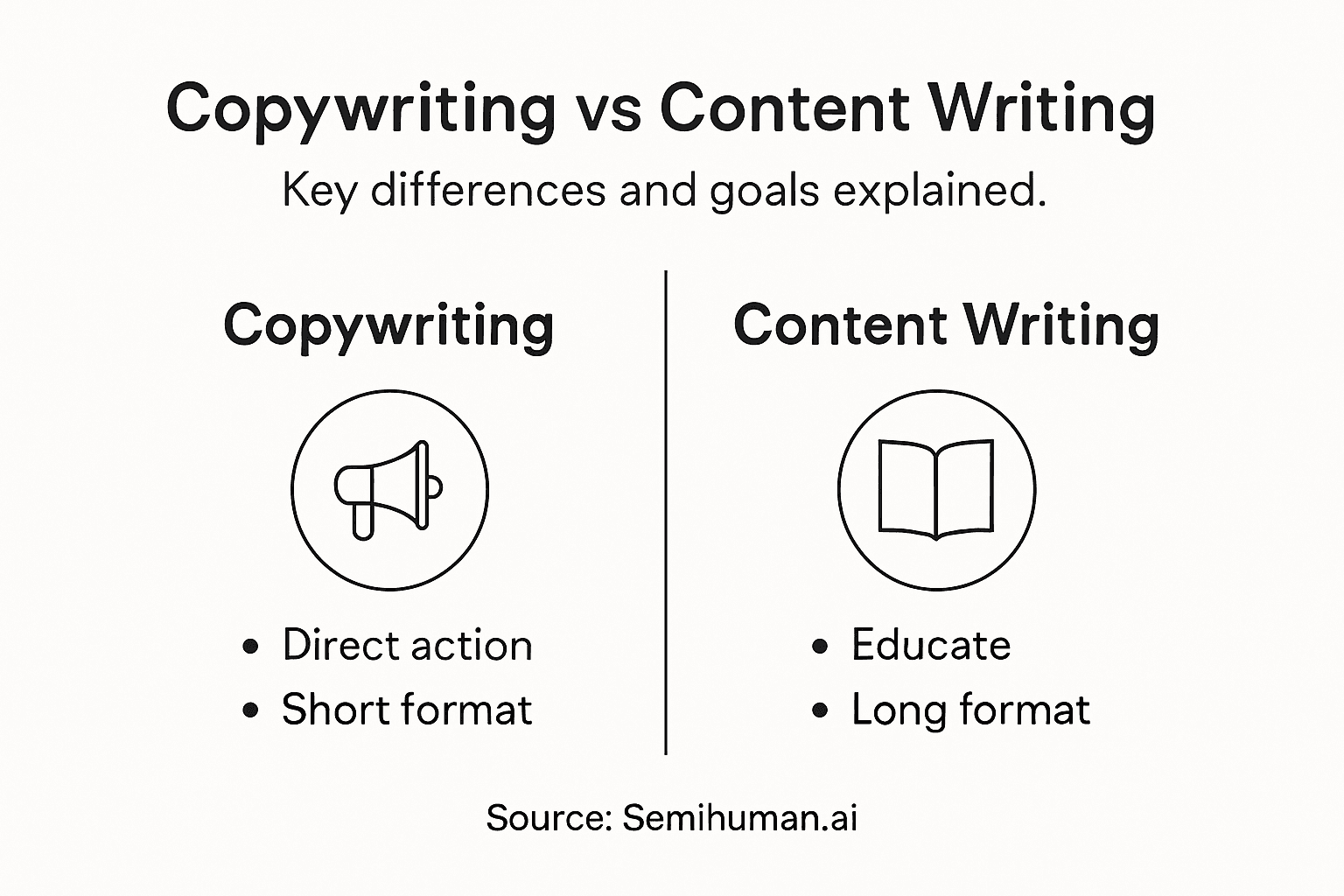
While copywriting and content writing both serve critical roles in digital communication, they represent distinctly different strategic approaches to engaging audiences. Copywriting fundamentally focuses on persuasion and conversion, designed to drive immediate actions like purchases or sign-ups, whereas content writing aims to educate, build trust, and establish long-term relationships with readers.
The core distinction lies in their primary objectives and measurable outcomes. Copywriting targets short-term goals through compelling calls-to-action, typically measured by conversion rates and direct revenue impact. Content writing, conversely, prioritizes generating organic traffic, establishing thought leadership, and nurturing audience connections through informative, valuable content that addresses specific reader needs and pain points.
Practically speaking, copywriting manifests in more direct marketing materials like advertisements, landing pages, email campaigns, and sales scripts. These pieces are crafted with precise psychological triggers to motivate immediate reader response. Content writing emerges through blogs, guides, tutorials, and long-form articles that provide substantial value, answer complex questions, and demonstrate expertise without explicitly selling something.
Here's a concise comparison of copywriting and content writing, highlighting their core purposes and effects:
| Aspect | Copywriting | Content Writing |
|---|---|---|
| Primary Goal | Drive immediate action | Build trust and educate |
| Typical Formats | Ads, landing pages, email campaigns | Blogs, tutorials, guides |
| Key Measurement | Conversion rates, direct revenue | Organic traffic, audience loyalty |
| Tone and Approach | Persuasive, urgent | Informative, comprehensive |
Pro tip: Blend copywriting and content writing techniques by creating educational content that subtly incorporates persuasive elements to maximize audience engagement and conversion potential.
Marketing strategies in 2026 will demand unprecedented integration of content writing and copywriting, transforming how brands communicate and engage with audiences. The evolving digital landscape requires a nuanced approach that balances educational content with strategic persuasion, moving beyond traditional siloed marketing techniques.
Copywriting will increasingly focus on creating emotionally intelligent, narrative-driven content that seamlessly blends psychological triggers with authentic storytelling. This approach shifts from pure sales rhetoric to more sophisticated, relationship-building communication strategies. Content writing, meanwhile, will expand into diverse multimedia formats like interactive video scripts, podcast narratives, and immersive digital experiences that provide comprehensive audience value.
The primary objective in 2026 will be developing a holistic content ecosystem where copywriting and content writing work synergistically. Brands will need to create content that not only ranks well in search engines but also generates meaningful audience engagement, drives conversions, and builds long-term trust. This means developing flexible content strategies that can adapt to rapidly changing digital consumption patterns and emerging technologies.
Pro tip: Invest in cross-training your content teams to understand both copywriting and content writing principles, enabling more integrated and dynamic marketing approaches.
Content writing demands specialized research and communication skills that go far beyond traditional writing abilities. Professionals in this field must master complex data synthesis, develop deep subject matter expertise, and create comprehensive narratives that educate and engage audiences across multiple digital platforms. These skills require a strategic approach to information processing, understanding nuanced audience needs, and crafting compelling long-form content that delivers genuine value.

Copywriters, by contrast, need a razor-sharp set of psychological and persuasive techniques. Their skill set centers on creating concise, emotionally resonant messaging that triggers immediate reader action. This requires advanced understanding of consumer psychology, emotional intelligence, and the ability to distill complex value propositions into memorable, compact language. Copywriters must excel at crafting headlines, developing compelling calls-to-action, and understanding subtle linguistic triggers that motivate purchasing decisions.
Both disciplines share fundamental requirements like understanding brand voice, maintaining consistent tone, and adapting communication style to specific audience segments. However, the key differentiation lies in their ultimate objectives: content writers aim to inform and build long-term trust, while copywriters focus on converting that trust into immediate, measurable actions. Successful practitioners in each field must continuously update their skills, stay current with digital communication trends, and develop a nuanced understanding of emerging content consumption patterns.
Pro tip: Develop cross-disciplinary skills by practicing both long-form informative writing and short-form persuasive communication to become a more versatile content professional.
Modern SEO workflows demand sophisticated approaches to AI content detection that go beyond simple algorithmic screening. Search engines are increasingly developing advanced techniques to identify artificially generated content, which means content creators must become more nuanced in their approach to maintaining authenticity and search engine credibility.
AI-generated content typically exhibits predictable linguistic patterns that can trigger detection mechanisms. These include repetitive sentence structures, generic language, lack of genuine personal insights, and uniform tone that lacks the natural variation found in human writing. Search engines like Google are continuously refining their algorithms to distinguish between genuinely helpful content and machine-generated text that provides minimal value to readers.
To successfully navigate this evolving landscape, content creators must focus on humanizing AI-generated drafts by introducing unique perspectives, personal anecdotes, and contextual nuances that reflect authentic human experience. This process involves strategic restructuring of AI-generated content, injecting original insights, varying sentence complexity, and ensuring the text provides genuine value beyond surface-level information. The goal is not just to avoid detection but to create content that truly resonates with human readers and meets search engine standards for helpful, original information.
Pro tip: Develop a systematic review process that involves multiple human touchpoints to transform AI-generated drafts into authentic, engaging content that passes sophisticated detection algorithms.
Strategic content selection requires understanding your marketing funnel and precise audience engagement goals. Different stages of customer interaction demand unique content approaches, with copywriting and content writing serving complementary but distinct purposes in guiding potential customers through their decision-making journey.
In the initial awareness phase, content writing becomes paramount. This approach focuses on educational, value-driven material that builds trust, establishes thought leadership, and addresses potential customer pain points. Long-form blog posts, comprehensive guides, and informative articles help potential customers understand their challenges and begin exploring potential solutions, creating a foundation of credibility and expertise.
As potential customers move closer to conversion, copywriting takes center stage. Here, the focus shifts to persuasive, action-oriented messaging designed to overcome final hesitations and motivate immediate responses. Targeted landing pages, compelling email sequences, and concise promotional content work to transform the intellectual understanding developed through content writing into tangible purchasing decisions. The most effective marketing strategies seamlessly integrate both disciplines, creating a fluid narrative that guides customers from initial curiosity to confident commitment.
To help select the right writing style for each marketing stage, use this reference:
| Funnel Stage | Preferred Approach | Core Objective |
|---|---|---|
| Awareness | Content Writing | Educate and attract new readers |
| Consideration | Content Writing | Build credibility and engagement |
| Conversion | Copywriting | Motivate immediate actions |
| Retention | Blend Both | Reinforce loyalty and advocacy |
Pro tip: Map your content strategy across the entire customer journey, using content writing to educate and build trust, then strategically deploying copywriting techniques to drive conversions at critical decision points.
The article highlights key challenges in balancing persuasive copywriting with educational content writing while maintaining authenticity and SEO effectiveness. If you struggle with AI-generated text detection, or want to craft genuinely human-like content that resonates emotionally and boosts search engine rankings, you are not alone. Common pain points include avoiding robotic language patterns, integrating meaningful keywords naturally, and making your text feel both engaging and trustworthy—exactly the human qualities that modern SEO demands.
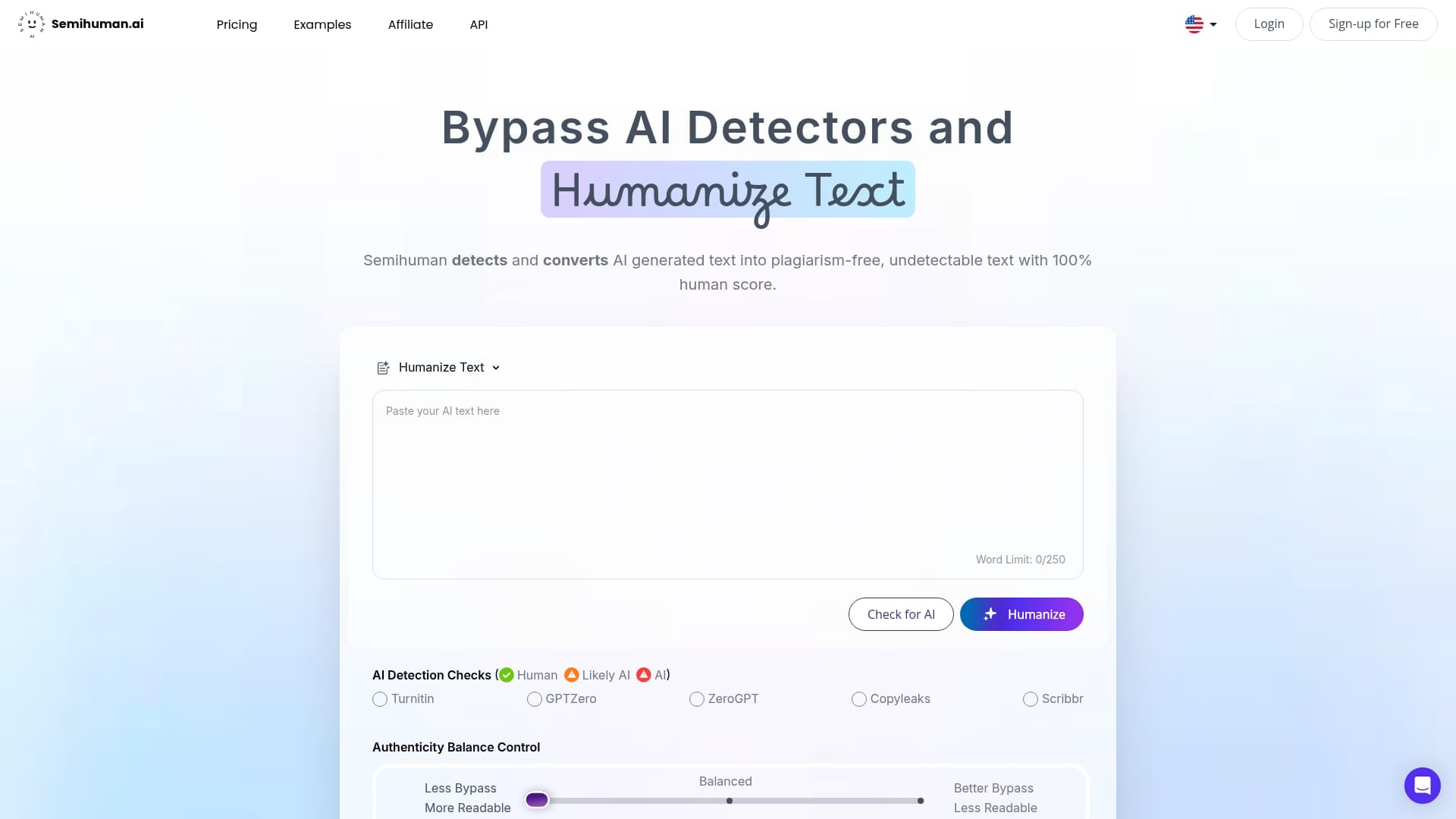
At Semihuman.ai, we specialize in transforming AI drafts into authentic content that passes the toughest AI detection systems like Turnitin and GPTZero. Our platform uses advanced text restructuring and keyword integration to help you create content that is unique, humanized, and conversion-ready. Whether you need to enhance blogs, landing pages, or email campaigns, our tool bridges the gap between compelling copywriting and in-depth content writing strategies discussed in the article.
Discover how to conquer AI detection challenges and elevate your content strategy today with Semihuman.ai.
Start humanizing your AI content now and watch your SEO rankings and audience trust soar. Visit Semihuman.ai to get started and experience the future of authentic content creation!
Copywriting focuses on persuasion and conversion, aiming to drive immediate actions like purchases or sign-ups, while content writing is about educating and building trust with audiences over time.
Copywriting is used in direct marketing materials such as advertisements, landing pages, email campaigns, and sales scripts, focusing on compelling language and psychological triggers to encourage immediate response.
You can create educational content that subtly incorporates persuasive elements, guiding potential customers through the decision-making journey while maintaining a balance between trust-building and conversion-oriented messaging.
Humanizing AI-generated content is crucial for SEO because search engines increasingly identify and penalize machine-generated content that lacks authenticity. By adding unique insights and personal experiences, you enhance the value of your content, improving both reader engagement and search engine credibility.


Start
Humanizing
for Free!
Humanize