
Loading...

Over half of American marketers report spending more time curating content than creating it from scratch. This shift reveals how the explosion of online information has changed what audiences expect and how brands manage their digital presence. By exploring both content curation and creation, you will see exactly how each approach shapes engagement, builds trust, and helps American businesses stand out in an increasingly crowded digital world.
| Point | Details |
|---|---|
| Content Curation vs. Creation | Content Curation focuses on organizing existing information, while Content Creation involves generating original material. Both approaches are valuable for engaging audiences. |
| Integrating Strategies | Successful digital marketing strategies leverage both curation and creation to maximize audience engagement and deliver targeted messages. |
| User Engagement Metrics | Understanding audience preferences and engagement metrics helps determine whether to prioritize curation or creation in content strategies. |
| Plagiarism Risks | Maintaining originality is crucial in both curation and creation; creators must develop strategies to avoid unintentional plagiarism and uphold content authenticity. |
Content curation and creation represent two distinct yet increasingly interconnected approaches to digital communication and information management. At its core, content curation involves carefully gathering, organizing, and presenting information relevant to a specific topic, with the primary goal of adding strategic value through intelligent selection and thoughtful arrangement.
Unlike pure content creation, which focuses on generating entirely original material, content curation requires a nuanced skill set that blends research, analysis, and presentation. Curators act as expert filters, sifting through vast amounts of digital information to identify the most relevant, compelling, and meaningful pieces that will resonate with their target audience. Technological advancements are progressively blurring traditional boundaries between these two domains, creating hybrid approaches that challenge conventional definitions.
The distinction between curation and creation can be understood through several key characteristics:
Content Curation:
Involves selecting and organizing existing content
Requires critical evaluation and context-setting
Adds value through expert commentary and strategic arrangement
Typically faster and less resource-intensive than creating from scratch
Content Creation:
Generates completely original material
Demands deep subject matter expertise
Involves comprehensive research and creative development
Requires more time and direct creative input
In today's digital ecosystem, successful content strategies often integrate both curation and creation, recognizing that each approach offers unique advantages in engaging and informing audiences.
Digital marketing represents a complex ecosystem where content curation and creation intersect, offering diverse strategies for engaging audiences. Content types in this domain range from carefully curated aggregations to completely original productions, each serving unique strategic purposes. Digital marketing strategies increasingly leverage content curation as a core competency for building meaningful audience connections and delivering targeted information.
The spectrum of content types in digital marketing can be categorized into several distinctive approaches:
Aggregation Curation:
Collecting relevant content from multiple sources
Presenting information with minimal original commentary
Ideal for rapidly sharing industry insights
Typically used in news and trend-focused platforms
Distillation Curation:
Extracting key insights from complex information
Simplifying technical or dense content for broader understanding
Focuses on providing clear, actionable takeaways
Common in educational and professional development contexts
Original Content Creation:
Developing completely new material
Requires deep subject matter expertise
Builds brand authority and thought leadership
Drives unique value proposition
E-commerce platforms demonstrate how advertising can seamlessly integrate with organic content, blending curated and created materials to optimize user engagement. This sophisticated approach allows marketers to craft narratives that feel both authentic and strategically designed, bridging the gap between informational value and promotional intent.
Successful digital marketing strategies recognize that the most effective content approaches are not binary but exist on a fluid spectrum, combining curation and creation to deliver maximum value to target audiences.
User engagement represents the critical metric that determines the success of digital content strategies, with both content curation and creation playing unique roles in capturing audience attention. The interactions between human creators and algorithmic systems are increasingly complex, shaping how audiences consume and interact with digital content across various platforms.
Content curation drives engagement through strategic information filtration and contextual presentation. By carefully selecting and arranging existing content, curators create value through:
Relevance Optimization:
Selecting most pertinent information for target audiences
Reducing cognitive load for consumers
Providing rapid insights without overwhelming details
Demonstrating expertise through intelligent selection
Trust Building:
Establishing credibility through thoughtful content selection
Showing deep understanding of audience interests
Presenting balanced perspectives from multiple sources
Creating a reputation for reliable information synthesis
Original content creation, conversely, drives engagement through unique storytelling and direct value generation. Algorithmic curation is fundamentally transforming how users experience content consumption, blending curated insights with original narratives to create more compelling user experiences.

The most effective digital strategies recognize that engagement is not about choosing between curation and creation, but strategically integrating both approaches to deliver maximum value, resonance, and audience connection.
Content creation and curation introduce significant challenges in maintaining originality and avoiding unintentional plagiarism. Algorithmic curation technologies increasingly complicate the landscape of content authenticity, raising critical concerns about the boundaries between inspiration and inappropriate replication.
The primary risks of plagiarism in digital content include:
Unintentional Content Mimicry:
Inadvertently reproducing similar language and structures
Failing to properly attribute source materials
Overreliance on existing online resources
Unconscious absorption of previously encountered content
Algorithmic Detection Triggers:
Identical phrase matching
Consistent linguistic patterns
Lack of unique narrative voice
Predictable sentence structures
Limited contextual variation
Content strategy requires meticulous planning to maintain authenticity and prevent potential plagiarism risks, demanding a proactive approach to originality. Creators must develop sophisticated strategies that balance research, inspiration, and genuine innovation.
Navigating the complex terrain of digital content requires understanding that originality is not about absolute novelty, but about bringing unique perspectives, personal insights, and thoughtful reinterpretation to existing knowledge domains.
Content strategy demands careful consideration of organizational objectives, audience needs, and available resources. Content strategy guides the planning and development of targeted marketing approaches, helping creators make informed decisions about whether curation or creation will most effectively achieve their communication goals.
Deciding between content curation and creation requires evaluating multiple strategic factors:
Resource Constraints:
Available time for content production
Budget limitations
Internal expertise and skill sets
Technical infrastructure
Audience Engagement Metrics:
Target audience information consumption preferences
Depth of subject matter understanding
Desire for original insights versus aggregated information
Potential for generating meaningful interactions
Content curation offers a strategic approach for efficiently delivering value without extensive original content creation, allowing organizations to maintain consistent communication channels with minimal direct resource investment. This method proves particularly effective for teams with limited production capabilities or rapidly evolving information landscapes.
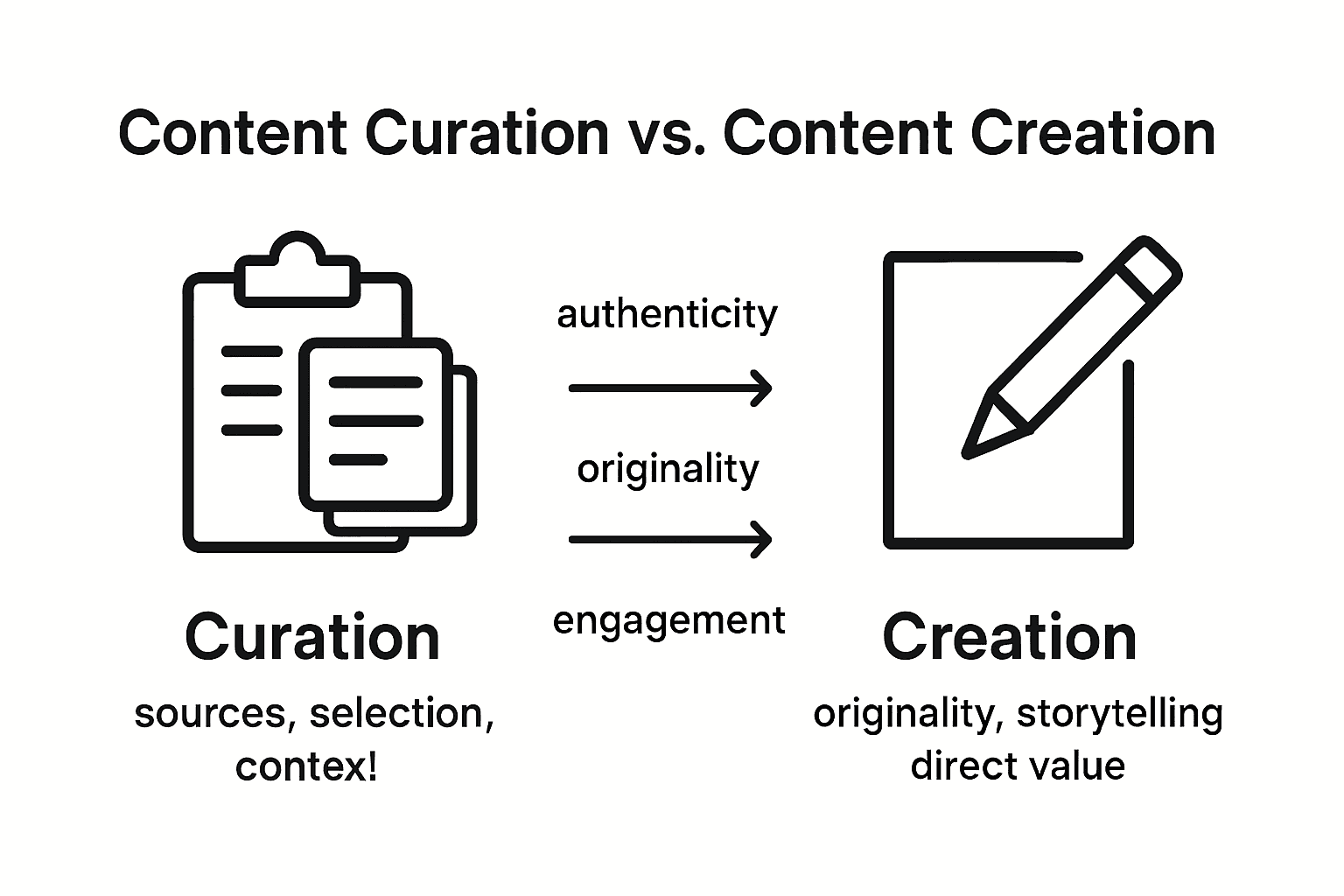
The most successful content strategies recognize that curation and creation are not mutually exclusive approaches, but complementary tools that can be dynamically balanced to achieve specific communication objectives. Intelligent content professionals blend these methods, creating a nuanced approach that maximizes audience engagement while optimizing organizational resources.
The challenge of balancing content curation and original creation is central to producing engaging, authentic digital materials without risking plagiarism or detection issues. If you have struggled with maintaining a human touch in AI-generated content or worry about algorithmic plagiarism detection, you are not alone. Many creators, marketers, and students face limitations in time, expertise, or resources while trying to keep their work genuine and SEO-friendly.

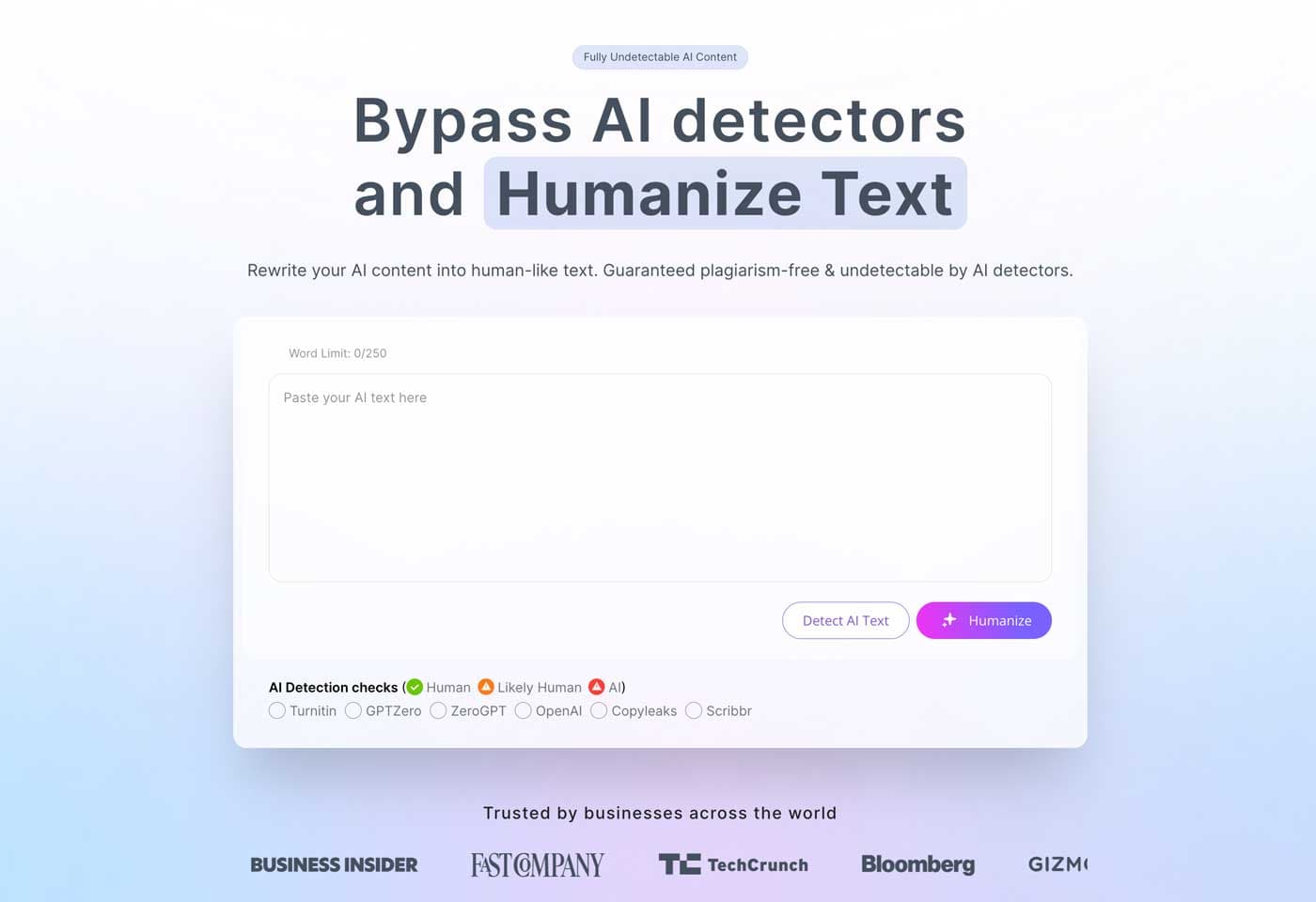
Discover how Semihuman.ai provides an innovative AI-powered solution designed specifically to humanize AI-generated text. Integrate keyword optimization, restructure sentence flow, and reduce AI detection sensitivity with ease. Semihuman.ai helps you achieve the natural, original voice your audience craves while safeguarding against unintentional plagiarism. Take control of your content strategy today to build trust, enhance engagement, and dominate search rankings with authentic stories. Start transforming your writing now at Semihuman.ai and experience the advantage of truly human-like content creation.
Content curation is the process of gathering, organizing, and presenting existing information relevant to a specific topic, adding value through intelligent selection and arrangement.
Content creation involves generating completely original material, while content curation focuses on selecting and organizing existing content. Creation requires deep expertise and time, whereas curation is generally faster and less resource-intensive.
The risks include unintentional replication of phrases or structures, failing to attribute sources, and overreliance on existing materials. To avoid this, creators should maintain originality by offering unique perspectives and proper citations.
Businesses should evaluate their resource constraints, audience engagement preferences, and overall communication goals. Curation can efficiently deliver value with less effort, while creation may be necessary for building authority and offering unique insights.


Start
Humanizing
for Free!
Humanize