
Loading...

Most american businesses struggle to stand out in a sea of online content, yet only a small percentage actually map out clear goals before hitting publish. Knowing who you are writing for and what you want to achieve changes everything. By understanding your true audience and choosing the right approach, you can create content that gets noticed, feels authentic, and drives real results.
| Key Point | Explanation |
|---|---|
| 1. Define your target audience clearly | Understanding who your audience is helps create more relevant and engaging content tailored to their needs and preferences. |
| 2. Conduct thorough keyword research | Identifying relevant keywords is essential for optimizing content for search engines and connecting with your audience. |
| 3. Write conversational drafts | Your content should feel relatable and engaging, resembling a friendly conversation rather than a stiff lecture. |
| 4. Humanize AI-generated texts | Utilize advanced tools to refine AI outputs, ensuring they sound natural and authentic, appealing to human readers. |
| 5. Focus on authenticity in SEO | While optimizing for search engines, maintain a genuine tone to ensure content resonates well with readers. |
Knowing exactly who you're creating content for transforms your entire strategy. Clearly defining your target audience isn't just a suggestion—it's the foundation of powerful content creation that genuinely connects with readers.
Start by mapping out your specific audience personas. Who are they? What problems do they need solved? What motivates them to seek out information? By understanding their core needs and behaviors, you can craft content that feels like it was written specifically for them. This means digging deep: consider their age, professional background, challenges, and information consumption habits.
Pro tip: Don't just guess about your audience. Research actual data from your existing customers, analytics tools, or surveys. The more precise you can be about who you're speaking to, the more compelling and targeted your content will become. Your goal is to create something so relevant that readers feel like you're speaking directly to their unique situation.
Keyword research is your secret weapon for creating content that not only resonates with readers but also ranks well in search results. Understanding how to identify and integrate keywords will transform your content strategy from guesswork to precision targeting.
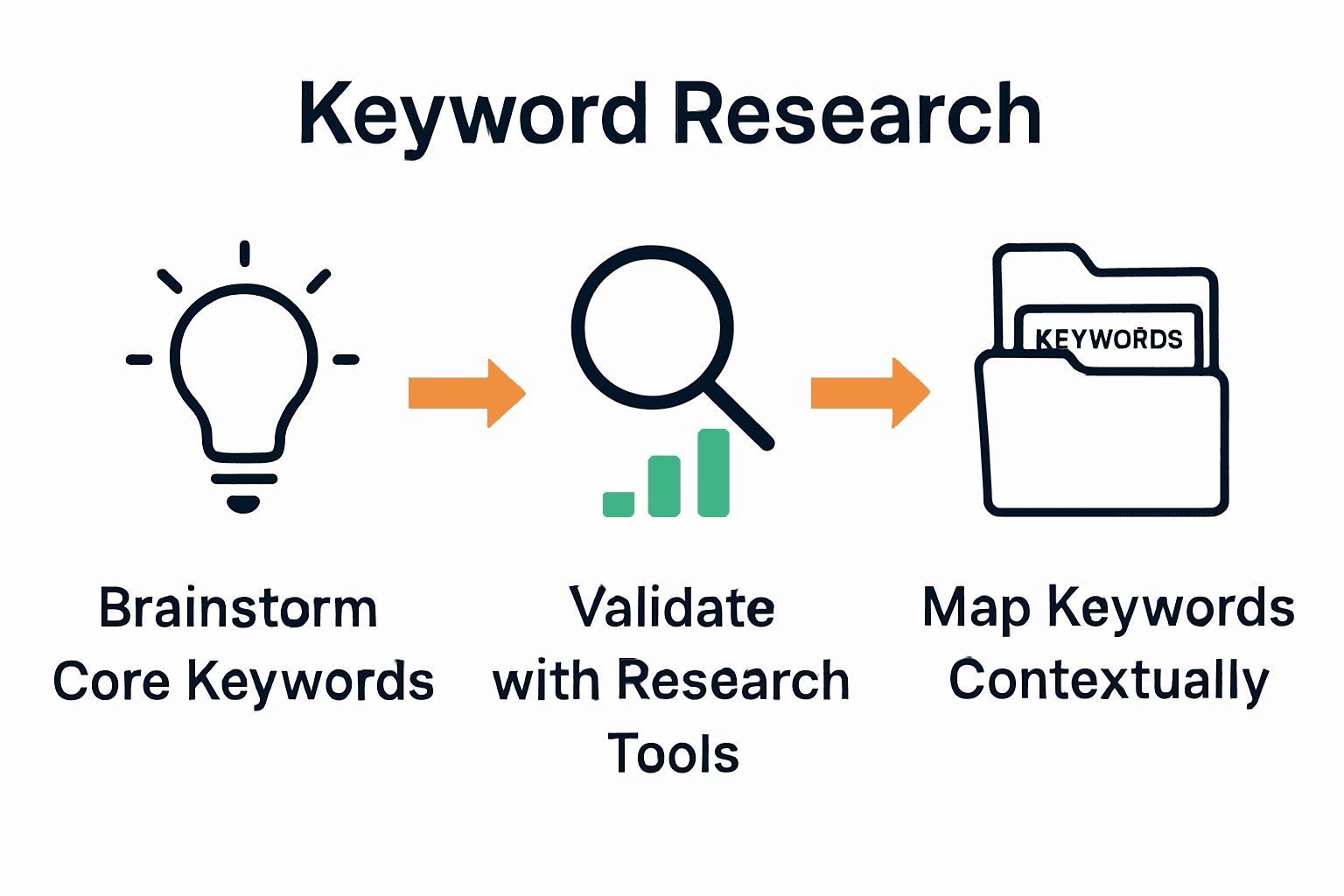
Before diving into research, start by brainstorming core terms directly related to your topic. Think about what words your target audience might type into a search engine. Create a comprehensive list that includes not just primary keywords, but also synonyms, related phrases, and variations. This means exploring broader and narrower terms that capture different aspects of your subject.
Pro tip: Use tools like Google Keyword Planner, SEMrush, or Ahrefs to validate your keyword choices. Look for terms with strong search volume but manageable competition. Remember that keyword integration isn't about stuffing—it's about weaving these terms naturally into your content so they feel organic and helpful. Your goal is to create content that speaks directly to your readers while signaling relevance to search engines.
Crafting content that genuinely connects with your audience requires more than just stringing words together. Your draft needs to feel like a conversation, not a lecture. Think about how you would explain your topic to a friend over coffee sharing insights that feel authentic and compelling.

Content marketing is about creating value that attracts and educates your readers, so start by outlining your key points with a natural narrative flow. Write conversationally by using active voice, mixing sentence lengths, and incorporating personal insights or storytelling elements. Imagine you are speaking directly to your target reader explaining complex ideas in simple, relatable language.
Pro tip: Read your draft out loud. If something sounds stiff or robotic, rewrite it. The goal is to create content that feels authentically human while maintaining clarity and professionalism. Your readers should feel like they are getting advice from a knowledgeable friend, not reading a mechanical instruction manual.
Advanced text analysis techniques can transform robotic AI output into natural sounding content that connects with readers. Think of humanizing AI text like translating a technical manual into a compelling conversation you might have with a knowledgeable friend.
Start by running your AI-generated draft through specialized humanization tools that break down and restructure language patterns. Combine sophisticated keyword citation methods to ensure your text maintains its original meaning while feeling more conversational and authentic. Focus on adjusting sentence structures, introducing varied vocabulary, and removing repetitive or mechanical phrasing that screams artificial intelligence.
Pro tip: Always review humanized content manually to guarantee the final version sounds genuinely human. Your goal is creating text that feels effortless and engaging, not like it was processed through an algorithmic filter. Read the text out loud and ask yourself: Would a real person actually say this?
Selecting the right keywords and phrases can dramatically improve your content's discoverability and search engine performance. Think of SEO optimization as creating a strategic roadmap that guides potential readers directly to your most valuable content.
Researching and integrating relevant keywords requires a nuanced approach that balances technical precision with natural language flow. Use tools like Google Search Console and SEMrush to identify high performing keywords, but avoid stuffing them mechanically. Instead, weave these terms organically into your text so they feel like a natural part of the conversation.
Pro tip: Authenticity matters more than perfect optimization. After running your content through SEO checks, always do a human review to ensure the text sounds genuine and engaging. Your ultimate goal is creating content that sounds like a real person wrote it while strategically targeting search engine algorithms.
The article highlights the challenge of creating content that feels genuinely human while strategically integrating keywords for SEO success. Many creators struggle with AI-generated text that reads robotic or repetitive, making it difficult to connect authentically with their audience and rank effectively. If you want to overcome this common pain point and produce content that resonates emotionally and ranks well without triggering AI detection systems, you need a specialized solution.

Discover how Semihuman.ai empowers you to transform AI drafts into authentic, engaging content with advanced text restructuring and keyword integration tools. This platform is designed for marketers, writers, and students who need to balance SEO optimization with natural language flow. Experience content creation that feels personal, improves SEO, and bypasses AI detection tools such as Turnitin and GPTZero. Don’t wait to make your content truly stand out. Visit Semihuman.ai now to start humanizing your AI-generated text and unlock the full potential of your written work.
To define your target audience effectively, start by creating detailed audience personas that outline their demographics, challenges, and goals. Research existing customer data or conduct surveys to refine this understanding, ensuring your content speaks directly to their needs and motivations.
Begin by brainstorming core terms related to your topic and then use keyword research tools to validate and expand your list. Aim for a mix of primary keywords and long-tail phrases that your audience might search for, ensuring that your content naturally incorporates these terms without keyword stuffing.
To write engaging drafts, adopt a conversational tone and use straightforward language that breaks down complex ideas. Organize your content with a clear narrative structure, and consider reading your draft aloud to ensure it sounds natural and relatable.
To humanize AI-generated text, utilize tools that can rephrase and restructure the language for a more conversational tone. Manually review and adjust the text to eliminate any robotic phrasing, ensuring the final version feels authentic and easy to understand.
SEO optimization involves careful keyword integration without relying on mechanical language. After researching relevant keywords, weave them naturally into your text, then conduct a human review to verify that the content remains engaging and genuine while effectively targeting search engines.



Start
Humanizing
for Free!
Humanize