
Loading...

Most American digital marketers know that nearly 45 percent of organizations have faced compliance-related penalties in the last year. Keeping content standards tight is not just a legal concern for American teams, but a reputation-saving necessity across today’s competitive platforms. With AI content under the microscope, this guide brings clarity to content compliance standards so you can confidently blend strong SEO with authentic, risk-free storytelling.
| Point | Details |
|---|---|
| Content Compliance | Adhering to established guidelines and legal requirements mitigates risks and protects users in digital content creation. |
| Types of Compliance | Internal compliance focuses on organizational standards, while external compliance addresses legal and regulatory requirements. |
| AI Legal Frameworks | Legal regulations for AI-generated text are evolving, requiring clear ownership attribution and transparency in content creation. |
| Authentic Content Creation | Strategies for humanizing AI-generated content include incorporating emotional intelligence and narrative diversity to enhance authenticity. |
Content compliance refers to adhering to established guidelines, legal requirements, and ethical standards when creating, publishing, and distributing digital content. These standards ensure that organizations maintain integrity, protect user interests, and minimize potential legal risks.
Understanding compliance involves recognizing multiple dimensions of content management. Comprehensive compliance frameworks encompass legal regulations, industry-specific guidelines, and organizational policies that dictate acceptable content practices. These frameworks help digital marketers and content strategists navigate complex regulatory landscapes by establishing clear parameters for content creation, distribution, and modification.
Key compliance standards typically address several critical areas:
Professional content compliance goes beyond mere rule-following. It represents a strategic approach to content development that balances organizational objectives with legal and ethical considerations. Successful implementation requires continuous monitoring, regular training, and adaptive strategies that evolve alongside changing digital landscapes.
Pro tip: Develop a comprehensive content compliance checklist that covers legal, ethical, and platform-specific requirements to streamline your content creation process and minimize potential risks.
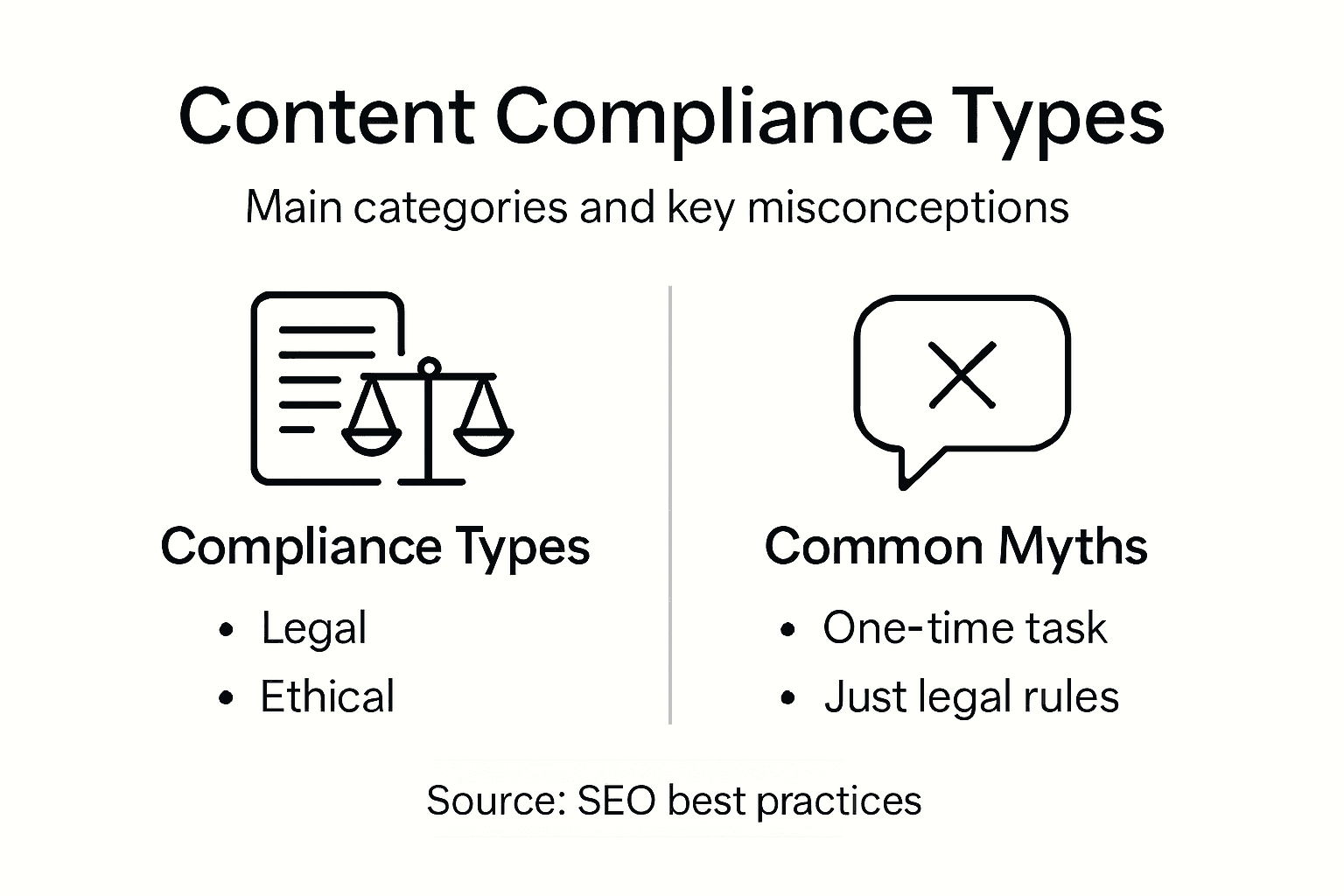
Compliance is a multifaceted concept that extends far beyond simple rule-following. Compliance categories range from internal organizational policies to external regulatory requirements, creating a complex landscape for digital content creators and marketers to navigate.

Two primary types of compliance emerge in professional environments:
Here's a comparison of internal and external compliance approaches for digital content:
| Aspect | Internal Compliance | External Compliance |
|---|---|---|
| Definition | Organization-driven standards and codes | Regulatory laws and industry regulations |
| Scope | Applies within company boundaries | Applies across industries and jurisdictions |
| Leadership | Led by HR, ethics, or management teams | Governed by legal and regulatory bodies |
| Flexibility | Adaptable to business needs | Must align with formal requirements |
| Risk Focus | Protects reputation and internal cohesion | Enforces legal protection and accountability |
Misconceptions about compliance can significantly hinder effective risk management. Common compliance myths often prevent organizations from developing robust, adaptive compliance strategies. Many professionals mistakenly view compliance as a static, bureaucratic process rather than a dynamic, strategic approach to risk mitigation.
The most prevalent myths surrounding compliance include believing that it is:
This table summarizes prevalent myths versus the realities of compliance:
| Compliance Myth | The Reality |
|---|---|
| It's just paperwork | It's a strategic risk management tool |
| Only for compliance teams | Requires involvement from all departments |
| Completed once then forgotten | Needs ongoing updates and vigilance |
| Irrelevant to business growth | Directly impacts reputation and operations |
In reality, effective compliance requires organization-wide commitment, continuous learning, and proactive risk management. It demands collaboration across departments, regular training, and a culture of ethical awareness that goes beyond simple rule adherence.
Pro tip: Create a cross-functional compliance task force that includes representatives from different departments to develop a more holistic and adaptive compliance approach.
The landscape of AI-generated content is rapidly evolving, creating unprecedented challenges for legal frameworks worldwide. European copyright regulations774095_EN.pdf) are increasingly scrutinizing the complex relationship between artificial intelligence and intellectual property rights, highlighting the need for comprehensive guidelines that balance technological innovation with creator protections.
Key legal considerations for AI-generated text emerge across multiple domains:
Academic and professional sectors are particularly focused on developing robust legal frameworks that address emerging ethical challenges. These frameworks aim to mitigate risks such as implicit plagiarism, credential misrepresentation, and potential misuse of AI-generated content.
The regulatory landscape is dynamic, with jurisdictions worldwide developing unique approaches to managing AI-generated text. Some regions are implementing strict disclosure requirements, while others focus on creating mechanisms for tracking and verifying the origins of AI-assisted content.
Pro tip: Develop a comprehensive documentation process that clearly tracks AI involvement in content creation, including specific details about AI tools used and the extent of their contribution.
The intersection of artificial intelligence and search engine optimization represents a transformative frontier for digital content strategies. AI-powered SEO techniques are revolutionizing how businesses approach online visibility, offering unprecedented opportunities for precise targeting and content optimization.
Strategic SEO integration with AI-generated content requires a nuanced approach that balances technological capabilities with human creativity:
Search engine algorithms increasingly prioritize content that demonstrates authentic user-focused strategies beyond simple keyword manipulation. This means AI-generated content must go beyond technical optimization to provide genuine value, maintaining a delicate balance between algorithmic efficiency and human-like engagement.
Successful SEO integration demands a holistic approach that treats AI as a collaborative tool rather than a replacement for human insight. Content creators must develop sophisticated workflows that leverage AI's analytical capabilities while preserving the nuanced understanding and creative spark that only human writers can provide.
Pro tip: Implement a rigorous content review process that uses AI as an initial draft generator, but requires human editing to ensure authenticity, emotional resonance, and true value for your target audience.
The digital landscape is increasingly characterized by sophisticated challenges in detecting artificially generated content. AI text detection vulnerabilities reveal significant weaknesses in current technological approaches, creating a complex environment for content creators and platform managers.
Key detection risks emerge across multiple domains:
Cybersecurity experts warn about sophisticated SEO manipulation techniques that exploit search engine vulnerabilities. These advanced strategies involve complex content generation designed to mimic human writing patterns while avoiding detection, posing significant risks to digital ecosystems.
Successful evasion techniques often involve multilayered approaches that blend advanced natural language processing with strategic content restructuring. Content creators must understand that detection avoidance is not about deception, but about creating authentic, high-quality content that genuinely serves user needs while maintaining technological sophistication.
Pro tip: Develop a comprehensive content review process that integrates both AI-powered analysis and human oversight to create truly authentic and undetectable content.
Creating genuinely human-like content requires a strategic approach that goes beyond simple text generation. Humanizing AI content demands careful attention to nuanced writing techniques that capture the complexity of human communication and storytelling.
Key strategies for achieving authentic content include:
Academic and professional contexts increasingly emphasize writing authenticity verification as a critical requirement. This means moving beyond surface-level text generation to create content that genuinely reflects human thought processes, intellectual creativity, and nuanced communication.
Successful content humanization involves a multidimensional approach that balances technological efficiency with genuine human creativity. Writers must learn to leverage AI as a collaborative tool, using it to enhance rather than replace the unique perspectives and insights that only human authors can provide.
Pro tip: Develop a personal editing workflow that systematically introduces human-specific elements like contextual anecdotes, conversational transitions, and subtle emotional undertones into AI-generated drafts.
Navigating the complex landscape of content compliance standards can feel overwhelming, especially when balancing legal regulations, ethical requirements, and SEO goals. You want to ensure your AI-generated content respects intellectual property rights, maintains transparency, and avoids detection risks without sacrificing authenticity or user engagement. This article highlights critical challenges like detection evasion, transparency mandates, and the need for genuine human-like content—key pain points for creators aiming to maximize SEO safely.
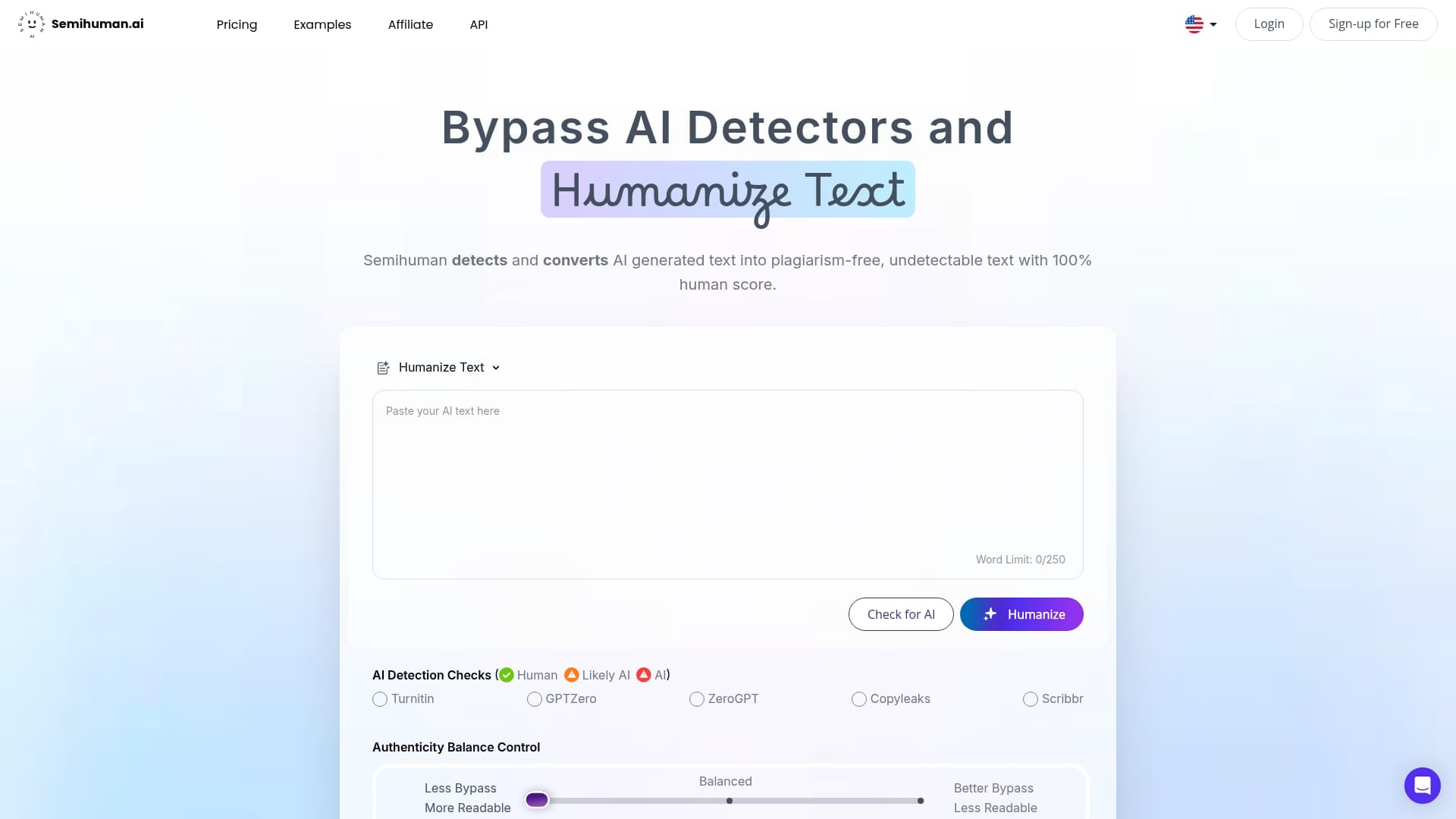
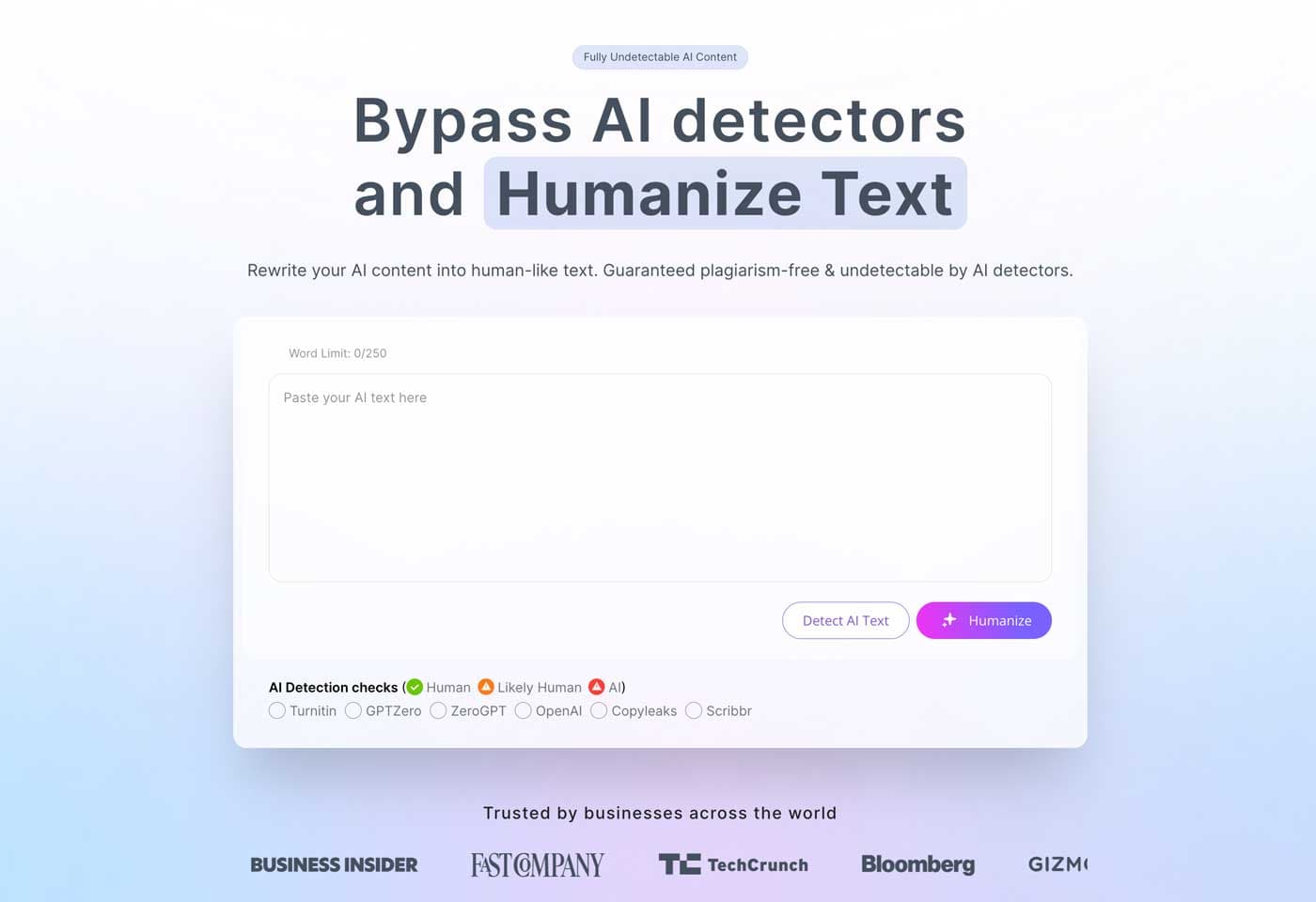
At Semihuman.ai, we offer an AI-powered platform specialized in transforming your AI-generated text into naturally human-like content. Our tools enable you to restructure text, integrate keywords strategically, and evade detection tools such as Turnitin and GPTZero—helping you stay fully compliant while enhancing your content's organic reach. You can protect your brand’s integrity, minimize plagiarism concerns, and align with evolving legal frameworks by leveraging technology designed specifically for content creators, marketers, and students alike.
Ready to take your content compliance strategy to the next level and unlock powerful SEO gains with authentic text? Discover how easy it is to humanize AI content with our solutions.
Start maximizing your compliant, high-ranking content today by visiting Semihuman.ai. Explore expert insights on SEO for AI-generated content and build trust with your audience through genuine storytelling enhanced by our platform.
Content compliance refers to adhering to established guidelines, legal requirements, and ethical standards when creating, publishing, and distributing digital content. This ensures organizations maintain integrity and protect user interests.
Compliance is critical for SEO because it helps maintain a site's reputation and ensures that content is in line with regulatory standards. Non-compliance can lead to penalties that negatively impact search engine rankings.
AI-generated content must address several legal considerations, including intellectual property rights and transparency requirements. It is essential to track AI involvement in content creation and ensure proper attribution and compliance with relevant regulations.
Best practices for human-like content include using narrative diversity, personal perspectives, emotional intelligence, and contextual relevance. These elements help ensure that AI-generated content resonates authentically with readers.


Start
Humanizing
for Free!
Humanize