
Loading...

Sorting fact from fiction about AI and SEO is harder than ever. Stories about robotic paragraphs, endless keyword stuffing, and the magic of long-form articles can leave you guessing what advice to trust or ignore. Following outdated rules could cause you to waste time or even hurt your content’s real impact.
This guide gives you clear answers supported by recent research. You’ll see which common beliefs hold up and which are holding you back. Get ready to discover practical insights that help you make smarter decisions each time you sit down to create, edit, or optimize your content.
| Takeaway | Explanation |
|---|---|
| 1. AI Content Can Sound Human | With proper guidance, AI can produce emotionally engaging content that resonates with readers. Neglecting editing and refinement leads to generic outputs. |
| 2. Quality Trumps Word Count for SEO | Content should satisfy user intent and provide valuable information, regardless of length. Focus on clarity and effectiveness over arbitrary word counts. |
| 3. Keyword Stuffing Harms SEO | Instead of forcing keywords repetitively, prioritize natural language and varied vocabulary to enhance readability and improve engagement. |
| 4. Edit AI Output for Authenticity | Treat AI-generated text as a draft needing human insights and corrections. Editing ensures content meets quality standards and reflects your voice. |
| 5. Readers Often Can't Detect AI Content | Most readers struggle to identify AI-generated text, highlighting the importance of content quality and audience engagement over the concern of authorship. |
Here's what many marketers believe: AI-generated content reads like it was written by a robot designed to sound authoritative but emotionally empty. They assume the moment you publish AI content, readers will instantly sense something feels off, disengaged, mechanical. But here's the reality: this myth needs serious reconsideration.
The truth is more nuanced than the blanket "AI always sounds robotic" claim. Recent studies reveal AI tools like ChatGPT can convincingly replicate personal tone and emotional elements in writing, with many reviewers unable to differentiate AI-generated from human-authored statements. This means the assumption that AI-generated content automatically lacks authenticity doesn't hold up under scrutiny.
That said, there's a legitimate kernel of truth buried in this myth. Research from the University of East Anglia found that while AI-generated essays often demonstrate fluent, structurally sound writing, they frequently lack the personal engagement and dynamic style typical of human writing. The study notes AI often misses rhetorical questions, personal commentary, and direct reader appeals, resulting in a mechanical tone that reduces persuasion and human connection.
Here's where the myth falls apart completely: these limitations aren't inherent to AI itself. They're predictable patterns that you can actively address. AI tends to produce generic structures because it hasn't learned your unique voice, your audience's specific pain points, or your brand's personality. When you provide clear direction, examples of your desired tone, and specific context about your readers, AI outputs shift dramatically.
Consider how a freelance writer might approach content differently from a corporate communications team. Both are human, yet their outputs vary wildly based on background, experience, and brief. AI works the same way. Feed it a vague prompt and you'll get generic content. Feed it rich context, your brand voice guidelines, and specific examples of what resonates with your audience, and the output transforms.
The practical application here is straightforward: treat AI as a starting point rather than a finished product. The edit and refinement process is where human judgment adds irreplaceable value. You inject personal commentary, question assumptions, add specific examples from your experience, and weave in emotional resonance that connects with readers on a deeper level. This hybrid approach combines AI's efficiency with human authenticity.
Many content marketers discover that why AI writing needs editing for authentic content becomes clear when they stop expecting AI to generate publication-ready work and start viewing it as a collaborative tool that handles structure and information synthesis while you handle the soul of the piece.
Pro tip: Ask AI to write in the style of a specific person you admire, provide 2-3 real examples of your brand voice in action, and include a line about what makes your audience unique—these three inputs dramatically improve the human quality of AI output without requiring extensive revision.
Most marketers operate under a simple assumption: longer content ranks better. They believe that 3,000 word articles automatically outperform 1,500 word pieces, and that word count is the primary lever for SEO success. This belief drives countless hours spent inflating content with filler just to hit arbitrary targets. But this myth misses the actual mechanics of how search engines evaluate content.
The reality is that word count matters far less than what you do with those words. Search engines care about whether your content satisfies user intent, demonstrates expertise, and engages readers. A 1,200 word article that directly answers someone's question will outrank a 4,000 word rambling piece every single time. The confusion comes from correlational data showing that high-ranking content tends to be longer, but correlation is not causation.
Long-form content does have genuine advantages when structured properly. Properly organized long-form content engages readers, improves user experience metrics like dwell time, and signals expertise and authority to search engines. The key word here is organized. A well-structured 2,500 word guide that moves readers through a logical journey will crush a disorganized 5,000 word wall of text.
Long-form content also excels at satisfying complex queries. When someone searches for a complicated topic, they expect comprehensive coverage. Long-form content enables detailed exploration of nuanced subjects and drives metrics like backlinks and user engagement. However, quality and relevance trump length every time. Long content without genuine value will not perform well, regardless of how much of it you produce.
Here is where the myth genuinely breaks apart: short-form content dominates in many verticals. Quick answer content, product comparisons, how-to guides under 800 words, and listicles consistently rank well for high-intent queries. A 600 word piece optimized for a specific problem often beats a 3,000 word piece that tries to cover everything tangentially related. Your audience often prefers the focused answer to the comprehensive epic.
The practical approach for modern content strategy balances both forms strategically. You write long-form content when the query demands it—when users need comprehensive exploration, step-by-step instructions, or deep comparison. You write short-form content when clarity and speed matter more. You also write medium-form content (1,200 to 1,800 words), which often represents the sweet spot for balancing depth with engagement.
Consider your actual readers. A developer searching for API documentation wants quick technical accuracy. A business owner researching quarterly reporting requirements wants thorough coverage. A student looking for essay structure guidance wants actionable steps without excessive theory. Your content length should match user needs, not SEO mythology.
Many successful content marketers focus on unique content that boosts authenticity and SEO success rather than chasing word count targets. They recognize that one genuinely useful paragraph that nobody else has published will outperform five mediocre paragraphs copied from ten other sources. Search engines increasingly reward distinctiveness and original value over sheer volume.
Pro tip: Research the actual word count of top-ranking pages in your target keywords, then aim to match that length only if your content naturally needs it—use a 5 percent margin above or below the average rather than adding pointless length to reach arbitrary targets.
You've probably heard the advice somewhere: pack your target keyword into every paragraph, repeat it in your headings, and make sure it appears at least 5 percent of the time. The logic seems sound, right? If search engines look for keywords, more keywords should mean better rankings. But this approach is not just ineffective, it's actively harmful to your content and your SEO performance.
Keyword stuffing is a relic from the early days of search engines when algorithms were far less sophisticated. Back then, keyword density actually mattered because Google had limited tools to understand context and meaning. Modern search engines have evolved dramatically. They now evaluate hundreds of ranking factors, understand user intent, recognize semantic relationships between words, and can spot manipulation attempts. Research involving Google, Yahoo, and Bing shows that excessive keyword stuffing does not improve rankings or cause blacklisting as widely believed. Search engines prioritize well-written, high-quality content over keyword density.
What actually happens when you stuff keywords into your content? Your writing becomes awkward, repetitive, and hard to read. Real humans notice immediately. They bounce away from your page, spend less time on it, and never come back. This behavior sends negative signals to search engines. High bounce rates and low dwell time tell Google that your content failed to satisfy the reader, which directly harms your rankings more than any keyword placement could help.
Keyword stuffing is considered a black hat SEO tactic that search engines have advanced to penalize deliberately. When an algorithm detects unnatural keyword repetition, it treats the content with suspicion. Instead of ranking well, the page may see reduced visibility or removal from search results entirely. The penalty isn't always automatic, but the risk simply isn't worth it when natural keyword usage works so much better.
Here's what actually works: place your primary keyword in the title, use it naturally in your first paragraph, weave related keywords throughout the content, and focus on answering user questions thoroughly. Strategic keyword placement and comprehensive, useful content outperform stuffing techniques by a significant margin. Your keyword might appear 5 to 10 times in a 2,000 word article if it fits naturally. That's roughly 0.25 to 0.5 percent, far below the old "5 percent rule" that some marketers still cling to.
Consider how a real person would write about your topic. They would use the keyword when it makes sense and switch to related terms to maintain natural flow. They would use synonyms, related phrases, and contextual language. This approach actually tells search engines more about your content because Google's algorithms recognize that varied language signals genuine expertise and natural writing.
The practical benefit here is that writing naturally for keyword stuffing elimination makes your content better for everyone. Readers find it easier to understand. It flows smoothly. It feels authentic and knowledgeable. These qualities encourage people to share your content, link to it, and return for more. Building authority through authentic content creation drives far more sustainable SEO success than any tactical keyword manipulation ever could.
If you're tempted to stuff keywords, pause and ask yourself if the sentence would still make sense without it. If removing the keyword leaves an awkward, grammatically weird sentence, you've found keyword stuffing. Rewrite it naturally. Your future self will thank you when those rankings climb and your bounce rate drops.
Pro tip: Focus on semantic variations and related keywords instead of repeating your exact target keyword, use tools like Google Search Console to see which keyword variations already rank for your content, and let natural language guide your placement rather than hitting arbitrary density targets.
Here's a widely held belief that needs immediate correction: plagiarism detection tools will catch any AI-generated content you try to publish. This assumption provides false confidence to marketers, educators, and writers who rely on these tools as foolproof guards against AI writing. The reality is far messier and more concerning than most people realize.
The problem starts with how plagiarism detectors work. Traditional tools like Turnitin and Copyscape were built to catch verbatim copying, where someone lifts text directly from another source. These detectors compare your content against a database of existing material and flag matches. But AI-generated text operates differently. AI synthesizes information from patterns in training data rather than copying verbatim, making it fundamentally harder to detect through traditional plagiarism matching. AI-generated text challenges traditional plagiarism detection because it synthesizes content rather than copying verbatim, complicating identification.
The detection problem extends beyond traditional plagiarism tools to AI-specific detectors. Various detection tools analyze AI-generated and human text, but none are infallible. GPTZero, Originality.AI, and similar services often fail to detect all AI-written passages or falsely flag human text as AI-generated. A human-written article might trigger AI detection flags, while an AI article passes through undetected. The inconsistency isn't a bug in these tools, it's a fundamental challenge of the task itself. Current plagiarism and AI detectors are inconsistent and prone to errors, necessitating supplementary human oversight for authentic academic integrity enforcement.
Why are detection tools so unreliable? Because AI writing quality continues improving faster than detection capabilities can keep pace. As AI language models become more sophisticated and more aligned with natural human writing patterns, they become harder to distinguish algorithmically. It's an arms race where detection lags behind capability. A detector trained on ChatGPT 3.5 outputs becomes less reliable as soon as more advanced models enter the market.
This creates a dangerous false sense of security. A marketer might use AI to draft content, run it through a plagiarism checker that returns green lights, and publish confidently. That content may still read as obviously AI-generated to a human reader, or it might contain subtle quality issues that hurt engagement. Or it might genuinely bypass detection entirely while still failing to meet authenticity standards.
For content marketers specifically, the real risk isn't getting caught by a detector. It's that your content fails to engage your audience because it still carries hallmarks of AI writing. Or it's that your brand reputation suffers when readers realize your published content lacked the authentic voice they expect. Understanding plagiarism risks with AI generated text helps you move beyond reliance on detection tools and focus on actual content quality.
The practical approach here abandons the idea that detection tools are your safety net. Instead, you should edit and refine AI-generated content until it matches your brand voice and quality standards. You should add original insights, personal examples, and authentic perspective that no detector matters for because the content is genuinely yours. You should treat AI as a starting point that requires human judgment and enhancement to become publication-ready.
Stop using detection tools as your primary quality gate. They're unreliable and they encourage the wrong behavior. Instead, develop a process where you evaluate your content based on whether it serves your reader, represents your brand authentically, and contains original value. This approach works regardless of detection tool accuracy because it focuses on what actually matters for your audience.
The multi-layered approach combining algorithms and expert judgment is what works at scale. You use detection tools as one input among many, but you don't trust them exclusively. You read the content yourself. You ask whether it sounds like something you or your team would write. You consider whether it adds genuine value beyond what's already published. You evaluate it through the lens of your specific audience and their needs. Only this combination of technical tools and human judgment provides real confidence in your content quality.
Pro tip: Never rely solely on plagiarism or AI detection tools as your final approval gate, instead implement a three stage review process that includes a detection tool scan, a human read for authenticity and brand voice, and a check for original insights or perspectives unique to your organization.
There's a comforting belief many marketers hold: readers are smart enough to instantly recognize when content was written by AI. This assumption suggests that if you publish AI-generated content without proper refinement, your audience will immediately call you out. The assumption provides false comfort because it simply doesn't match reality.
The truth is that most readers cannot reliably identify AI-generated content, especially when it's well-written. Ask someone to read an article and guess whether AI or a human wrote it, and they'll perform at roughly the level of chance. Their confidence in their assessment won't correlate with accuracy. They might feel certain they spotted AI writing when they're actually reading human-authored content, or they might miss obvious AI patterns completely.
This gap exists because AI writing has improved dramatically in recent years. Modern language models produce text that flows naturally, follows logical structure, and maintains consistent tone. The hallmarks that made earlier AI writing obviously mechanical have largely disappeared. When AI models can replicate diverse writing styles, incorporate specific examples, and maintain coherent arguments across thousands of words, human readers lose their ability to distinguish it from human writing through casual reading alone.
Research highlights this challenge directly. As AI models improve, traditional detection methods become less effective. Researchers emphasize statistical watermarking as a new strategy, but even sophisticated techniques face challenges. The line between human and AI writing is increasingly blurred, making reliable human detection difficult and unreliable on its own. This means your readers simply don't have a reliable detection mechanism, regardless of how carefully they read.
Consider the practical implications. A marketing team publishes an AI-generated article on their blog. The content is well-structured, informative, and addresses reader pain points directly. Most readers consume it without suspecting AI involvement. They share it because it provided value. They return for more content. The AI writing successfully accomplished its purpose because readers engaged with the substance rather than focusing on detection.
However, this doesn't mean publishing unrefined AI content is smart strategy. The absence of reader detection doesn't equal quality. Your content might pass casual inspection while still lacking the authentic voice, personal perspective, and original insights that build lasting audience loyalty. A reader might not consciously identify it as AI-generated, but they might sense something feels off, generic, or impersonal. That intuitive response, even if they can't articulate why, leads them to prefer competitors' content.
The real risk isn't getting caught. It's publishing content that seems fine on the surface but fails to build the trust and authority that drives business results. Understanding why AI content gets flagged helps you move beyond thinking about detection and focus instead on the elements that actually matter for your audience.
This shifts the entire approach. Rather than worrying whether readers will detect AI writing, focus on whether your content serves them authentically. Rather than assuming unedited AI output is acceptable because readers won't notice, invest in refining it until it represents your genuine expertise and perspective. The goal isn't fooling readers. It's creating content valuable enough that its origin doesn't matter because it delivers real value.
Your responsibility as a content marketer is to publish material that meets your audience's needs and represents your brand honestly. Relying on reader inability to detect AI writing as justification for publishing unrefined AI content is backwards. Use AI as a tool that accelerates your content creation process, then apply your judgment and expertise to make it authentically valuable. Your readers will appreciate the result far more than they would appreciate discovering they were misled about authorship.
Pro tip: Stop viewing reader detection as a risk factor and instead focus on whether your content contains original perspectives, specific examples from your experience, and authentic voice that no pure AI generation provides, then use AI tools for research and drafting rather than final publication.
Many content marketers operate under a paralyzing belief: if your idea isn't completely novel, your content will fail to engage readers. This myth suggests that every article, every guide, every piece of content must break new ground to be worthwhile. It's a false standard that prevents countless marketers from publishing valuable work because they convince themselves their angle isn't original enough.
The reality is far more forgiving. Engagement depends on factors that have nothing to do with originality. Motivation, emotional connection, and cognitive involvement drive how readers interact with your content. These elements can be fostered through original ideas, but they can also be fostered through well-curated, thoughtfully presented existing ideas. A reader engages because your content solves their problem, teaches them something useful, or helps them understand a concept better. The novelty of your core idea matters far less than how you present it.
Consider how many successful content pieces cover topics that have been written about hundreds of times. There are thousands of articles about email marketing best practices, productivity systems, and content strategy fundamentals. Yet new articles on these topics still generate engagement because they offer fresh perspective, better organization, stronger examples, or more relatable explanation. The idea isn't original, but the execution is. The engagement comes from quality presentation, not idea novelty.
Generating truly original ideas is challenging and rare, even in fields dedicated to research and innovation. A model based on observing, bridging disciplines, and challenging assumptions is recommended to foster originality, but most successful content doesn't require this level of innovation. You can build audience loyalty and engagement through synthesizing and communicating ideas creatively, not solely from absolute originality. This distinction is crucial for marketers operating under real-world constraints.
Think about your own content consumption. How many articles have you read that presented familiar concepts but in a way that finally made them click for you? How many times have you shared content not because it invented a new idea, but because it explained an existing idea so well that you finally understood it, or because it provided better examples than you'd seen before? This experience translates directly to how your audience will respond to your content.
The practical application here removes a major barrier to content creation. You don't need to spend weeks chasing a completely novel angle. You can write about topics your audience needs help with, even if others have covered them. Your contribution is making that topic more accessible, more relevant to your specific audience, or more actionable than existing coverage. You might cite existing research, reframe familiar concepts, or apply established ideas to your industry in a new way. All of these create genuine value through presentation rather than idea originality.
Freelance writers and content marketers can build sustainable careers on this principle. You curate the best thinking from your field, synthesize it in ways your audience understands, add your expertise and perspective, and package it in formats that work for your readers. This approach requires no more originality than most content actually demands, yet it consistently generates engagement because you're focused on serving your audience rather than impressing people with novelty.
There's also a practical benefit to this approach for SEO and discoverability. Content that addresses what people actually search for, even if the topic has been covered before, will get visibility if you execute it well. Understanding why content originality matters for marketers helps you find the balance between covering proven topics and adding your unique perspective without requiring breakthrough ideas.
The permission this gives you is significant. Write the guide that explains your industry's complex process in simpler terms. Write the comparison that helps readers choose between options. Write the tutorial that walks through a familiar technique with your specific approach. Write the article synthesizing multiple perspectives on a known challenge. These pieces will generate engagement because they serve readers, not because they invent entirely new concepts.
Pro tip: Focus your energy on understanding what your specific audience struggles with, then find the best existing information on that topic, curate and synthesize it with your perspective, and present it in the format your audience prefers rather than waiting for a completely original idea that may never materialize.
Some marketers treat AI-generated content like a finished product that needs minimal adjustment. They assume that if AI produced the text, editing it adds no real value. Why spend time refining something a machine wrote when you could be creating new content instead? This assumption costs them significantly in content quality and effectiveness.
Editing AI text is not wasted effort, it's essential work that transforms adequate content into excellent content. Think of AI as your research assistant and first draft writer, not your final editor. The raw output from any language model contains patterns, generic phrasing, missed opportunities for specificity, and occasional inaccuracies that your editing eye can catch and fix. Editing AI-generated text is essential to refine quality, ensure accuracy, and maintain authentic voice, making it a valuable part of the writing process, not wasted effort.
Consider what happens during editing. You read the AI output and spot sentences that sound robotic despite being grammatically correct. You identify places where the writing could be more specific by adding real examples from your experience. You notice where generic statements could be strengthened with actual data or concrete details. You catch logical gaps the AI overlooked. You adjust tone to match your brand voice. You cut filler and tighten weak passages. None of these edits are cosmetic. They transform the content from adequate to engaging.
The editing process also catches accuracy issues that AI frequently introduces. Language models sometimes generate plausible sounding information that's actually incorrect. They might cite statistics that don't exist or misrepresent facts. They can make logical leaps that seem reasonable but don't hold up under scrutiny. An editor with domain knowledge catches these errors before publication. This is why editing isn't optional, it's a safeguard for your credibility.
Here's the practical workflow that successful content teams use. They use AI to handle the initial draft, the research synthesis, and the structural outline. Then they edit thoroughly, adding original insights, correcting errors, improving clarity, and injecting personality. This approach is faster than writing from scratch but produces higher quality than unedited AI output. The time investment in editing returns value through better engagement, fewer corrections after publication, and stronger audience trust.
Consider a specific example. An AI writes a 2000-word guide on email marketing automation. The structure is solid, the information is generally accurate, but the writing feels generic. During editing, you notice the AI included a vague example about "increasing conversion rates." You replace it with your specific client case study showing a 34 percent improvement in click through rates. You spot three paragraphs that repeat similar points, so you consolidate them and use the space to add a section on common mistakes you've observed. You rewrite the introduction to match your brand voice instead of the formal corporate tone the AI produced. These edits take an hour but they make the content significantly more valuable.
The ROI on editing time is substantial. A 30-minute edit session can transform adequate content into material that performs 50 percent better in engagement metrics. Content with authentic voice, specific examples, and accurate information gets shared more, ranks better, and builds more trust than generic AI output. Your investment in editing pays dividends across multiple metrics.
Some marketers resist editing because they assume it requires deep expertise. Actually, you don't need to be a professional editor to improve AI content. You just need to read it critically, ask yourself whether each section serves your audience, and make changes where clarity or authenticity could improve. You can identify common grammar mistakes in AI writing and fix them. You can spot where your voice is missing and add it back. You can notice where generic statements could be more specific and enhance them.
The real efficiency win comes from treating AI as your drafting tool and your editing judgment as the value-add. You draft faster because AI handles the heavy lifting. You edit purposefully because you know exactly what needs human judgment. This combination produces better results in less total time than writing from scratch or publishing unedited AI output.
Pro tip: Create an editing checklist specific to your brand including voice consistency, specificity requirements, accuracy verification, and audience relevance, then use it for every piece of AI generated content to streamline your editing process and ensure consistent quality standards.
Below is a comprehensive table summarizing seven prevalent myths about AI-generated content and modern content creation strategies, along with explanations and corrections.
| Myth | Description | Reality |
|---|---|---|
| AI Content Always Lacks a Human Touch | AI content is perceived as unauthentic and mechanical. | AI can produce personalized and engaging content when provided with clear directions, examples, and specific context. |
| Long-Form Content Is Always Better for SEO | It is believed that longer articles rank higher by default. | Content quality, alignment with user intent, and relevance determine ranking, regardless of length. |
| Keyword Stuffing Improves Search Rankings | Repeatedly using keywords enhances content’s search engine visibility. | Keyword stuffing is penalized, and modern search engines reward natural, contextually rich content. |
| Plagiarism Detectors Catch All AI Writing | Plagiarism tools can identify AI-generated content. | Traditional and AI-specific plagiarism tools are insufficient for consistently detecting AI content. |
| All Readers Can Spot AI-Generated Content | Readers can distinguish between human and AI-written content. | Advanced AI models produce natural and cohesive text, making differentiation difficult for casual readers. |
| Only Original Ideas Achieve Engagement | Unique ideas are necessary for content success. | Presentation, relevance, and clarity often matter more than absolute originality in engaging audiences. |
| Editing AI Text Is a Waste of Time | AI-generated content doesn't require further refinement. | Editing improves authenticity, specificity, and alignment with brand voice and audience expectations. |
Marketers often struggle with creating authentic, engaging content that truly connects with their audience while navigating the pitfalls of AI writing myths discussed in "7 Common Content Writing Myths Busted for Marketers." Challenges like lacking a human touch, risks of keyword stuffing, and fears around AI detection tools can stall your content strategy and damage trust. At Semihuman.ai, we understand these pain points and help you overcome them by transforming AI-generated drafts into naturally human-like writing that resonates with readers and improves SEO outcomes.
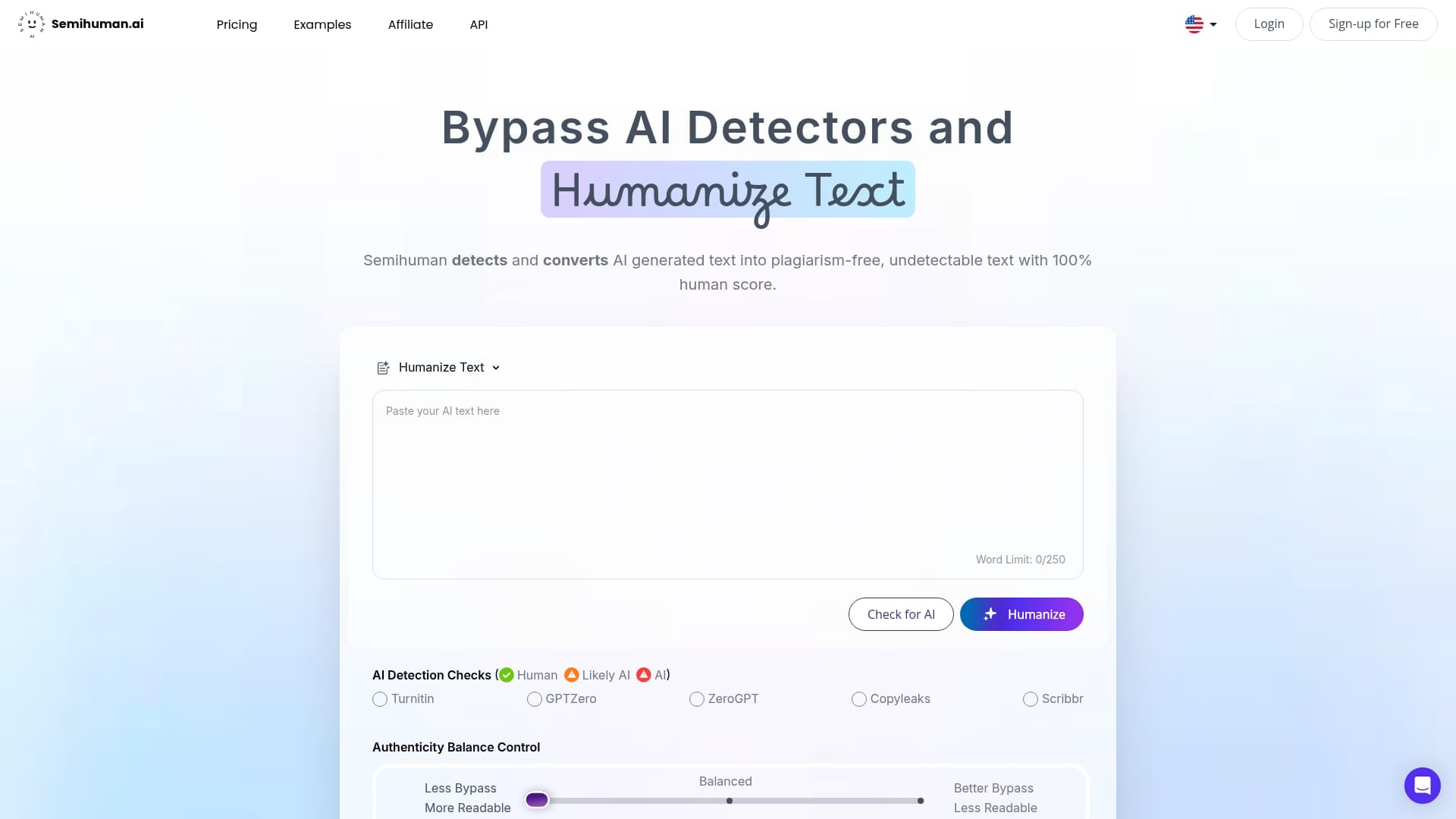
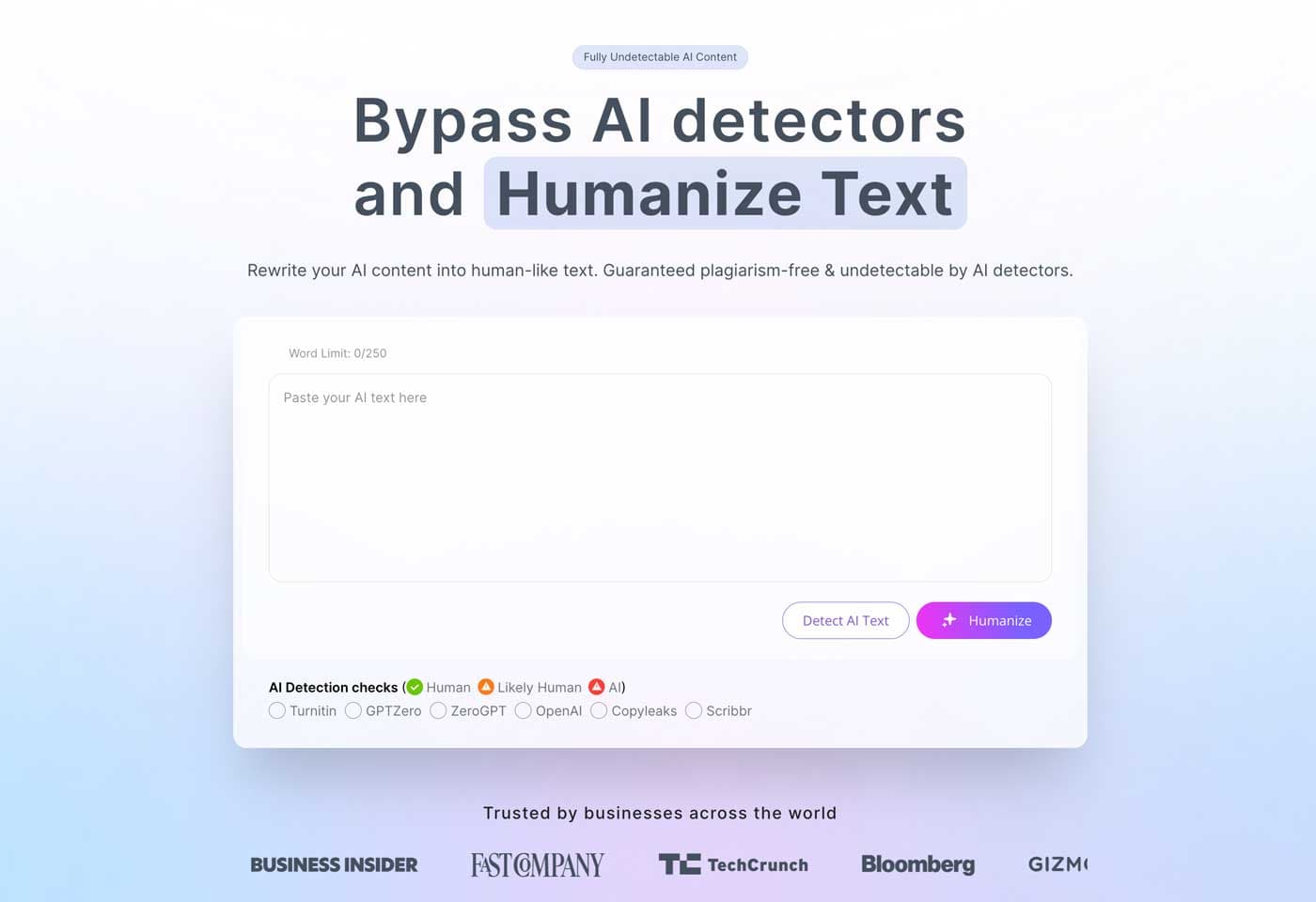
Unlock your content's full potential by partnering with a platform designed to "humanize" AI-produced text, enhance keyword integration, and bypass detection systems like Turnitin and GPTZero. Don't let these common myths hold you back. Experience how Semihuman.ai can empower you to deliver original, authentic content that stands out. Start refining your AI-assisted writing today and give your audience the genuine connection they deserve.
Using AI-generated content requires careful editing to infuse your brand's unique voice and expertise. Start by providing the AI with clear context and examples of your preferred tone to enhance the quality of the output.
To balance long-form and short-form content, evaluate user intent for each topic. Create detailed guides for complex subjects and concise pieces for straightforward queries, ensuring you match your audience's needs.
Keyword stuffing is ineffective because search engines prioritize high-quality, natural writing over raw keyword density. Focus on using your primary keyword logically within the content while offering relevant information to improve engagement.
Enhancing the quality of AI writing involves a thorough editing process. Identify areas for improvement, such as adding specific examples or adjusting tone, to create engaging and valuable content that resonates with your audience.
Common mistakes to avoid when editing AI-generated text include neglecting to check for accuracy and failing to adjust the voice to match your brand. Conduct a detailed review of the content, focusing on clarity and relevance, to ensure it aligns with your audience's expectations.


Start
Humanizing
for Free!
Humanize