
Loading...

Every Digital Marketer has faced the challenge of making AI-generated content sound truly authentic without risking detection. Crafting text that passes for human writing is now a vital skill, as machine-generated drafts often reveal predictable patterns and robotic language. By focusing on techniques to create authentic narrative flow and strategic keyword placement, you gain the ability to produce engaging materials that boost your SEO and resist plagiarism detection.
| Key Insight | Explanation |
|---|---|
| 1. Analyze for Robotic Patterns | Evaluate AI text structure to identify non-human traits like repetitive phrases and overly formal language. |
| 2. Restructure for Authenticity | Transform mechanical text into a dynamic narrative that reflects personal insights and critical thinking. |
| 3. Integrate Keywords Naturally | Seamlessly include relevant keywords while maintaining a flow that prioritizes reader comprehension over optimization. |
| 4. Use Detection Tools Effectively | Test content with multiple detection tools to discover potential red flags in AI detection patterns. |
| 5. Review for Human-Like Quality | Engage in meticulous revisions to ensure the text reflects genuine human perspective and emotional resonance. |
Transforming AI-generated text into authentic, human-like content requires strategic preparation. By understanding how to effectively modify machine-written drafts, you can create more engaging and undetectable written materials.
The initial phase involves carefully analyzing your AI-generated text using specialized techniques. Start by analyzing text structure to identify robotic patterns that might reveal artificial origins. Look for repetitive language, overly formal sentence structures, and predictable phrasing that signal computer-generated writing.
Key preparation strategies include:
Rewriting requires a nuanced approach. Focus on transforming mechanical text into a more natural narrative flow by reimagining phrases, introducing subtle variations, and mimicking authentic human communication styles. Your goal is creating content that reads smoothly and sounds genuinely conversational.
Pro tip: Always read your humanized text aloud to identify any remaining artificial-sounding passages that need additional refinement.
Here's a comparison of humanizing versus leaving AI-generated text unchanged:
| Aspect | Humanized Content | Unmodified AI Content |
|---|---|---|
| Reader Engagement | Higher, more relatable | Lower, feels robotic |
| Detection Risk | Less likely to be flagged | More likely to be detected |
| Narrative Flow | Natural and dynamic | Predictable and uniform |
| Emotional Resonance | Expresses human perspective | Lacks authentic emotion |
| Adaptability | Suited for diverse audiences | Limited flexibility |
Restructuring AI-generated content is a critical step in creating truly authentic written materials that resonate with human readers. The goal is to transform mechanically produced text into a genuine, engaging narrative that reflects personal insight and critical thinking.

Start by implementing strategic content transformation techniques that go beyond surface-level editing. This involves deep restructuring that addresses the core characteristics of AI-generated text.
Key restructuring strategies include:
The restructuring process requires careful attention to narrative flow and authentic voice. Focus on transforming mechanical text into a more dynamic and engaging piece of writing. Analyze each section critically, asking yourself how a human would naturally communicate these ideas.
Authentic content emerges not from perfect grammar, but from genuine human perspective and unique storytelling.
Pay special attention to transitions, sentence variety, and the overall emotional tone of your text. Your objective is to create content that feels like it was crafted by a thoughtful individual, not generated by an algorithm.
Pro tip: Always incorporate personal insights or professional experiences that add unique credibility to your restructured content.
Successfully integrating keywords into your content requires a delicate balance between search engine optimization and maintaining a natural, engaging writing style. The objective is to weave important terms into your text so smoothly that readers barely notice their strategic placement.
Begin by identifying strategic keyword placement that enhances your content's discoverability without compromising readability. This means selecting keywords that authentically reflect your content's core message.
Key keyword integration strategies include:
The most effective keyword integration feels conversational and organic. Treat keywords like natural language components, not algorithmic insertions. Each term should flow seamlessly within your narrative, providing value to the reader while subtly signaling relevance to search engines.
Authentic content speaks to humans first, search algorithms second.
Pay close attention to contextual relevance. Your keywords should emerge naturally from the discussion, reflecting genuine subject matter expertise rather than appearing mechanically inserted.
Pro tip: Read your content aloud to ensure keywords integrate smoothly without disrupting the natural reading rhythm.
Testing your AI-generated content against detection tools is a crucial step in ensuring its authenticity and avoiding potential penalties from academic or professional platforms. Your goal is to identify and eliminate any telltale signs that might expose your content as machine-generated.
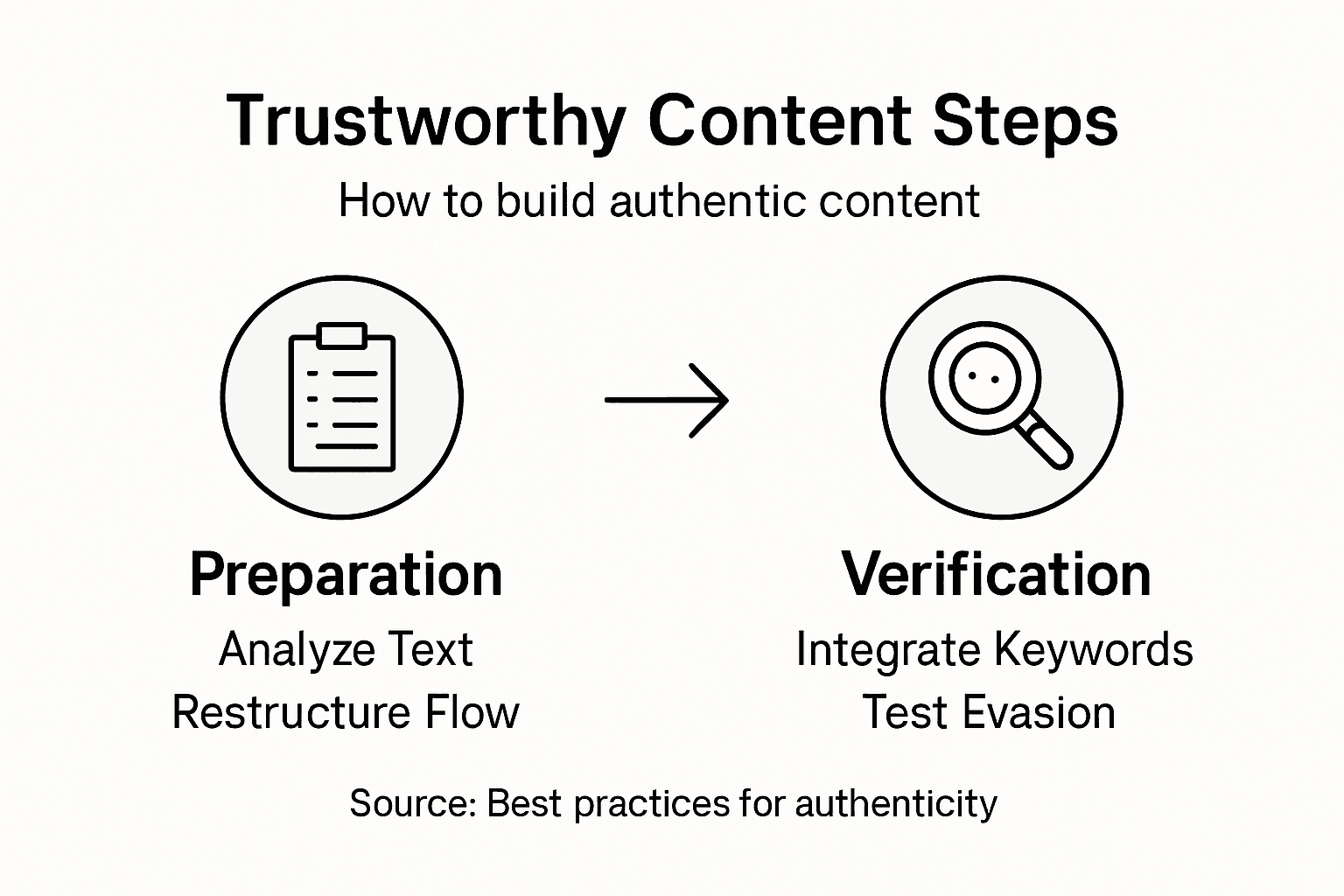
Begin by understanding AI detection limitations that could impact your content's perceived originality. These tools are not infallible, but they provide valuable insights into potential AI markers in your text.
Key detection testing strategies include:
Approach detection testing systematically, treating each tool as a unique lens into your content's authenticity. Pay special attention to language patterns, sentence structures, and contextual nuances that might trigger AI detection algorithms.
Not all AI detection tools are created equal. Diversity in testing provides the most comprehensive insights.
Remember that detection tools are constantly evolving, and no single tool provides a definitive judgment. Your objective is to understand and mitigate potential red flags while maintaining the core message and quality of your content.
Pro tip: Rotate between different detection platforms to gain a more comprehensive understanding of your content's AI fingerprint.
Transforming AI-generated content into an authentic, human-like narrative requires meticulous review and strategic refinement. Your ultimate goal is to breathe life into machine-generated text, ensuring it resonates with genuine human expression and critical thinking.
Begin by examining academic writing nuances that distinguish human-crafted content from algorithmic outputs. This process involves a deep, critical analysis of your draft's underlying structure and voice.
Key refinement strategies include:
Approach your refinement process as a creative dialogue with the AI-generated draft. Each paragraph should reflect your unique voice, intellectual depth, and nuanced understanding of the subject matter.
Authentic writing emerges from critical thinking, not algorithmic precision.
Focus on transforming generic content into a narrative that feels personal, thoughtful, and uniquely yours. This means going beyond surface-level edits to fundamentally reimagine how the information is presented and interpreted.
Pro tip: Always read your refined content from the perspective of a curious, discerning reader who values original insight.
Use this quick reference for refining AI text at each major step:
| Step | Goal | Reviewer Tip |
|---|---|---|
| Preparation | Identify robotic features | Read aloud for odd phrasing |
| Restructuring | Enhance narrative and authenticity | Add personal insights |
| Keyword Integration | Balance SEO and natural flow | Check for forced terms |
| Detection Testing | Reduce AI detection risk | Compare multiple tool results |
| Final Review & Refinement | Achieve human-like quality | Adopt a reader's perspective |
Building trust through authentic content is more crucial than ever in today’s digital landscape. The article "Building Trust With Content: Proven Steps for Authenticity" highlights common challenges such as robotic text patterns, keyword stuffing, and the risk of AI detection that can damage your credibility and reader engagement. If you want to overcome these pain points by producing naturally human-like writing that resonates emotionally and ranks well in search engines, you need a powerful solution tailored to these exact needs.
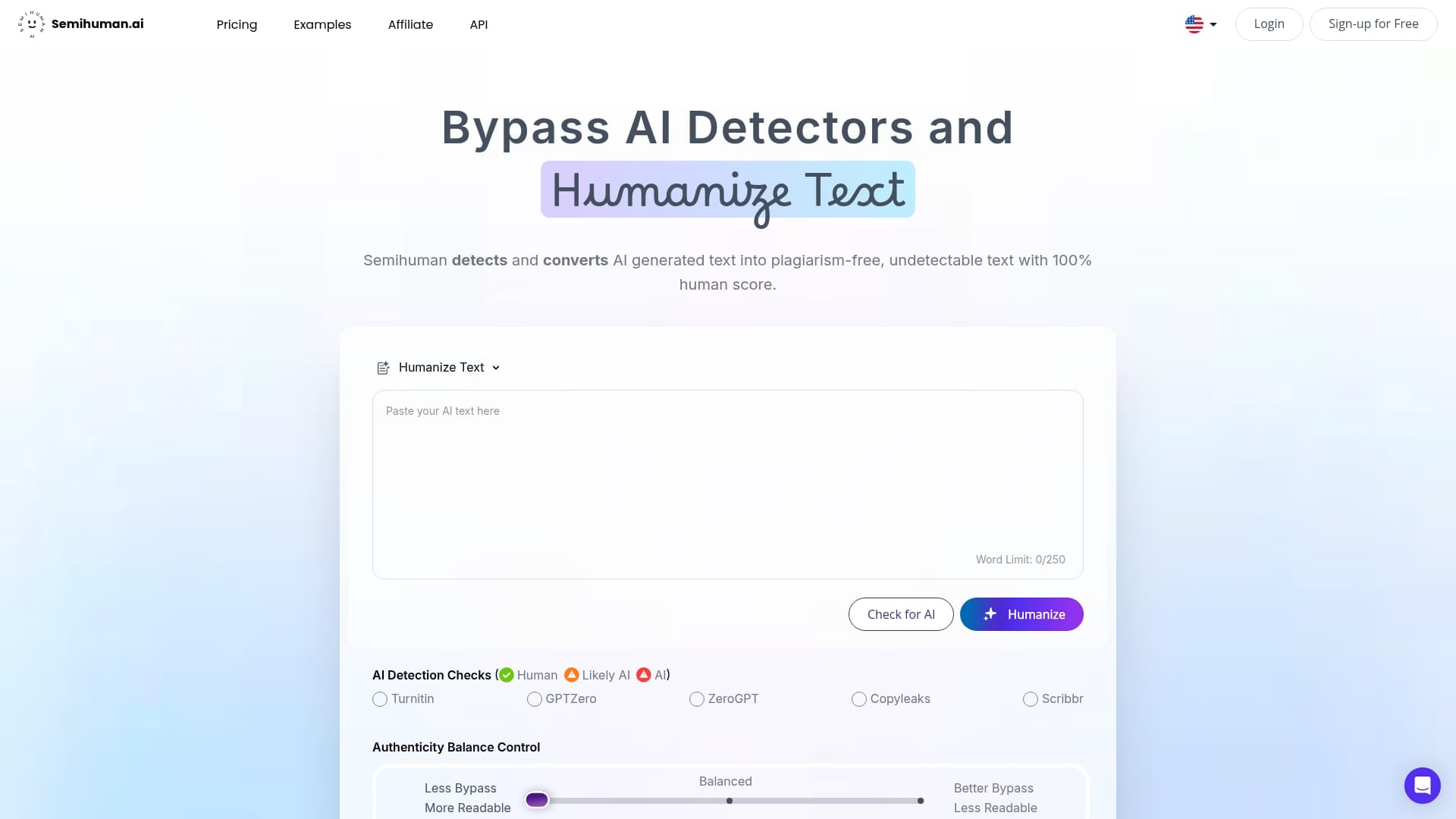
Discover how Semihuman.ai can transform your AI-generated drafts into captivating, humanized content with features like intelligent text restructuring, seamless keyword integration, and advanced AI detection evasion techniques. Perfect for creators, marketers, and students seeking to elevate their content’s authenticity and outsmart tools like Turnitin and GPTZero. Don’t let mechanical writing block your success. Start enhancing your content’s trust factor and organic reach today at https://semihuman.ai. Explore the platform now and experience authentic content creation that stands apart.
Start by analyzing the text structure to identify robotic patterns, such as repetitive language or overly formal sentences. Focus on breaking up uniform paragraph structures and introducing personal anecdotes to create a more relatable narrative.
Rewrite repetitive or overly systematic paragraphs and remove generic language patterns. Aim to introduce personal perspectives and break complex ideas into conversational explanations, enhancing the overall narrative flow and authenticity.
Identify relevant keywords that naturally reflect your content's core message, and incorporate them within the text without disrupting the reader's experience. Aim to distribute keywords proportionally, ensuring they flow smoothly within your narrative to maintain readability and engage your audience.
Run your content through multiple detection tools to get a comprehensive analysis of its authenticity. Pay attention to consistent patterns that might trigger AI detection, and refine your content based on the feedback to minimize any potential issues.
During the final review, focus on eliminating repetitive language and introducing unique perspectives. Read the content aloud from a reader's viewpoint to ensure it feels personal and reflective of authentic human thought.
Aim to transform generic content into a narrative that reflects personal storytelling and critical thinking. Regularly inject insights and examples that connect with the interests and expectations of your target audience to build trust and engagement.



Start
Humanizing
for Free!
Humanize