
Loading...

Most advice about authority content gets it wrong, yet over 80 percent of American digital marketers believe credibility is the key to higher search rankings. With so much competition online, building real trust has become a challenge that affects marketers worldwide. This article digs into what makes authority content stand out, why it matters for long-term SEO, and how smart strategies can help you rise above algorithm-driven pitfalls.
| Point | Details |
|---|---|
| Expertise is Essential | Authority content relies on the creator's deep knowledge and proven experience to establish credibility. |
| Diverse Content Formats Boost SEO | Utilizing various types of authority content, such as case studies and expert guides, enhances search rankings and user trust. |
| Transparency Builds Trust | Citing sources and presenting balanced perspectives in content significantly increases audience confidence and credibility. |
| Avoid Common Mistakes | Ensuring precision and clarity in writing is crucial, as errors can undermine content authority and trustworthiness. |
Authority content represents more than just information - it's a strategic approach to building credibility and trust in digital communication. Academic research defines authority as content created by experts who demonstrate deep knowledge, rigorous research processes, and recognized expertise within their specific domain.
At its core, authority content distinguishes itself through several key characteristics. Expertise is the foundational element, where content creators possess specialized knowledge validated by academic credentials, professional experience, or proven track records. Credibility emerges from transparent sourcing, clear methodologies, and the ability to substantiate claims with verifiable evidence. Context-dependent authority means that expertise can vary across different fields, recognizing that subject matter proficiency looks different in academic research versus industry innovation.
Building authority requires a multifaceted approach. Digital marketers and content strategists must focus on developing content that not only provides valuable insights but also demonstrates deep understanding. This involves:
Pro tip: Conduct periodic content audits to ensure your materials maintain high standards of expertise and remain current with the latest developments in your field.
Comprehensive SEO content strategies require understanding the diverse types of authority content that can elevate a website's search rankings and user trust. Authority content goes beyond simple information delivery, representing strategic approaches that demonstrate deep expertise and provide substantial value to readers.

The primary types of authority content include long-form articles, case studies, expert guides, and comprehensive resource pages. These content formats share critical characteristics: they address user queries comprehensively, showcase specialized knowledge, and provide actionable insights. Expert-level content development emphasizes creating materials that not only inform but also establish credibility through in-depth analysis and transparent research methodologies.
Effective authority content typically encompasses several key formats:
Each content type serves a specific purpose in building topical authority, demonstrating expertise, and addressing user intent with precision. The goal is to create content that search engines recognize as valuable, trustworthy, and worthy of high rankings.
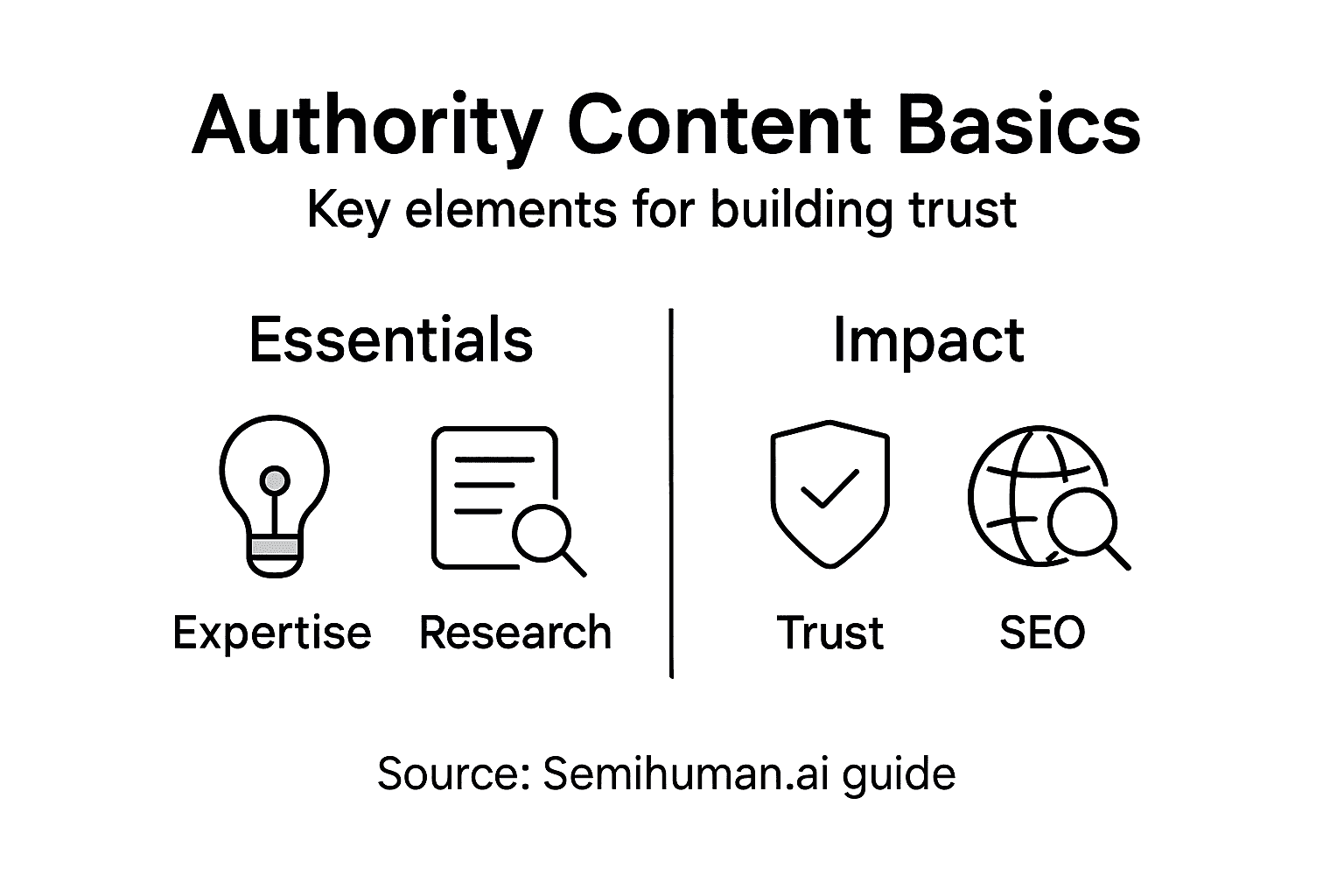
Here's a summary of how different types of authority content impact SEO and audience trust:
| Content Type | SEO Benefit | Audience Trust Impact |
|---|---|---|
| Long-form Articles | Improves ranking for broad topics | Signals deep expertise |
| Case Studies | Supports targeted keywords | Demonstrates real-world results |
| Expert Guides | Attracts diverse search queries | Builds subject authority |
| Resource Pages | Boosts internal linking | Establishes credibility |
Pro tip: Develop a content matrix that maps different authority content types against your audience's specific information needs to maximize engagement and SEO performance.
Thorough content research forms the foundation of building trust with your audience. Credibility isn't just about presenting information, but demonstrating a comprehensive understanding of your subject matter through meticulously verified and transparently sourced content.

Building content credibility requires a strategic approach that encompasses multiple critical elements. Transparency stands as the cornerstone of trust, which means clearly citing sources, acknowledging potential limitations, and presenting information with intellectual honesty. Effective credibility strategies involve creating content that goes beyond surface-level information, diving deep into nuanced analysis and providing genuine value to readers.
Key strategies for establishing content credibility include:
Credibility is an ongoing process that requires continuous refinement and commitment to quality. By consistently delivering well-researched, thoughtful, and transparent content, you can build a reputation that resonates with both readers and search engines.
Compare these key strategies for building content credibility:
| Strategy | Approach | Result for Readers |
|---|---|---|
| Transparency | Cite all sources clearly | Increases confidence in content |
| Balanced View | Present multiple angles | Promotes fairness and objectivity |
| Expert Input | Add expert opinions | Reinforces trust and authority |
| Regular Updates | Refresh material often | Ensures relevance and accuracy |
Pro tip: Create a content review checklist that systematically evaluates each piece for accuracy, relevance, and credibility before publication.
Transforming AI-generated text requires strategic approaches that make artificial content sound authentically human. The core challenge lies in creating text that passes both algorithmic detection tools and human scrutiny, while maintaining the efficiency and information density of AI-generated material.
Successful humanization involves nuanced techniques that go beyond simple word substitution. Linguistic variation becomes critical, requiring writers to deliberately introduce human-like imperfections and natural communication patterns. This means incorporating conversational elements, intentional sentence structure variations, and contextual language that reflects genuine human thought processes and communication styles.
Key strategies for humanizing AI content include:
Ultimately, humanizing AI content is an art form that balances technological efficiency with authentic communication. The goal is not to replace human creativity but to enhance and supplement it, creating content that feels natural, engaging, and genuinely valuable to readers.
Pro tip: Develop a personal editing process that systematically introduces human-like nuances and breaks predictable AI writing patterns.
Academic writing errors can significantly erode the credibility and perceived expertise of content creators. These mistakes extend beyond simple grammatical issues, potentially undermining the entire foundation of trust that authors aim to build with their audience.
Content authority depends on precision, clarity, and consistent professionalism. Structural weaknesses in writing manifest through disorganized arguments, inconsistent formatting, and communication gaps that confuse readers. Editing mistakes compromise content quality by introducing uncertainties that challenge the author's perceived expertise and undermine the fundamental purpose of knowledge sharing.
Critical mistakes that undermine content authority include:
Building content authority requires a meticulous approach that prioritizes precision, clarity, and genuine expertise. By systematically addressing these common pitfalls, content creators can develop more compelling, trustworthy, and influential materials that resonate with their target audience.
Pro tip: Develop a rigorous self-editing checklist that addresses potential content authority weaknesses before final publication.
Building trusted and credible content requires more than expertise it demands authentic, human-like communication that resonates with readers and search engines alike. This article highlights key challenges such as maintaining transparency, avoiding robotic writing patterns, and ensuring your AI-generated material remains engaging and undetectable by AI detection tools. If you want to elevate your SEO rankings while preserving a genuine human voice Semihuman.ai offers powerful solutions that transform AI text into authentic, nuanced content.
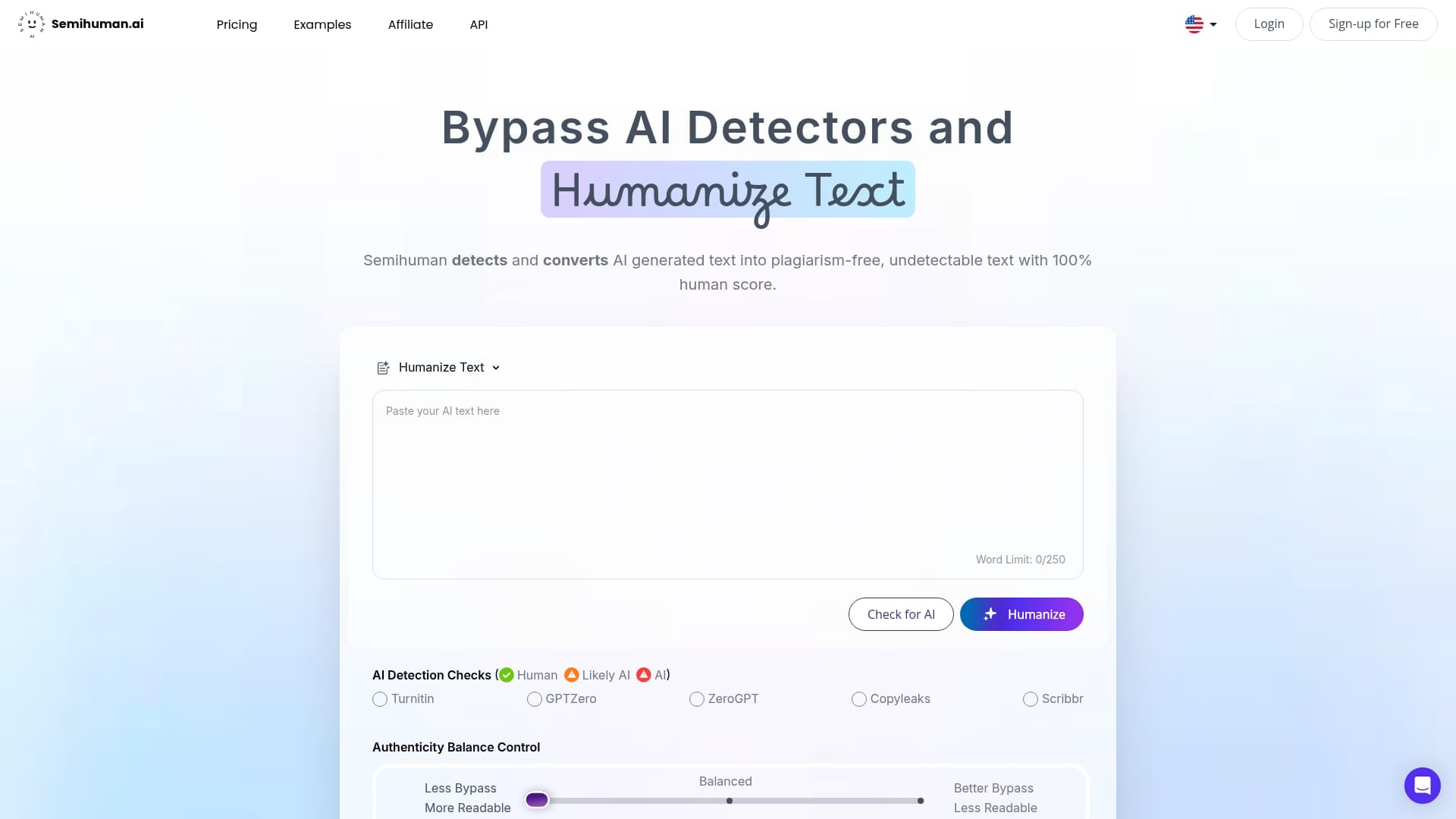
Take control of your content credibility today with Semihuman.ai. Leverage advanced features like text restructuring and keyword integration designed to humanize your AI-generated texts. Avoid common pitfalls that undermine authority such as unnatural language or repetitive phrasing. Explore how our platform complements your content strategy by ensuring your writing passes AI detection systems like Turnitin or GPTZero while maintaining powerful SEO benefits. Start enhancing your content trust and rankings now at https://semihuman.ai and experience the next level in authentic content creation.
Authority content is content created by experts that demonstrates deep knowledge and rigorous research. It is important because it builds credibility and trust, helping to enhance a website's SEO rankings and audience engagement.
Types of authority content include long-form articles, case studies, expert guides, resource pages, and tutorial content. Each serves to provide valuable insights, establish expertise, and address users' queries effectively.
To improve credibility, focus on thorough research, clear sourcing, presenting balanced perspectives, and including expert opinions. Regularly updating content to reflect accurate and current information is also essential.
Common mistakes include grammatical errors, inconsistent formatting, lack of clear organization, and poor citation practices. Addressing these issues is crucial to maintaining authority and trust with your audience.


Start
Humanizing
for Free!
Humanize