
Loading...

Most American readers can spot AI-generated content in seconds, and studies show that over 60 percent say authenticity directly impacts their trust in a message. In a world filled with quick automation and algorithm-driven text, genuine and engaging writing stands out more than ever. Discover the key techniques that help digital creators stay relatable, protect their unique voice, and win real human attention in an age dominated by artificial intelligence.
| Key Message | Explanation |
|---|---|
| 1. Authenticity is Essential | Crafting genuinely human content fosters trust and engagement, standing out from generic AI-generated text. |
| 2. Engage through Natural Language | Use conversational language and personal anecdotes to connect with readers and improve content interaction. |
| 3. Document Your Creative Process | Maintain thorough records of your content creation to enhance credibility and ease compliance across platforms. |
| 4. Protect Your Brand Voice | Develop a comprehensive style guide to ensure all content reflects your unique brand personality and tone. |
| 5. Safeguard Original Ideas | Balance AI assistance with personal creativity to maintain originality and emotional depth in writing. |
Authenticity isn't just a buzzword it's the cornerstone of meaningful digital communication. By understanding how to create genuinely human content, digital creators can transform their work from algorithm-generated text to compelling narratives that resonate with readers.
In an era of increasingly sophisticated AI tools, maintaining a unique voice becomes critical. Research examining digital media authenticity reveals the importance of preserving human nuance to combat misinformation and maintain public trust. This means going beyond simply avoiding detection it's about crafting content that genuinely reflects human experience and perspective.
The key is subtle differentiation. AI tends to produce generic text with predictable structures digital creators must intentionally inject personal insights, unexpected perspectives, and emotional depth that artificial systems struggle to replicate. Your lived experiences unique observations and individual storytelling approach become your strongest assets in creating authentic content.
Successful authenticity requires strategic thinking. Consider incorporating personal anecdotes, using conversational language, and structuring your content with natural variations in paragraph length and sentence complexity. These techniques make your writing feel more organic and less machine generated.
Contextual adaptation also plays a crucial role. Understanding factors that influence perceived authenticity helps creators develop more nuanced communication strategies. This means tailoring your approach to specific audiences while maintaining your core narrative voice.
Pro tip: Develop a personal writing ritual that helps you tap into your authentic voice. Whether it's writing at a specific time of day, using a particular notebook, or creating a mood board before drafting spend time connecting with the emotional core of your message before you start writing.
Search engine optimization goes far beyond keyword stuffing and technical tricks. The most effective SEO strategy now centers on creating genuinely engaging content that provides real value to human readers while strategically satisfying search algorithms.
Modern search engines have become remarkably sophisticated at identifying and rewarding content that feels authentic and human generated. Generative Engine Optimization techniques demonstrate how strategic content adaptation can dramatically improve digital visibility. This means creating text that not only includes relevant keywords but also maintains a natural conversational flow that resonates with actual readers.
Research indicates that AI generated metadata can significantly boost content consumption, suggesting that subtle algorithmic optimization combined with human authenticity creates a powerful SEO strategy. The goal is to craft content that feels organic compelling and informative while strategically incorporating search friendly elements.
To improve SEO rankings with humanized text digital creators should focus on several key approaches. First understand your audiences specific language patterns and information needs. Use natural conversational language that mirrors how people actually speak and search. Incorporate long tail keywords that sound conversational rather than robotic. Write in a way that directly answers potential user questions while maintaining an engaging narrative flow.
Context and depth matter more than ever. Search engines now prioritize comprehensive authoritative content that demonstrates expertise. This means going beyond surface level information and providing nuanced insights that truly help readers. Break complex topics into digestible sections use clear headings and include practical examples that illustrate your points.
Pro tip: Develop a content review process that involves reading your text out loud. If something sounds awkward or unnatural when spoken it probably needs revision to sound more human and improve its search engine potential.
Academic writing requires an intricate balance between original thought and proper citation. Digital creators and students face increasing challenges with AI detection systems that can mistakenly flag legitimate work as potentially plagiarized.
Academic research on generative AI knowledge production highlights the critical need for maintaining academic integrity while navigating complex technological landscapes. Modern plagiarism detection tools often struggle to distinguish between AI assisted writing and direct intellectual theft creating significant risks for well intentioned writers.
Understanding how these detection systems work is crucial. Plagiarism checkers analyze text for unique patterns linguistic structures and potential matches with existing academic databases. When AI generated content enters this ecosystem it can trigger false positives because machine learning models tend to produce text with predictable structural characteristics.
To mitigate these risks digital creators should implement several strategic approaches. First develop a robust citation strategy that transparently documents all sources including AI tools used in research or writing. Manually review and modify AI generated content to introduce unique phrasing personal insights and contextual nuances that demonstrate genuine intellectual engagement.
Research exploring AI content disclosure reveals that transparency about technological assistance can actually improve academic perception. By proactively explaining your writing process and showing how you've critically evaluated and personalized AI generated material you reduce the likelihood of plagiarism accusations.
Pro tip: Create a personal annotation system that tracks every section of text generated or assisted by AI. Develop a habit of reviewing each paragraph for unique language patterns personal perspectives and contextual relevance before submission.
Every brand has a unique personality a distinctive way of communicating that sets it apart from competitors. In the age of AI generated content protecting this brand voice becomes more challenging and critical than ever before.
Content Credentials provide a mechanism for digital media metadata that helps brands verify and protect their authentic communication style. This means going beyond simple text generation and actively ensuring that every piece of content sounds like it was crafted specifically by your brand team.
AI tools often produce generic text that lacks the nuanced personality businesses work hard to develop. The risk is creating content that feels flat impersonal and disconnected from your brand identity. Successful digital creators understand that brand voice is more than words it is about emotional resonance personality and consistent messaging.
To maintain tone consistency digital creators should develop a comprehensive style guide that captures the unique linguistic fingerprint of their brand. This guide should include specific details like preferred sentence structures emotional tone key phrases to use or avoid and the overall personality the brand wants to project. By creating a detailed reference document you provide AI tools with specific parameters to generate more authentic on brand content.
The Content Authenticity Initiative promotes industry standards for verifying content origin which further underscores the importance of maintaining genuine brand communication. This means not just detecting AI generated text but actively shaping it to reflect your organization unique voice and values.
Pro tip: Create a brand voice recording or video where key team members discuss how they naturally communicate. Use this as training material for AI tools to help them better understand and replicate your specific communication style.
Engagement is the heartbeat of digital content. When readers feel a genuine connection readers stay read share and interact with your material in meaningful ways.
Research demonstrates that AI generated titles can significantly increase content consumption revealing the powerful relationship between language choice and audience interaction. Natural language goes beyond grammatical correctness it is about creating an emotional resonance that makes readers feel understood.
The key to increasing engagement lies in understanding human communication patterns. AI generated text often sounds mechanical structured and predictable. By contrast human language is messy unpredictable and rich with nuance. Successful digital creators learn to inject personality humor vulnerability and authentic storytelling into their writing.
To create more engaging content digital creators should focus on several strategic approaches. First write as if you are speaking directly to a friend. Use conversational language that feels immediate and personal. Ask rhetorical questions incorporate personal anecdotes and create narrative arcs that pull readers into your world. Break complex ideas into digestible chunks and use sensory language that helps readers visualize and emotionally connect with your message.
Context matters immensely in natural language. Understanding your specific audience demographic psychological triggers and communication preferences allows you to craft text that feels like a direct conversation. This means moving beyond generic statements and creating content that speaks directly to individual reader experiences challenges and aspirations.
Pro tip: Develop a reader persona document that captures the specific language patterns emotional triggers and communication style of your target audience. Review every piece of content against this persona to ensure maximum engagement and authenticity.
Creative writing represents the most personal form of human expression an intricate dance between imagination individual experience and linguistic craftsmanship. In an era of AI generated content protecting the sanctity of original ideas becomes paramount.
Research exploring generative AI's impact on knowledge production reveals the critical challenge facing modern writers: maintaining originality while navigating technological innovations. AI tools can quickly generate text but they cannot replicate the nuanced emotional landscape that makes human writing truly compelling.
Understanding the difference between assistance and replacement is crucial for digital creators. Unique ideas emerge from personal experiences emotional depth and unexpected connections that artificial intelligence cannot spontaneously generate. While AI can provide structural support research assistance and language suggestions the core creative spark must come from human imagination.
To safeguard creative writing digital creators should develop strategic approaches that leverage AI as a tool without surrendering their creative autonomy. This means using AI for initial drafting research organization and technical refinement while personally reviewing and dramatically transforming the generated content. Inject personal stories unexpected metaphors and emotional nuance that artificial systems cannot replicate.
Exploring AI disclosure in creative content highlights how transparency about technological assistance can actually enhance perceptions of creativity. By openly acknowledging where AI supports your writing process you demonstrate technical sophistication while reinforcing the uniquely human elements of your work.
Pro tip: Establish a personal writing ritual that keeps you connected to your creative core. Before engaging with any AI writing tool spend 15 minutes free writing without technological intervention to reconnect with your authentic voice and creative impulses.
Compliance in digital content creation is no longer a simple checkbox it is a strategic advantage that opens doors across multiple platforms and professional environments. Digital creators who understand and navigate content authenticity effectively can dramatically expand their professional opportunities.
The Content Authenticity Initiative establishes critical standards for verifying digital media origins. This means creators can now demonstrate the legitimacy of their work with unprecedented transparency creating trust with platforms publishers and audiences who increasingly demand accountability.
Understanding content credentials transforms how digital creators approach their work. Rather than seeing AI assistance as a potential liability creators can leverage technological tools while maintaining clear provenance documentation. This approach allows for greater flexibility in content creation across academic professional and creative domains.
Practical strategies for broadening content use involve developing robust documentation practices. This includes maintaining clear records of content generation processes tracking AI assistance levels and being prepared to provide detailed information about your creative workflow. By creating transparent documentation digital creators can submit work to platforms with stricter review processes academic institutions and professional publications that might otherwise be hesitant about AI assisted content.
Content Credentials provide a mechanism for verifying digital content origins that goes beyond simple detection. These metadata systems allow creators to showcase the authentic journey of their work demonstrating not just the final product but the entire creative process. This transparency becomes a powerful tool for building professional credibility and trust.
Pro tip: Create a personal content provenance portfolio that tracks your creative process across different projects. Document your research methods AI tool usage and original contributions to build a comprehensive record of your unique creative approach.
Below is a comprehensive table summarizing the main strategies and practices for enhancing authenticity, improving SEO, avoiding plagiarism flags, protecting brand voice, increasing engagement, safeguarding creative writing, and broadening opportunities discussed throughout the article.
| Topic | Key Strategies & Actions | Benefits/Outcomes |
|---|---|---|
| Enhancing Authenticity | Inject personal insights and emotional depth; use personal anecdotes; contextual adaptation | Resonate with readers; combat misinformation; maintain public trust |
| Improving SEO Rankings | Use natural conversational language; incorporate long tail keywords; provide nuanced insights | Engaging content; improved digital visibility; satisfy search algorithms |
| Avoiding False Plagiarism Flags | Develop citation strategy; manually review AI-generated content; transparency about AI use | Maintain academic integrity; reduce plagiarism accusations |
| Protecting Brand Voice | Develop style guide; create brand voice recordings; use Content Credentials | Consistent brand messaging; protect brand identity |
| Increasing Engagement | Use conversational language; ask rhetorical questions; understand audience demographics | Higher reader interaction; increased content consumption |
| Safeguarding Creative Writing | Use AI for drafting but maintain creative autonomy; transparency about AI support | Preserve originality; reinforce human elements of work |
| Broadening Opportunities | Maintain documentation of creative processes; use Content Credentials | Create trust with platforms; expand professional opportunities |
The challenge of bypassing AI detection tools while maintaining genuine, human-like content is real and pressing for digital creators, marketers, and students alike. This article reveals how AI-generated text often lacks the unique voice, emotional depth, and natural flow that resonate with readers and search engines. It highlights pain points such as avoiding false plagiarism flags, preserving brand voice consistency, and improving SEO rankings with content that feels truly organic and engaging.
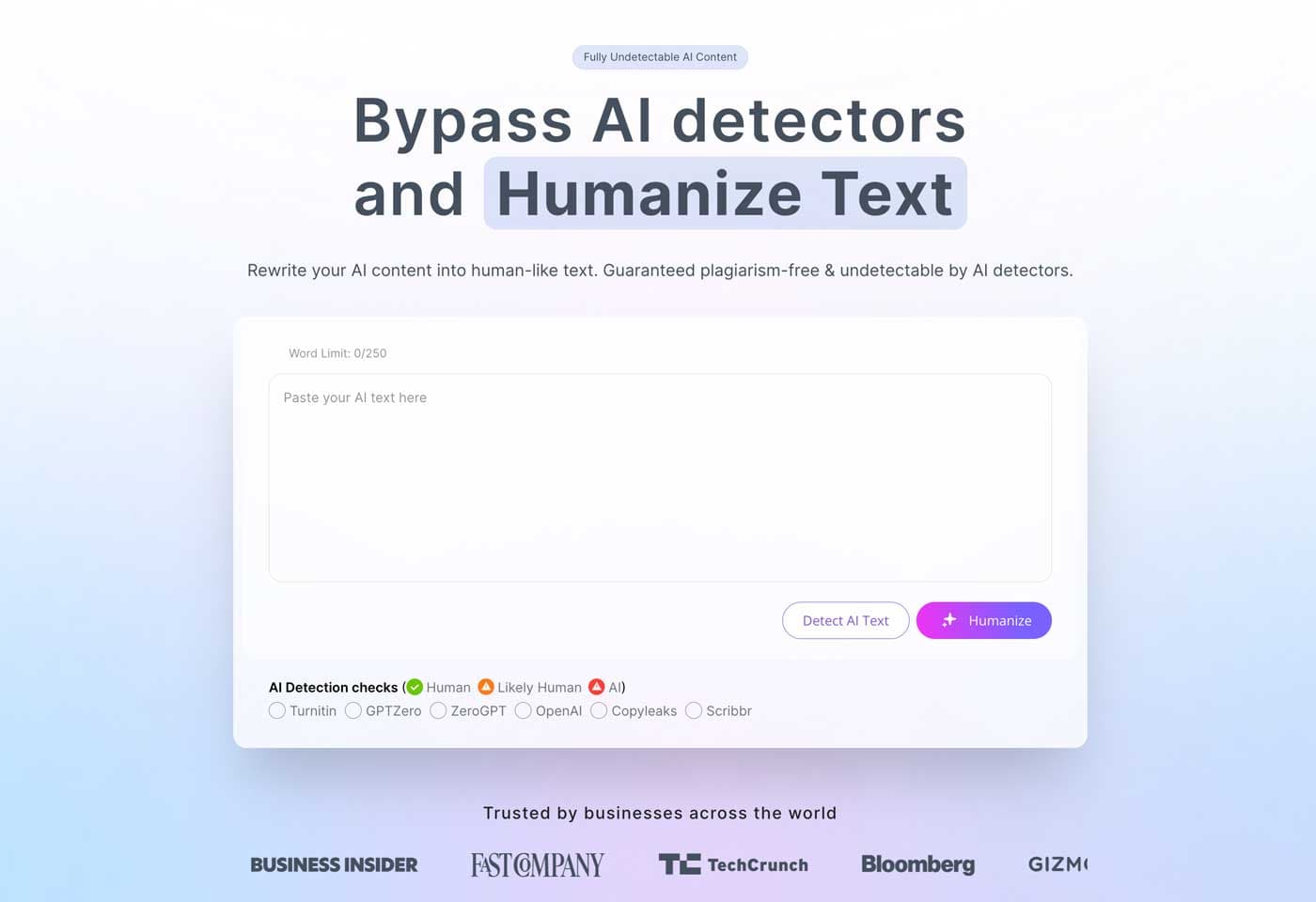
At Semihuman.ai, we understand these struggles and offer a tailored AI-powered solution crafted to bridge the gap between machine-generated and authentically human content. Our platform specializes in transforming AI outputs into natural, compelling narratives by restructuring text, integrating keywords seamlessly, and helping your writing evade AI detection systems like Turnitin and GPTZero. Whether you need to protect your academic integrity, safeguard your creative vision, or boost your digital presence, our service empowers you to keep your unique voice front and center.
Take control of your content's authenticity today and experience how easy it is to produce engaging, humanized writing that stands out.
Discover how to maintain content authenticity and conquer AI detection at Semihuman.ai. For creators aiming to improve SEO with natural flow and keyword precision, explore our tools designed for SEO optimization. To shield your brand voice and tone consistency, learn how our platform supports lasting identity across all your communications.
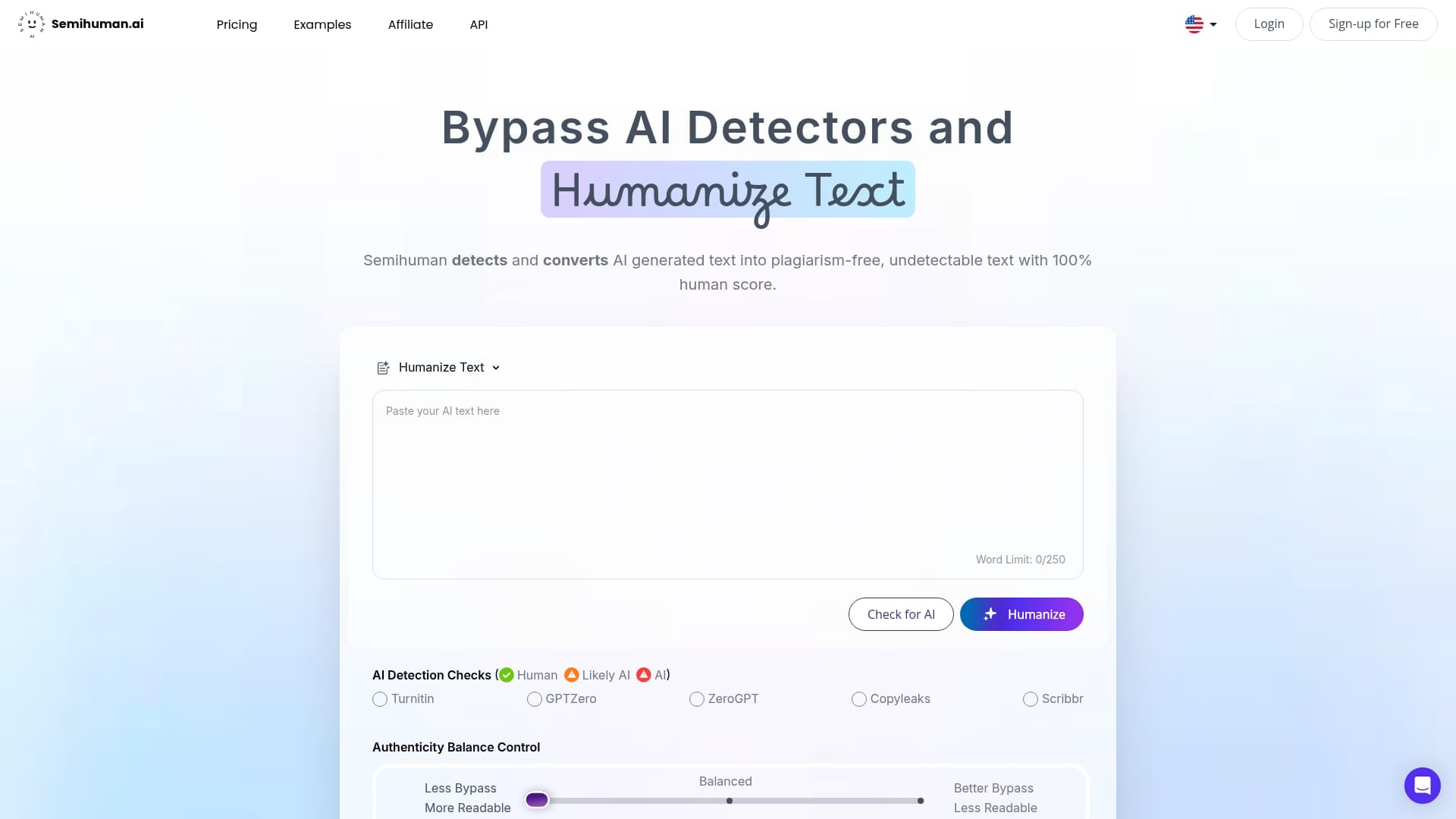
Ready to transform your AI-generated drafts into genuinely human content that captivates audiences and passes scrutiny? Visit Semihuman.ai now and start crafting content that truly reflects your unique voice with confidence and ease.
Bypassing AI detection allows digital creators to maintain originality and protect their unique voice. This approach enhances authenticity, leading to deeper audience engagement and increased trust in the content.
To enhance authenticity, inject personal anecdotes, use conversational language, and ensure varied sentence structures. This approach not only helps you avoid detection but also creates a more engaging narrative for your readers.
Focus on creating genuinely engaging content that answers specific audience questions and incorporates long-tail keywords. Aim to provide value through detailed insights, and your visibility on search engines will increase.
To maintain academic integrity, clearly document all sources and explain how you've personally engaged with AI-generated content. This transparency can help showcase your original contributions, reducing the risk of false plagiarism flags.
Using AI-generated content without careful modification can lead to misclassification as plagiarized or unoriginal work. To reduce this risk, actively personalize the content you generate, ensuring that it reflects your voice and insights.


Start
Humanizing
for Free!
Humanize