
Loading...

Over sixty percent of online users say they trust content that feels honest and well-researched. With so much information competing for attention, spotting what is truly authentic has never mattered more. Understanding the real qualities of authentic content helps readers avoid misinformation, see through common myths, and recognize why genuine value stands out in a crowded digital world.
| Point | Details |
|---|---|
| Authentic Content Definition | Authentic content is characterized by transparency, factual accuracy, and a genuine intent to inform, distinguishing it from misinformation. |
| Distinction from AI-Generated Text | Authentic content exhibits emotional depth and nuanced reasoning, which AI-generated text typically lacks, making human communication uniquely valuable. |
| Impact on SEO | Authentic content improves SEO by prioritizing original, well-researched materials that align with user intent, thus enhancing visibility. |
| Best Practices | Creating authentic content involves comprehensive research, unique perspectives, and maintaining intellectual honesty to provide meaningful insights. |
Authentic content represents a nuanced approach to creating original, trustworthy, and meaningful communication that goes beyond surface-level information. At its core, authentic content distinguishes itself from misinformation by delivering accurate, transparent, and contextually rich material that genuinely serves the audience's informational needs.
Contrary to popular belief, authentic content isn't simply about avoiding falsehoods. According to the Wikipedia framework on misinformation, authentic content actively combats incorrect or misleading information that can emerge with or without malicious intent. This means moving beyond just preventing inaccuracies and instead proactively constructing narratives that are comprehensive, well-researched, and intellectually rigorous.
Key characteristics of authentic content include:
The Wikipedia Framework for Authentic Intellectual Work provides valuable insights into creating content that resembles complex, meaningful adult tasks. This framework emphasizes going beyond mere information reproduction and instead focusing on generating work that demonstrates critical thinking, original analysis, and substantive intellectual engagement.
Common misconceptions about authentic content often stem from misunderstanding its fundamental purpose. Many creators mistakenly believe that authenticity is about personal storytelling or raw emotional expression. However, true authenticity in content creation is about maintaining intellectual honesty, presenting well-researched information, and providing genuine value to the audience.
Creating authentic content requires a strategic approach that balances thorough research, clear communication, and a commitment to ethical information sharing. It's not about being perfect, but about being transparent, accountable, and dedicated to delivering meaningful insights that help readers understand complex topics more deeply.
Authentic content and AI-generated text represent two distinctly different approaches to communication, with critical differences that discerning readers and professionals can identify. Textual authenticity goes beyond mere information delivery, encompassing nuanced expression, emotional intelligence, and contextual understanding that AI currently struggles to replicate.
According to research from digital-pedagogy, AI-generated texts often exhibit telltale characteristics that distinguish them from human-written content. These include repetitive language patterns, unnatural transitions, and a fundamental lack of coherent narrative flow. Such mechanical traits make AI-generated text feel impersonal and disconnected.
Key distinguishing traits of authentic versus AI-generated text include:
Research from Arxiv further highlights that AI-generated texts frequently display inconsistent tonal qualities and repetitive linguistic structures. These mechanical patterns emerge from AI's algorithmic processing, which lacks the organic, intuitive language development inherent in human communication.
Understanding these distinctions is crucial for content creators, educators, and professionals seeking to produce genuinely engaging material. While AI tools can generate text quickly, they cannot replicate the subtle emotional intelligence, personal experiences, and creative spontaneity that define authentic human communication. True authenticity requires a deep understanding of context, audience, and the nuanced art of storytelling.


Here's a comparison of the key traits of authentic content versus AI-generated text:
| Trait | Authentic Content | AI-Generated Text |
|---|---|---|
| Emotional Depth | Genuine feeling and perspective | Lacks true emotion |
| Reasoning Style | Complex, non-linear thinking | Linear, predictable logic |
| Voice & Style | Unique, varied | Consistent, repetitive |
| Contextual Adaptability | Responds to nuanced context | Struggles with context shifts |
| Creativity | Spontaneous, original ideas | Mechanical, formulaic choices |
| Subtext & Nuance | Rich understanding of subtext | Literal interpretations |
As technology evolves, the gap between AI-generated and authentic content continues to narrow. However, the core elements of genuine human expression remain a complex frontier that artificial intelligence has yet to fully comprehend. Learn more about how to humanize AI text to bridge this critical communication divide.
Authentic content plays a transformative role across diverse professional domains, serving as a critical tool for meaningful communication, strategic engagement, and intellectual integrity. From marketing campaigns to academic research, the power of genuine, thoughtfully crafted content transcends traditional boundaries and delivers tangible value to audiences.
In the marketing landscape, authentic content serves as a powerful mechanism for building trust and establishing meaningful connections with target audiences. Unlike generic, mass-produced messaging, authentic marketing materials resonate deeply by providing genuine insights, addressing real customer challenges, and demonstrating transparent understanding of consumer needs.
Key applications of authentic content include:
According to Wikipedia's research on inauthentic text, computer-generated documents designed to manipulate search results or evade filters fundamentally undermine the core principles of meaningful communication. Authentic content, by contrast, prioritizes genuine value, intellectual honesty, and meaningful audience connection.
In academic contexts, the stakes of authenticity become even more pronounced. Wikipedia's analysis of ChatGPT in education highlights growing concerns about AI-generated assignments and their potential to erode traditional writing skills and academic integrity. Authentic academic writing demands original thinking, critical analysis, and a commitment to scholarly rigor that automated tools cannot replicate.
For SEO professionals, authentic content represents the gold standard of digital communication. Search algorithms increasingly prioritize high-quality, original content that demonstrates expertise, addresses user intent, and provides comprehensive, nuanced information. Explore advanced copywriting techniques to elevate your content strategy and create materials that genuinely serve your audience's informational needs.
Search engine optimization represents a critical battleground where authentic content strategies intersect with increasingly sophisticated technological challenges. The emergence of AI-generated content has fundamentally transformed how search algorithms evaluate and rank digital materials, creating a complex landscape for content creators seeking to maintain visibility and credibility.
According to Wikipedia's research on inauthentic text, computer-generated documents are frequently designed to manipulate search engine results, undermining the core principles of meaningful digital communication. This practice not only risks potential penalties but also diminishes the genuine value that search engines aim to provide to users.
Key SEO strategies for maintaining content authenticity include:
Wikipedia's analysis of artificial intelligence content detection reveals that many AI detection tools remain unreliable, with accuracy rates frequently falling below 80%. This technological limitation creates both challenges and opportunities for content creators seeking to navigate the complex landscape of digital content authenticity.
For SEO professionals, the key lies in developing content that genuinely serves user intent while strategically avoiding detection mechanisms. This requires a nuanced approach that goes beyond simple algorithmic manipulation. Learn advanced strategies for bypassing AI content detection to ensure your content remains both authentic and search-engine friendly.
Ultimately, successful SEO in the age of AI-generated content demands a holistic strategy that prioritizes genuine value, user experience, and meaningful information delivery. By focusing on creating truly distinctive, insightful content, creators can outmaneuver both algorithmic detection systems and generic AI-generated materials.
Authentic content creation represents a deliberate, strategic approach to producing meaningful communication that transcends generic information delivery. It requires a nuanced understanding of audience needs, intellectual rigor, and a commitment to genuine value generation that distinguishes truly impactful writing from mere information regurgitation.
According to the Framework for Authentic Intellectual Work, creating genuine content involves developing work that resembles complex adult tasks, emphasizing critical thinking and substantive intellectual engagement. This framework provides a crucial roadmap for content creators seeking to move beyond surface-level reporting and generate truly meaningful materials.
Key best practices for creating authentic content include:
Wikipedia's research on misinformation highlights the critical importance of avoiding incomplete or misleading information. Authentic content demands a commitment to comprehensive, accurate representation that goes beyond selective or half-truth narratives, ensuring readers receive a holistic understanding of complex subjects.
Professional content creators must approach authenticity as a multifaceted discipline that combines rigorous research, creative expression, and genuine intellectual curiosity. This requires developing a systematic approach that prioritizes depth, originality, and meaningful audience connection. Learn advanced techniques for making AI content undetectable to enhance your content's authenticity and impact.
Ultimately, authentic content is not about perfection but about creating genuine, thoughtful communication that respects the audience's intelligence and provides meaningful insights. By embracing a holistic approach that values intellectual integrity and creative expression, content creators can develop materials that truly resonate and provide substantial value.
Creating authentic content that resonates emotionally and intellectually can be challenging in a digital landscape flooded with AI-generated text. The article highlights the struggle to maintain transparency, originality, and genuine connection while ensuring SEO success and bypassing unreliable AI detection tools. Many creators face the pain of their content feeling repetitive, mechanical, or lacking real emotional depth and nuance. This is where the power of authentic, humanized communication sets you apart.
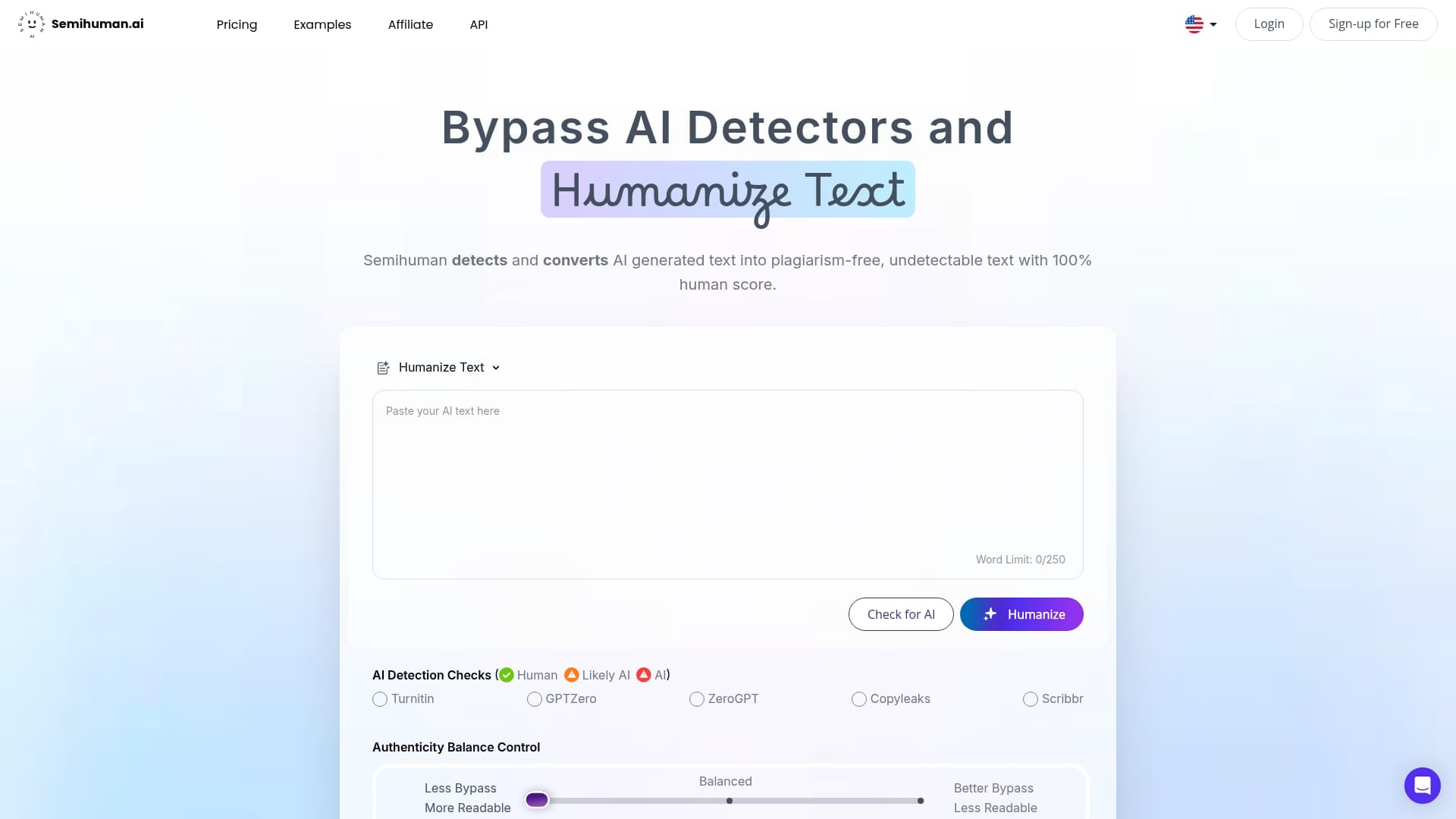
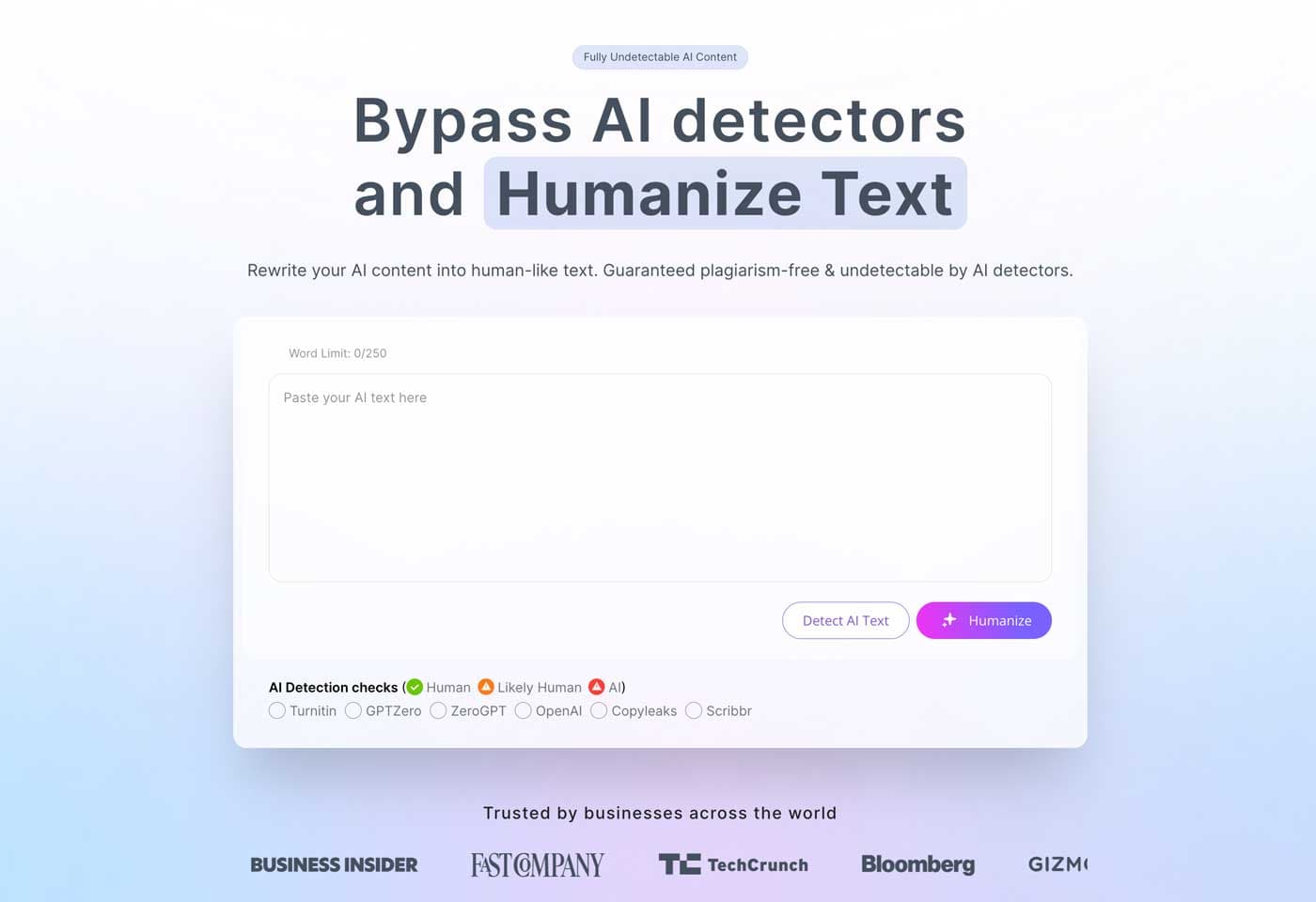
Discover how Semihuman.ai transforms your AI-generated drafts into authentic, naturally flowing content that confidently passes detection systems like Turnitin, GPTZero, and Copyleaks. Designed specifically to prioritize intellectual honesty and unique voice, the platform helps you improve SEO rankings by integrating keywords seamlessly and restructuring text for a genuine feel. Whether you are a marketer, student, or content creator, our AI-powered solutions help you avoid the pitfalls of inauthentic text and build meaningful connections with your audience. Get started today and join the many who are already mastering the art of authentic content at Semihuman.ai.
For practical guidance on enhancing your writing authenticity and evading AI detection, explore how to make AI content undetectable with 5 proven methods and learn how to humanize AI text to further enrich your content creation strategy.
Authentic content is original, trustworthy, and meaningful communication that actively resists misinformation while delivering accurate and contextually rich material to serve the audience's informational needs.
Authentic content is crucial for SEO as search algorithms prioritize high-quality, original content that demonstrates expertise, addresses user intent, and provides comprehensive information, thus enhancing visibility and credibility in search results.
To create authentic content, conduct in-depth research, develop unique perspectives, incorporate diverse sources, demonstrate subject matter expertise, and maintain intellectual honesty while addressing complex topics with contextual depth.
Key characteristics of authentic content include transparency about sources, commitment to factual accuracy, contextual depth, genuine intent to inform, and acknowledgment of potential biases.


Start
Humanizing
for Free!
Humanize